Executive Overview
In the rapidly evolving digital landscape, search engine optimization (SEO) is no longer confined to blue links on a Google search results page. As generative AI (genAI) transforms how users discover information, a new, highly potent traffic source has emerged: ChatGPT. While it may appear as a negligible blip on a standard Google Analytics 4 (GA4) dashboard, data suggests that traffic originating from ChatGPT often boasts superior engagement metrics compared to traditional organic search.
For e-commerce retailers and content publishers, the challenge lies in visibility. Because of how these platforms handle referral data, much of this high-intent traffic remains obscured, misclassified as "Direct" or "Unassigned." This article investigates why ChatGPT is becoming a primary driver of quality leads, how businesses can successfully track this elusive traffic, and why failing to monitor AI-referred users could mean missing out on your most valuable audience segment.
Detailed Chronology: The Rise of AI-Driven Referrals
The shift toward AI-assisted browsing has been subtle but systemic. In the early days of LLM (Large Language Model) adoption, traffic was primarily internal, as users treated the interface as a creative writing partner. However, as ChatGPT integrated real-time browsing capabilities and citation modules, it shifted into a discovery engine.

Unlike traditional search, where a user scans a list of ten results, a user engaging with ChatGPT is participating in a high-context dialogue. By the time a user clicks a link provided by the AI, they have often already received a preliminary education on the subject, refined their intent, and established a level of trust in the solution presented.
We are currently in a transitional phase. While search engines remain the dominant volume driver, the quality of traffic from AI sources is demonstrating a higher propensity for conversion. For savvy digital marketers, the priority has shifted from simply ranking for keywords to optimizing content for AI "answerability."
Supporting Context & Metrics: Beyond the Surface
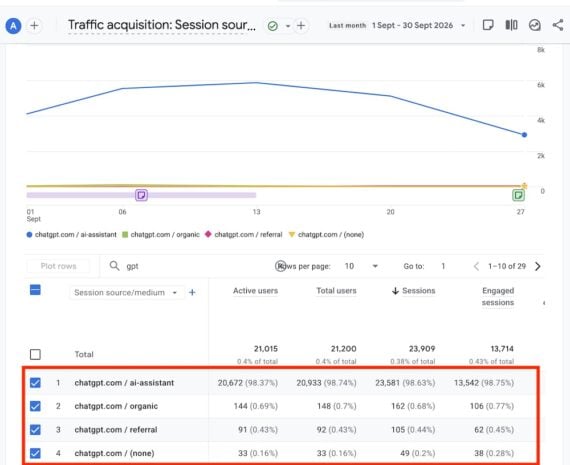
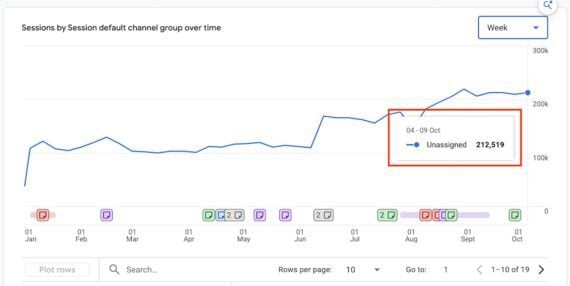
The primary issue facing analysts today is the "attribution gap." When a user clicks a link from ChatGPT, the platform often attaches a noreferrer attribute to the URL. This privacy-focused feature strips the referral string, causing GA4 to lose the context of the visit. Consequently, these users—who are often highly engaged—are lumped into the "Unassigned" or "Direct" buckets.
Why ChatGPT Traffic Performs Better
While formal, peer-reviewed academic studies on this specific traffic segment are still in their infancy, observational data from site optimization efforts reveals two compelling theories regarding why this traffic is so "sticky":
- The "Pre-Qualified" Effect: A user who reaches your site via ChatGPT has already engaged in a conversational filter. They have asked a specific question and received a summary. By the time they click your link, they are not browsing; they are seeking a specific solution they have already been told you provide.
- Intent-Driven Context: When a user arrives at a landing page through a search engine, they are often clicking based on a meta-title and description. When they arrive via AI, they are doing so because the AI has contextualized your content as the definitive answer to their query. This creates a higher level of baseline trust.
Monitoring the Unseen
To capture this data, marketers must move beyond default reports.
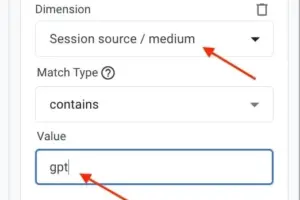
- The Filter Strategy: By navigating to Acquisition > Traffic acquisition in GA4, analysts should build custom filters that include the "Session source" or "Session medium" containing the string "gpt." This simple adjustment allows you to isolate traffic from OpenAI’s platforms from the noise of general "Direct" traffic.
- Reverse-Engineering Prompts: Since ChatGPT does not provide the specific prompt used by the user, we must work backward. By analyzing which landing pages receive the most AI-referred clicks, we can infer the intent. If a page about "best waterproof hiking boots" is seeing a spike in AI traffic, the prompt was likely, "What are the best waterproof hiking boots for rainy climates?"
The Analytical Toolkit: Decoding AI Referrals
To truly master this channel, you must treat your landing pages as an AI-optimized ecosystem. Simply tracking the numbers is not enough; you must understand why the AI chose you.
Step 1: Isolate the Data
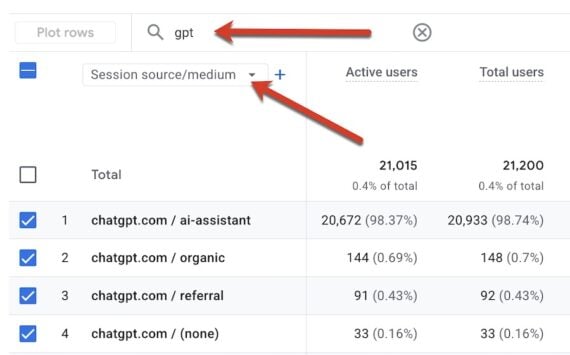
In GA4, create a custom report that segments by "Session source/medium." Build a filter that specifically pulls in sources containing "gpt." This will give you a clear view of your growth trends. If your "Unassigned" traffic is growing in tandem with your efforts to optimize for AI, you have successfully identified your ChatGPT audience.
Step 2: Contextual Inquiry
Once you identify the high-performing URLs, perform a "Context Audit." Use ChatGPT itself as a research tool:
- Query: "I am an expert in [Industry]. Here is a URL from my site: [URL]. If a user asked a question about [Topic], what prompt would lead you to cite this specific page as a solution?"
This process transforms your content strategy from "keyword-focused" to "problem-focused." You are no longer writing for a crawler; you are writing for an AI agent that needs to identify your site as the most efficient way to solve a user’s problem.

Step 3: Deep-Dive Tools
In addition to GA4, supplement your analysis with:
- Search Console: Monitor how your brand name and key terms are appearing in AI-related queries.
- Heatmap Tools: Analyze the behavior of users arriving from these sources. Are they staying longer? Do they interact with more elements on the page? This confirms the quality of the referral.
Future Outlook: The Maturation of AI Discovery
We are witnessing the "mainstreaming" of the AI assistant. As tools like ChatGPT, Claude, and Gemini become default browsers for the younger generation, the volume of this traffic will inevitably eclipse the "niche" label it currently holds.
The current misclassification of traffic in GA4 is a temporary technical hurdle. As privacy standards evolve, it is likely that referral headers will become more standardized, or that AI platforms will eventually offer integrated analytics suites for publishers. Until then, the burden of discovery lies with the site owner.
Recommendations for the AI-First Era:
- Prioritize "Answer" Content: Structure your content to be easily summarized. Use clear headers, bullet points, and definitive statements that an AI can easily parse and cite.
- Build Authority: AI models prioritize sources that demonstrate topical authority. Back your claims with data, original research, and expert citations.
- Audit the "Unassigned": If you see a massive spike in "Unassigned" traffic, do not ignore it. Investigate whether it correlates with your recent content updates or shifts in AI search visibility.
- Embrace Transparency: As the landscape shifts, the sites that win will be those that provide the most value to the end user, regardless of whether that user arrives via a traditional search engine or a conversational AI interface.
The digital marketing landscape is shifting from a paradigm of "finding information" to "receiving answers." While the shift is currently creating data blind spots, the underlying value of the traffic is undeniable. By adopting the advanced tracking methods outlined here and refining your content for AI-readability, you are not just preparing for the future—you are capturing the most engaged segment of the modern internet.