Executive Overview
In the rapidly shifting landscape of digital marketing, a new, potent traffic source has emerged: Generative AI. While search engine optimization (SEO) professionals have spent decades obsessing over Google’s algorithm updates and organic search rankings, a quiet revolution is occurring within the chat interfaces of Large Language Models (LLMs).
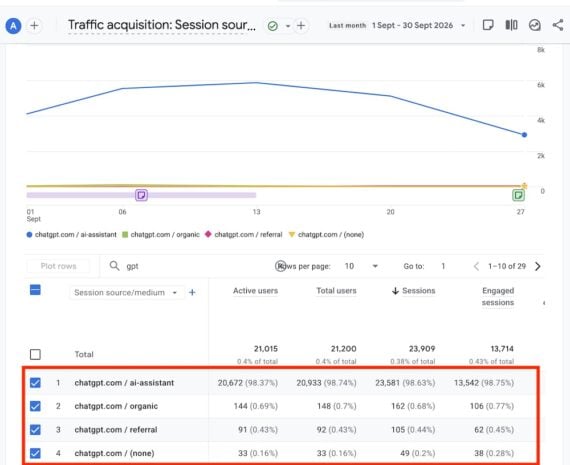
Recent observational data suggests that traffic originating from ChatGPT is not only growing but often demonstrates significantly higher engagement metrics than traditional organic search traffic. Despite this, many marketers remain blind to this trend because it is frequently miscategorized or buried within the "Direct" or "Unassigned" channels of Google Analytics 4 (GA4). This article investigates the mechanics of AI-driven traffic, why it represents a high-intent audience, and how marketers can effectively track, analyze, and optimize for this nascent referral source.
Detailed Chronology: The Shift from Search to Synthesis
The digital era began with the "link economy"—a system where users queried a search engine, received a list of blue links, and navigated to a website to find an answer. Today, we are transitioning into the "answer economy."

When a user asks ChatGPT a specific question—"How do I fix a leaking faucet?" or "What is the best CRM for a small business?"—the model synthesizes information and provides a curated response. Crucially, when that response includes a citation or a link to a resource, the user who clicks through is no longer a passive searcher; they are an informed seeker who has already had their initial curiosity satisfied by the AI.
The Misunderstood Metric
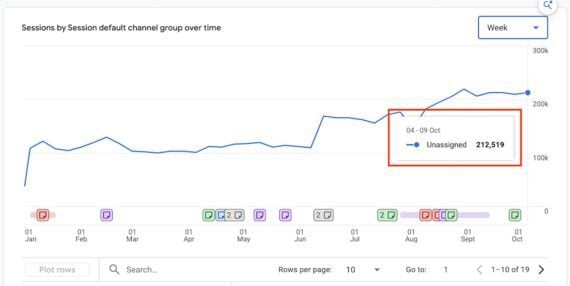
Historically, web traffic analysis has been straightforward: Referrals come from social media, email, or search engines. However, ChatGPT often utilizes the noreferrer attribute in its outbound links. This attribute is designed to protect user privacy, but for the digital marketer, it acts as a digital curtain, obscuring the source of the traffic. Consequently, GA4 often defaults these visits to "Unassigned" or "Direct." As AI adoption becomes mainstream, marketers are seeing a mysterious, steady climb in "Unassigned" traffic, which, upon closer inspection, frequently correlates with the rise of GenAI adoption.
Supporting Context & Metrics: Decoding the AI Visitor
Why does ChatGPT traffic perform so well? While comprehensive academic studies are currently limited, practitioners in the field have identified two primary theories for why this traffic is so "sticky."
1. The High-Intent "Pre-Vetting" Effect
Before a user clicks a link provided by ChatGPT, they have essentially engaged in a dialogue with a sophisticated information filter. The AI has already narrowed down the potential solutions to the user’s problem. By the time the user lands on your website, they have already been "pre-vetted." They aren’t just clicking a random link on a SERP (Search Engine Results Page); they are following a specific recommendation provided by a tool they trust.
2. The Contextual Bridge
When ChatGPT cites a website, it does so within the specific context of a user’s query. This creates a psychological "bridge." The user isn’t just looking for a topic; they are looking for the specific solution to a constraint or challenge they just articulated to the AI. This leads to higher dwell times, lower bounce rates, and more meaningful interactions once they arrive on the site.
The Mechanics of Tracking in GA4
To move beyond the default, opaque reporting of GA4, marketers must take a proactive stance. Tracking this traffic requires building custom filters.
Step-by-Step Implementation:
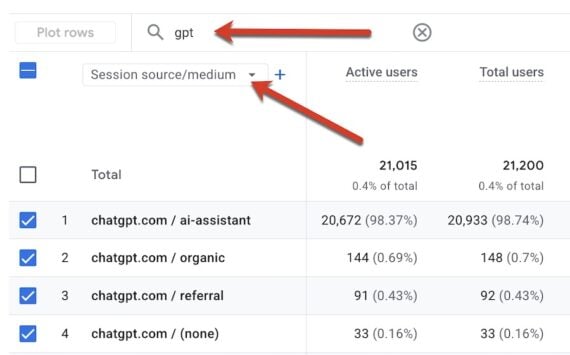
- Navigate to Acquisition: In your GA4 dashboard, go to Acquisition > Traffic acquisition.
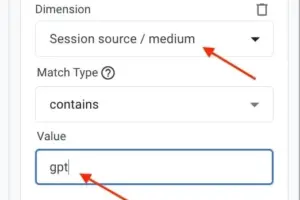
- Build a Custom Filter: Use the "Add filter" feature to create a segment that isolates traffic sources containing the string "gpt."
- Analyze Landing Pages: By sorting these results, you can see which of your pages are being cited most frequently by AI models.
- Contextual Investigation: Once you identify the top-performing pages, you can perform a "reverse prompt engineering" task. Ask ChatGPT: "My URL [URL] is being cited as a solution to a problem. What prompts would likely lead you to recommend this page?"
This process turns your analytics from a passive reporting tool into a strategic intelligence engine.
Official Perspectives: The Visibility Challenge
The industry faces a significant hurdle: platforms like OpenAI are not currently prioritizing the "referrer" data that marketers crave. For OpenAI, the priority is user experience and privacy, not providing detailed analytics to website owners.

However, the "Unassigned" traffic category is a clear indicator that the status quo is changing. As noted by industry experts, the growth in unassigned traffic is not a coincidence; it is a direct reflection of the migration of user behavior toward conversational search. If a company sees a spike in unassigned traffic, it is no longer safe to assume it is simply "unknown direct traffic." It is highly likely to be the result of a "dark social" interaction occurring within the walls of an AI model.
To mitigate this, marketers should utilize secondary tools to validate their findings:
- Search Console: Look for anomalies in impression data that don’t correlate with traditional keyword fluctuations.
- Third-party Rank Trackers: Some advanced SEO tools are beginning to offer "AI-cited" metrics, allowing you to see where your brand appears in LLM responses.
Future Outlook: The New SEO Imperative
The future of digital traffic will not be defined solely by Google rankings. It will be defined by "Answer Optimization." As GenAI models become more integrated into our daily workflows—through browsers, mobile OS integration, and standalone apps—the traditional "Ten Blue Links" will become increasingly secondary.
The Path Forward
- Optimize for "Answerability": Content should be structured to be easily parsed by AI. This means using clear headers, concise definitions, and data-driven insights that an AI can easily summarize.
- Embrace Transparency: While we cannot force AI models to stop using
noreferrer, we can optimize our landing pages to be so helpful that the user—once they arrive—is compelled to engage, sign up, or convert immediately. - Monitor the "Dark" Traffic: Treat your "Unassigned" traffic segment as a primary area of concern. If that segment grows, it is a sign that your brand is gaining authority within the AI ecosystem.
Conclusion
We are witnessing the end of the era where search traffic was the sole barometer of digital success. ChatGPT and similar generative AI tools have introduced a new layer of complexity to the digital marketing funnel. By understanding that AI-driven traffic is often of higher quality—and by taking the necessary steps to manually filter and analyze this data within GA4—marketers can gain a significant competitive advantage.
The goal is no longer just to be found; it is to be cited. As we move deeper into this new frontier, the brands that learn to listen to what their "hidden" traffic is telling them will be the ones that dominate the next decade of digital growth. Don’t let your most valuable visitors remain "unassigned." Start tracking the AI revolution today.