Executive Overview
In the traditional retail paradigm, the consumer’s purchase decision is heavily influenced by the "tactile handshake"—the ability to hold, touch, and inspect a product. Physical interaction provides an immediate, subconscious data stream regarding texture, weight, flexibility, and utility. However, as global e-commerce continues to dominate the retail landscape, digital merchants face a significant hurdle: the screen acts as a sterile barrier between the consumer and the commodity.
While most online storefronts rely on static, high-resolution product photography, a new wave of innovative brands is moving beyond simple visual representation. By utilizing sophisticated lighting techniques to highlight material surface quality and demonstrating products in dynamic states of use, these companies are effectively "digitizing the sense of touch." This investigative report explores how strategic visual storytelling can replicate the sensory experience of a brick-and-mortar environment, ultimately reducing buyer hesitation and increasing conversion rates.
Detailed Chronology: The Evolution of Product Representation
For decades, the standard for online product display was the "white background" studio shot. This approach was designed to minimize distractions and focus entirely on the item’s features. However, as consumers became more discerning, this minimalist approach began to fail. A flat, sterile image cannot communicate the grain of leather, the grit of a textured wall, or the viscous consistency of a cosmetic cream.
In recent years, the industry has witnessed a pivotal shift. Around 2020, as digital-first brands began to scale, the focus moved toward "lifestyle integration." Brands realized that a product sitting on a shelf is not how a consumer experiences it in their daily life. The evolution can be tracked in three distinct phases:

- The Static Phase: Products isolated against white backgrounds (the era of information-only).
- The Contextual Phase: Products shown in use-case environments (the era of aspirational marketing).
- The Sensory-Direct Phase (Current): A focus on material reality—using light, motion, and texture to simulate physical presence (the era of tactile simulation).
This current phase is defined by a shift in photographic philosophy. It is no longer about showing what a product is, but how it feels and behaves.
Supporting Context & Metrics: Why Tactile Data Matters
Psychological research into "haptic imagery"—the mental simulation of touch—suggests that when a shopper can visualize the tactile qualities of an object, their psychological ownership of that item increases. This is known as the Endowment Effect. When a consumer can "feel" the product through a high-quality image, they are statistically more likely to finalize a purchase.
Let Light Do the Touching
One of the most effective strategies for bridging this gap is the mastery of light. In photography, light is not merely for illumination; it is a tool for revealing topography.
Take, for instance, Backdrop, a brand that has transformed the paint industry’s online presence. Rather than offering a flat, digital square of color, Backdrop presents high-fidelity, full-bleed imagery of actual painted walls. By capturing the light hitting the surface, they highlight the "pitting" and "roller marks" that a customer would encounter in reality. This is not just a photo; it is a sensory proxy. When a shopper sees the way light reflects off the subtle imperfections of a freshly painted wall, they gain an intuitive understanding of the finish, the thickness, and the quality of the paint.

Similarly, Fireclay Tile employs macro photography to capture the nuances of ceramic glaze. By utilizing tight, close-up shots, they reveal the interplay between glossy and matte surfaces. The uneven distribution of light across these tiles provides the viewer with an immediate sense of the product’s handcrafted nature, distinguishing it from mass-produced, uniform alternatives.
Show It Doing Something
If texture is the primary requirement for stationary objects, "behavior" is the requirement for consumables. Brands like Lush Cosmetics have mastered this through dynamic product demonstration.
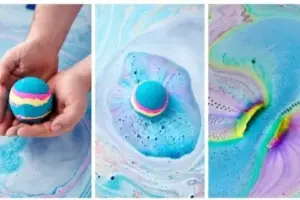
When a consumer shops for a bath bomb, they aren’t just buying a sphere of dried minerals; they are buying an experience of dissolution, scent, and color. Lush’s product galleries don’t just show the bomb in the box; they show the item fizzing in water, swirling into a marbled pattern of blue, pink, and yellow. This visual demonstration answers the fundamental question: What does this do? By showing the product mid-transformation, the brand eliminates the mystery of the user experience, effectively allowing the shopper to "feel" the luxury of the product through their screen.
Furthermore, Lush applies this to their category grids. Instead of showing jars, they display smears of the product itself. This allows the shopper to assess the consistency—whether it is a coarse scrub, a silky lotion, or a dense butter—without ever opening a lid.

Official Statements and Industry Insights
Industry experts argue that the future of e-commerce lies in "sensory-forward design." According to design consultants, the brands that succeed in the next decade will be those that view their product pages as interactive digital showrooms rather than static catalogs.
"The goal is to reduce the cognitive load on the customer," notes one lead creative strategist. "When a customer has to wonder about the texture, they hesitate. When they hesitate, they browse away. By using high-contrast lighting to reveal surface grain or video loops to show product consistency, we answer the customer’s subconscious questions before they even have to formulate them."
This sentiment is echoed by the data. E-commerce platforms that have implemented "texture-first" photography report lower return rates. Why? Because the expectation of the product matches the reality of the delivery. When a customer knows exactly how a product will feel or behave, they are less likely to be disappointed by a perceived discrepancy between the online image and the physical item.
Future Outlook: The Next Frontier of Sensory E-commerce
As we look toward the future, the integration of tactile-focused media will likely expand beyond traditional photography. Several trends are currently on the horizon:

1. The Rise of Micro-Video
Short, high-definition loops (3–5 seconds) that show a product’s texture being manipulated—a finger pressing into a cream, a fabric being stretched, or a liquid being poured—are becoming the new standard. These "tactile loops" provide more information than a hundred words of product description.
2. Augmented Reality (AR) Integration
While AR has previously been used for "placing" furniture in a room, the next evolution is "material AR," where high-resolution surface mapping allows users to change lighting angles in real-time on their screens to see how a texture reacts to light sources.
3. AI-Driven Visual Enhancement
Artificial intelligence is beginning to assist photographers in identifying the "sensory hotspots" of a product—the specific areas of a texture or material that most influence a consumer’s decision to buy—and automatically generating imagery that emphasizes these features.
4. Accessibility and Universal Design
As brands focus more on texture and material, they are also finding new ways to describe these qualities for visually impaired users. High-quality imagery combined with rich alt-text descriptions of physical sensations (e.g., "a matte finish with visible, fine-grain sandpaper-like texture") creates a more inclusive digital shopping environment.

Conclusion
The digital barrier is not insurmountable. By treating the screen as a canvas for sensory information rather than a mere window for product identification, e-commerce brands can replicate the essential qualities of in-store shopping. Whether through the strategic use of raking light to reveal surface topography or the dynamic display of materials in motion, the brands that thrive will be those that provide their customers with the information they need to feel the product, even from thousands of miles away.
As technology advances, the line between digital representation and physical reality will continue to blur. The retailers who master the art of tactile communication today are the ones who will define the shopping standards of tomorrow.