Executive Overview
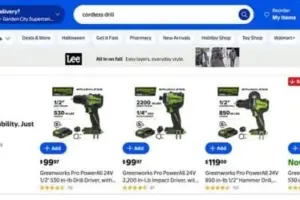
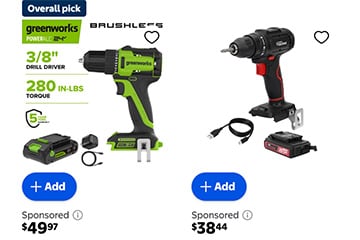
In the modern digital retail landscape, the line between curated shopping experiences and high-yield advertising real estate has blurred to the point of near-invisibility. A recent search for "cordless drill" on Walmart’s e-commerce platform provides a stark case study: a Greenworks-sponsored brand module dominated the top of the screen, followed by three additional sponsored product listings. A shopper had to scroll past six paid advertisements before encountering the first organic search result.
This phenomenon is not an anomaly; it is the new operational reality for enterprise-level e-commerce. As retailers pivot toward "retail media"—the business of selling advertising space on their own websites—they face a growing existential dilemma. When the most valuable digital shelf space is sold to the highest bidder rather than the most relevant or profitable product, where does traditional merchandising end and media monetization begin? This article explores the structural, governance, and long-term strategic implications of this tension, arguing that the future of retail success depends on finding a harmonious equilibrium between the two.
Detailed Chronology: The Evolution of the Digital Shelf
The trajectory of e-commerce has moved from simple, utilitarian catalogs to highly sophisticated, algorithm-driven marketplaces. In the early 2010s, search results were predominantly governed by "relevance signals"—factors such as product category, customer reviews, and historical sales velocity. Merchandisers acted as the digital store managers, ensuring that high-performing items were front and center to maximize conversion rates.
However, the rise of the "Retail Media Network" (RMN) model has fundamentally altered this hierarchy. As retailers like Amazon, Walmart, and Target realized their massive traffic volume could be converted into a high-margin advertising business, the objective shifted. Today, the search results page—the most high-traffic "real estate" in the digital world—is no longer solely a tool for discovery; it is a primary revenue-generating asset.
The transition occurred in three distinct phases:
- The Introduction of Sponsored Slots: Initially, retailers added a single "sponsored" banner or product placement at the top of the page, framed as a "featured" item.
- The Algorithmic Integration: Retailers began blending ads into the organic feed, making them visually indistinguishable from non-paid results, save for a small "sponsored" tag.
- The Current State (Saturation): As seen in the Greenworks example, we have entered an era where sponsored content can effectively crowd out the first page of search results entirely.
This evolution has been driven by the need for retailers to protect their margins. With the retail sector facing thin margins and fierce competition, retail media offers an attractive, high-margin revenue stream that essentially monetizes traffic that the retailer has already paid to acquire.
Supporting Context & Metrics: The Governance Gap
The tension between merchandising and media is, at its core, a clash of organizational incentives. In most large retail organizations, these two departments operate in silos, each governed by conflicting KPIs.
The Merchandiser’s Mandate
The merchandising team is focused on the "conversion funnel." Their success is measured by sell-through rates, profit margins per unit, and overall customer satisfaction. To a merchandiser, the goal of a search results page is to present the absolute best-fit product to the consumer as quickly as possible. If a shopper searches for a cordless drill, the merchandiser wants to show the drill that has the highest rating, the best price, and the lowest return rate, as this maximizes the probability of a completed, profitable transaction.
The Media Team’s Mandate
Conversely, the media team is measured by ad revenue, CPMs (cost per mille), and advertiser retention. Their goal is to fill available "ad inventory" with paid placements. They are incentivized to secure the most premium slots for their advertisers, regardless of whether those products are the "best" choices for the shopper.
The Structural Advantage of Media
Left unresolved, the media side often holds a structural advantage. Ad revenue is immediate, highly visible on executive dashboards, and easily attributable to specific campaigns. The negative impact of displacing an organic result—such as a slight drop in conversion or a "hidden" frustration felt by the customer—is diffuse, delayed, and notoriously difficult to quantify in real-time.
When a sponsored slot generates $50,000 in revenue but leads to a 2% drop in conversion, the media team reports a win, while the merchandising team struggles to prove that the loss in conversion was directly caused by the ad displacement. This asymmetry is the primary driver of the current "Retail Media Paradox."
Official Statements and Industry Perspective
The industry is beginning to recognize that uncontrolled monetization comes at a long-term cost. Sherry Smith, President of Retail Media at Criteo, emphasizes that the strategy must shift from simple volume to value-based placement.
"Retailers need to be thoughtful about where and how they introduce advertising," Smith noted in response to inquiries regarding the balance of power on e-commerce platforms. "More inventory doesn’t necessarily mean more value. The focus should be on placements that perform for advertisers, remain useful to shoppers, and create incremental value for the retailer once the costs of running the program are taken into account."
Smith’s perspective suggests that the most successful retail media networks will be those that treat relevance as the primary constraint. "At the end of the day, relevance matters," she added. "If the advertising is useful to the shopper, it’s much more likely to create value for everyone involved. The key is making sure media adds to the experience rather than getting in the way of it or simply replacing organic discovery."
This sentiment is shared by many industry analysts who argue that if the "sponsored" tag becomes synonymous with "irrelevant" or "overpriced," shoppers will eventually lose trust in the search function itself, potentially driving them back to competitors or search engines that offer a cleaner, more curated experience.
Future Outlook: Finding the Equilibrium
To avoid the pitfalls of excessive monetization, retailers must move toward a more integrated governance model. This requires establishing clear "rules of engagement" between merchandising and media teams.
The Path Toward "Smart" Governance
- Relevance Thresholds: Retailers are increasingly implementing "relevance scores" for ads. If an ad does not meet a minimum relevance threshold based on the user’s search query, it is blocked from appearing in high-value slots, regardless of the bid amount.
- Dynamic Capping: Instead of a static number of ads, retailers can use dynamic capping to limit the number of sponsored placements based on the strength of organic results. If the organic search engine identifies a product with an extremely high conversion probability, the system may prevent an ad from taking that specific spot.
- Unified P&L Accountability: The most progressive organizations are starting to hold teams accountable for "net profitability" rather than siloed metrics. If a media campaign drives revenue but creates a net drag on the total category margin due to lost organic sales, the media team is forced to adjust.
- Transparency as a Brand Value: In an era where shoppers are savvy about "sponsored" content, retailers that are transparent about why a product is being recommended—and that prioritize the shopper’s intent—will likely maintain higher levels of customer loyalty.
Conclusion: The Synthesis of Experience and Income
The future of retail media is not a binary choice between merchandising and advertising; it is the synthesis of the two. Retailers that succeed in the next decade will be those that view retail media not as a separate product to be sold, but as a component of the customer experience that must be managed with the same level of care as the product catalog itself.
As the Greenworks example at Walmart illustrates, there is a path where advertising and organic discovery coexist. When the sponsored product is, in fact, the most relevant choice for the consumer, the retailer wins twice: they collect the ad revenue and they close the sale. The danger lies only when the ad machine is allowed to override the needs of the customer. In the battle for the digital shelf, the ultimate arbiter will always be the shopper. If the shopper finds what they need quickly and easily, the retail media network thrives. If they don’t, the long-term value of the entire e-commerce ecosystem is at risk.