Executive Overview: A Landscape in Flux
The media ecosystem is currently navigating a period of profound structural and personnel transformation. As legacy networks struggle to reconcile traditional broadcast standards with the hyper-fragmented digital creator economy, the industry is seeing a wave of high-profile executive movements, aggressive legal maneuvers regarding press access, and a reimagining of visual aesthetics to accommodate the "vertical-first" consumption habits of modern audiences.
From the halls of the White House to the boardrooms of major networks, media organizations are recalibrating their editorial strategies. This week, MS NOW secured a significant talent acquisition, while legal friction between major newsrooms and the executive branch continues to escalate. Simultaneously, the definition of "news" is expanding as tech-forward platforms challenge traditional gatekeepers, and internal shifts at legacy giants like CBS and NBC indicate a pivot toward subscription-based digital sustainability. This report provides a comprehensive analysis of the shifts currently shaping the fourth estate.
Detailed Chronology of Recent Industry Developments
The MS NOW Talent Offensive
The most significant personnel news of the week centers on MS NOW’s aggressive recruitment strategy. The network has officially tapped Paula Reid, the former chief legal affairs correspondent at CNN, to serve as its new chief White House reporter. This move is widely viewed as a strategic play by MS NOW to bolster its investigative capabilities and sharpen its coverage of the administration.
In an internal memorandum obtained by industry insiders, MS NOW Washington bureau chief Sudeep Reddy expressed optimism regarding the appointment. "Paula will bring her deep experience to covering the administration, serve as a key reporting voice across MS NOW’s Washington Bureau, and help drive our newsroom’s investigative and enterprise journalism," Reddy wrote. Reid’s immediate transition signals the network’s intent to hit the ground running as policy scrutiny intensifies.
The Access Wars: A Legal Front
Beyond the hiring headlines, the relationship between the press and the executive branch has reached a boiling point. A coalition including CNN, MS NOW, and Politico has amended its ongoing lawsuit against the White House. The news organizations are now petitioning U.S. District Judge Timothy Kelly to codify current access orders into permanent mandates.
At the heart of the litigation is the desire to ensure consistent, protected access to the White House press pool. The plaintiffs are seeking a judicial intervention to prevent the White House from unilaterally blocking journalists from performing their essential duties—specifically rotating press pool responsibilities in the Oval Office and securing seats on Air Force One. The outcome of this case could set a precedent for executive-press relations for the remainder of the decade.
Digital Disruption and the Rise of Phareo
While legacy media defends its territory, the startup sector is innovating on how content is delivered. Andrew Morse, a veteran media executive who previously led CNN and later served as CEO of The Atlanta Journal-Constitution, has unveiled his latest venture: Phareo.
Co-founded alongside Brian Whitman, Phareo is positioned as a direct competitor to the established creator economy, including platforms like YouTube. The platform aims to solve the "discovery paradox"—helping creators find their target audiences while simultaneously assisting fans in navigating the oversaturated landscape of digital content. Morse’s departure from the traditional newspaper model to the tech-creator space highlights a broader trend of media leaders betting on decentralized content distribution.
Supporting Context & Metrics: Analyzing the Shift
The "Trustworthiness" Crisis: Bari Weiss at the WTF Summit
During the recent "The Information 2026 WTF Summit," CBS News editor-in-chief Bari Weiss offered a candid assessment of the current state of journalism. In her first public appearance since assuming her role at the outlet, Weiss challenged the prevailing narrative regarding media credibility.

"There isn’t a crisis in trust, but a crisis in trustworthiness," Weiss remarked during a conversation with Jessica Lessin. By shifting the focus from the audience’s skepticism to the institution’s output, Weiss is signaling a potential shift in CBS’s editorial philosophy. Addressing the performance of its flagship investigative program, 60 Minutes, she noted that the show is performing "tremendously well" and emphasized that her leadership team is prioritizing long-term editorial integrity over the volatility of weekly Nielsen ratings.
Visual Rebranding: ABC News Live’s Vertical Pivot
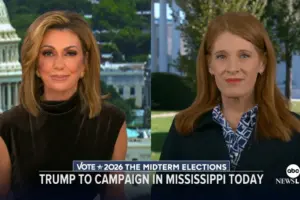
The technical side of news delivery is also evolving. ABC News Live has debuted a comprehensive redesign of its on-air graphics package. The update is not merely cosmetic; it is a tactical response to the rise of social media and mobile consumption.
By employing cleaner typography and removing backplates, the new "lower-third" layout is center-justified, allowing the network to broadcast in both 16:9 (widescreen) and 9:16 (vertical video) formats simultaneously. This design choice enables ABC News Live to syndicate its content across platforms like TikTok, Instagram Reels, and YouTube Shorts without the need for expensive or time-consuming reformatting, effectively future-proofing their content pipeline.
Official Statements and Personnel Milestones
The Revolving Door
The media landscape continues to see significant executive movement:
- NBC News Digital: The network has appointed Kevin Delaney as its new head of digital content and subscription. In a memo to staff, Catherine Kim (EVP of Editorial and Content) and Sat Brainch (Chief Business Officer) highlighted that Delaney will be tasked with developing content that drives both audience engagement and revenue growth. Delaney brings an elite pedigree, having held positions at The New York Times, The Wall Street Journal, and The Information.
- CBS Sunday Morning: Jon Carras has been promoted to senior producer. A 20-year veteran of the broadcast, Carras has been the architect behind over 400 stories, solidifying his role as a cornerstone of the Sunday morning news tradition.
- Newspress: The startup, which focuses on video journalism, has added former 60 Minutes executive producer Bill Owens to its leadership team. Owens is expected to spearhead the development and launch of a new slate of documentary-style programming.
Recognition and Personal Milestones
The industry also took a moment to celebrate its own. CNN’s chief medical correspondent, Dr. Sanjay Gupta, was officially inducted into the Atlanta Press Club Hall of Fame. The honor acknowledges his quarter-century of service to journalism, an era defined by his ability to translate complex medical data into digestible information for global audiences.
On the personal front, the Fox News network saw two of its most prominent faces unite in marriage. Primetime host Sean Hannity and Fox & Friends co-host Ainsley Earhardt were married on October 24 at the Church of Bethesda-by-the-Sea in Palm Beach, Florida. The event was attended by top-tier Fox executives and on-air talent, including Suzanne Scott, Steve Doocy, Lawrence Jones, and Bret Baier.
Future Outlook: Navigating the 2027 Horizon
As we look toward the remainder of the year and into 2027, three key trends are expected to dominate the media sector:
- Subscription-Led Digital Models: With the appointment of figures like Kevin Delaney at NBC, the industry is clearly moving away from purely ad-supported models. The focus is shifting toward cultivating loyal, paying digital subscribers who value specialized content over generic news cycles.
- The Convergence of Tech and Journalism: Platforms like Phareo represent the "next generation" of media. Expect traditional networks to either acquire similar tech startups or attempt to build internal "creator incubators" to compete for the attention of younger demographics who are increasingly bypassing cable news.
- Legal Battles Over Access: The outcome of the lawsuit involving the White House and major news organizations will serve as a bellwether for the health of democratic reporting. If the court rules in favor of the journalists, it will reinforce the role of the press as an essential observer of the executive branch. If access is restricted, we may see a rise in alternative, decentralized reporting methods that do not rely on traditional White House press pool credentials.
The media landscape remains highly volatile. Organizations that prioritize internal "trustworthiness" and technical agility—such as those investing in vertical-friendly graphics and robust digital subscription strategies—are likely to remain the dominant voices. Conversely, those that fail to adapt to the shifting expectations of the creator economy and the changing legal landscape may find their influence waning as the industry moves toward a more fragmented, digital-first future.