Executive Overview
For creative professionals navigating the demanding landscape of graphic design, digital illustration, and high-resolution photography, hardware choice is never trivial. The tools of the trade must balance raw computational output, color-accurate display fidelity, and all-day portability without stuttering under heavy multi-threaded workloads. For some time, industry consensus has pointed toward Apple’s ecosystem as the gold standard for portable creative workstations.
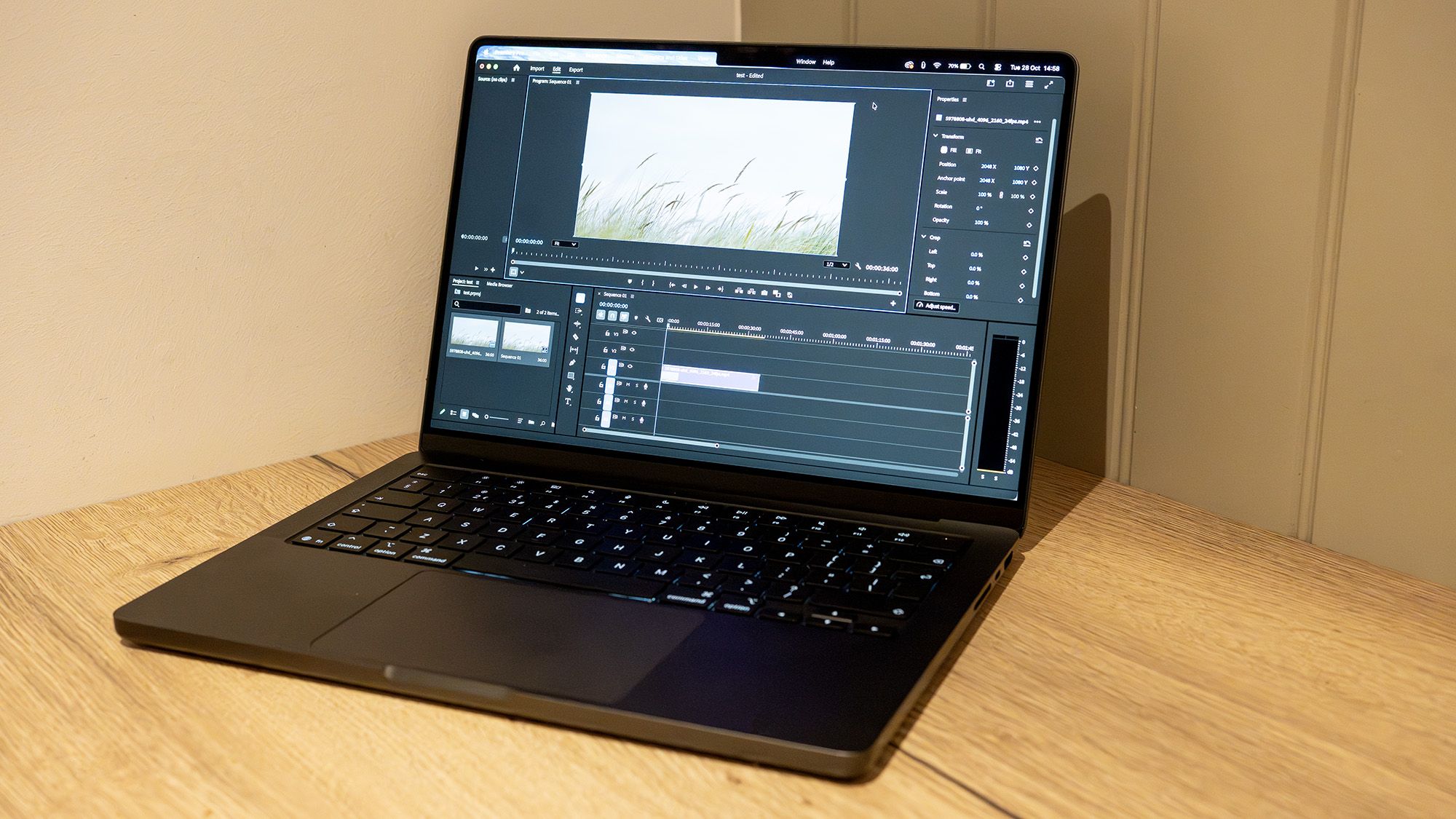
At the very pinnacle of this category sits the 14-inch MacBook Pro powered by Apple’s latest M5 silicon. Widely lauded as the best laptop for graphic design on the market, it has consistently dominated benchmark suites—particularly in Adobe Photoshop performance—while offering a fluid, reliable user experience in the field.
However, stellar performance has historically come at a steep financial cost. Apple’s pro-tier hardware requires a serious capital investment, often pricing out independent freelancers, boutique studios, and students. That reality shifts today. In a notable retail development, Amazon has slashed the price of the configurations-leading 14-inch MacBook Pro with the M5 chip. Dropping the $1,999 base MSRP down to $1,839, this $160 price reduction represents a compelling entry point for anyone currently nursing an aging MacBook or contemplating a cross-platform switch.
While the device is not entirely without compromise—notably retaining Thunderbolt 4 rather than leaping to Thunderbolt 5—its combination of blazing single-core speed, a doubled SSD read/write throughput, and a breathtaking 120Hz P3-wide color display makes it an extraordinarily tough machine to beat. This report breaks down the performance metrics, architectural upgrades, real-world utility, and market context behind Amazon’s latest discount on Apple’s premier creative laptop.
Detailed Chronology: Evolution to the M5 Paradigm
To truly understand the value of the current Amazon discount, it is necessary to contextualize how Apple’s silicon has evolved over recent product cycles. The transition away from Intel architecture began with a wave of optimism, but it was the iterative refinement seen in the M3 and M4 generations that truly cemented Apple Silicon as an industry-standard powerhouse.
The M4 Predecessor and the Push for Higher Efficiency
When Apple rolled out the M4 architecture across its portable lines, reviewers and engineers alike praised the massive leaps in energy efficiency and neural processing capability. The M4 series laid the groundwork for advanced on-device artificial intelligence tasks, streamlined video rendering pipelines, and improved thermal management that kept fan noise to a minimum even under sustained workloads.
Yet, creative professionals using heavy raster-based asset workflows—such as layered, multi-gigabyte Photoshop compositions or complex vector layouts in Adobe Illustrator—demanded even greater headroom. The bottleneck had shifted away from pure thermal throttling toward raw single-core calculation speed and memory bandwidth.
The Arrival of the M5 Silicon
Enter the M5 generation. When Apple introduced the M5 chip into the 14-inch MacBook Pro chassis, it was designed to target these exact professional pain points. Rather than relying solely on multi-core brute force, Apple engineered significant architectural enhancements to both the Central Processing Unit (CPU) and the Graphics Processing Unit (GPU).
In empirical lab testing, the M5 immediately asserted its dominance, bypassing its predecessors to capture the top spot in Geekbench single-core evaluations. This single-core dominance directly translates to snappier application launches, instantaneous filter application in image editors, and smoother timeline scrubbing in video editing suites. Furthermore, the accompanying GPU architectural overhaul provided a substantial generational leap in graphical processing, granting creative applications the visual pipeline bandwidth required for complex 3D viewports and fluid user interfaces.
The Retail Correction: Amazon’s $160 Price Drop
Despite its technical triumph, the $1,999 starting price for the primary M5 configuration positioned it firmly in the premium investment tier. For months, early adopters and enterprise buyers absorbed the cost as a necessary business expense.
However, retail market dynamics have now shifted in favor of the consumer. Amazon’s decision to drop the price to $1,839 marks the first significant promotional adjustment of this scale for the current M5 iteration. By trimming $160 off the sticker price, the retail giant has effectively bridged the gap for prospective buyers who were on the fence, transforming what was once a prohibitive luxury into a more accessible professional upgrade.
Supporting Context & Metrics: Under the Hood of the M5 MacBook Pro
A $160 discount is noteworthy, but hardware value is ultimately defined by performance metrics. Independent testing suites, benchmark runs, and hardware teardowns reveal a machine engineered to eliminate friction in creative workflows.
Benchmark Dominance and Photoshop Performance
In professional design environments, Adobe Photoshop serves as the ultimate litmus test for general workstation responsiveness. During rigorous benchmark testing, the 14-inch MacBook Pro with the M5 chip did not merely perform well; it sat at the pinnacle of the chart by a decisive margin.
The secret lies in the synergy between the M5’s record-breaking single-core processing metrics and unified memory architecture. Single-core performance dictates how quickly a CPU can execute sequential tasks—the exact type of calculations required when applying complex brush strokes, rendering layer styles, or calculating pixel manipulations in real time. The M5’s architecture handles these operations with virtually zero perceptible latency.
Storage Speed: Doubling the SSD Throughput
One of the most remarkable, yet sometimes overlooked, hardware upgrades in this generation is the storage subsystem. Apple has radically accelerated the internal Solid State Drive (SSD).
In stress tests, the M5 MacBook Pro’s SSD routinely clocks read and write speeds in excess of 6,000 MB/s. To put this in perspective, this is nearly twice the speed of the storage found in the previous generation of machines. For creatives working with massive uncompressed RAW photo libraries, multi-channel audio stems, or high-bitrate video footage, this throughput speed drastically reduces file transfer times, speeds up project loading, and ensures that virtual memory paging (swap memory) operates without stuttering when working at the absolute limits of RAM capacity.
Display Fidelity: The 120Hz P3 Color Canvas
For a graphic designer, illustrator, or photographer, the screen is the most critical component of any laptop. The 14-inch MacBook Pro features a breathtaking Liquid Retina XDR display equipped with Apple’s ProMotion technology, enabling adaptive refresh rates up to 120Hz.
Lab evaluations of the color reproduction validate Apple’s marketing claims:
- Color Gamut Coverage: The display successfully covers 93% of the P3 wide color gamut, ensuring that digital assets rendered on screen translate accurately across diverse digital and print mediums.
- Brightness and Contrast: With extreme peak brightness capabilities and deep, true blacks, high-dynamic-range (HDR) content editing is exceptionally precise.
- Motion Clarity: The 120Hz refresh rate ensures that UI navigation, timeline dragging, and canvas panning are buttery smooth, reducing eye fatigue during marathon editing sessions.
Connectivity and Connectivity Trade-offs
No piece of technology is completely without flaws, and the M5 MacBook Pro makes a few deliberate choices that merit scrutiny:
- Thunderbolt 4 vs. Thunderbolt 5: Despite being a bleeding-edge machine, Apple opted to equip this iteration with Thunderbolt 4 ports rather than the newly emerging Thunderbolt 5 standard. For the vast majority of graphic designers and photographers connecting external RAID storage, hubs, and 4K/6K displays, Thunderbolt 4 offers more than enough bandwidth (up to 40Gbps). However, heavy-duty video editors pushing multiple 8K uncompressed streams simultaneously may view this as a minor limitation.
- The Windows Alternative: For pure 3D rendering, complex CAD design, and high-end video post-production that heavily relies on dedicated CUDA cores, professional Windows workstations housing dedicated Nvidia hardware (such as RTX 40-series mobile GPUs) may still hold an edge in specialized pipelines.
Nevertheless, for the core demographic of graphic designers, digital artists, and photographers, the balance of battery life, software optimization, and display accuracy tilts heavily in favor of the MacBook Pro.
Official Statements & Industry Perspectives
The reception of the M5 MacBook Pro within the creative technology community has been overwhelmingly positive, underscored by expert evaluations from leading design publications and hardware analysts.
In comprehensive reviews conducted by industry authorities like Creative Bloq, experts noted that the machine represents the current zenith of portable computing for visual artists. Reviewers highlighted the practical ergonomics of the 14-inch form factor—describing it as a "lovely laptop to work on in practice"—emphasizing that Apple has managed to pack desktop-class performance into a chassis that easily slips into a standard backpack.
Design industry veterans have also pointed out the psychological barrier of Apple’s pricing structure. Because creative software suites (such as the Adobe Creative Cloud, Affinity suite, and Cinema 4D) demand significant capital outlay for licenses, hardware expenditures represent a major risk for independent practitioners.
Industry analysts tracking retail trends observe that Amazon’s $160 discount is a strategic play to capture budget-conscious professionals who have been holding onto Intel-based Macs or early M1 machines. With Apple’s ecosystem transitioning deeper into native AI capabilities and complex multi-threaded processing, hardware obsolescence is creeping up on older generations. Analysts suggest that promotional price drops from major authorized resellers like Amazon serve as the primary catalyst for mass fleet upgrades across creative agencies and freelance networks alike.
Future Outlook: The Trajectory of Creative Hardware
As we look toward the horizon of personal computing, the launch and subsequent discounting of the M5 MacBook Pro offer a clear window into where the industry is heading.
The Normalization of On-Device AI in Design Workflows
The integration of advanced neural engines within Apple’s M-series silicon is no longer a futuristic novelty; it is rapidly becoming the backbone of everyday creative software. Tools such as Adobe’s generative fill, automated masking, intelligent upscaling, and noise reduction rely heavily on local neural processing units (NPUs). As software developers lean further into localized AI models to protect user privacy and accelerate processing times, having an M5-class processor ensures that a creative’s hardware will remain relevant and responsive for years to come.
Sustainable Upgrades in the Prosumer Market
The tech sector is currently grappling with longer upgrade cycles as consumer electronics reach a plateau of functional maturity. When a computer can comfortably handle everyday tasks for five to seven years, consumers require a substantial incentive to part with their money.
Price adjustments like Amazon’s current $1839 promotional rate on the M5 MacBook Pro are likely to become the new baseline for how high-end hardware penetrates the market. By softening the financial blow of premium technology, retailers can stimulate demand among a broader tier of creative workers who view their tools as direct investments in their livelihood.
Final Verdict for Prospective Buyers
For graphic designers, photographers, and digital illustrators still operating on legacy machines, the calculus has changed. The combination of industry-leading single-core performance, doubled SSD throughput, a color-accurate 120Hz P3 display, and a rare $160 discount makes the 14-inch MacBook Pro with the M5 chip an exceptional purchase. While professionals requiring dedicated Nvidia discrete graphics for heavy 3D pipelines may look elsewhere, the vast majority of visual creatives will find this machine to be an invaluable, long-term asset in their professional arsenal.