Executive Overview
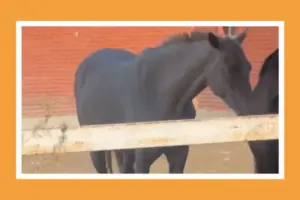
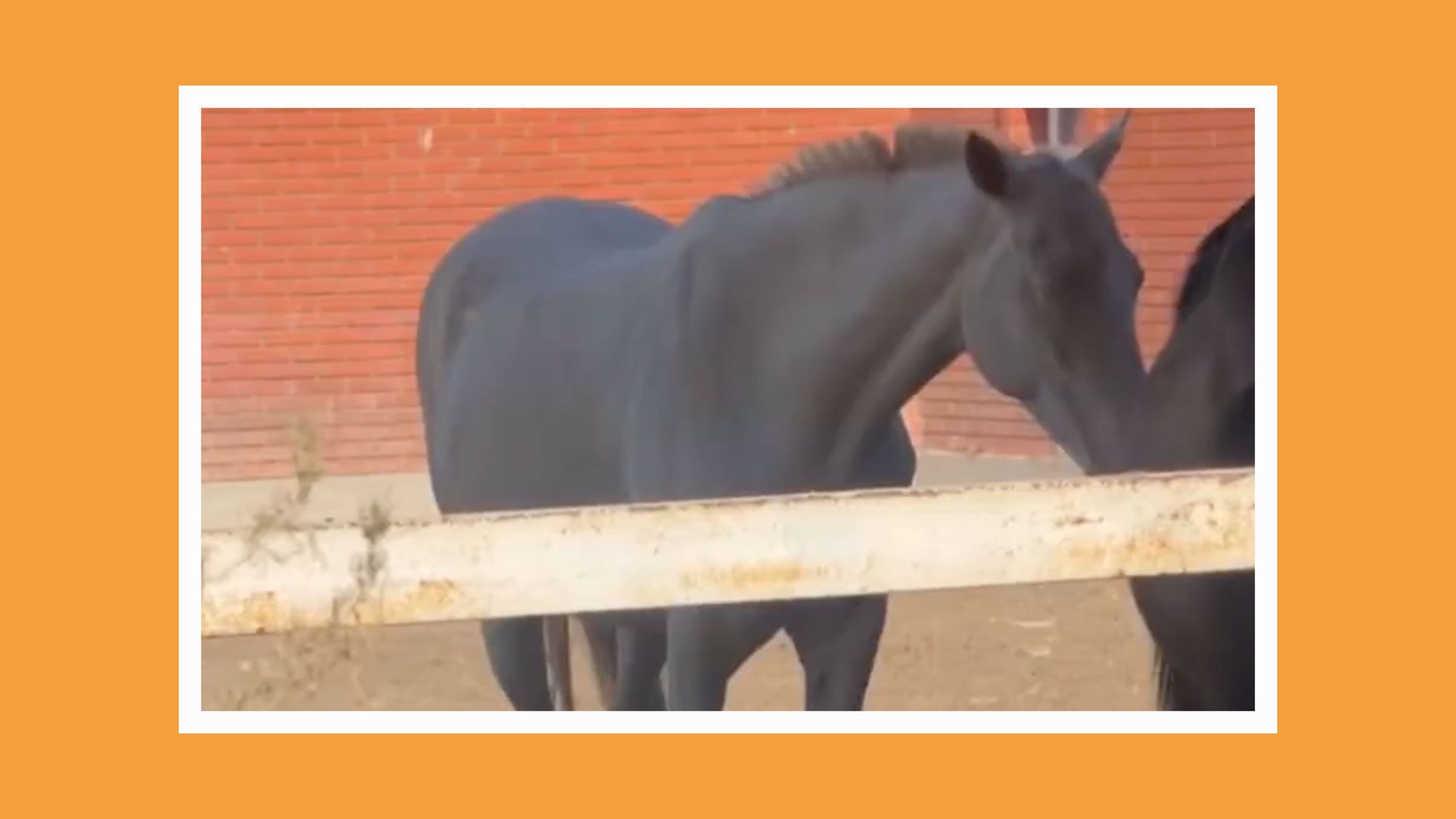
The internet has once again found itself deeply divided over a deceptively simple optical illusion—this time featuring a stable horse that is defying basic visual logic for thousands of viewers online. Amassing thousands of upvotes across Reddit’s vibrant r/opticalillusions community, a short video clip showing a horse standing inside a rustic stable has reignited age-old debates about how the human brain processes color, contrast, and ambient lighting.
At first glance, the animal appears undeniably dark—virtually pitch-black against the dimly lit interior of its enclosure. Yet, astonishingly, the horse is actually white. This profound perceptual contradiction has left scores of internet users utterly baffled, drawing immediate comparisons to historical viral phenomena such as "The Dress" (the legendary blue-and-black versus white-and-gold garment that fractured the internet in 2015) and the mind-bending "spinning horse" illusions of recent years.
This comprehensive report explores the neurological mechanics behind the viral shadow stallion, examines the internet’s collective fascination with lighting-based visual anomalies, and details the exact psychological hacks users are employing to flip their perception from darkness to light.
Detailed Chronology: From Reddit Submission to Global Visual Phenomenon
The journey of the viral white horse began on the popular social media aggregation platform Reddit, specifically within the community dedicated to visual anomalies and tricks of the mind.
Phase 1: The Initial Upload and First Impressions
A user uploaded a real-life video file depicting an everyday scene: a horse standing quietly inside a partially shaded stable. Almost immediately, the post gained traction as early viewers registered the animal’s coat as deep charcoal or jet black. Commenters expressed complete certainty that the video captured a dark-colored equine.
However, as the post climbed the subreddit’s algorithmic rankings—eventually securing over 4,500 upvotes—dissenting voices began to emerge. A subset of users insisted that the horse was, in fact, stark white. This claim was initially met with widespread skepticism, accusations of digital tampering, and playful disbelief from the majority who continued to perceive a dark silhouette.
Phase 2: The Epiphany and the Flip
As engagement surged, users who managed to "unlock" the true color of the horse began sharing troubleshooting steps. By cropping out the overly bright background or focusing intently on specific focal points within the stable, viewers reported a jarring cognitive shift.
- "I can no longer see it as a black horse, but at first it was as black as midnight," wrote one bewildered user.
- "Now it’s white and I can’t make it go back."
This sudden, irreversible shift in perception transformed the post from a standard media share into an interactive viral puzzle. Viewers began testing the video on friends, family members, and colleagues, documenting how different brains processed the exact same pixel data in diametrically opposed ways.
Supporting Context & Metrics: The Science of Perceptual Constancy
To understand why the internet is so deeply divided over a simple barnyard video, we must examine the physiological mechanisms of human sight. The phenomenon at play is heavily rooted in luminance adaptation and color constancy—the brain’s evolutionary attempt to interpret the true color of an object despite fluctuating environmental lighting conditions.
The Lighting Paradox
The core of the illusion lies in a high-contrast lighting setup. The background outside the stable is flooded with brilliant, direct sunlight, while the interior where the horse stands is cast in deep, heavy shadow.
When the human eye encounters a scene with extreme dynamic range (a massive difference between the brightest highlights and darkest shadows), the visual cortex attempts to normalize the image. Because the ambient light inside the stable is so low compared to the blazing sunlight just beyond the threshold, the brain misinterprets the reflected light bouncing off the horse’s coat. It assumes that the animal is absorbing light rather than reflecting it, leading to the erroneous conclusion that the coat is black.
The Parallels to "The Dress"
Visual perception experts note that this viral horse video operates on the exact same neurological principles that made Tumblr user Swiked’s photograph of a lace dress a global sensation a decade ago.
| Phenomenon | Primary Trigger | Neurological Mechanism | Community Reaction |
|---|---|---|---|
| The Dress (2015) | Ambiguous lighting on a garment | Brain misjudging whether the dress is in shadow or direct illumination | Widespread division (Blue/Black vs. White/Gold) |
| The Spinning Horse | Motion and silhouette ambiguity | Depth perception and directional rotation confusion | Fascination and debate over rotational direction |
| The Shadow Stallion | High-contrast stable lighting | Luminance adaptation and shadow masking | Initial perception of black, flipping to white via isolation techniques |
In both cases, the absence of contextual cues regarding the primary light source forces the brain to make an educated guess. Once the brain commits to a hypothesis (e.g., "this object is in deep shadow" versus "this object is inherently dark"), it filters all subsequent visual data through that assumption.
Expert Perspectives and Community Troubleshooting
As the debate intensified across social platforms, digital communities stepped up with user-generated solutions to help the visually stuck majority experience the intended illusion.
The Scroll Technique
Because the human brain relies heavily on peripheral context—specifically the blindingly bright outdoor sunlight—to misinterpret the horse’s coat, removing that context can force a perceptual reset.
- Method: Users recommend scrolling down the webpage or app interface until the upper portion of the video (including the bright background) is completely out of frame, leaving only the horse’s legs and lower body visible.
- Result: Stripped of the glaring contrast, the visual cortex recalibrates to the local illumination of the stable, instantly revealing the horse’s true white coat.
Focusing on the Ambient Shade
Another widely recommended strategy involves targeted fixation.
- Method: Viewers are instructed to ignore the animal as a whole and instead focus intensely on the nuanced gradients of light and shadow falling directly across the horse’s flanks and legs.
- Result: By analyzing the subtle highlights rather than the overall silhouette, the brain recognizes that the surface is actually reflecting a high volume of ambient light, signaling that the fur is light-colored.
For many, once this neurological lock is broken, it becomes mathematically impossible to return to the initial "black horse" interpretation—a testament to the plastic, adaptable nature of human visual processing.
Future Outlook: The Enduring Appeal of Visual Puzzles
The viral success of the shadow stallion underscores a broader cultural appetite for harmless, collaborative digital mysteries. In an era dominated by complex news cycles and digitally manipulated media, organic optical illusions offer a refreshing, democratic form of digital engagement. They remind internet users of the fascinating, quirky limitations of human biology.
As long as cameras struggle to capture the full dynamic range of the human eye—and as long as extreme lighting environments continue to trick our visual cortex—new variations of "The Dress" and the shadow stallion will inevitably surface.
For now, the debate over the stable horse remains active across Reddit and beyond. Whether you see a sleek black steed or a bright white horse standing in the shade, one thing is certain: our eyes can rarely be trusted at face value.
Have you managed to flip your perception of the shadow horse yet? Let us know which color you see first, and be sure to explore our archives for deep dives into past viral sensations, including the legendary rotating horse illusions that continue to captivate the design and creative communities.