Executive Overview
With the global release of Grand Theft Auto VI for the PlayStation 5 and Xbox Series X/S just under two weeks away, Rockstar Games has officially reached the apex of its promotional blitz. Pegged as arguably the most anticipated video game—and arguably the most hyped entertainment product—in human history, GTA VI is supported by an estimated global launch cycle marketing budget ranging between $200 million and $300 million.
While traditional campaigns lean heavily on cinematic trailers, gameplay deep-dives, and plastered character art of protagonists Lucia Caminos and Jason Duval, Rockstar has chosen a radically different path for a significant portion of its real-world presence. Rather than relying solely on conventional assets, the publisher is bringing the unhinged, satirical corporate ecosystem of Vice City directly into major metropolitan areas—most notably Miami, Florida.
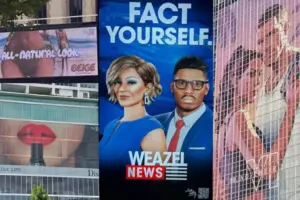
By erecting public kiosks, bus wraps, and digital billboards featuring fictional parody brands like Crowex, Beige Shapewear, Dix, Vice City Narcos, and Taco Bomb, Rockstar is intentionally bypassing real-world product placements. Instead, the company is doubling down on its signature social commentary. This bold strategy avoids marketing fatigue, blurs the line between fiction and reality, and sparks organic conversations across social media. This comprehensive report examines the mechanics, cultural implications, and genius of Rockstar’s unprecedented real-world advertising campaign.
Detailed Chronology: From Digital Teasers to Real-World Takeovers
The journey toward GTA VI’s impending launch has been historic, filled with monumental milestones that have kept the gaming community in a state of perpetual fervor. To understand the gravity of the current marketing blitz, one must contextualize the timeline of how Rockstar rolled out its real-world assault on public spaces:
1. The Initial Reveal and Key Art Phase
Following the record-shattering debut of the first GTA VI trailer, Rockstar maintained a calculated silence interspersed with periodic content drops. As the launch window grew closer, traditional key art began dominating urban landscapes globally. Billboards featuring Lucia and Jason appeared across major transit hubs in New York, London, Tokyo, and Los Angeles. Notably, a hand-painted mural in Brooklyn became an instant viral talking point when it was controversially "tagged" and altered, proving that even the collateral damage of GTA advertising generates massive cultural buzz.
2. The Miami Inundation (October 2026)
As the release date narrowed to weeks, the campaign shifted gears into localized guerrilla tactics. Tourists and residents in Miami—the real-world inspiration for Vice City—began spotting tour buses wrapped not just with game titles, but with ads for in-game corporations clearly mirroring modern consumer giants.
- Vice City Narcos spoofed the Miami Heat.
- Beige Shapewear directly targeted the cultural footprint of SKIMS.
- Crowex mocked luxury watchmaker Rolex.
- Taco Bomb offered a satirical nod to Taco Bell.
3. Public Kiosks and Wynwood Activations
By mid-to-late October 2026, commuters in artistic hubs like Miami’s Wynwood district noticed public digital kiosks cycling between mundane public announcements and bizarre, double-entendre-laden GTA VI advertisements. Slogans like "Always come early" (Kronos watches) and "Suddenly You Are Big Enough" (Kowalski jewelry) began appearing seamlessly alongside legitimate civic messaging. These displays relied on subtle formatting—featuring a modest GTA VI logo and a scannable QR code tucked discretely in the corner—forcing curious passersby to investigate further, thereby turning passive observers into active participants in the marketing ecosystem.
Supporting Context & Metrics: The Economics of Fictional Satire
To fully appreciate the scope of this campaign, one must evaluate the financial and psychological metrics driving Rockstar’s decisions. Industry analysts estimate that Rockstar’s parent company, Take-Two Interactive, is deploying a marketing war chest that could rival blockbuster cinematic releases like Avengers: Endgame or Avatar: The Way of Water.
Rejecting Trendjacking and Product Placements
In an era where "trendjacking"—where unrelated brands hastily inject themselves into viral internet moments (from Burger King to Shrek memes)—has become the norm, Rockstar has firmly closed its doors to real-world corporate collaborations.
- Zero Product Placement: Unlike competing titles that integrate real-world energy drinks, clothing lines, or automotive brands into their virtual spaces, Rockstar builds an entirely self-contained capitalist dystopia.
- Hundreds of Parody Brands: The game features hundreds of proprietary fictional companies. By keeping the economy entirely fictional, Rockstar retains absolute creative control over its satire, avoiding the dated aesthetics or legal liabilities tied to real-world brands.
The Psychology of Indirect Advertising
At first glance, spending millions of dollars on billboards for fictional items like Dix makeup or Juice Loose might seem counterintuitive. Traditional marketing theory demands clear calls to action: Buy this product now.
Rockstar’s approach, however, relies on curiosity-driven engagement:
- Avoiding Fatigue: Consumers have developed cognitive blindness toward standard video game marketing. By showing the setting rather than the product or gameplay loop, Rockstar completely circumvents advertising fatigue.
- Rewarding Lore Veterans: For longtime fans, seeing references to classic fictional entities like Ammu-Nation, Sprunk, eCola, or media networks like Weazel News acts as an exclusive inside joke. It fosters a deep sense of belonging and community.
- Onboarding Newcomers: For those unfamiliar with the franchise, the bizarre, unapologetically provocative nature of the ads breeds genuine confusion and intrigue. When a digital kiosk in Miami flashes an unhinged slogan with no immediate context, it drives social media shares, TikTok videos, and word-of-mouth speculation.
Official Statements and Industry Reception
While Rockstar Games has historically maintained an aura of quiet mystique—rarely giving traditional developer interviews or breaking character to explain their marketing philosophies—industry experts, advertising professionals, and community commentators have weighed heavily on the campaign.
Advertising critics have lauded the campaign as a masterclass in contextual environmental design. Marketing columnists noted that Rockstar’s ability to mirror real-world advertising tropes—down to the precise typography, color grading, and condescending corporate tone—proves that the studio’s writers possess a sociological understanding of modern consumerism that rivals professional advertising agencies.
Social media sentiment has been overwhelmingly positive. Viral posts documenting the Miami kiosks have racked up millions of impressions across X (formerly Twitter), Reddit, and TikTok. Commentators who previously worried that Rockstar might "tone down" its signature edgy humor due to contemporary cultural sensitivities were decisively silenced. As one viral post aptly summarized:
“From ‘Go Topless’ to ‘Suddenly You Are Big Enough,’ Rockstar is bringing Vice City’s unhinged humor straight into the real world. The double entendres, fake brands, and savage satire are STILL HERE.”
Furthermore, the integration of fictional media assets—such as promotional posters for the in-universe children’s cartoon Macca & Friends slated for "November 19 on Weazel"—demonstrates an extraordinary commitment to world-building. These aren’t merely advertisements for a video game; they are cultural artifacts imported from an alternate, hyper-caricatured version of America.
Future Outlook: The Legacy of GTA VI’s Marketing Blueprint
As the countdown clock ticks down to the official launch of Grand Theft Auto VI, the implications of Rockstar’s guerrilla marketing campaign extend far beyond the immediate sales figures—which are all but guaranteed to shatter global entertainment records.
Setting a New Standard for World-Building
Rockstar has proven that marketing can be an extension of the artistic medium itself. By treating the physical world as a canvas for Vice City’s corporate greed and absurdity, the publisher has dissolved the boundary between fiction and reality. Future AAA developers will undoubtedly study this campaign as a masterclass in how to generate authentic cultural hype without leaking gameplay spoilers or leaning on tired cinematic tropes.
The Post-Launch Ecosystem
Once GTA VI is finally in the hands of millions of players on PS5 and Xbox Series X/S, the fictional brands introduced on these Miami billboards will take on a life of their own. Players hunting for Easter eggs will scour the streets of Vice City to find the brick-and-mortar storefronts of Crowex, Taco Bomb, and Beige Shapewear. The real-world ads will transform from speculative teasers into nostalgic touchstones, cementing the universe’s depth.
Ultimately, Rockstar Games has executed a masterstroke. By refusing to compromise their satirical voice and by investing heavily in the rich, absurd lore of their fictional universe, they have achieved something extraordinary: they have made people excited not just to play a video game, but to step inside a living, breathing, brilliantly cynical world.