
Executive Overview
The modern consumer technology landscape is governed by an unyielding paradox: as electronic devices become more sophisticated, immersive, and expensive, their operational lifespans grow progressively shorter. This is nowhere more apparent than in the multi-billion-dollar wireless earbud market. Dominated by mainstream giants like Apple, Samsung, and Sony, the industry has long relied on a business model of built-in obsolescence. Because wireless earbuds are sealed shut with industrial-grade adhesives and ultrasonic welds, their internal lithium-ion batteries cannot be replaced.
When a battery degrades after two or three years of daily charging cycles—losing its capacity to hold a charge—the entire device is rendered useless. Millions of pristine audio drivers, advanced microchips, and complex acoustic housings are routinely discarded, ending up in overflowing landfills.
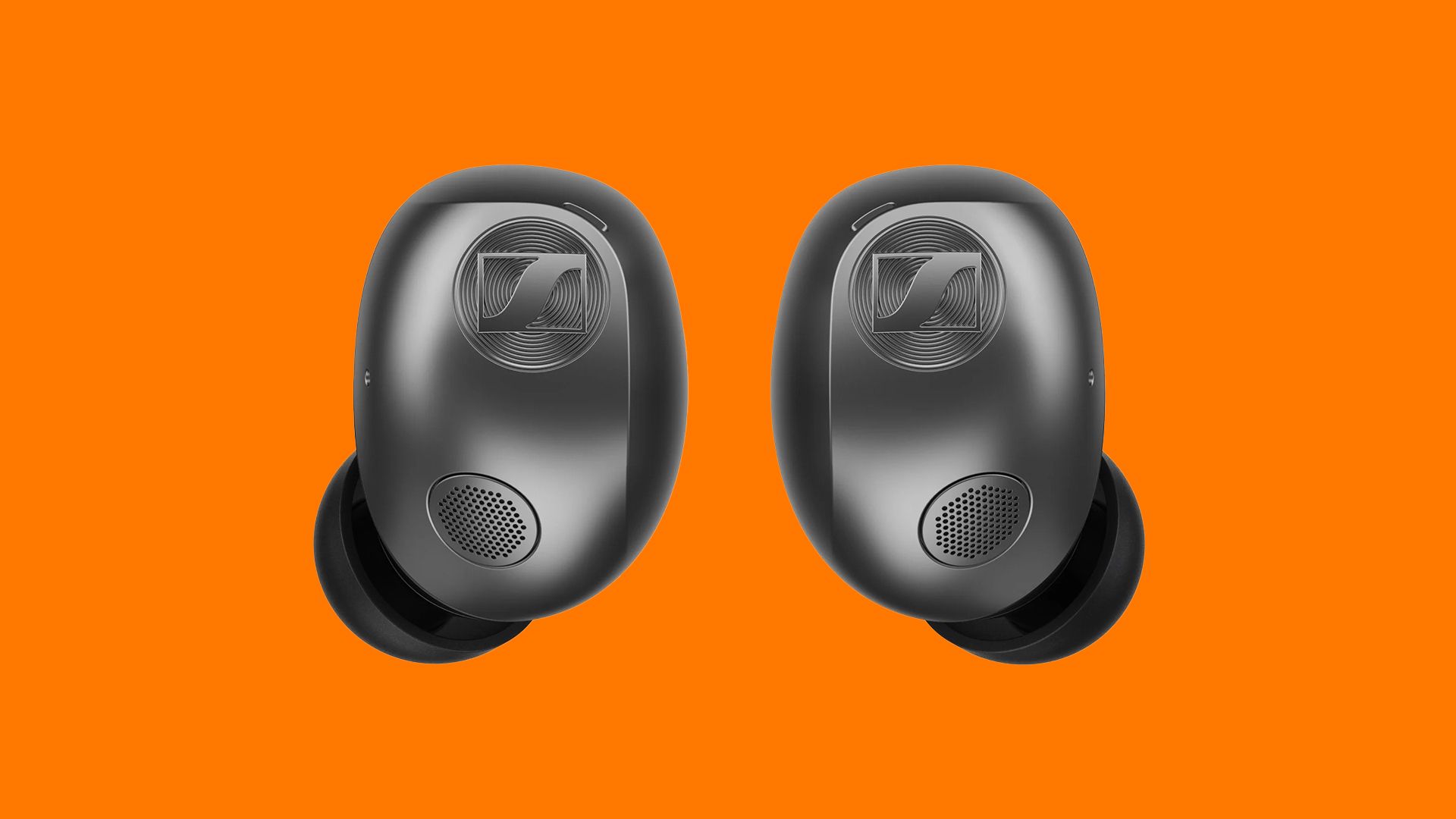
Amidst this culture of disposable electronics, German audio specialist Sennheiser has introduced a disruptive paradigm shift. The newly announced Sennheiser Momentum True Wireless 5 introduces a rare and radical design philosophy to the high-end audio market: user-replaceable batteries.
Priced to compete directly with flagship models like Apple’s AirPods Pro, these premium inner-ear monitors (IEMs) allow users to swap out depleted power cells in both the earbuds and the charging case using nothing more than a small screwdriver. By marrying uncompromising, audiophile-grade sound quality, advanced Active Noise Cancellation (ANC), and modular repairability, Sennheiser is challenging the industry status quo and offering a sustainable blueprint for the future of personal audio.
Detailed Chronology: The War on Repairability and the Rise of Modular Audio
To understand why the release of the Sennheiser Momentum True Wireless 5 represents a watershed moment for consumer technology, it is necessary to examine the historical trajectory of personal audio and the systemic design choices that have defined the past decade.
2016–2019: The Wireless Revolution and the Sealed Design Standard
When Apple introduced the original AirPods in 2016, the tech industry scoffed at first, only to swiftly follow suit. The removal of the 3.5mm headphone jack catalyzed an unprecedented migration toward Bluetooth-enabled true wireless stereo (TWS) earbuds. Consumers embraced the untethered freedom, but this convenience came with a hidden structural cost.
Engineers realized that miniaturizing Bluetooth chips, digital-to-analog converters (DACs), microphones, and batteries into an enclosure small enough to fit inside the human ear canal required extreme spatial efficiency. To achieve water resistance and a seamless aesthetic, manufacturers universally adopted unibody plastic construction sealed shut with industrial epoxy. The internal lithium-ion batteries were soldered directly to microscopic circuit boards. Repairability was sacrificed entirely on the altar of sleek form factors and waterproofing.
2020–2022: Right-to-Repair Pressure and Consumer Backlash
As millions of first-generation wireless earbuds began to experience severe battery degradation, environmental watchdog groups and tech repair advocates—most notably iFixit—began calling out consumer electronics giants. Right-to-Repair legislation gathered momentum across the European Union and several U.S. states.
In 2022, facing mounting public pressure, Apple launched its self-service repair program for iPhones, allowing consumers to purchase official tools and components. However, this gesture conspicuously bypassed AirPods. Teardowns confirmed that attempting to open an AirPod casing required destroying the plastic housing, making battery swaps virtually impossible for everyday consumers.
2023: Hackers Take Matters into Their Own Hands
The consumer frustration manifested in creative, albeit impractical, ways. In 2023, independent hardware hackers and DIY electronics enthusiasts captured global attention by designing homemade, fully repairable versions of popular wireless earbuds. While these grassroots engineering projects proved that modular wireless audio was technically feasible, they required specialized soldering skills, custom 3D-printed parts, and equipment unavailable to the average consumer. The market was crying out for an enterprise-level manufacturer to solve the problem commercially.
2024–2026: The Niche Emergence of Modular Alternatives
Realizing the growing consumer demand for sustainable tech, niche brands began testing the waters. Ethical tech pioneer Fairphone introduced the Fairbuds, pioneering modular, coin-cell batteries that could be replaced without specialized tools. While celebrated for their eco-conscious engineering, the Fairbuds targeted the mid-tier market and could not compete with the high-fidelity acoustic performance demanded by audiophiles.
Concurrently, mainstream flagships continued to double down on unrepairable designs. Apple’s ongoing iterations of the AirPods Pro prioritized miniaturization and spatial computing features over longevity, leaving a massive void at the top end of the market for a device that offered uncompromised premium sound and sustainability.
Today: Sennheiser Changes the Game
With the launch of the Momentum True Wireless 5, Sennheiser has bridged the gap between luxury high-fidelity audio and sustainable engineering. By successfully engineering a screw-based, user-accessible battery compartment into a premium, sweat-resistant, audiophile-grade earbud, Sennheiser has established a new benchmark for the entire industry.
Supporting Context & Metrics: The Scale of Electronic Waste and Audio Performance
The Global E-Waste Crisis
To fully grasp the significance of Sennheiser’s design choice, one must examine the staggering scale of global electronic waste (e-waste). According to the Global E-waste Monitor, the world generates over 50 million metric tons of e-waste annually, a figure projected to climb steeply. Small consumer electronics, including wireless earbuds, Bluetooth speakers, and fitness trackers, contribute disproportionately to this crisis.
Because lithium-ion batteries have a finite lifespan—typically enduring between 300 and 500 charge cycles before dropping below 80% capacity—hundreds of millions of wireless earbuds become electronic garbage every few years.
- Average Lifespan: Standard non-repairable TWS earbuds last between 24 to 36 months under regular daily usage.
- Economic Impact: Consumers are forced into a continuous subscription-like upgrade cycle, repurchasing $200–$300 devices every few years simply because the chemical energy storage medium failed, while the primary audio hardware remains entirely functional.
- Environmental Toll: Extracting rare earth metals such as lithium, cobalt, and nickel for single-use electronics accelerates ecological degradation and carbon emissions.
Technical Specifications of the Sennheiser Momentum True Wireless 5
Beyond their repairability, the Momentum True Wireless 5 are engineered to stand shoulder-to-shoulder with the finest flagship earphones on the market, ensuring that consumers do not have to compromise on audio fidelity in the name of sustainability.
- Acoustic Transducers: Equipped with Sennheiser’s proprietary high-fidelity TrueResponse transducers, delivering a wide soundstage, deep bass response, and crystal-clear highs.
- Immersive Audio: Features native 3D Dolby Atmos sound support, transforming spatial audio consumption for movies, games, and compatible music streams.
- Active Noise Cancellation (ANC): Powered by an adaptive hybrid ANC system that dynamically adjusts to ambient environmental noise in real-time.
- Smart Communications: Integrates AI-powered voice isolation algorithms and automatic wind-reduction technology to ensure pristine call quality even in adverse weather conditions.
- Codec Support: Includes high-resolution Lossless codec options, catering directly to audiophiles streaming uncompressed tracks via platforms like Tidal and Apple Music Lossless.
- Battery Longevity & Ecosystem: Offers an impressive 40 hours of total playback time when utilizing the redesigned, quick-charge-compatible carrying case. The accompanying Smart Control Plus app provides deep parametric EQ customization and acoustic personalization.
- Ergonomics: Features a refined, lighter ergonomic chassis designed to fit a broader range of ear shapes securely during workouts and extended listening sessions.
Official Statements and Industry Perspective
Sennheiser’s engineering team approached the development of the Momentum True Wireless 5 with a clear mandate: challenge the throwaway culture of modern consumer electronics without sacrificing the acoustic excellence that defines the brand.
"For too long, the consumer audio industry has accepted a false dichotomy: you can either have a sleek, premium, high-performance product that is sealed and disposable, or you can compromise on audio engineering to achieve modularity," noted a lead product manager during the global launch briefing. "With the Momentum True Wireless 5, our acoustic engineers proved that premium high-fidelity sound and sustainable, user-centric repairability can coexist in a single form factor."
Industry analysts have responded with cautious optimism, noting that while the feature represents a monumental leap forward, its long-term market impact will depend heavily on consumer awareness and the availability of replacement parts.
"Sennheiser has thrown down the gauntlet," says tech market analyst Marcus Vance. "Consumers are increasingly fatigued by planned obsolescence. When a buyer spends three hundred dollars on a pair of earbuds, they expect more than a three-year expiration date. If Sennheiser makes replacement batteries affordable and readily accessible, competitors like Apple, Sony, and Bose will face immense consumer pressure to justify their own sealed designs."
Environmental advocates have similarly lauded the move, pointing out that shifting even a fraction of the premium earbud market toward user-replaceable power cells could divert metric tons of toxic lithium-ion waste from landfills annually.
Future Outlook: Will Apple and Other Giants Follow Suit?
The introduction of the Sennheiser Momentum True Wireless 5 raises a critical question for the immediate future of consumer technology: Will industry heavyweights be forced to abandon sealed designs?
Historically, Apple and other dominant ecosystem players have resisted modularity under the banner of maintaining ultra-compact form factors and robust water-resistance ratings (such as IP57 or IPX4). Designing a watertight seal around a screw-access battery door adds engineering complexity and manufacturing overhead. Furthermore, from a purely financial perspective, planned obsolescence ensures a steady, predictable stream of hardware upgrade cycles.
However, the regulatory landscape is shifting beneath manufacturers’ feet. The European Union’s aggressive Right-to-Repair directives, alongside emerging legislation in various global markets, are progressively dismantling the legal loopholes that allow companies to manufacture sealed, unserviceable electronics. Brands that proactively engineer modularity into their flagships—much like Sennheiser has done with the Momentum True Wireless 5 and Fairphone with the Fairbuds—will likely find themselves uniquely positioned to capture the loyalty of an increasingly eco-conscious consumer base.
As we look toward the horizon, the true measure of success for Sennheiser’s initiative will not merely be the critical acclaim of these earbuds upon release, but the operational execution of their spare parts supply chain. If replacement batteries remain cheap, easy to order, and simple to install over a five-to-ten-year product lifecycle, the Momentum True Wireless 5 will be remembered not just as a great pair of headphones, but as the moment the consumer audio industry finally grew up.