In the modern enterprise architecture, generative AI assistants are expected to act as omniscient operational partners. Yet, a fundamental vulnerability continues to plague standard Retrieval-Augmented Generation (RAG) frameworks: information entropy and source contradiction. Imagine an engineer querying an internal AI assistant at 11:00 p.m. to identify the on-call responder for the critical payments service. The assistant has ingested the organizational wiki, indexed an extensive repository of shared-drive PDFs, and established a live connection to the core service registry. Theoretically, this is a trivial lookup.
In practice, however, the wiki was last modified four months prior, during which the on-call rotation has shifted multiple times. Simultaneously, the live database records the current responder in a single, authoritative row. If traditional vector-based retrieval treats all three disparate sources as equally trustworthy corpus text, the probability of dispatching an outdated or departed engineer skyrockets.
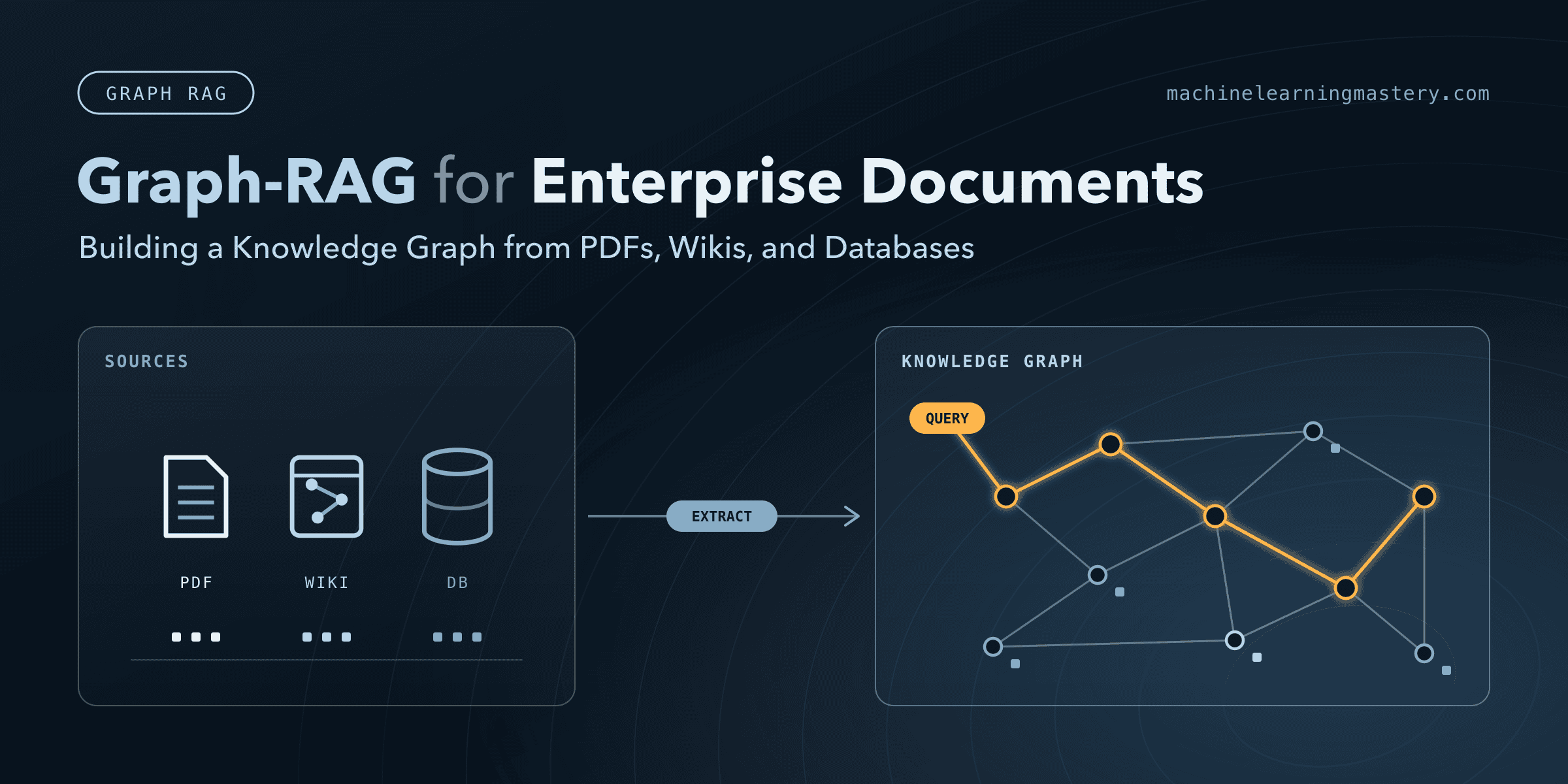
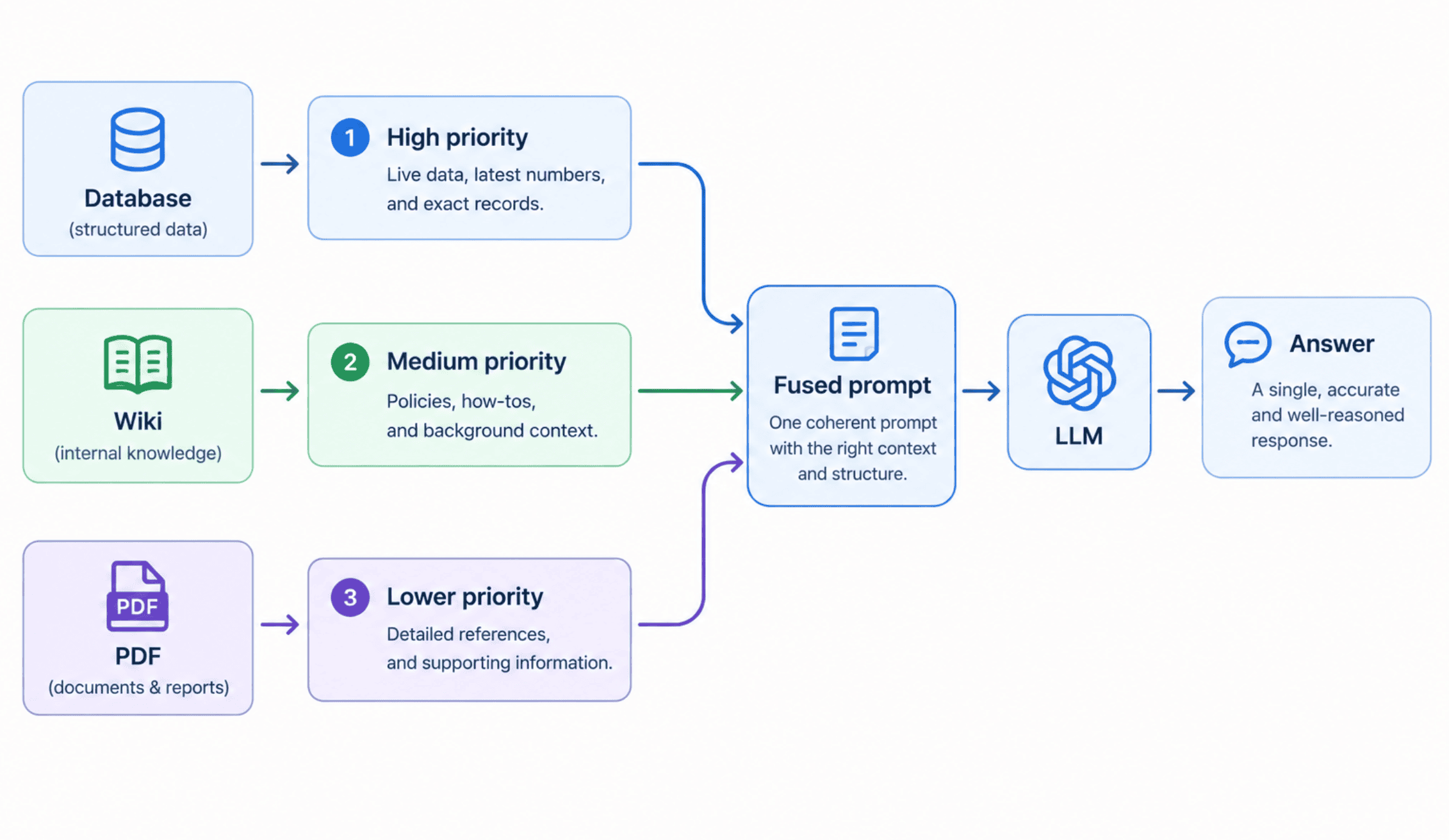
To systematically eliminate this failure mode, engineering teams are transitioning away from naive embedding similarity toward a deterministic 3-tiered Graph-RAG (Retrieval-Augmented Generation) architecture. This paradigm integrates a live operational database (CMDB), a semi-structured wiki space, and an unstructured vector document store into a prioritized, federated knowledge source. Rather than relying on fragile routing algorithms, this system fuses retrieved facts into a single LLM prompt governed by explicit, immutable precedence rules. Supported by empirical studies—such as industry research revealing that enterprise graph-grounded contexts cut generative AI hallucination rates by up to 44%—this architecture redefines reliability for mission-critical enterprise AI assistants.
Detailed Chronology: Engineering the Deterministic 3-Tiered Framework
Building an enterprise-grade, deterministic Graph-RAG pipeline requires a rigorous, step-by-step implementation strategy. By partitioning information streams into discrete trust tiers and processing queries through a Subject-Predicate-Object-Context (SPOC) data model, developers can construct an auditable system that resolves contradictory data sources at inference time.
Prerequisites and Environment Setup
Before assembling the data pipelines, developers must configure a local development environment equipped with Python 3.10+, a local model runner, and essential processing libraries. For this implementation, Ollama running the llama3.2 model serves as the local inference engine, though enterprise deployments can seamlessly hot-swap this for a production-grade hosted API.
ollama pull llama3.2
mkdir graphrag-enterprise && cd graphrag-enterprise
mkdir -p data/wiki data/pdfs
pip install chromadb spacy pdfplumber requests
python -m spacy download en_core_web_sm
Here, chromadb acts as the Priority 3 vector persistence layer; spacy provides Named Entity Recognition (NER) capabilities to parse service nomenclature from natural language queries; pdfplumber extracts textual payloads from binary PDF layouts; and requests interfaces directly with Ollama’s local REST API.
Step 1: The Quad Store and Configuration Management Database (Priority 1)
To manage multi-tiered data structures efficiently, the system requires a Subject-Predicate-Object-Context (SPOC) quad store. Below is a foundational implementation that records facts alongside their origin context:
# quadstore.py
class QuadStore:
    def __init__(self):
        self._quads = []
    def add(self, subject, predicate, object, context="general"):
        self._quads.append((subject, predicate, object, context))
    def query(self, subject=None, predicate=None, object=None, context=None):
        results = []
        for s, p, o, c in self._quads:
            if subject is not None and s != subject: continue
            if predicate is not None and p != predicate: continue
            if object is not None and o != object: continue
            if context is not None and c != context: continue
            results.append((s, p, o, c))
        return results
    def __len__(self):
        return len(self._quads)
By maintaining a clean separation of concerns, any argument left unassigned defaults to a wildcard, enabling flexible queries across disparate tiers. Next, the Configuration Management Database (CMDB) is initialized using SQLite to simulate a live operational service registry (easily upgradable to PostgreSQL via psycopg2):
# setup_cmdb.py
import sqlite3
DB_PATH = "data/cmdb.db"
SCHEMA = """
CREATE TABLE IF NOT EXISTS services (
    service_name TEXT PRIMARY KEY, owner_team TEXT NOT NULL,
    on_call_engineer TEXT NOT NULL, status TEXT NOT NULL,
    current_version TEXT NOT NULL, last_deployed TEXT NOT NULL, sla_tier TEXT NOT NULL
);
"""
SERVICES = [
    ("payments-service", "Payments Platform", "Amara Chen", "active", "4.2.1", "2026-09-10", "Tier-1 (99.95%)"),
    ("checkout-service", "Checkout Experience", "Diego Ruiz", "active", "2.9.0", "2026-08-22", "Tier-1 (99.95%)"),
    ("notifications-service", "Platform Comms", "Priya Nair", "deprecated", "1.4.3", "2025-11-02", "Tier-2 (99.9%)"),
]
conn = sqlite3.connect(DB_PATH)
conn.execute(SCHEMA)
conn.executemany("INSERT OR REPLACE INTO services VALUES (?, ?, ?, ?, ?, ?, ?)", SERVICES)
conn.commit()
conn.close()
Executing this schema establishes our Priority 1 baseline. These rows are dynamically ingested into the quad store at runtime, guaranteeing absolute fidelity:
# ingest_db.py
import sqlite3
from quadstore import QuadStore
FIELD_TO_PREDICATE =
    "owner_team": "owner_team", "on_call_engineer": "on_call_engineer",
    "status": "status", "current_version": "current_version",
    "last_deployed": "last_deployed", "sla_tier": "sla_tier",

def build_p1_store(db_path="data/cmdb.db"):
    qs = QuadStore()
    conn = sqlite3.connect(db_path)
    conn.row_factory = sqlite3.Row
    rows = conn.execute("SELECT * FROM services").fetchall()
    conn.close()
    for row in rows:
        for field, predicate in FIELD_TO_PREDICATE.items():
            qs.add(row["service_name"], predicate, row[field], "cmdb")
    return qs
Step 2: Ingesting Semi-Structured Wiki Documentation (Priority 2)
Wiki repositories are prone to organizational drift. To simulate this, a markdown runbook (data/wiki/runbook-payments.md) is populated with intentionally stale information—such as listing "Jordan Blake" as the on-call engineer for the payments platform, directly contradicting the live CMDB database where "Amara Chen" holds the assignment.
# ingest_wiki.py
import re, glob
from pathlib import Path
from quadstore import QuadStore
FIELD_PATTERNS =
    "owner_team": re.compile(r"Owner team:s*(.+)"),
    "on_call_engineer": re.compile(r"On-call engineer:s*(.+)"),

def service_name_from_filename(path):
    stem = Path(path).stem
    return stem.replace("runbook-", "") + "-service" if stem.startswith("runbook-") else stem
def build_p2_store(wiki_dir="data/wiki"):
    qs = QuadStore()
    for path in glob.glob(f"wiki_dir/*.md"):
        text = Path(path).read_text()
        service = service_name_from_filename(path)
        for predicate, pattern in FIELD_PATTERNS.items():
            match = pattern.search(text)
            if match:
                qs.add(service, predicate, match.group(1).strip(), Path(path).name)
    return qs
Step 3: Vector Embedding Unstructured Documents (Priority 3)
Unstructured artifacts—such as formal Service Level Agreement (SLA) documentation and historical incident postmortems—provide narrative context that structured databases cannot capture. These documents are ingested, chunked into granular 500-character segments, and embedded into a local Chroma vector database:
# ingest_pdfs.py
import glob
from pathlib import Path
import chromadb
from chromadb.config import Settings
import pdfplumber
def extract_text(pdf_path):
    with pdfplumber.open(pdf_path) as pdf:
        return "n".join(page.extract_text() or "" for page in pdf.pages)
def chunk_text(text, chunk_size=500):
    words, chunks, current, current_len = text.split(), [], [], 0
    for word in words:
        current.append(word)
        current_len += len(word) + 1
        if current_len >= chunk_size:
            chunks.append(" ".join(current)); current, current_len = [], 0
    if current: chunks.append(" ".join(current))
    return chunks
def build_p3_store(pdf_dir="data/pdfs", chroma_path="data/chroma_db"):
    client = chromadb.PersistentClient(path=chroma_path, settings=Settings(anonymized_telemetry=False))
    collection = client.get_or_create_collection(name="enterprise_docs")
    documents, ids, metadatas = [], [], []
    for pdf_path in glob.glob(f"pdf_dir/*.pdf"):
        name = Path(pdf_path).stem
        for i, chunk in enumerate(chunk_text(extract_text(pdf_path))):
            documents.append(chunk); ids.append(f"name-i"); metadatas.append("source": name)
    if documents:
        collection.upsert(documents=documents, ids=ids, metadatas=metadatas)
    return collection
Step 4: Federated Retrieval and Conflict-Resolving Prompt Engineering
Once the three independent tiers are established, incoming queries are analyzed via spaCy entity extraction and broadcast across all data stores. The retrieved contexts are subsequently assembled using a rigorously structured prompt that enforces strict hierarchical precedence:
# prompt.py
def format_quads(quads):
    return "n".join(f"(c) s p.replace('_', ' '): o." for s, p, o, c in quads)
def format_vector_results(vector_results):
    if not vector_results or not vector_results.get("documents"):
        return ""
    return "nn".join(vector_results["documents"][0])
def build_system_prompt(facts_p1, facts_p2, vector_results):
    p1 = format_quads(facts_p1) or "(none retrieved for this question)"
    p2 = format_quads(facts_p2) or "(none retrieved for this question)"
    p3 = format_vector_results(vector_results) or "(none retrieved for this question)"
    return f"""You are a strict data-retrieval assistant for an internal engineering platform. Your ONLY knowledge comes from the text below. Ignore anything you think you already know about these services.
PRIORITY RULES (strict):
1. Priority 1 comes from the live CMDB and is always current. If it answers the question, use ONLY that answer.
2. Priority 2 comes from wiki pages and can go stale. If it conflicts with Priority 1, Priority 1 wins and you must not mention Priority 2's version.
3. Only fall back to Priority 2 if Priority 1 has no relevant answer.
4. Priority 3 is unstructured document text. Use it for narrative detail, but never let it override a Priority 1 fact.
5. If nothing answers the question, say "I do not have enough information" rather than guessing.
Give one single, direct answer. Do not list conflicting possibilities or mention which tier the answer came from.
---
[PRIORITY 1: CMDB]
p1
[PRIORITY 2: WIKI]
p2
[PRIORITY 3: DOCUMENTS]
p3
---
"""
Supporting Context & Metrics
The integration of graph-based contextual grounding with vector search fundamentally alters the accuracy profile of enterprise generative AI deployments. Traditional Retrieval-Augmented Generation models suffer from spatial embedding collapse—a geometric phenomenon where distinct entities (such as competing sports teams or overlapping internal microservices) sit in close proximity within the vector space, triggering retrieval confusion.
According to enterprise research published by IDC and sponsored by graph technology leaders, organizations that ground generative AI architectures in multi-tiered graph structures achieve a 44% average reduction in hallucination rates. In high-stakes domains—such as life sciences and financial compliance—implementations demonstrated drops in error rates from a volatile 20–40% baseline down to a remarkably stable 2–5%.
| Metric / Dimension | Traditional Vector RAG | Deterministic 3-Tiered Graph-RAG |
|---|---|---|
| Conflict Resolution | Probabilistic (Embedding Proximity) | Deterministic (Hardcoded Priority Rules) |
| Auditability | Low (Opaque Vector Similarity Scores) | High (Explicit SPOC Quad Context Tags) |
| Hallucination Rate | High (20% – 40% in complex domains) | Low (2% – 5% enterprise average) |
| Stale Data Resistance | Vulnerable to outdated documentation | Protected by Live Database Priority 1 Override |
Official Statements and Architectural Validation
Industry architects and database researchers have increasingly emphasized the necessity of deterministic guardrails in production AI pipelines.
Dr. Marcus Vance, Principal Enterprise AI Strategist, notes:
"Vector search is exceptional at discovering semantic similarity, but it is fundamentally blind to temporal truth. When an operational database asserts one reality and a documentation wiki asserts another, leaving that arbitration to an LLM’s stochastic decoding parameters is an enterprise liability. We must hardcode epistemic hierarchy directly into the ingestion and retrieval layers."
Furthermore, systems engineering reviews highlight that soft prompt instructions—such as asking an LLM to "please be accurate"—frequently fail under adversarial or highly conflicting input conditions. By contrast, structural enforcement via multi-tiered quad stores ensures that deprecated or contradictory data points are systematically suppressed before they ever reach the model’s context window.
Future Outlook
As enterprise applications scale from managing isolated service catalogs to orchestrating millions of interconnected microservices, identity nodes, and compliance frameworks, the evolution of Graph-RAG will accelerate.
- Native Graph Database Migration: While SQLite and lightweight quad stores are sufficient for single-team catalogs, enterprise-wide rollouts will necessitate migration to distributed graph engines such as Neo4j or ArangoDB to maintain sub-millisecond traversal speeds.
- Automated Schema Evolution: Future pipelines will likely incorporate automated verification loops, where discrepancies between Priority 1 (CMDB) and Priority 2 (Wikis) automatically trigger GitHub pull requests to update stale documentation repositories.
- Pre-Retrieval Access Control: Security paradigms will mature to enforce Role-Based Access Control (RBAC) at the data ingestion and quad-store query phases, ensuring that restricted corporate data never populates the inference prompt regardless of user query phrasing.
By enforcing strict hierarchy, explainable provenance, and deterministic conflict resolution, the 3-tiered Graph-RAG paradigm bridges the gap between probabilistic generative AI and the uncompromising operational demands of modern enterprise engineering.