Executive Overview
For millions of city dwellers, the ambient energy of metropolitan life comes with an invisible, lingering tax: poor indoor and outdoor air quality. Whether transitioning from the pristine, tree-lined expanses of the countryside or navigating a lifetime of urban living, residents quickly learn that the romanticized hustle of the city smells distinctly of exhaust fumes, industrial particulate matter, and urban dust. While air purifiers have long been championed by health professionals as vital appliances for mitigating allergens, asthma triggers, and microscopic pollutants, they have historically suffered from a major design flaw: they are traditionally absolute eyesores.
For decades, the standard air purifier was engineered with a strict adherence to function over form. These machines typically manifested as bulky, clinical plastic towers or industrial white boxes that felt more at home in a hospital ward, dentist’s office, or sterile laboratory than in a carefully curated living room. For design-conscious homeowners—those who meticulously balance mid-century modern furniture, curated art prints, and bespoke lighting—introducing one of these uninspired, monolithic oblongs into a thoughtfully styled space has long felt like an interior design compromise.
However, a cultural shift is underway. As wellness and home aesthetics increasingly intersect, manufacturers are finally waking up to the demands of modern interior design. Today, a new wave of air purifiers is hitting the market, proving that health technology no longer needs to be hidden behind the sofa. This comprehensive report explores the evolution of the air purification market, the marriage of high-performance filtration and cutting-edge industrial design, and how the latest generation of purifiers is redefining what wellness appliances look like in our homes.
Detailed Chronology: From Industrial Utility to Home Decor
To understand why the aesthetic revolution of air purifiers is so significant, we must examine how these devices evolved from utilitarian machinery into consumer lifestyle products.
Phase 1: The Industrial Roots (Mid-20th Century)
The foundational technology behind modern air purification—High-Efficiency Particulate Air (HEPA) filtration—was born out of necessity during the 1940s Manhattan Project. Developed to trap radioactive particulate matter and protect scientists handling hazardous materials, early air filtration systems were massive, loud, and strictly industrial. For decades, these technologies remained confined to cleanrooms, hospitals, and manufacturing plants.
Phase 2: The Medicalized Consumer Market (1980s–2000s)
As airborne allergies, asthma rates, and urban pollution gained greater medical attention in the late 20th century, companies began scaling down HEPA technology for home use. Unfortunately, industrial design principles followed them. The consumer market was flooded with medical-grade white-goods: heavy, ribbed plastic shells, humming AC motors, and flashing control panels that shouted "allergy treatment center" rather than "cozy sanctuary." These machines were purchased out of medical necessity, tucked quietly into corners, and promptly ignored or hidden away when guests visited.
Phase 3: The Smart Home Disruption (2010s)
The advent of the smart home era brought the first major design pivot. Brands like Dyson revolutionized the appliance market by reimagining the fan and the purifier as sleek, bladeless towers. While these devices were undeniably futuristic and a massive step up from traditional plastic boxes, they still leaned heavily into a high-tech, minimalist aesthetic. They looked like props from a sci-fi film—impressive and conversation-starting, but sometimes too imposing or sterile for warm, bohemian, maximalist, or rustic interior schemes.
Phase 4: The Aesthetic Renaissance (Present Day)
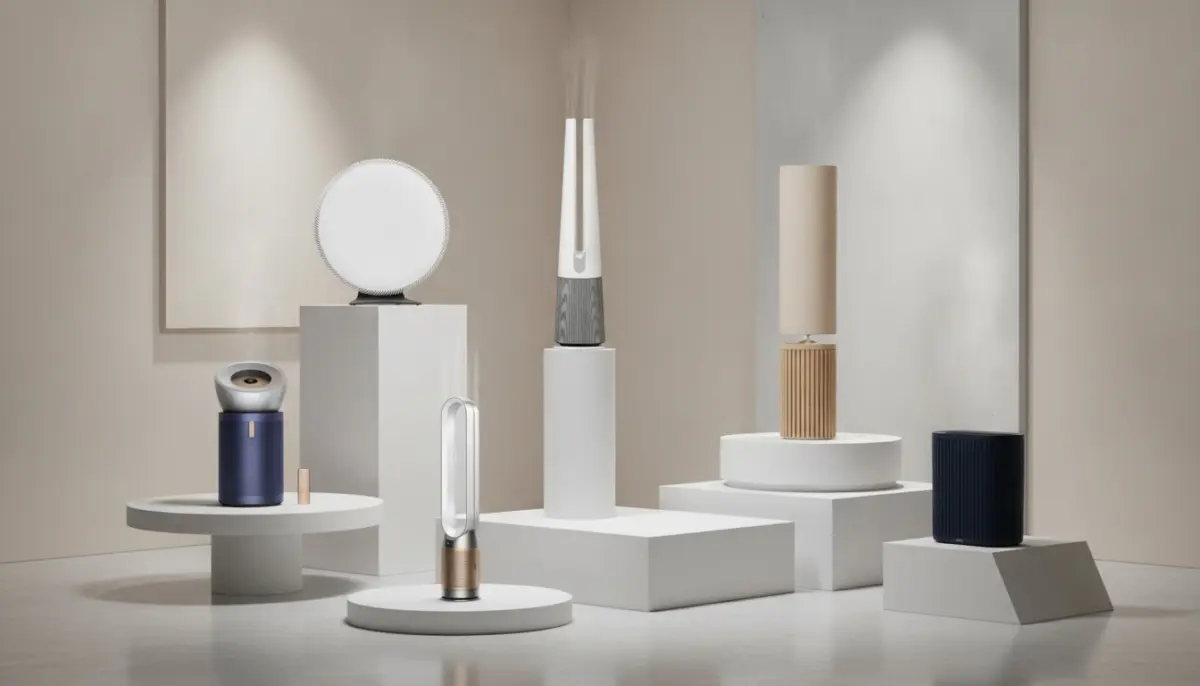
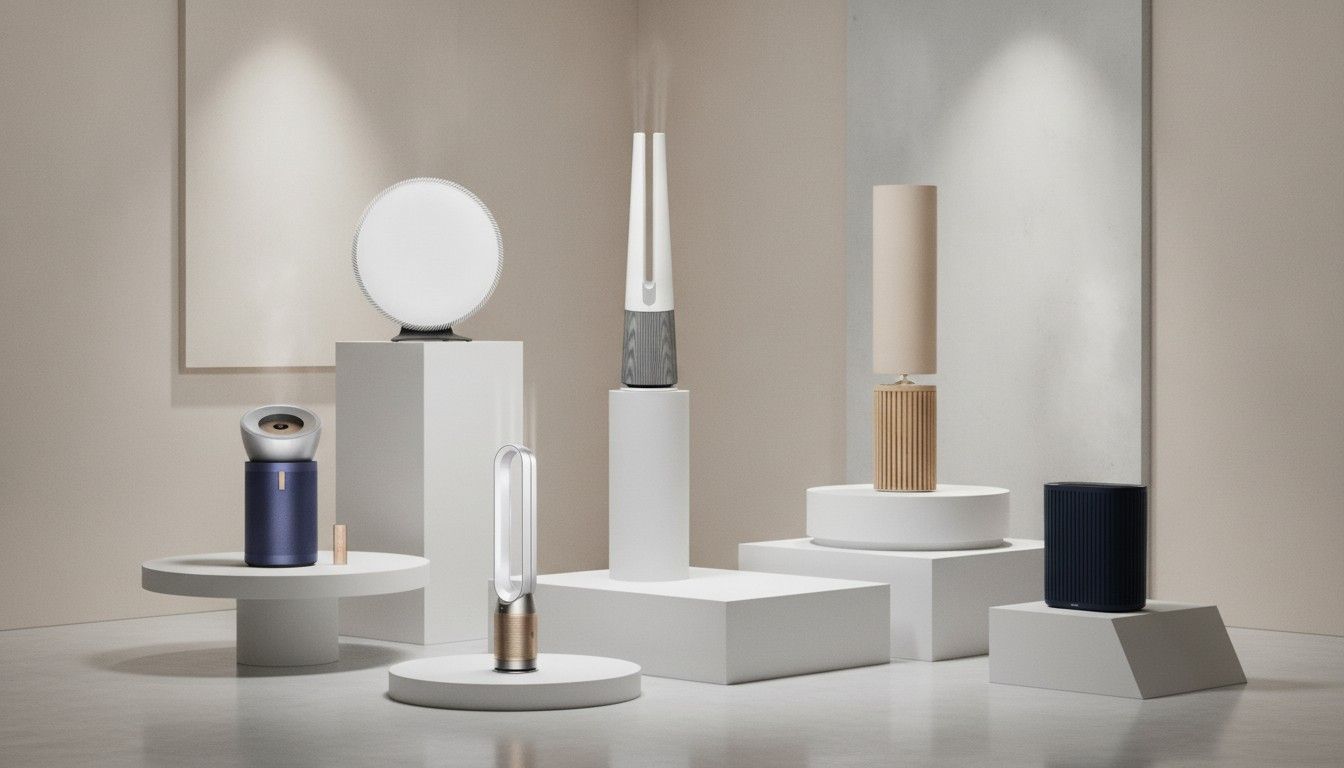
Today, we are witnessing the fourth phase of this evolution: the complete integration of wellness technology into interior design trends. Manufacturers are collaborating with industrial designers and home decor experts to create appliances that double as sculptural objects. Utilizing matte finishes, natural materials like wood and woven fabrics, subtle color palettes, and organic silhouettes, contemporary air purifiers are designed to complement—rather than compromise—high-end interior spaces.
Supporting Context & Metrics: The Intersection of Health, Architecture, and Design
The demand for better-looking air purifiers is driven by significant shifts in consumer behavior, environmental awareness, and real estate trends.
The Urban Air Quality Crisis
According to data from the World Health Organization (WHO), an overwhelming majority of the global urban population lives in areas where air quality fails to meet recommended safety guidelines. Fine particulate matter (PM2.5), nitrogen dioxide, and volatile organic compounds (VOCs) regularly infiltrate homes through ventilation systems, open windows, and everyday household activities like cooking and cleaning. Consequently, the global air purifier market has experienced explosive growth, expanding into a multi-billion-dollar industry as consumers seek refuge in their indoor sanctuaries.
The Rise of Wellness Architecture and Biophilic Design
Concurrently, the interior design landscape has experienced a monumental shift toward wellness architecture and biophilic design—a concept that seeks to connect building occupants more closely to nature. Over the past few decades, trends have moved away from cold minimalism toward spaces that foster mental wellbeing. Homeowners are investing heavily in organic textures, earthy color schemes, and natural light.
Within this framework, a bulky, whirring plastic box stands out like a sore thumb. As interior design trends increasingly prioritize holistic living, the pressure has mounted on appliance manufacturers to align their visual language with contemporary decor. Consumers no longer want to choose between breathing clean air and maintaining a visually cohesive home; they demand both.
Official Statements and Industry Insights
Design critics and industry insiders have increasingly spoken out about the necessity of bridging the gap between appliance functionality and interior aesthetics.
"Whether you’ve just moved from the countryside like me, or you’ve been an urbanite all your life, you’ll know that among the excitement of city life, the air quality leaves something to be desired. While it’s by no means a necessity, a good quality air purifier is well worth the investment, helping to trap those nasty particles that make you yearn for the pure air of greener pastures."
— Natalie Fear, Design Writer & Critic
Industry analysts note that modern consumers view their living spaces as extensions of their identity. Every object in a room—from lighting fixtures and soft furnishings to technology and appliances—is scrutinized for its aesthetic contribution.
"Air purifiers aren’t always the most attractive item, usually designed for function over aesthetics," notes Fear. "If you’re particular about your interior design trends, the thought of lugging an uninspired oblong into your home probably doesn’t spark joy. That’s why the market is shifting toward solutions that complement, rather than clash with, home styling."
Leading manufacturers have taken note. Modern design-forward air purifiers now feature interchangeable fabric outer covers (often sourced from high-end textile houses like Kvadrat), real wood finishes, and minimalist LED indicators that dim or turn off completely when the room is dark, ensuring the machine blends seamlessly into the background.
Future Outlook: What’s Next for Home Wellness Appliances?
As we look toward the future, the boundary between furniture and functional technology will continue to blur. Several key trends are poised to shape the next generation of home air purification:
- Multifunctional Furniture Integration: Expect to see air purifiers embedded directly into everyday furniture pieces. We are already seeing prototypes and early market entries of side tables, nightstands, and media consoles that house advanced multi-stage filtration systems within their structural frames.
- Advanced Sustainable Materials: As sustainability becomes a core tenet of modern design, manufacturers will increasingly utilize recycled ocean plastics, biodegradable biopolymers, and responsibly harvested timber for appliance casings, moving away from virgin plastics entirely.
- Biomimetic and Sculptural Forms: Future purifiers will likely abandon geometric box and cylinder shapes altogether, drawing inspiration from natural forms—such as river stones, woven baskets, or ceramic pottery—allowing them to act as genuine pieces of art within a room.
- Silent, Invisible Operation: Beyond visual aesthetics, the future of purification lies in acoustic discretion. Advanced brushless DC motors and acoustic baffling will reduce noise to near-zero levels, ensuring these devices are truly felt rather than heard or seen.
Conclusion
The evolution of the air purifier from a clinical medical device into a sophisticated interior design object reflects a broader cultural appreciation for holistic living. We have reached a point where health and beauty no longer exist in opposition. By prioritizing both rigorous particulate filtration and thoughtful industrial design, modern manufacturers are ensuring that our indoor sanctuaries can be both impeccably styled and effortlessly breathable. For urbanites seeking refuge from the concrete jungle, the future of clean air has never looked—or felt—better.