Executive Overview
YouTube has officially shifted its strategic focal point from mobile handhelds to the living room. As connected TV (CTV) infrastructure becomes the primary traffic driver for top-tier creators and digital media brands, the platform’s executive vision is clear: the 65-inch television screen is now YouTube’s flagship destination.
This structural migration requires a comprehensive overhaul of digital video marketing strategies. Viewers consuming content on home televisions operate under vastly different psychological and environmental conditions than mobile commuters. Sitting on a couch after watching a high-budget streaming documentary, a TV viewer implicitly expects broadcast-level visual standards, relaxed pacing, and immersive storytelling—even when watching independent brand content.
To facilitate this ecosystem shift, YouTube has introduced a suite of technological and analytical tools. These include 4K thumbnail support, automated AI upscaling, Gemini-powered voice search via "Ask YouTube," a multi-viewer "Unique Reach" metric modeled after legacy broadcast ratings, and direct television commerce via "Buy with Google Pay." Marketers and content creators who fail to adapt their visual assets, editorial pacing, and monetization structures to these television-first dynamics risk obsolescence in an increasingly living-room-centric video economy.
+-----------------------------------------------------------------------------------+
|                        YOUTUBE'S CONNECTED TV (CTV) ECOSYSTEM                      |
+-----------------------------------------------------------------------------------+
|  VIEWER MINDSET   | Cinematic Expectations | Group Co-Viewing | Relaxed Pacing      |
+-------------------+---------------------------------------------------------------+
|  TECHNICAL        | 50MB / 4K Thumbnails   | AI Video Upscaling| TV Banner Formats   |
+-------------------+---------------------------------------------------------------+
|  AI DISCOVERY     | "Ask YouTube" (Gemini) | Multimodal Vision| Voice-First Search  |
+-------------------+---------------------------------------------------------------+
|  COMMERCE & DATA  | "Buy with Google Pay"  | Unique Reach Data| Group Interaction   |
+-----------------------------------------------------------------------------------+
Detailed Chronology of Platform & Algorithmic Updates
The transformation of YouTube into a primary television network has not occurred overnight; it is the product of continuous infrastructure upgrades and feature deployments designed to optimize the lean-back viewing experience.
[Legacy Phase] ---------------> [Technical Optimization] -----------> [AI & Commerce Integration]
• Mobile-first priorities        • 50MB 4K Thumbnails                • Gemini "Ask YouTube" on CTV
• Short 3-5 min tutorials       • TV Banner expansion space          • "Buy with Google Pay" 2-click
• Aggressive jump cuts          • Automated AI Video Upscaling       • Nielsen-style "Unique Reach"
Visual Infrastructure & High-Definition Asset Standards
YouTube’s engineering updates reflect a deliberate effort to eliminate technical friction on large displays:
- Thumbnail File Expansion: YouTube expanded thumbnail file size limits from 2 megabytes to 50 megabytes. This allows creators to upload uncompressed 4K assets, ending the pixelation issues that plagued low-resolution thumbnails stretched across large screens.
- Expanded Channel Banner Real Estate: The standard YouTube channel banner renders differently across devices. On connected TVs, the platform unmasks additional vertical space at the top and bottom of the art canvas—real estate hidden on mobile and desktop viewports. Brands can now utilize these "TV-only" areas for supplementary messaging and brand collateral.
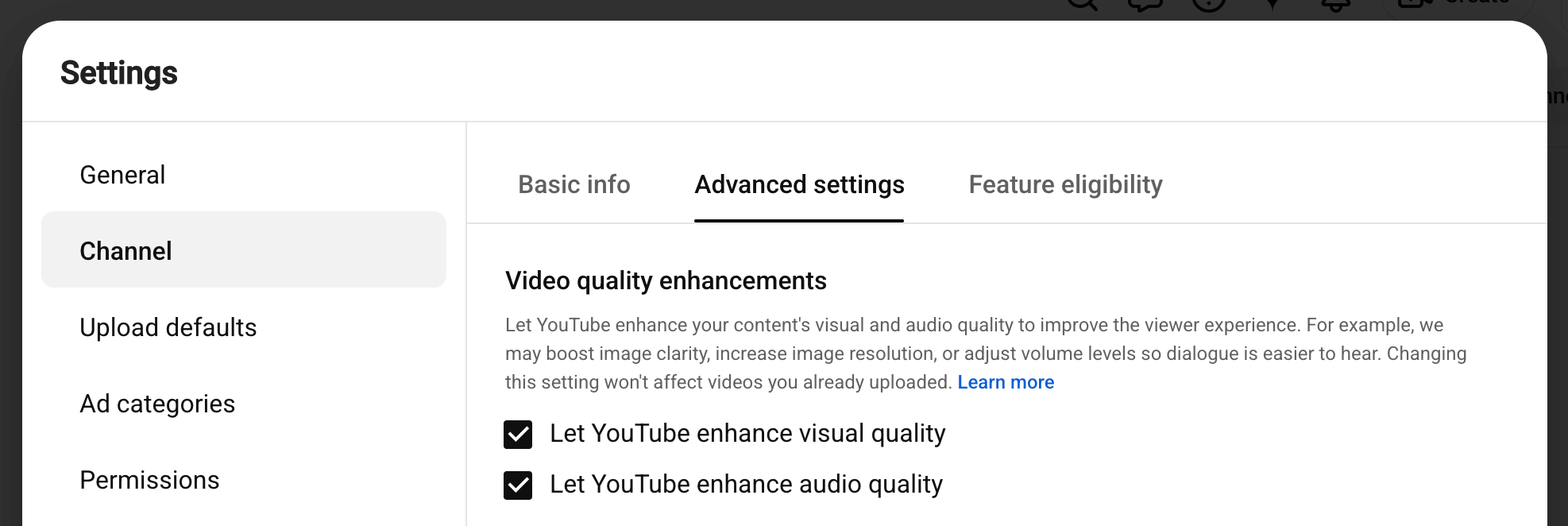
- Automated AI Upscaling: To prevent legacy or low-fidelity footage from degrading the living room experience, YouTube implemented an AI-driven upscaling feature. Videos uploaded below 1080p resolution are automatically processed to display at higher fidelities on 4K and 8K displays, though enterprise brands retain the option to disable this setting to preserve artistic intent.
The Integration of Gemini via "Ask YouTube"
The deployment of Google’s multimodal AI, Gemini, directly to smart TVs, streaming media players, and gaming consoles marks a turning point in video discovery:
- Voice-Activated Search: Viewers can now press the microphone button on their TV remotes to engage "Ask YouTube." The assistant answers complex queries, indexes video transcripts in real time, and identifies exact moments within a video that address a user’s question without requiring them to pick up a smartphone or open a mobile browser.
- Multimodal Screen Indexing: Gemini processes more than spoken audio transcripts; it utilizes computer vision to analyze on-screen lower thirds, text overlays, graphical elements, and physical objects shown within the footage.
Living Room Transactional Systems
To bridge the gap between content consumption and immediate point-of-sale conversion, YouTube introduced native e-commerce mechanics tailored for TV remote navigation:
- "Buy with Google Pay" On-Screen Commerce: Viewers can purchase tagged products or sponsor merchandise directly from their television with a two-click remote interaction, aligning YouTube’s commerce capabilities with platforms like TikTok Shop and Amazon Prime Video.
- Voice-Driven Commerce: Future iterations of the CTV interface seek to replace static QR codes—which historically suffered from low conversion due to screen-to-phone friction—with conversational commands such as "add to cart" or "send link to my device."
Operational and Editorial Transformations
Succeeding in a living-room-first ecosystem requires creators and brands to fundamental overhaul how content is scripted, edited, and formatted.
+----------------------------------------------------------------------------------+
|                         DESKTOP/MOBILE vs. CONNECTED TV                          |
+----------------------------------------------------------------------------------+
| Metric / Strategy   | Mobile / Desktop Era        | Connected TV (CTV) Era       |
+---------------------+-----------------------------+------------------------------+
| Content Runtime     | Short, compressed (3-8 min) | Long-form (10-45+ min)       |
| Pacing & Editing    | Hyper-kinetic, tight cuts   | "Infotainment", relaxed pace |
| Formatting          | Standalone tutorials        | Episodic, narrative arcs     |
| CTAs & Links        | "Link in description"       | Spoken URLs & visual cues    |
| Primary Audience    | Solo viewer on-the-go       | Group / Communal viewing     |
+----------------------------------------------------------------------------------+
The Transition to Long-Form "Infotainment"
Where mobile viewing favors fast-paced, highly compressed tutorials designed to answer a quick query, TV audiences favor long-form, episodic content.
A 10-minute video—once considered the maximum threshold for retaining audience attention—has become the baseline entry point for TV optimization. TV audiences display a higher tolerance for longer runtimes (spanning from 20 to 45 minutes or more) provided the content balances instruction with entertainment. This format shift, termed "infotainment," requires a more conversational, relaxed pacing. Hyper-kinetic jump cuts are being replaced by dynamic narrative arcs that allow viewers to feel as though they are "hanging out" with the creator.
Embracing "Authentic" Imperfection
As synthetic and polished AI content proliferates across digital channels, TV viewers are placing a premium on human authenticity. Old-school YouTube editing philosophy dictated cutting out every pause, breath, mistake, or unscripted interaction. On television displays, retaining these raw, humanizing moments creates a sense of intimacy and realism. Even legacy television broadcasts (such as competitive reality shows) have adopted behind-the-scenes, unscripted footage to meet audience demand for unfiltered authenticity.
   [Traditional Editing Paradigm]                [Living Room Editing Paradigm]
   • Tight, hyper-fast jump cuts                 • Relaxed, conversational cadence
   • Eliminate every pause & breath             • Preserve humanizing bloopers & context
   • Immediate, transactional pitch              • Narrative arc with strategic "Re-Hooks"
The "Re-Hook" Strategy for Distracted Viewers
Living room viewers frequently multi-task, using smartphones or tablets while watching television. To keep semi-distracted audiences engaged over long runtimes, creators must implement periodic "re-hooks"—subtle narrative check-ins designed to re-engage the viewer without disrupting the flow of the video.
Phrases like, "Now that we’ve covered the technical setup, let’s look at how this impacts your monthly budget," act as cognitive restops that pull multi-tasking viewers back to the primary screen.
AI Search Scripting and Verbal URL Integration
Because television interfaces lack accessible description boxes or clickable hyper-links, traditional calls-to-action ("click the link down below") fail on CTV. Marketers must pivot toward verbal and visual reinforcement:
- Spoken Web Addresses: Presenters must explicitly state simple, memorable domain names and handles verbally within the audio track.
- On-Screen Graphic Cues: URLs, discount codes, and brand names should be displayed as visual lower-thirds so Gemini’s computer vision models can index the text.
- Conversational FAQ Scripting: To maximize surface area in Gemini search queries, creators should embed natural language questions into their scripts. Formulating spoken dialogue to mirror natural speech patterns (e.g., "A common question clients ask me is, what are the top lawn care tools for desert climates?") ensures the video transcript aligns with voice search queries executed via TV remotes.
Supporting Context & Data Metrics
The migration to connected TV fundamentally alters how audience analytics must be evaluated, particularly regarding group viewing dynamics and programmatic commerce.
Traditional Metric:           UNIQUE VIEWERS
                              [ Account A ] = 1 View
                              (Fails to measure multi-person living room households)

Connected TV Metric:          UNIQUE REACH
                              [ Account A ] + [ Family / Co-Viewers ]
                              = Modeled Multiplier (e.g., 2.5 to 3.0 Viewers per Screen)
Demystifying the "Unique Reach" Metric
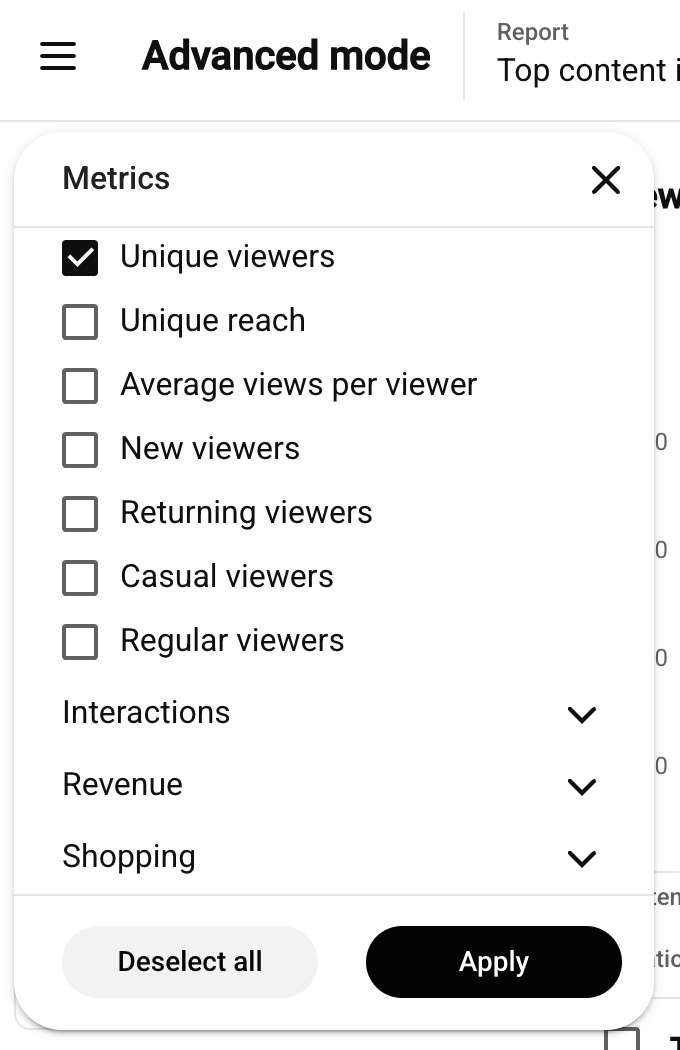
Historically, YouTube analytics relied on logged-in account data to report viewer numbers. However, television screens inherently foster a co-viewing environment where families, couples, or friends watch content simultaneously on a single account.
To account for this, YouTube introduced Unique Reach. Modeled after traditional broadcast television measurement frameworks (such as Nielsen ratings), Unique Reach applies statistical modeling to estimate the total number of physical individuals watching a screen. The calculation evaluates variables including:
- Device Type: CTVs carry higher co-viewing probability coefficients than smartphones.
- Time of Day: Evening viewing windows skew heavily toward multi-person household consumption.
- Content Category: Family, cooking, entertainment, and live event genres trigger higher co-viewing multipliers than niche software tutorials.
+-----------------------------------------------------------------------------------+
|                        UNIQUE REACH DATA MODULATION SIGNALS                       |
+-----------------------------------------------------------------------------------+
| Signal Category       | Environmental Context       | Impact on Unique Reach      |
+-----------------------+-----------------------------+-----------------------------+
| Device Type           | Connected TV (Living Room)  | Increases co-viewer count   |
| Time of Day           | Prime Evening Hours         | Higher household density    |
| Content Category      | Family / Cooking / Live     | Multi-viewer probability up |
| User Demographics     | Multi-member Account        | Broadened reach estimate    |
+-----------------------------------------------------------------------------------+
While Unique Reach provides a compelling story for enterprise brand awareness and high-level corporate reporting, performance marketers and sponsors must approach the metric with nuance:

$$textEffective Reach = textStandard View Count times textCo-Viewing Multiplier$$
While a video with 10,000 recorded views might claim a Unique Reach of 30,000 individuals, sponsorship valuations should maintain standard view counts as a baseline metric. Unique Reach should serve as a secondary signal of brand impact rather than a justification for tripling media rates.
Living Room E-Commerce Data Trends
Data released by YouTube indicates that global users consumed over 35 billion hours of shopping-related content across the platform in a single year, with living room viewing accounting for a rapidly growing share of that volume.
The introduction of frictionless, two-click TV checkout systems targets impulse purchases and lower-priced catalog items, shifting YouTube’s position from a purely top-of-funnel awareness engine to a full-funnel transactional channel.
Official Statements & Expert Analysis
Industry strategists emphasize that success in this new landscape requires a shift in how creators evaluate their own work.
YouTube strategist Liron Segev points out that the single largest operational blind spot for video marketers is a total absence of living-room testing:
"The biggest mistake marketers make is that they never watch their own channel on a television. Most creator teams review assets on a high-end desktop monitor or a mobile device prior to publishing. But almost no one sits on their couch, at actual viewing distance from a 65-inch television screen, to experience their channel the way their audience does. That perspective check costs nothing, yet it immediately exposes thumbnail clutter, illegible graphic overlays, and audio mix imbalances that are invisible on a phone."
Segev also cautions brands against attempting to rely on generic, AI-generated video scripts when optimizing for search systems like Ask YouTube:
"The transcript of every video you upload is instant AI fodder. But Gemini and other search architectures will not highlight or cite content that the AI could have written itself. Marketers who inject personal experience, proprietary data, unique case studies, and clear proof points elevate their videos above generic summaries. Your unique insight is the only defense against being filtered out by AI search results."
Adding context to the shift in audience expectations, digital marketing expert Jerry Potter highlights the evolution of evergreen, search-driven discovery on television platforms:
"We are seeing search-driven short content published years ago experience major secondary traffic spikes on connected TVs. When you create focused, question-answer content, search-driven discovery gives those assets a long tail that far outlasts the initial algorithmic distribution phase."
Future Outlook: Strategic Imperatives for Content Marketers
As television hardware, artificial intelligence, and digital streaming continue to converge, brands must adapt to maintain their competitive edge.

+-----------------------------------------------------------------------------------+
|                        TACTICAL CHECKLIST FOR TV OPTIMIZATION                     |
+-----------------------------------------------------------------------------------+
| [ ] 1. CONDUCT A "COUCH AUDIT"                                                    |
|     Review top 10 channel assets on a 65-inch display from 9 feet away.           |
|                                                                                   |
| [ ] 2. UPGRADE THUMBNAIL PIPELINE                                                 |
|     Export thumbnail assets as uncompressed 4K files (up to 50MB limit).          |
|                                                                                   |
| [ ] 3. REDESIGN CHANNEL BANNER ARTWORK                                            |
|     Verify that extended top/bottom margins on CTV displays feature branding.     |
|                                                                                   |
| [ ] 4. ADAPT SCRIPTING FOR MULTIMODAL AI                                          |
|     Answer core video thesis within the first 100 spoken words.                   |
|                                                                                   |
| [ ] 5. IMPLEMENT VERBAL & VISUAL CTAs                                             |
|     Replace "link below" messaging with clearly spoken URLs and lower-thirds.     |
|                                                                                   |
| [ ] 6. BUILD A SHORTS FAQ PLAYLIST                                                |
|     Create targeted short-form videos addressing common, natural-language queries.|
+-----------------------------------------------------------------------------------+
Key Takeaways for Marketing Teams:
- Perform Routine Living Room Content Audits: Marketing teams should regularly audit their content assets on a physical TV screen to verify visual legibility, banner alignment, and production quality.
- Shift Focus from Pure Views to Business Outcomes: As AI engines answer basic queries directly within the interface, raw view counts may stabilize or decline for simple informational queries. However, qualified leads generated by becoming the definitive authority cited by Ask YouTube will yield higher conversion rates and business value.
- Optimize Script Transcripts for Natural Language: Structure scripts to directly address specific questions within the first 100 words of dialogue. Incorporate spoken natural-language questions to mirror how users speak into voice remotes.
- Deploy a Dedicated FAQ Video Strategy: Build out playlists composed of short, highly focused videos that resolve single, specific customer problems. These targeted assets serve as ideal nodes for AI indexing and voice-search discovery over long time horizons.
- Prepare for Direct TV Commerce: For brands selling direct-to-consumer goods, merchandise, or low-friction digital products, setting up YouTube Shopping integrations and Google Pay functionality is essential to captured living-room conversions.
The migration of YouTube content to the television screen represents a major evolution in digital media distribution. By aligning video production, visual asset design, and search optimization strategies with living-room consumption habits, marketers can capitalize on the most valuable real estate in digital advertising: the home living room screen.