
Executive Overview
For the past several years, digital marketing strategies have been dictated by a single narrative: short-form vertical video is the only viable engine for organic social growth. Creators and brands have felt compelled to pivot to Instagram Reels, spending immense resources on video editing, scripting, and on-camera performances. However, an emerging shift in platform analytics and user behavior reveals a different reality—one where static and slide-based content can generate equivalent or superior business outcomes without the overhead of video production.
Social media strategist Katelyn Rhoades built a following of over 217,000 users and scaled a six-figure marketing agency by focusing primary distribution efforts on educational Instagram carousels. Her methodology—which led to an official partnership with Meta and features in major business publications—demonstrates that carousels trigger key algorithmic signals that video often misses.
By leveraging carousel architecture, creators can systematically capture audience attention, cultivate high-intent lead pathways, and drive direct revenue. This strategy offers an alternative for businesses hindered by video creation fatigue, providing a blueprint for scalable organic growth rooted in copy-driven design, strategic micro-animations, and automated message sequences.
Supporting Context & Algorithmic Metrics
To understand why carousels have resurfaced as a primary growth engine, marketers must examine how Meta’s recommendation algorithms calculate content value.

While Reels remain an effective discovery vehicle for casual viewer reach, they frequently struggle with conversion and deep audience retention. A user watching a short video typically consumes the content passively before swiping vertically to the next creator. In contrast, carousels force active engagement.
       REELS USER FLOW (Passive)
       [ Watch Video ] ──> [ Vertical Swipe Away ]

       CAROUSEL USER FLOW (Active Engagement)
       [ Stop Scroll ] ──> [ Horizontal Swipe ] ──> [ Reverse Swipe ]
             │                     │                      │
             ▼                     ▼                      ▼
       (Hook Visual)         (Dwell Time)           (High Intent)
             │                     │                      │
             └─────────────────────┼──────────────────────┘
                                   │
                                   ▼
                         [ Share / DM Trigger ]
Instagram’s algorithm evaluates post performance based on a complex weight of user behaviors:
- Dwell Time: The cumulative duration a user spends viewing a single post.
- Swipe-Through Rate: The percentage of total slides a user swipes through before moving on.
- Exit Slide Identification: The specific point in the sequence where user attention drops off.
- Re-Swiping: Actions where users scroll back to reference prior slides, signaling high information density.
- Direct Shares: The act of sending content to another user via Direct Message (DM).
Recent shifts in platform dynamics have altered the value hierarchy of these metrics. While content saves were historically the primary indicator of educational quality, shares have become the single most heavily weighted engagement metric on Instagram.
Carousels naturally drive higher share and dwell metrics because they present digestible, high-value visual packages that users want to pass along to peers. Furthermore, carousels provide two opportunities for feed exposure: if a follower scrolls past the first slide without interacting, Instagram will often re-serve the same post to that user later, displaying the second slide as the primary cover.
Detailed Chronology: The 4-Step Blueprint for High-Converting Carousels
Transitioning from passive media to structured carousels requires an intentional execution pipeline. Rhoades’ framework relies on a narrative-first production flow across four core stages.
+-------------------------------------------------------------------------+
|                      CAROUSEL PRODUCTION PIPELINE                       |
+-------------------+------------------+-------------------+--------------+
| 1. STORY ARC      | 2. TEXT HOOK     | 3. CALL TO ACTION | 4. VISUALS   |
| • Define ICP      | • Negative Hook  | • Share Prompts   | • Vertical   |
| • Pain Point      | • High Contrast  | • DM Keywords     | • Micro-Anim |
| • "Incomplete"    | • Curiosity Gap  | • Auto-Responders | • Faces First|
+-------------------+------------------+-------------------+--------------+
1. Planning the Narrative Arc Before Graphic Assembly
The primary point of failure for most carousel campaigns occurs in the initial phase: designing visual slides first and trying to fit copy into pre-made templates. High-performing carousels reverse this workflow by prioritizing story architecture.
- Target a Singular Ideal Customer Profile (ICP): Content designed for broad audiences rarely resonates deeply. Every carousel must address a specific individual’s precise struggle, question, or desired transformation.
- Establish the Narrative Arc: The standard framework utilizes an 8-to-10 slide architecture (despite Instagram allowing up to 20 slides).
- Slide 1: Identifies a pain point to grab attention.
- Slides 2–8: Deliver useful, structured insight.
- Final Slide: Directs the user to a single call to action (CTA).
- The "Useful But Incomplete" Principle: To drive real business outcomes, the body of the carousel must mirror successful webinar structures. It should provide genuine value that helps the reader understand what their problem is and why it exists, without exhausting the entire customized solution (how to execute it at scale). This leaves a natural demand gap for the creator’s services or products.
- AI-Assisted Storyboarding: Marketers can streamline script planning by feeding bulleted concepts into Large Language Models (LLMs) like ChatGPT, using custom prompts to structure raw text into slide-by-slide narrative outlines before entering design software.
2. Crafting the Scroll-Stopping Text Hook
The first slide bears the heaviest burden: its sole responsibility is to interrupt the user’s scroll. If the hook fails, the remaining slides go unread.
       HOOK FRAMEWORK COMPARISON

       [ Standard Positive Hook ] ──> "5 Ways to Grow on Instagram Today"
                                      (Low Urgency - Easy to Scroll Past)

       [ Negative Pattern-Interrupt ] ──> "This One Mistake Is Destroying
                                          Your Instagram Reach"
(High Urgency - Loss Aversion Triggered)- Leveraging Loss Aversion: Negative or pattern-interrupt hooks regularly outperform passive positive statements. Audiences naturally pay closer attention to risks, mistakes, and common misconceptions.
- The Curiosity Gap: A successful hook must never resolve its own premise on slide one. Revealing the answer immediately eliminates any incentive to swipe to slide two.
- Visual Ergonomics: Text layout determines readability. Designers should favor high-contrast color palettes—such as high-visibility yellow or stark white on dark backgrounds—paired with clean typography and generous negative space to minimize cognitive fatigue.
3. Engineering Strategic Calls to Action (CTAs)
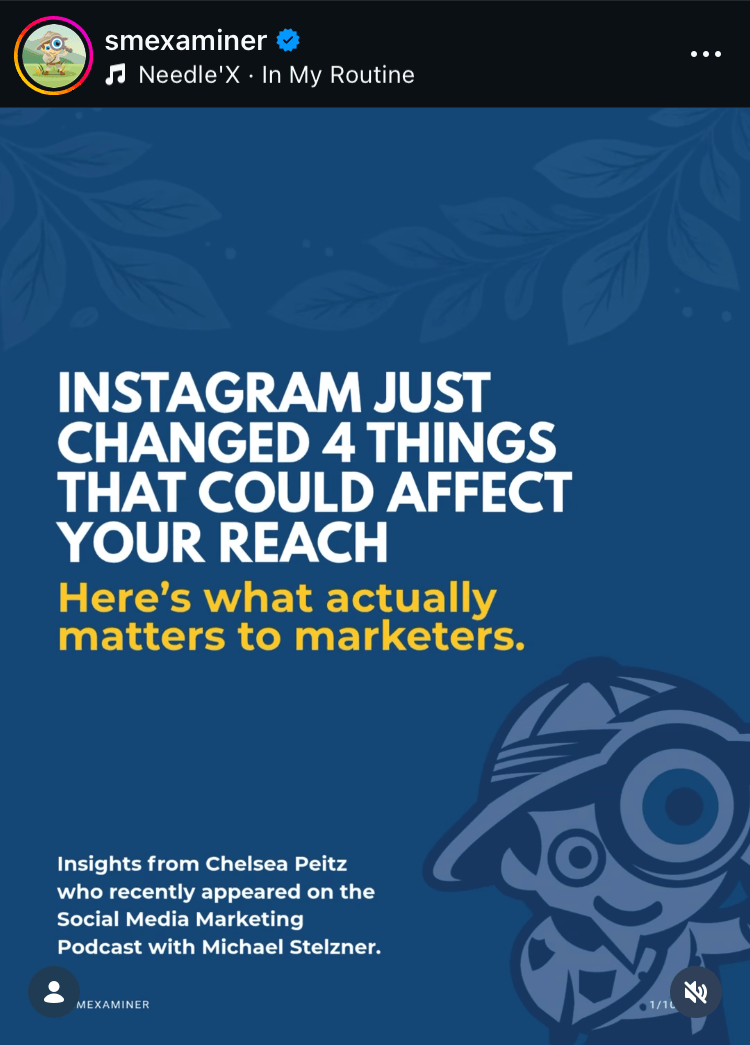
The final slide dictates the business return on the post. Rather than relying on passive closures, carousels should utilize tailored CTAs built for specific marketing goals:
  +----------------------+--------------------------------------------------+
  | CTA GOAL             | OPTIMAL EXECUTION                                |
  +----------------------+--------------------------------------------------+
  | Broad Distribution   | Prompt open-ended discussion in comments         |
  +----------------------+--------------------------------------------------+
  | Viral Reach          | Prompt DM forwards ("Share with a teammate")     |
  +----------------------+--------------------------------------------------+
  | Direct Revenue/Leads | Keyword-triggered automated DM workflows        |
  +----------------------+--------------------------------------------------+
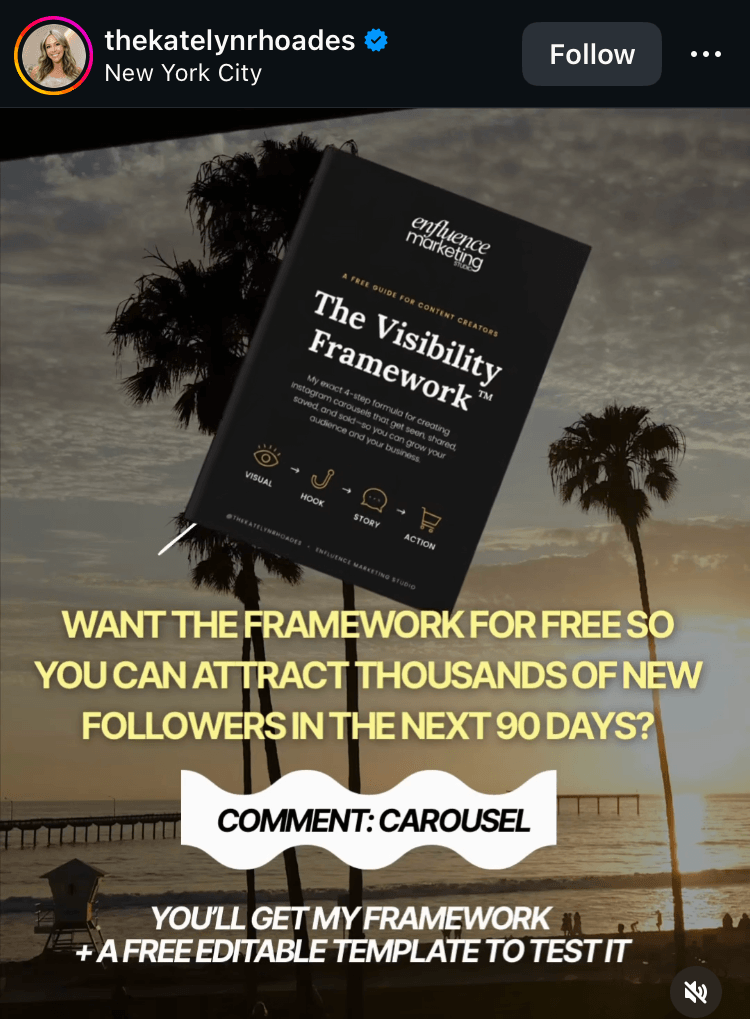
For monetization, keyword-triggered direct messages bridge the gap between social engagement and sales funnels. Creators can instruct users to comment with a targeted phrase (e.g., "BLUEPRINT"). Integrations like ManyChat or Stan Store then automatically send a private message containing the relevant link, lead magnet, or product page. For smaller accounts, manual DM responses achieve the same result while building personal relationships with prospective clients.
4. Assembling Visuals and Micro-Animations
Once the copy is finalized, visual design converts the text into a digestible asset.
- Format Dimensions: Utilizing vertical standard ratios (such as 4:5 vertical alignment) captures more screen real estate in the feed compared to traditional square formats.
- Authenticity Over High Production: Field tests across diverse client portfolios demonstrate that authentic, camera-roll snapshots—such as casual workspace photos or candid moments—routinely outperform polished, overly engineered agency graphics. Featuring a human face on the first slide helps establish immediate viewer trust.
- Strategic Micro-Animations: Incorporating subtle motion onto only the first slide acts as an effective pattern interrupt. Animating subsequent slides offers diminishing returns and slows visual consumption. Simple motion options include:
- Layering hook typography over subtle video backgrounds (e.g., passing clouds or train motion).
- Using text entrance effects, like subtle typewriter or fade-in styling.
- Utilizing AI tools like Google Gemini to add subtle dynamic motion to static base photos.
- Applying Photoshop’s Generative Fill features to extend image headroom, creating clear space for text placement.
Official Statements & Platform Tooling Developments
The shift toward structured, text-focused carousels coincides with recent updates to Instagram’s native feature set. Meta has expanded tools for carousel creators, acknowledging that media formats are evolving beyond pure video.
+-------------------------------------------------------------------------+
|                 RECENT INSTAGRAM PLATFORM UPDATES                       |
+-------------------------------------------------------------------------+
|  [Expanded Slide Count]  ──> Up to 20 slides per carousel post        |
|  [Native Text Overlays]  ──> In-app typography directly over images    |
|  [Algorithm Shift]       ──> DM Shares prioritized over post Saves        |
+-------------------------------------------------------------------------+
Industry practitioners point out that native overlay features allow creators to build quick multi-slide posts directly inside the application, removing the mandatory requirement for third-party graphics software.

In discussing the long-term viability of non-video strategies, Katelyn Rhoades emphasized that consistency and audience clarity trump production budget:
"The biggest misconception about Instagram growth is that Reels are the only path forward. When content speaks directly to one person’s situation, everyone who relates feels like it was written directly for them. Carousels naturally generate the attention and retention that the algorithm rewards."
This shift reflects a broader push across digital channels toward clear, high-density educational content. By combining strong narrative hooks with automated sales funnels, visual carousels allow creators to turn casual scrollers into paying clients without ever stepping in front of a video camera.
Future Outlook
The rise of conversion-focused carousels points to a more balanced social media ecosystem. While short-form video will continue to play a major role in top-of-funnel discovery, text-and-image carousels have proven to be a reliable, highly scalable driver for bottom-of-funnel lead generation and monetization.
Key trends shaping the future of Instagram content strategy include:
- Hybrid Visual-Text Formats: The integration of native platform editing features will lower the barrier to entry, allowing real-time publishing without complex third-party tools.
- AI-Driven Storyboarding & Asset Generation: Generative AI tools will increasingly handle spatial expansions, background cleanup, and quick content outline generation, shortening total production cycles from hours to minutes.
- Conversational Automation Supremacy: The reliance on static "link-in-bio" calls to action will continue to drop as creators adopt interactive, automated DM keyword workflows that capture leads instantly within the messaging tab.
- Algorithmic Prioritization of Private Distribution: As social media habits become more private, content engineered for direct message sharing will gain distribution advantages over posts optimized for public likes or basic comments.
For brands, agencies, and independent creators, carousels provide a practical, high-yield strategy for sustainable growth. Focusing on structured copy, simple visual hooks, and clear conversion paths enables businesses to build authority, scale their reach, and generate predictable revenue—all without relying on vertical video.