Executive Overview
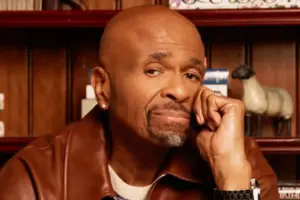
In the bustling mockumentary halls of ABC’s critical darling Abbott Elementary, actor William Stanford Davis commands the screen as Mr. Johnson, the idiosyncratic, endlessly wise, and delightfully unpredictable school janitor. To millions of television viewers, Davis is the quintessential scene-stealer—an actor who delivers deadpan humor and eccentric wisdom with the precision of a seasoned veteran. Yet, the meteoric rise that cemented him as a household name arrived at a point in life when many performers are well into retirement: age 70.
Now, Davis is pulling back the curtain on the arduous, unconventional, and deeply inspiring journey that preceded his late-in-life renaissance. BenBella Books has announced that it will publish Davis’s eagerly anticipated memoir, titled Don’t Mess With the Fat Kid. Acquired by Glen Yeffeth, editor and CEO of BenBella Books, through literary agent Miles Blim at Aevitas Creative Management in association with Innovative Artists, the book promises an unflinching look at a life defined by resilience. Set for a multi-format release encompassing hardcover, e-book, and audiobook editions, the memoir chronicles Davis’s decades-long battle with addiction, the stinging realities of industry rejection, and the profound triumph of finding one’s true calling late in the game.
The announcement of Don’t Mess With the Fat Kid is not merely a celebrity book deal; it is a cultural testament to the power of perseverance. In an entertainment industry notoriously obsessed with youth, velocity, and instantaneous viral success, Davis’s trajectory stands as a powerful counter-narrative. His story underscores the reality that artistic maturity, hard-earned life experience, and sheer tenacity can outlast the transient trends of Hollywood. As readers prepare to dive into the pages of his memoir, they are invited to explore a narrative arc that spans over half a century of American history, shifting cultural landscapes, and deeply personal battles won against staggering odds.
Detailed Chronology of a Relentless Journey
Structured across three distinct chronological and thematic parts, Don’t Mess With the Fat Kid maps out a life lived on the margins before stepping into the glaring lights of prime-time television. Davis’s story is inextricably linked to the socio-cultural shifts of late-20th-century America, offering a rich historical tapestry that grounds his personal evolution in the broader American experience.
Part I: The Crucible of 1960s St. Louis
The memoir opens in the tumultuous and culturally vibrant landscape of the 1960s, transporting readers to the Ville, a historically and predominantly Black neighborhood in St. Louis, Missouri. During this era, the Ville was a crucible of community strength, artistic expression, and civil rights agitation, having produced legendary figures such as Tina Turner, Chuck Berry, and civil rights trailblazer Arthur Mitchell.
It was within this dynamic, tight-knit environment that a young William Stanford Davis forged his early worldview. The book explores the texture of his childhood—the sights, sounds, and socioeconomic realities of growing up in a segregated yet deeply supportive urban enclave. These formative years instilled in him a foundational resilience. Long before he ever set foot on a soundstage or memorized a dramatic monologue, Davis was absorbing the rhythms of everyday human behavior, observing the resilience of neighbors navigating systemic hurdles, and developing the sharp observational humor that would later define his comedic and dramatic performances.
Part II: Fresh Off the Bus in Jefferson City
The second section of the memoir tracks Davis as a young man taking a leap into the unknown during the early 1970s. Finding himself "fresh off the bus in ‘country-ass’ Jefferson City," as the book’s official description colorfully puts it, Davis faced the abrupt culture shock of transitioning from an urban Midwestern hub to a smaller, more restrictive rural setting.
This period was marked by the quintessential anxieties of young adulthood: identity formation, economic precarity, and the search for belonging. In Jefferson City, Davis encountered a vastly different social ecosystem, one that tested his adaptability and forced him to confront the limitations imposed by geography and societal expectations. It was an era of wandering without a definitive map, where the seeds of his future artistic expression were planted amidst the trials of trying to find a stable footing in a rapidly changing world.
Part III: From Addict to Working Actor
Perhaps the most harrowing and emotionally resonant portion of the memoir centers on Davis’s long, winding, and arduous road into middle age. Well into his forties, Davis was fighting a relentless battle against addiction—a private demon that threatened to derail not only his professional aspirations, but his life itself.
The narrative details the grueling process of recovery, the agonizing years of professional rejection, and the unglamorous reality of a working-class actor scraping by in an unforgiving industry. For decades, Davis navigated the Hollywood periphery, taking minor roles, enduring countless auditions that led nowhere, and facing the soul-crushing doubt that accompanies chronic underemployment. Yet, rather than capitulating to despair, Davis transformed his pain and life experience into fuel. This section of Don’t Mess With the Fat Kid serves as a masterclass in perseverance, illustrating how decades of setbacks and hard-earned wisdom ultimately forged the magnetic, fully realized performer audiences see on screen today.
Supporting Context & Metrics: A Late-Career Triumph
To fully grasp the magnitude of William Stanford Davis’s current success, one must examine the broader metrics of representation and career longevity in the modern entertainment landscape. Hollywood has long faced structural critiques regarding ageism—particularly the systemic marginalization of actors over the age of fifty, let alone seventy. Industry studies consistently reveal that speaking roles for older actors, especially performers of color, remain statistically scarce compared to their younger counterparts.
Against this backdrop, Davis’s breakout in Abbott Elementary is a statistical and cultural anomaly. Created by and starring Quinta Brunson, the ABC mockumentary has garnered widespread critical acclaim, sweeping awards seasons, and capturing the cultural zeitgeist since its premiere in 2021. Within this powerhouse ensemble cast—which includes Sheryl Lee Ralph, Tyler James Williams, Janelle James, and Lisa Ann Walter—Davis’s Mr. Johnson stands out as a critical fan favorite. His deadpan delivery, encyclopedic and bizarre array of hidden skills, and unwavering dead-eyed wisdom have made him an integral pillar of the show’s comedic architecture.
[Early Years: St. Louis & Jefferson City]
       │
       ▼
[Decades of Struggle: Addiction & Rejection (Into 40s)]
       │
       ▼
[Building Resiliency: Character & Support Roles (Curb, Ray Donovan, etc.)]
       │
       ▼
[The Breakout: "Abbott Elementary" at Age 70]
       │
       ▼
[Literary Milestone: Memoir "Don’t Mess With the Fat Kid"]
Before his monumental break on Abbott Elementary, Davis built a robust, blue-collar resume that spanned television and film, proving his versatility across diverse genres. His credits read as a comprehensive tour of prestige and popular television over the past two decades:
- Television Appearances: Memorable turns on HBO’s improvisational masterclass Curb Your Enthusiasm, Showtime’s gritty fixer drama Ray Donovan, Apple TV+’s critically acclaimed youth sports drama Swagger, and ABC’s family drama Lincoln Heights.
- Film Work: Notable performances including the Wanda Sykes-starred film Undercard.
These stepping stones reflect a relentless dedication to the craft. While many actors might have folded under the weight of decades spent playing bit parts and recurring guest spots, Davis treated every single set as a masterclass, accumulating the invaluable timing and emotional depth that would eventually catch the eye of Abbott Elementary’s casting directors.
Official Statements and Industry Perspective
The announcement of Don’t Mess With the Fat Kid has elicited excitement from both the publishing world and the actor himself. In an official statement released alongside the book’s announcement, Davis articulated the profound personal significance of finally sharing his life story with the public:
"I’ve wanted to write this memoir for a long time, to honor the road I’ve taken to get here and to connect with folks who are still on their way," Davis shared. "People know me as Mr. Johnson from ‘Abbott Elementary,’ and while that’s the biggest role of my career so far, it’s not the whole story. I’m excited to finally share the full story: the struggles, the setbacks, the second chances and the perseverance it took to keep going and get to where I am today. It took me a long time to get here, and the beautiful thing is, I’m just getting started."
This sentiment of "just getting started" captures the essence of Davis’s personal philosophy. Publishing house BenBella Books, known for championing powerful memoirs and thought-provoking nonfiction, recognized the unique resonance of his journey. Editorial leadership at the publishing house noted that Davis’s voice brings a raw, unfiltered authenticity to the literary marketplace—one that avoids sanitized Hollywood tropes in favor of a gritty, empathetic exploration of survival and redemption.
Literary agent Miles Blim of Aevitas Creative Management, working in association with Innovative Artists, orchestrated the deal that brought the manuscript to BenBella. Industry observers note that memoirs centering on late-blooming success stories have increasingly captured reader interest, offering a vital antidote to the hyper-curated, overnight-sensation narratives often pushed by social media algorithms. Davis’s book promises to offer a tactile, human counterweight to these trends, reminding readers that meaningful achievement is often forged in the fires of protracted struggle.
Future Outlook: The Next Chapter for William Stanford Davis
As anticipation mounts for the publication of Don’t Mess With the Fat Kid, William Stanford Davis shows no signs of slowing down professionally. Abbott Elementary continues to be a juggernaut for ABC, keeping Davis entrenched in active production schedules and cementing his status as a permanent fixture in contemporary comedy. The cross-platform visibility generated by the hit show provides an ideal launching pad for the memoir, ensuring a receptive and eager audience waiting to discover the man behind the janitor’s mop.
Beyond the book release and his ongoing television commitments, Davis’s cultural footprint is expanding. He has increasingly stepped into public advocacy and speaking spaces, where his lived experiences with addiction recovery and career perseverance resonate deeply with individuals facing their own crossroads. By demystifying the nonlinear nature of success, Davis has inadvertently become a spokesperson for late-stage bloomers—proving that creativity, dignity, and personal reinvention are not bound by arbitrary age limits.
In conclusion, Don’t Mess With the Fat Kid is poised to be much more than a standard celebrity autobiography. It is an artifact of resilience, a historical snapshot of working-class Black America across the latter half of the 20th century, and a poignant reminder that life’s most unexpected chapters are often its most rewarding. As William Stanford Davis prepares to release his story to the world, he extends an invitation to anyone feeling stuck, overlooked, or counted out: keep moving forward, because the best part of the story might still be unwritten.