Executive Overview
In a landmark development for Indonesia’s cultural landscape, the acclaimed Jakarta World Cinema (JWC) festival has officially broken its geographical boundaries, expanding beyond the capital for the first time in its history. On November 14, the inaugural Bandung World Cinema and Malang World Cinema launched simultaneously, bringing an unprecedented curation of international, award-winning art-house cinema to two of Indonesia’s most vibrant student hubs and creative epicenters.
Running through November 21, this ambitious expansion marks a pivotal turning point in how global cinema is consumed across the Indonesian archipelago. For years, cinephiles outside the Jakarta metropolitan area could only watch from afar as the capital hosted high-profile international film events. Now, audiences in West Java’s cultural heartland of Bandung and East Java’s bustling university city of Malang are experiencing the exact same caliber of bold, provocative, and globally celebrated programming that defines the primary Jakarta event.
The simultaneous launch features dense, high-tier schedules hosted at premier commercial venues—CGV Paris Van Java in Bandung and Cinépolis Malang Town Square. Furthermore, the festival has integrated a robust hybrid component, ensuring digital accessibility via an online program that runs concurrently with the physical screenings until November 21.
By decentralizing access to alternative cinema, the festival organizers are actively dismantling the hegemony of commercial Hollywood blockbusters in regional Indonesian theaters. Supported by local government leaders, prominent industry executives, and a passionate grassroots creative community, the inaugural regional editions of the festival represent far more than a simple expansion of screening venues. They stand as a cultural bridge, connecting regional Indonesian cinephiles with the absolute pinnacle of contemporary global filmmaking, while simultaneously celebrating domestic cinematic heritage through special retrospectives and student showcases.
Detailed Chronology: Opening Night to the Open-Air Finale
The Launch: November 14
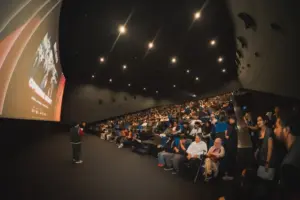
The simultaneous inaugurations in Bandung and Malang on the evening of November 14 established an electric atmosphere across both cities. In Bandung, the grand opening took place at the CGV Paris Van Java, drawing a packed house of local dignitaries, filmmakers, students, and media representatives.
The marquee event of the evening was the regional premiere of Romanian auteur Cristian Mungiu’s highly anticipated feature, Fjord. Having captured the prestigious Palme d’Or at this year’s Cannes Film Festival, Mungiu’s latest masterwork set a towering artistic benchmark for the eight-day event, immediately signaling to the Bandung audience that the festival was offering uncompromised, top-tier international cinema.
The Weeklong Journey: November 15–20
Over the course of the week, theatergoers at CGV Paris Van Java and Cinépolis Malang Town Square have been treated to an extraordinary cinematic feast. The programming committee curated an international lineup comprising 203 distinct titles hailing from 69 different countries.
Among the standout physical screenings drawing massive crowds are:
- Josephine by Beth de Araujo: The critical darling that swept the 2026 Sundance Film Festival, capturing both the Grand Jury Prize and the Audience Award in the U.S. Dramatic Competition.
- La Gradiva by Marine Atlan: Winner of the coveted AMI Paris Grand Prize at the 2026 Cannes Critics’ Week.
- Everytime by Sandra Wollner: The gripping psychological feature that secured the Un Certain Regard Prize at Cannes.
- The Samurai and the Prisoner by legendary Japanese director Kurosawa Kiyoshi: A much-discussed Cannes Premiere selection that has captivated Asian cinephiles.
Simultaneously, the festival’s online streaming platform has bridged geographic gaps for home viewers nationwide. Running until November 21, the digital roster features monumental festival winners, including Ildiko Enyedi’s Silent Friend—which earned the Fipresci Prize at the 2025 Venice International Film Festival—and Ilker Çatak’s Yellow Letters, the triumphant Golden Bear winner at this year’s Berlinale.
The Grand Finale: November 21
While the indoor theatrical runs conclude on November 21, the Bandung edition features a unique, community-focused closing event designed to give back to the public. Breaking away from traditional multiplexes, Bandung will host a free, open-air public screening on the final night.
This open-air celebration will spotlight local talent before transitioning into historical preservation. The evening will begin with a showcase of cutting-edge short films created by university students across Bandung, alongside the celebrated winners of the KlikFilm Short Movie Competition. The festival will then draw its final curtain with a special screening of a newly restored 4K print of Lewat Djam Malam (After the Curfew), the timeless 1954 masterpiece by pioneering Indonesian director Usmar Ismail. This poignant pairing of contemporary student work with a restored national classic encapsulates the festival’s overarching mission: honoring cinematic history while actively cultivating the future of Indonesian filmmaking.
Supporting Context & Metrics: Deconstructing the Festival’s Reach
To fully grasp the magnitude of the Bandung and Malang World Cinema editions, one must examine the quantitative and qualitative metrics driving this unprecedented expansion.
Scale and Scope
- Total International Titles: 203 films.
- Geographic Diversity: Films representing 69 distinct countries, offering regional audiences a truly global panorama of human storytelling, aesthetics, and socio-political perspectives.
- Duration: 8 intensive days of theatrical screenings, running continuously from November 14 through November 21.
- Venues: CGV Paris Van Java (Bandung) and Cinépolis Malang Town Square (Malang), both chosen for their modern projection capabilities, comfortable seating, and prime locations within major student districts.
Demographic Significance: Bandung and Malang
Choosing Bandung and Malang as the inaugural expansion sites was a calculated and strategic decision. Both cities possess distinct demographic profiles that make them ideal incubators for alternative cinema:
- Bandung: As the capital of West Java and home to legendary institutions such as the Bandung Institute of Technology (ITB) and dozens of other universities, Bandung boasts a massive, highly educated student populace. Historically recognized as Indonesia’s creative capital—renowned for its indie music scene, fashion design, visual arts, and independent publishing—Bandung offers a fertile, highly receptive soil for avant-garde and international art-house films.
- Malang: Situated in East Java, Malang is famously known as a "student city" (kota pelajar), hosting heavyweights like Brawijaya University and Malang State University. With hundreds of thousands of young scholars residing within the city limits, Malang possesses an energetic, curious demographic hungry for intellectual stimulation and cultural alternatives to mainstream media.
The Economic and Cultural Shift
For decades, Indonesia’s commercial theatrical distribution network has been heavily skewed toward major Hollywood studio releases, Indonesian horror franchises, and mainstream domestic comedies. While these genres undeniably sustain the box office, they leave a glaring void for international festival darlings, experimental cinema, and independent global narratives.
By injecting 203 titles from 69 countries directly into these regional markets, Jakarta World Cinema is actively decentralizing film culture. It proves that a robust, paying appetite for high-brow international cinema exists far outside the capital’s elite circles. This regional penetration also serves as a vital economic proof-of-concept, demonstrating to international sales agents, distributors, and festival organizers that secondary Indonesian cities are viable, enthusiastic markets for specialty film distribution.
Official Statements: Voices from Leadership and Organization
The cultural weight of this historic expansion has been heavily emphasized by the civic leaders and operational masterminds behind the scenes.
Attending the high-profile opening night at CGV Paris Van Java, Bandung Mayor Muhammad Farhan delivered an impassioned speech highlighting the transformative potential of the festival for his constituents.
"Bandung World Cinema gives the local audience an unprecedented opportunity to watch alternative cinema outside of the mainstream Hollywood films that dominate the theaters," Mayor Farhan stated. "The hope is that this festival will foster a greater local appreciation for film, become a source of inspiration for cinephiles, and encourage aspiring filmmakers to pursue their dreams."
Farhan’s remarks strike at the heart of the municipal government’s vision: using international cultural programming as a catalyst for local creative empowerment. By exposing young Indonesians to unconventional narrative structures, daring directorial choices, and diverse global viewpoints, the festival functions as an open-air classroom for the next generation of storytellers.
Echoing these sentiments, Frederica, Executive Director of Bandung World Cinema, pointed to the years of pent-up demand that finally necessitated this expansion.
"Bringing the Jakarta World Cinema experience to Bandung and Malang for the first time has been a long time coming," Frederica noted. "For years, our team has monitored digital engagement, social media inquiries, and ticket requests from cinephiles based outside of Jakarta. Over the next eight days, audiences in both cities will experience the exact same caliber of bold, thought-provoking, and celebrated global cinema that defines JWC."
Frederica’s commitment to parity is evident in the programming. Rather than offering a watered-down selection of lesser-known titles for regional audiences, the festival organizers ensured that top-tier prize-winners from Cannes, Venice, Berlin, and Sundance were distributed evenly to the regional hubs. This uncompromising approach demonstrates deep respect for regional audiences, treating them as sophisticated cinephiles worthy of the world’s finest cinematic achievements.
Future Outlook: The Road Ahead for Regional Cinema in Indonesia
As the inaugural editions of Bandung World Cinema and Malang World Cinema draw toward their November 21 conclusion, film industry analysts, cultural critics, and festival organizers are already looking toward the future. The success of this dual-city rollout has profound implications for the trajectory of film culture and distribution across Indonesia.
1. Blueprint for National Expansion
The smooth execution of simultaneous festivals in Bandung and Malang—complete with complex multi-venue logistics, hybrid online streaming components, and municipal government partnerships—serves as a scalable operational blueprint. Having successfully broken the Jakarta monopoly, the organizing committee has laid the groundwork to potentially scale the festival to other major Indonesian cultural hubs in the coming years. Cities like Yogyakarta, Surabaya, Medan, and Makassar—each with distinct regional identities and thriving university communities—now sit as prime candidates for future JWC expansions.
2. Nurturing Local Filmmaking Talent
Beyond audience development, the long-term economic and artistic dividends of this expansion will likely manifest in Indonesia’s domestic film production sector. When regional students and aspiring filmmakers are exposed to the experimental artistry of Cristian Mungiu, Kurosawa Kiyoshi, Ildiko Enyedi, and Ilker Çatak, their creative horizons expand exponentially.
Coupled with initiatives like the Bandung open-air student showcase and the KlikFilm Short Movie Competition, the festival acts as an invaluable pipeline. It encourages young Indonesian creators to move beyond derivative storytelling and push the boundaries of cinematic art. By pairing these contemporary global works with Usmar Ismail’s foundational 1954 classic Lewat Djam Malam, the festival reminds local creators of their rich national lineage while challenging them to write the next chapter of Indonesian cinema.
3. Transforming Commercial Distribution Paradigms
Finally, the commercial ripple effects of Bandung and Malang World Cinema may permanently alter how international art-house distributors view the Indonesian market. Historically dismissed as a single-market nation centered solely around Jakarta, Indonesia is now proving to be a diverse, multi-node landscape of passionate film communities. If the box office metrics and digital streaming numbers from this week continue to trend positively, international sales agents may begin pushing for wider, coordinated theatrical releases of art-house titles across multiple Indonesian cities rather than limiting them exclusively to the capital.
Conclusion
Jakarta World Cinema’s bold leap into Bandung and Malang represents a watershed moment for Indonesian cultural democratization. By refusing to let geography dictate access to artistic excellence, the festival has ignited a nationwide celebration of storytelling. As the screens go dark on November 21—following open-air tributes to student creators and cinematic history—the true legacy of this inaugural regional expansion will only just be beginning, echoing forward in the inspired minds of a newly empowered generation of Indonesian cinephiles and filmmakers.