
Executive Overview
In the modern gaming landscape, enthusiasts face a punishing financial reckoning. Whether building a custom PC from scratch or investing in the latest console hardware, the cost of entry has never been higher. As the industry anticipates monumental releases like Grand Theft Auto VI, consumers find themselves caught in a high-stakes dilemma: should they invest in a mid-range gaming PC, or stick with closed-box console systems like Sony’s PlayStation 5 and PlayStation 5 Pro?
Attempting to answer this question often leads down a rabbit hole of technical equivalencies. Specifically, gamers frequently ask: Which NVIDIA graphics card offers performance closest to the PS5 and PS5 Pro?
The answer, unfortunately, is far from simple. Hardware architecture, memory allocation, unified APU designs, and fluctuating component markets mean that comparing an open-ended PC graphics card to a bespoke console chipset is akin to comparing apples and oranges. While industry benchmarks and frame-counting metrics can pinpoint rough equivalents—such as aligning the base PS5 with an aging NVIDIA RTX 2070 Super, or the PS5 Pro with an RTX 5060 Ti—the real-world experience involves a complex matrix of software optimization, pricing volatility, and architecture differences. This report examines the intricacies of matching PC hardware to Sony’s console ecosystem, evaluating the performance, cost, and practicality of crossing the PC-console divide.
Detailed Chronology & Technological Evolution
To understand how modern graphics cards measure up against current-generation consoles, it is vital to trace the evolution of the hardware powering both platforms over the past several years.
The Foundation: The 2020 Console Launch and the RTX 2070 Super Era
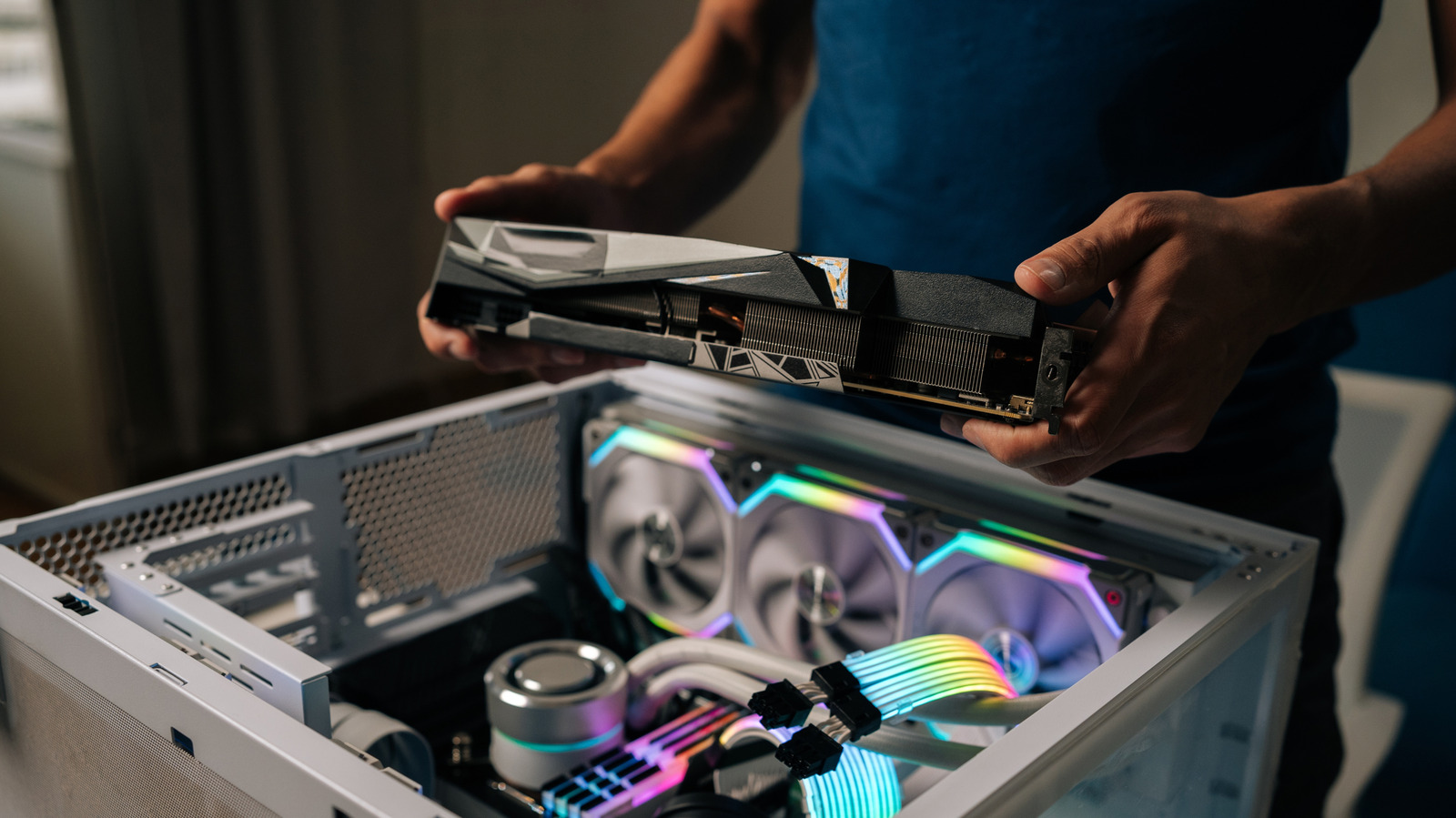
When the base PlayStation 5 launched in late 2020, it arrived equipped with a custom AMD chipset utilizing RDNA 2 graphics architecture and a Zen 2 processor, fused into a single Accelerated Processing Unit (APU). At the time of its release, PC gamers were operating within the RTX 20-series and emerging RTX 30-series ecosystems.
According to analyses from hardware testing specialists like Digital Foundry, the graphics processing capability of the base PS5 APU most closely aligns with NVIDIA’s GeForce RTX 2070 Super. Released in 2019, the RTX 2070 Super featured 8GB of GDDR6 memory and stood as a formidable upper-mid-range card for its era.
However, calling this a direct match overlooks fundamental architectural differences. The PS5 relies on a unified memory architecture—sharing 16GB of GDDR6 across both system and graphics tasks—whereas a PC utilizing an RTX 2070 Super separates its video RAM from system RAM. Despite these differences, under targeted optimization, the 2070 Super can achieve comparable fidelity and frame-rate outputs to the base console.
The Mid-Generation Leap: PS5 Pro and Blackwell GPUs
Fast forward to the mid-generation refresh cycle. Sony introduced the PlayStation 5 Pro, featuring a heavily upgraded custom AMD "Trinity" APU designed to dramatically improve graphical throughput via advanced upscaling (PlayStation Spectral Super Resolution, or PSSR) and enhanced ray-tracing capabilities. However, the CPU upgrade on the Pro model remained conservative—offering only about a 10 percent bump over the base console due to its adherence to the Zen 2 architecture.
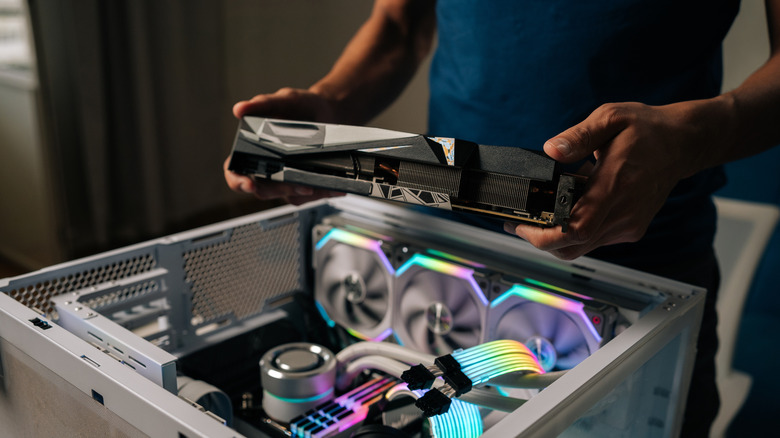
Concurrently, the PC hardware market entered the Blackwell generation with NVIDIA’s 50-series GPUs. By late 2026, cards like the NVIDIA GeForce RTX 5060 and its heavier sibling, the RTX 5060 Ti (equipped with 8GB and 16GB of GDDR7 memory respectively), became mainstream staples, capturing significant market share according to hardware surveys.
From a raw horsepower perspective, the 16GB RTX 5060 Ti and AMD’s Radeon RX 9060 XT offer performance ceilings that can equal or exceed the PS5 Pro. Yet, just like its predecessor, this comparison remains fraught with caveats regarding pricing, software-level optimization, and system bottlenecks.
Supporting Context & Metrics
Evaluating whether a PC setup is "better" or "cheaper" than a console requires examining current market pricing, hardware bottlenecks, and performance metrics.
Financial Realities: The Cost of Components
Building a custom gaming PC in the current economic climate is a financial challenge. Industry observers note that inflated component pricing—driven by high global demand for AI infrastructure, tightening manufacturing supplies, and volatile memory markets—has severely skewed the value proposition of entry-level and mid-range PC building.
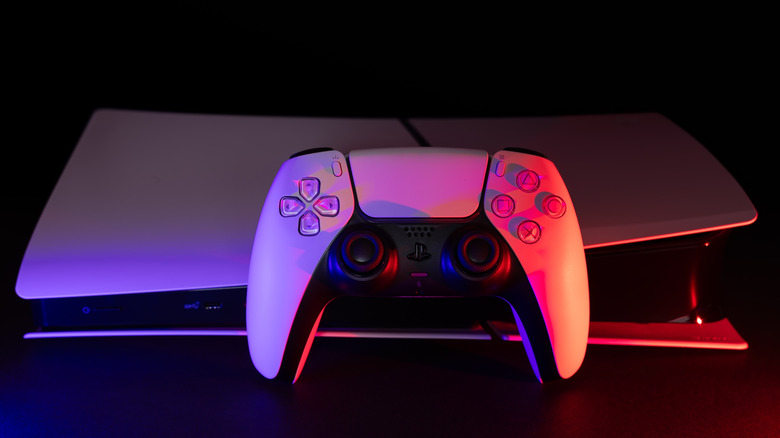
- The Base PS5 vs. RTX 2070 Super: While a brand-new base PS5 or Digital Edition ranges between $450 and $600 depending on retail bundles, a second-hand RTX 2070 Super can be found for roughly $280 on the used market. However, buying a seven-year-old GPU means investing in out-of-warranty hardware with no direct path to modern feature sets like advanced AI frame generation.
- The PS5 Pro vs. RTX 5060 Ti / RTX 5060: The PS5 Pro launched at $700, but inflated pricing and high demand—exacerbated by anticipation for blockbuster titles like Grand Theft Auto VI—have seen retail and resale values climb past $1,000 to $1,250 in various markets. Meanwhile, current-generation mid-range GPUs like the RTX 5060 regularly retail upwards of $500 standalone, meaning a complete, balanced PC build capable of beating the PS5 Pro will easily outpace the console’s total cost.
Architectural Disparities: APU vs. Discrete GPU
A common pitfall for consumers is assuming that matching a graphics card’s teraflop rating or VRAM capacity to a console guarantees identical performance. Several factors complicate this assumption:
- Unified Memory vs. Dedicated VRAM: Consoles use a shared pool of high-bandwidth memory accessible by both the CPU and GPU. This eliminates redundant data transfers that occur in standard PCs between system RAM and discrete GPU VRAM.
- The CPU Bottleneck: A graphics card is only as fast as the processor feeding it. If a user pairs a powerful modern GPU with a budget-tier or aging CPU to save money, the system will become "CPU-bound," crippling frame rates regardless of the GPU’s capabilities.
- Low-Level Optimization: Console game developers optimize their titles for a single, fixed hardware configuration. This allows them to extract maximum performance, achieving stable 60 FPS and checkerboard or native 4K resolutions that would require significantly more brute-force power on an open PC architecture.
Official Statements & Industry Perspectives
Hardware analysts and platform architects have long emphasized that console-to-PC comparisons are inherently flawed due to the closed-source nature of gaming consoles.
Engineers from Sony and AMD have consistently highlighted that custom APUs are designed with specific latency-reduction pathways and memory management techniques that cannot be replicated simply by slotting a discrete graphics card into a motherboard. As noted by hardware analysts at Digital Foundry, treating console specs as direct equivalents to PC desktop parts ignores the reality of operating systems. A PC runs background tasks, diverse driver suites, and variable background applications, whereas a console operating system is hyper-focused on executing game code with minimal overhead.
Furthermore, industry reaction to upscaling technologies—such as NVIDIA’s DLSS iterations and Sony’s PSSR—illustrates a shifting paradigm. Both console and PC ecosystems now rely heavily on AI-assisted reconstruction to achieve high-resolution outputs at acceptable frame rates, blurring the lines between native rendering power and software trickery.
Future Outlook: Which Path Should Gamers Take?
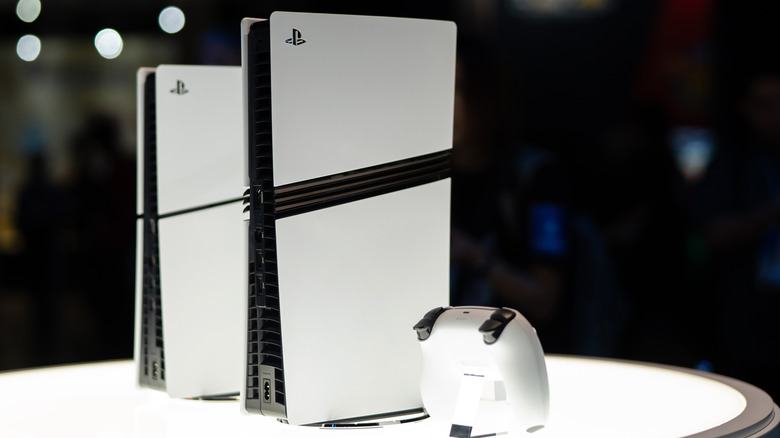
As the industry looks toward the latter half of the decade, the choice between investing in a high-end PC rig or sticking with console ecosystems boils down to user priorities, budget constraints, and performance demands.
When to Choose a Console (PS5 / PS5 Pro)
For the vast majority of consumers who simply want a plug-and-play entertainment center capable of delivering stunning visuals without technical troubleshooting, Sony’s hardware remains the superior value proposition.
- Cost-Efficiency: Securing stable 4K gaming with smooth frame rates for under $1,000 is exceptionally difficult in the PC space once you factor in the cost of a modern CPU, motherboard, RAM, power supply, case, and display.
- Longevity and Software Support: With a multi-year lifespan ahead, platforms like the base PS5 and PS5 Pro guarantee optimized performance for major upcoming releases like GTA VI without requiring mid-cycle hardware upgrades.
When to Choose a Gaming PC
Conversely, investing in a high-end PC rig with an advanced NVIDIA GeForce RTX GPU remains the undisputed choice for enthusiasts who demand absolute cutting-edge performance.
- Uncapped Potential: If your goal is high refresh-rate gaming (120Hz+), native ultra-wide resolutions, and maximum path-tracing fidelity, a high-end desktop environment is unmatched.
- Versatility: A PC functions as a complete productivity workstation, content creation hub, and open gaming platform across multiple storefronts (Steam, Epic Games, GOG, and Xbox Game Pass).
Conclusion
Ultimately, declaring an absolute winner between an NVIDIA GPU and Sony’s PlayStation hardware is impossible. While an RTX 2070 Super or RTX 5060 can match aspects of the PS5 and PS5 Pro on paper, the true magic of modern gaming lies in how effectively hardware and software are brought together. Whether you choose the streamlined efficiency of a PlayStation console or the expansive power of a custom PC rig, understanding these underlying compromises ensures you make the right investment for your digital entertainment needs.