Executive Overview
In an unprecedented aviation disruption that paralyzed American skies, the Federal Aviation Administration (FAA) instituted a nationwide ground stop on November 13, bringing commercial and private air traffic across the United States to a grinding halt. The hours-long freeze left millions of passengers stranded at terminals, forced hundreds of flight cancellations, and diverted thousands of airborne aircraft to alternative airports in one of the most sweeping operational halts in modern aviation history.
The crisis, which began unfolding during the busy afternoon travel window, forced authorities to confront deep-seated vulnerabilities within the nation’s critical infrastructure. Speaking at an emergency press conference following the lifting of the suspension at 8:15 PM Eastern Time, U.S. Transportation Secretary Sean Duffy did not mince words. He laid the blame squarely on what he termed the United States’ "incredibly old air traffic control system," criticizing Congress for protracted delays and resistance in approving the necessary funding to overhaul the archaic technology.
While Homeland Security officials quickly ruled out immediate indicators of a cyberattack—and distanced the incident from a separate, massive Microsoft service outage—the technical post-mortem revealed a dangerously brittle network relying on decades-old analog infrastructure. Secretary Duffy’s stark warning that the system "is going to continue to fail" has reignited a fierce political and fiscal debate on Capitol Hill regarding infrastructure modernization, funding priorities, and the escalating risks of operational neglect in the world’s busiest airspace.
Detailed Chronology of the November 13 Shutdown
The sequence of events on November 13 rapidly evolved from an internal technical glitch into a national logistical nightmare. Understanding the timeline underscores the cascading nature of modern air traffic management and the severe precautions required when foundational data feeds are compromised.
The Buildup and the Breaking Point
The trouble began early in the afternoon as air traffic control centers across the United States experienced anomalies in internal data transmission. According to Transportation Secretary Sean Duffy, the root of the crisis lay within the network’s reliance on Time-Division Multiplexing (TDM) telecom—a legacy analog telecommunications technology still utilized to relay critical flight and routing information between regional facilities.
As afternoon air traffic volumes peaked, the legacy routers handling the TDM data streams became critically overloaded. By 3:36 PM Eastern Time, the strain proved too much: the outdated hardware began transmitting conflicting and inconsistent information across the network. Air traffic controllers, whose safety mandates rely entirely on precise, real-time telemetry and positional data, were suddenly faced with ambiguous readouts.
The Implementation of the Ground Stop
Faced with corrupted data feeds and operating under strict fail-safe protocols, the FAA made the executive decision to implement a nationwide ground stop. Unlike regional disruptions caused by severe weather or localized technical faults, this order applied to the entire U.S. national airspace system.
The immediate operational impact was instantaneous and severe:
- Departures Halted: All outbound flights nationwide were held at their gates, creating massive terminal congestion.
- Airborne Diversions: Thousands of aircraft already in flight at the time of the order were forced to divert to nearest available airports or return to their points of origin, clogging ramp space at regional hubs.
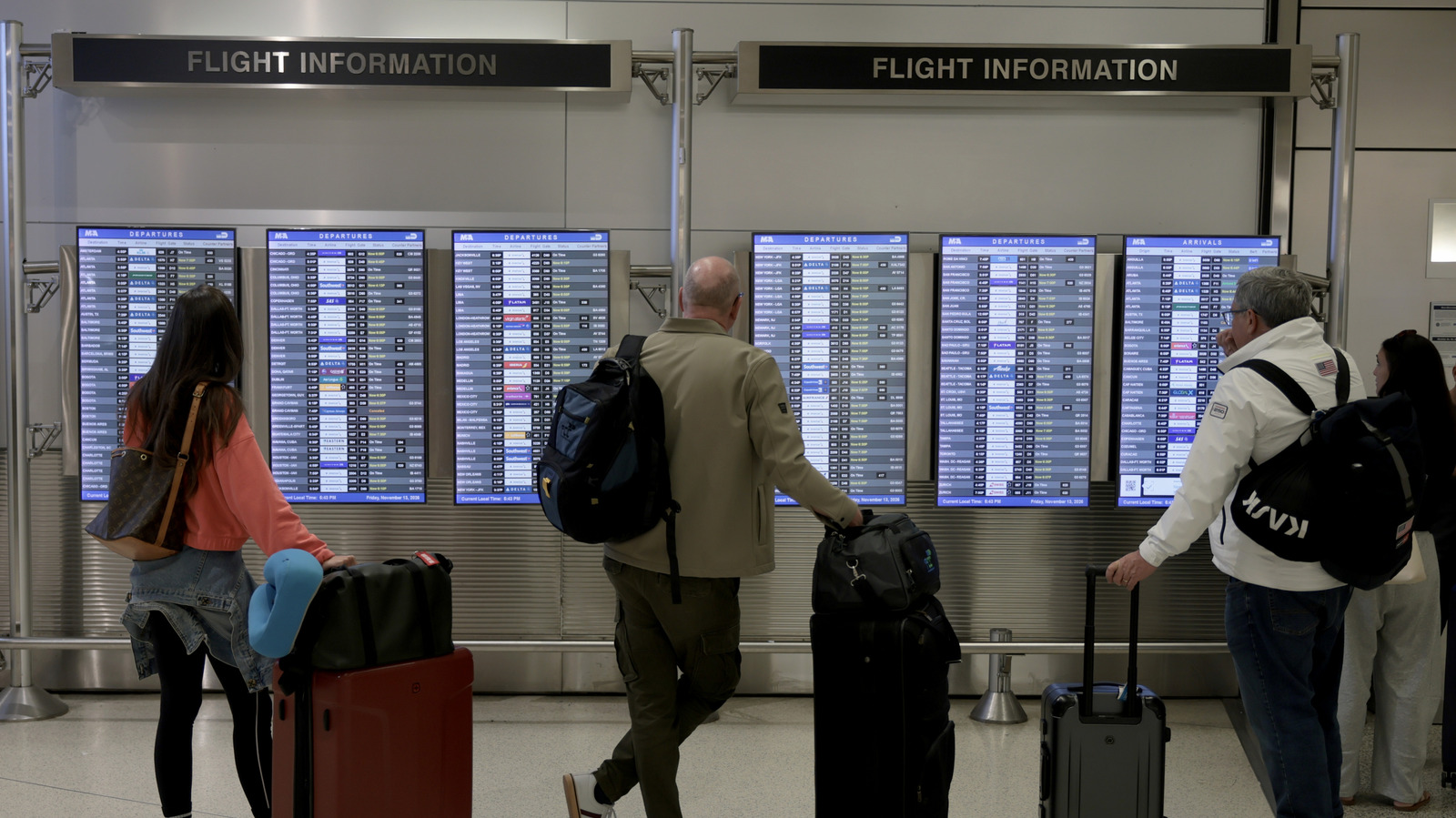
- Passenger Gridlock: Millions of travelers found themselves stranded in departure terminals, facing rolling delays, missed connections, and an immediate scramble for rebooking.
The Resumption of Operations
Engineering teams, working in tandem with telecommunications specialists, managed to isolate the failing legacy routers, bypass corrupted data streams, and verify system integrity over several tense hours. By 8:15 PM Eastern Time, the FAA officially lifted the nationwide ground stop, allowing a phased, highly regulated resumption of departures. However, aviation experts noted that unwinding the operational backlog would take days, as aircraft and flight crews were chronically out of position across the global network.
Supporting Context & Metrics: The Scale of the Disruption and Technology Gap
To fully grasp the magnitude of the November 13 ground stop, it is essential to examine both the statistical rarity of the event and the technological debt that accumulated over decades within the FAA’s architecture.
Historical Precedence
Nationwide ground stops ordered by the FAA are extraordinarily rare. Prior to this incident, the agency had only instituted system-wide ground stops on three prior occasions in the 21st century:
- September 11, 2001: The unprecedented, multi-day grounding of all U.S. airspace following the terrorist attacks.
- January 11, 2023: A brief, multi-hour ground stop caused by a corrupted database file within the Notice to Air Missions (NOTAM) system.
- November 13, 2026: The catastrophic failure of legacy analog telecom routers handling regional air traffic data feeds.
With the exception of the 9/11 attacks, the November 13 incident stands as the second-longest and most widespread operational freeze in modern American aviation history, outstripping previous technical glitches in both scale and duration.
The Technological Root Cause: TDM Telecom
The technical heart of the failure rests on TDM (Time-Division Multiplexing) technology. Developed decades ago, TDM was revolutionary for its era, allowing multiple signals to be transmitted simultaneously over a single communication channel by dividing the signal into alternating segments.
However, in an era defined by high-bandwidth Internet Protocol (IP) networks, cloud computing, and real-time data integration, TDM is a fossilized standard. Secretary Duffy noted that modern equipment—hardware that had already undergone scheduled modernization updates—withstood the data load seamlessly. It was exclusively the legacy, un-upgraded TDM routers that buckled under the traffic volume, transmitting contradictory location and flight plan data to air traffic controllers.
The Capital Deficiency: Billions Required
The crisis has thrust the ongoing battle over FAA modernization budgets into the national spotlight. While Congress previously allocated $12.5 billion toward upgrading aging air traffic facilities and digital infrastructure, transportation officials maintain that this figure is a mere drop in the bucket compared to the true cost of a complete system overhaul.
Secretary Duffy has been aggressively lobbying Congress for an additional $30 billion to accelerate the replacement of legacy analog systems with modern, resilient digital architecture. Aviation economists point out that the economic fallout of a single nationwide ground stop—measured in lost productivity, airline revenue loss, passenger compensation, and supply chain delays—runs into the billions of dollars, making preventative infrastructure investment far more economical than reactive emergency management.
Official Statements and Inter-Agency Responses
During the joint press conference held immediately after the ground stop was lifted, key administration figures addressed the public, the press, and Capitol Hill, offering clarity while managing anxieties regarding national security and systemic stability.
Secretary Sean Duffy’s Direct Challenge to Congress
Transportation Secretary Sean Duffy adopted an aggressive, uncompromising tone, using the platform to demand immediate fiscal action from lawmakers.
"It’s going to continue to fail," Duffy bluntly told reporters during the briefing, referencing the precarious state of the national airspace hardware. "How many times does this have to happen for Congress to give the money to fix it?"
Duffy emphasized that the crisis was entirely predictable and preventable. By highlighting that modernized sectors of the network performed without error, he sought to dismantle arguments that the system’s failures were systemic across all generations of equipment, pointing instead to specific budgetary bottlenecks as the primary point of failure.
Homeland Security and Cyber Threat Assessment
Addressing potential security implications, Homeland Security Secretary Markwayne Mullin joined Duffy at the podium to provide an assessment of the threat landscape. Mullin confirmed that preliminary investigations yielded "no indication" that the communication failure was the result of a malicious cyberattack or foreign interference.
However, exercising operational caution, Mullin noted that federal agencies were maintaining an open investigation:
- Ongoing Forensics: The Department of Homeland Security, in coordination with cybersecurity agencies, continued to scour server logs and router telemetry.
- No Rule-Out Policy: Mullin stressed that while evidence of a cyberattack was absent, the agency was "still looking" and "not going to rule it out" until a comprehensive forensic audit of the legacy network hardware was finalized.
- Separation of Incidents: Mullin explicitly clarified that the FAA communication collapse bore no relation to a separate, lengthy technical outage that knocked Microsoft’s core enterprise services (including Outlook and Teams) offline for over 24 hours earlier in the week, dispelling rumors of a coordinated multi-industry digital assault.
Future Outlook: Modernizing the Skies Before the Next Crisis
As commercial aviation returns to its frantic, high-volume rhythm, the fallout from the November 13 ground stop will likely reverberate through Washington for months. The incident serves as a glaring wake-up call regarding the fragility of critical national infrastructure in the face of deferred maintenance and political gridlock.
The Path Forward for FAA Modernization
The pressure is now firmly on Congress to re-evaluate infrastructure spending bills. Lawmakers from both sides of the aisle face mounting constituent pressure from frustrated travelers, commercial airline executives, and cargo operators who cannot afford recurring national shutdowns.
Key milestones in the impending modernization push include:
- Accelerated TDM Phase-Out: Agencies are expected to prioritize the immediate decommissioning of remaining legacy TDM telecom links, replacing them with encrypted, high-capacity IP-based networks.
- Funding Negotiations: Secretary Duffy’s request for an additional $30 billion will likely face renewed legislative scrutiny, with proponents arguing that national security and economic stability depend on swift authorization.
- Redundancy Protocols: The FAA is currently reviewing its operational safety margins, evaluating whether alternative fail-safes can prevent total nationwide ground stops in the event of localized or regional data corruptions.
Conclusion
The nationwide FAA ground stop of November 13 was more than an inconvenient travel day; it was a visible symptom of a deeper infrastructural malaise affecting the United States. As Transportation Secretary Sean Duffy warned, without decisive financial commitment from Congress to eradicate the remnants of analog technology from modern air traffic control, the skies above America remain vulnerable to recurring technological collapse.