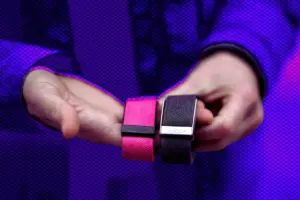
Executive Overview
In an era dominated by generative artificial intelligence, hyper-targeted algorithms, and a rising tide of bot-driven digital noise, the line between human and machine interaction has never been blurrier. From synthetic social media profiles to automated botnets manipulating public discourse, digital spaces are facing a crisis of authenticity. Into this fray steps Whoop, the consumer technology and fitness-tracking pioneer known for its minimalist, screenless bands.
This week, Whoop announced a paradigm-shifting pivot in how fitness data and community interact with the launch of Whoop Humans—a proprietary social network integrated directly into the company’s mobile ecosystem. Billed by the company as “the most verifiably human social network” on earth, the platform upends traditional social media architecture. Instead of relying on email addresses, CAPTCHAs, or government identification to prove user legitimacy, Whoop Humans authenticates every single profile through an immutable biological signature: a real, verified human heartbeat.
By allowing users to share workout milestones, sleep metrics, and recovery data exclusively with real people who wear the device, Whoop is attempting to solve a modern cultural paradox. While digital connectivity has exploded over the past two decades, authentic interpersonal support has declined. Whoop Humans merges biometric data-sharing with peer-to-peer accountability, transforming isolated health trackers into a synchronized web of human empathy.
This ambitious expansion arrives at a pivotal commercial moment for Whoop. Having spent 14 years meticulously scaling its subscription-based hardware model, the company is experiencing exponential growth, eyeing a milestone of roughly four million members by the close of the year. However, the wearable tech landscape is growing fiercely competitive, with tech giants like Google and Apple encroaching on the screenless health tracker space. This in-depth report explores the mechanics of Whoop Humans, the leadership vision behind it, the metrics driving Whoop’s explosive growth, and the broader implications for the future of digital health and social networking.
Detailed Chronology: From Biometric Band to Biological Social Network
To understand the strategic significance of Whoop Humans, one must trace the deliberate, highly disciplined evolution of the company itself. Founded 14 years ago by CEO Will Ahmed, Whoop rejected the flashing screens, smart notifications, and text-messaging capabilities that defined mainstream smartwatches like the Apple Watch. Instead, Ahmed and his team doubled down on continuous, unobtrusive biometric monitoring.
The 14-Year Build to an “Overnight Success”
For over a decade, Whoop operated as a niche product favored by elite endurance athletes, Olympians, and professional sports leagues. The company’s subscription model—ranging from $199 to $359 annually—bundled continuous physiological monitoring with deep analytical software. For years, growth was steady rather than explosive.
Reflecting on the timeline during a recent appearance on the All-In Podcast, Ahmed famously remarked that it took a very long time to become an overnight success.
- The First Decade: It took Whoop roughly 12 years to cross its first million active members.
- The Acceleration Phase: The inflection point arrived rapidly thereafter. Scaling from one million to two million members took approximately 18 months.
- Hyper-Growth: The jump from two million to three million members was compressed into just six months.
- Current Projections: Driven by aggressive international expansion and high-profile endorsements (such as an expanded, long-term partnership with NBA legend LeBron James), Whoop expects to close out the year approaching the four-million-member threshold.
The Launch of Whoop Humans
The conceptual groundwork for Whoop Humans was laid as the company’s active user base crossed multi-million-member milestones, creating a massive, highly engaged community of health-conscious individuals. Recognizing that members were already opening the Whoop mobile app an average of more than eight times per day, leadership identified an untapped opportunity: transforming raw physiological data into communal support.
Rolled out globally earlier this week, Whoop Humans allows members to opt into a dedicated social layer within the companion app. Users can connect with a curated network of friends, family members, and fellow Whoop wearers. Rather than posting filtered selfies or curated lifestyle updates, participants share raw, objective metrics: sleep debt, strain scores, recovery percentages, and major workout milestones.
The system was architected with privacy and mutual care at its core. Participation is entirely optional, giving users granular control over what they broadcast. More importantly, the foundational premise of the network relies entirely on physical hardware: because an account cannot be manufactured without an active, skin-contact device recording real-time cardiovascular data, the network is structurally immune to bot infiltration.
Supporting Context & Metrics: The Science of Wearables and Community
Whoop’s pivot into social networking is backed by substantial internal research and hard user engagement metrics. The company is not merely betting on a philosophical dislike of AI bots; it is capitalizing on established behavioral science demonstrating that wearable technology fundamentally alters human routines for the better.
The Health Dividends of Continuous Tracking
Last year, Whoop published peer-reviewed research in the scientific journal Sensors that analyzed 12 weeks of continuous data from nearly 12,000 active members. The findings painted a clear picture of how daily biometric monitoring shifts human behavior:
- Increased Physical Activity: Individuals who wore their Whoop device consistently every day logged more than 90 additional minutes of exercise per week compared to sporadic users.
- Optimized Sleep Architecture: Daily wearers accrued roughly 20 extra minutes of sleep per night, translating to over two hours of additional restorative rest every single week.
These numbers underscore why users open the Whoop app multiple times a day: the device serves as an active coach rather than a passive pedometer. By introducing Whoop Humans, the company aims to amplify these behavioral gains through the proven psychology of social accountability and shared goals.
The User Experience: Empathy Through Data
Early adopters of the feature have already begun highlighting its practical applications. Mika Bublitz, a prominent Whoop member, noted the unique emotional intelligence enabled by sharing biological recovery data rather than superficial updates.
"Sometimes people don’t tell you when they’re not feeling their best," Bublitz noted in the company’s official launch materials. "If I see a friend’s Recovery score is low, I can check in and say, ‘Hey, it’s okay to take it easy today.’ That’s what I like about Whoop Humans. It gives us another way to look out for each other."
This sentiment strikes at the heart of the platform’s design. In traditional social media, low energy or vulnerability is masked behind a polished digital facade. In Whoop Humans, a low recovery score—often driven by poor sleep, overtraining, or looming illness—serves as an open invitation for genuine, empathetic check-ins from trusted peers.
Official Statements and Leadership Vision
The philosophical underpinnings of Whoop Humans reflect a broader cultural pushback against the digital landscape’s descent into synthetic content. Will Ahmed, Founder and CEO of Whoop, articulated this vision clearly during the network’s rollout:
"In a world that’s becoming increasingly artificial, we’re building something deeply human," Ahmed stated. "Every account represents a real person with a verified heartbeat. They have real goals, challenges, and achievements. That’s what makes Whoop Humans different, and it’s a big area of investment for us."
Ahmed’s remarks position Whoop not merely as a hardware manufacturer competing in the consumer electronics space, but as a lifestyle ecosystem dedicated to human optimization. By anchoring digital interaction in biological reality, Whoop is attempting to reclaim the concept of the "social network" from the advertising-driven, algorithmically manipulated platforms of the Web 2.0 era.
Future Outlook: Competitive Landscapes and Market Challenges
As Whoop pushes deeper into software, community, and social infrastructure, it enters a high-stakes competitive arena. The screenless fitness tracker market—pioneered largely by Whoop and competitors like Oura—has officially caught the attention of the world’s largest technology conglomerates.
Navigating Big Tech Competition
- Google’s Fitbit Air: Earlier this year, Google launched the Fitbit Air, a lightweight, screenless wearable priced aggressively at $100, directly targeting the form factor that made Whoop popular.
- Apple’s Rumored Entries: Industry reports indicate that Apple is actively developing screenless health-tracking form factors to challenge incumbents in the recovery and sleep-tracking space.
Despite these competitive pressures from well-funded giants, Whoop’s distinct advantage lies in its deeply entrenched community, high daily engagement rates (averaging over eight app opens per day), and now, an exclusive social fabric that hardware giants cannot easily replicate without their own closed biological networks.
The Road Ahead for Whoop Humans
The long-term success of Whoop Humans will depend on how effectively the company balances privacy concerns with community engagement. While sharing sleep and recovery scores is appealing to fitness enthusiasts, ensuring robust data governance will be paramount as the platform scales toward its goal of four million-plus users.
If Whoop successfully executes this vision, Whoop Humans could establish a new blueprint for digital community—one where social bonds are forged not through likes, retweets, or AI-generated imagery, but through shared physical effort, mutual vulnerability, and the undeniable proof of a living, breathing pulse.