Executive Overview
Digital advertising has long grappled with the invisible tax of invalid traffic (IVT)—a persistent phenomenon encompassing automated bot swarms, accidental double-clicks, malicious click farms, and deliberate attempts by bad actors to drain competitors’ marketing budgets. For years, auditing these filtered interactions required marketing professionals and agency media buyers to perform tedious data-matching exercises, cross-referencing high-level campaign performance metrics against granular, decentralized monthly billing statements.
This administrative friction is finally dissipating. Google is rolling out a globally accessible Invalid Traffic Overview Card directly within the Google Ads interface. Announced by Google Ads Liaison Ginny Marvin via LinkedIn and detailed extensively in the latest edition of the Ads Decoded newsletter, this new feature centralizes crucial data regarding filtered ad activity.
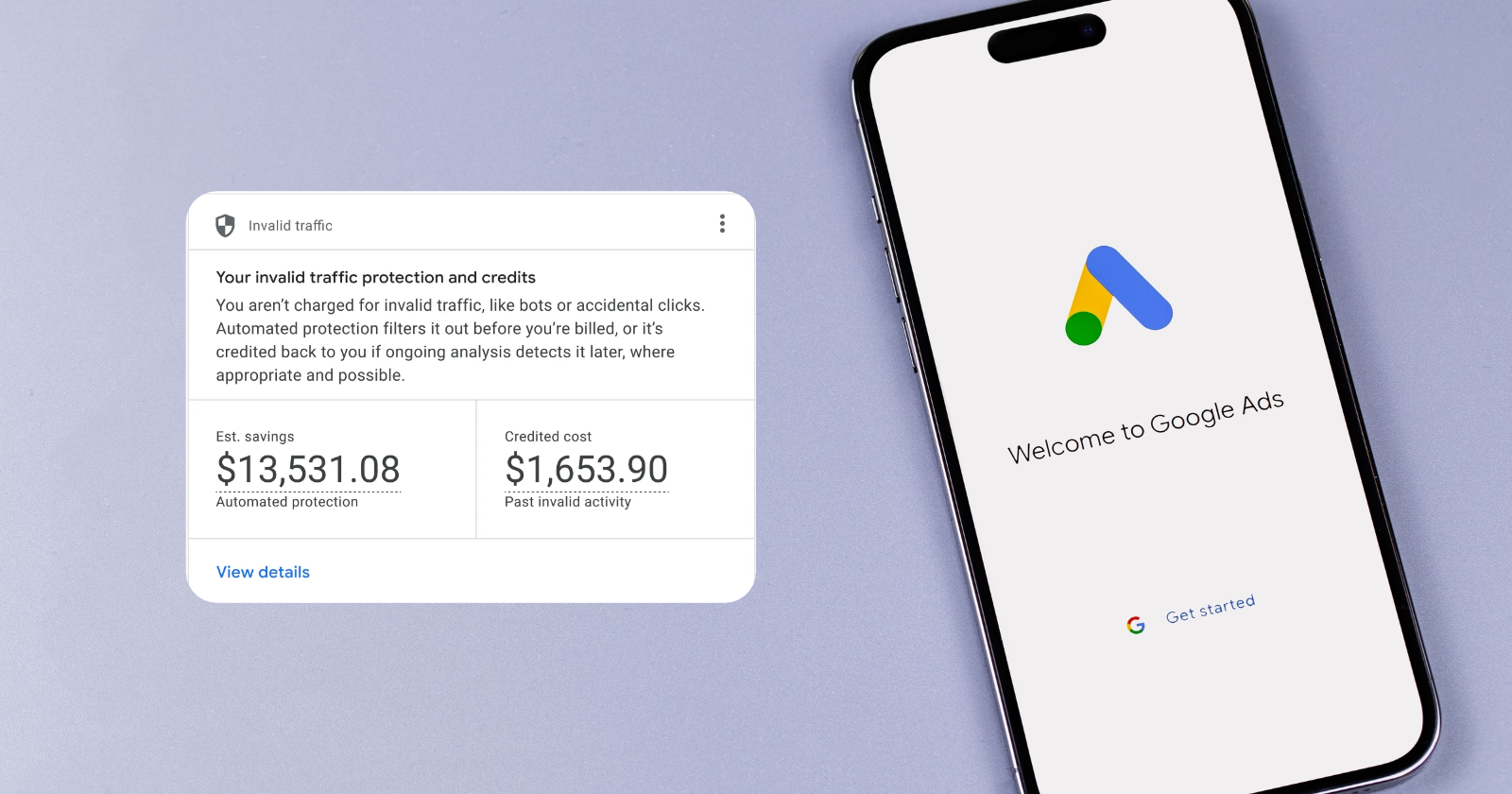
For the first time, advertisers can see a consolidated view of the invalid activity Google’s systems intercept before billing takes place, alongside any post-billing credits issued to their accounts. The rollout, which spans standard Google Ads accounts as well as enterprise management layers like Search Ads 360, aims to deliver unprecedented transparency regarding how marketing dollars are safeguarded. However, while this tool marks a major step forward in financial visibility, industry experts note that it comes with distinct analytical boundaries—particularly concerning lead quality and undetected fraudulent traffic.
Detailed Chronology and Rollout Timeline
The introduction of the Invalid Traffic Overview Card marks the culmination of a multi-year push by Google to provide greater visibility into its automated security and filtration layers. Historically, Google has relied on a sophisticated matrix of automated algorithms and dedicated human review teams to identify and neutralize malicious or accidental engagement. Yet, despite these robust background defenses, the mechanics of how and where invalid traffic was being intercepted remained somewhat opaque to the end user.
Phase 1: The Fragmentation Era (Pre-2026)
Prior to this update, advertisers possessed fractional visibility into invalid traffic. While platforms historically offered basic metrics regarding invalid clicks, these reports lacked financial context. Crucially, they failed to display the estimated monetary value of the traffic Google’s automated defense grids had successfully prevented from ever reaching an invoice. To calculate financial recuperation or assess the scale of filtered bot traffic, media buyers had to pull performance data from the Campaigns tab and manually reconcile it with line items on monthly billing invoices. This created a fragmented workflow, making it difficult for enterprise-level brands and agencies to audit traffic health rapidly across multiple sub-accounts.
Phase 2: The Integration and Global Rollout
Recognizing the demand for consolidated data transparency, Google engineering and product teams developed the unified Overview Card framework. The global rollout commenced this week, deploying automatically to eligible Google Ads accounts worldwide. Crucially, Google extended compatibility to Search Ads 360, ensuring that enterprise advertisers managing massive portfolios across multiple engines can also leverage the centralized reporting feature.
By embedding the card directly onto the primary Google Ads Overview page beneath the Campaigns tab, Google has shifted invalid traffic monitoring from an audit chore into an accessible, at-a-glance dashboard component.
Understanding the New Invalid Traffic Infrastructure
To fully appreciate the utility of the new card, advertisers must understand how Google categorizes and processes invalid interactions. Google’s safety systems are engineered to intercept the vast majority of suspicious engagement pre-billing. This means that when a bot, a malicious script, or a high-frequency clicker interacts with an ad, Google’s real-time filters recognize the anomaly and block the charge before it ever manifests on an invoice.
What the Overview Card Features
The newly introduced card consolidates this sprawling data set into three primary reporting areas, accessible directly from the main campaign interface:
- Pre-Billing Interceptions: Displays the total volume of ad interactions filtered out by Google’s systems prior to financial processing.
- Estimated Financial Savings: The standout addition to the reporting suite. For the first time, advertisers are provided with an estimated dollar amount representing the funds Google’s preventative filters kept safe from being billed.
- Post-Billing Credits: Tracks adjustments and credits issued after monthly billing cycles close, providing a clear audit trail for anomalies caught after initial invoice generation.
By clicking “View details,” users unlock an advanced modal containing a daily trend chart and a comprehensive campaign-level table. This granular breakdown allows media buyers to isolate specific dates and campaigns, tracing precisely where fraudulent or accidental activity was concentrated. Furthermore, direct links within the detailed view guide users straight to the relevant monthly invoices where post-billing credits were successfully applied.
Post-Billing Credits, Campaign Metrics, and the Report Editor
A recurring technical challenge in programmatic advertising is the reconciliation of closed accounting periods with ongoing campaign optimization. Google Ads locks standard campaign metrics at month-end to ensure permanent alignment with official billing records. Consequently, if Google’s advanced post-billing detection systems identify sophisticated invalid traffic after an invoice has closed, the resulting credits do not retroactively alter the Cost or CPA (Cost Per Acquisition) figures displayed within the standard Campaigns table.
This structural separation can create confusion for performance marketers trying to calculate true return on ad spend (ROAS). To bridge this gap, Google has provided a specialized reporting pathway.
Navigating the Invalid Activity Credit Report
Advertisers seeking a holistic performance view that accounts for retroactive adjustments must step outside the standard dashboard and utilize the Report editor.
- Path to Access: Navigate to Reports > Predefined reports (Dimensions) > Other > Invalid activity credit: Search & PMax.
- Structure and Composition: This dedicated report features 10 specialized columns, including vital performance metrics such as Adjusted cost and Adjusted cost / conv.
- Attribution Logic: A critical feature of this report is its chronological integrity. Even when Google issues a credit months after the fact, the system attributes those financial adjustments back to the exact dates the ads originally ran.
This enables performance marketers to analyze Search and Performance Max (PMax) campaign histories with absolute financial accuracy, ensuring that post-billing credits are fully factored into long-term efficiency models without distorting closed accounting ledgers.
Official Statements and Expert Insights
The release of the Invalid Traffic Overview Card has generated significant discussion across the digital marketing ecosystem. In her official announcement on LinkedIn and through deeper analysis published in the Ads Decoded newsletter, Ginny Marvin emphasized the dual goals of the update: greater financial transparency and a clearer understanding of how automated filters protect marketing investments.
However, industry analysts and platform veterans are quick to contextualize what these numbers do—and do not—represent.
The Trap of Campaign-Level Dollar Comparisons
One of the primary caveats highlighted by experts involves interpreting the new estimated savings figures. A common pitfall for inexperienced analysts is assuming that campaigns showing higher estimated dollar savings suffer from poorer traffic quality.
In reality, a campaign with a massive budget and high impression volume will naturally trigger higher estimated savings simply because it operates at a larger scale. Comparing absolute dollar amounts across campaigns of vastly different sizes without normalizing for traffic volume can lead to misguided optimization decisions. Media buyers must evaluate these savings proportionally against total impressions and clicks to accurately gauge localized traffic health.
The Lead Quality Misconception
Perhaps the most critical nuance addressed by Google’s leadership revolves around the perennial debate over lead generation quality. Many B2B and direct-to-consumer advertisers struggling with spam submissions, fake phone inquiries, or low-quality form fills frequently point the finger at invalid traffic.
Marvin explicitly clarified a fundamental distinction in the Ads Decoded newsletter: Google’s invalid traffic systems filter non-human or malicious ad interactions, but they cannot inherently police the intent of human users.
An account can feature pristine metrics within the new Invalid Traffic Overview Card—showing minimal bot activity and virtually zero fraudulent clicks—while simultaneously struggling with a deluge of low-quality or fraudulent form submissions. This phenomenon occurs because bad leads often originate from entirely legitimate clicks executed by real human beings who subsequently submit fabricated or spam data upon reaching a landing page.
Consequently, advertisers experiencing severe lead-quality degradation cannot rely solely on Google’s invalid traffic figures for answers. True root-cause analysis requires cross-referencing Google Ads reporting directly against internal Customer Relationship Management (CRM) databases, sales pipeline outcomes, and downstream conversion validation tools.
Future Outlook and Strategic Implications for Advertisers
As programmatic ecosystems grow increasingly complex, the demand for radical transparency will only intensify. Google’s rollout of the Invalid Traffic Overview Card sets a welcome precedent, moving the industry closer to unified, frictionless financial auditing within major ad platforms.
For digital marketing agencies and internal media buying teams, this tool provides immediate practical benefits:
- Streamlined Auditing: Eliminates hours of manual cross-referencing between campaign reports and billing statements.
- Enhanced Client Trust: Agencies can now present clients with clear, visual proof of the capital saved by Google’s automated defense mechanisms.
- Frictionless Enterprise Management: Seamless integration with Search Ads 360 empowers large-scale operations to monitor multi-channel accounts from a single command center.
Nevertheless, advertisers must approach the new card with informed pragmatism. The feature represents a powerful accounting and visibility aid, not a silver bullet for overarching traffic integrity or conversion quality. By understanding the structural boundaries of pre-billing filters, leveraging the Report Editor for adjusted CPA calculations, and maintaining rigorous CRM-level validation for lead generation campaigns, marketers can extract maximum value from Google’s latest transparency initiative while maintaining a clear-eyed view of their true digital performance.