Executive Overview
The global entertainment landscape mourns the loss of one of its most enduring, beloved, and pioneering figures. Dolly Parton, universally celebrated as the "Queen of Country," passed away at the age of 80, according to an official announcement from her estate on Tuesday, August 25. Parton leaves behind a staggering legacy that transcends the boundaries of the genre that first made her a household name.
While her extraordinary contributions to American music—spanning nearly seven decades, yielding 11 Grammy Awards, and introducing timeless anthems such as "Jolene," "I Will Always Love You," and "9 to 5"—cemented her status as a musical titan, Parton’s influence extended far beyond the recording studio. She was a masterclass in personal branding, an astute businesswoman, a tireless philanthropist, and a cultural architect who continuously reinvented her relevance across generations.
In her later years, Parton demonstrated a rare, generational agility. Rather than resting on the laurels of her historic catalog, she actively bridged generational divides by collaborating with contemporary superstars including Beyoncé, Post Malone, and Pitbull. Furthermore, her magnetic charisma and instantly recognizable persona—anchored by her iconic platinum blonde bouffant wig and quick-witted humor—made her one of the most sought-after figures in commercial advertising. For decades, Parton utilized her immense cultural capital to anchor major brand campaigns, proving that authenticity and commercial viability could coexist harmoniously.
This comprehensive retrospective examines the life, career, cultural impact, and commercial legacy of a true American icon, charting her evolution from rural Appalachia to the upper echelon of global pop culture.
Detailed Chronology: From Sevier County to Global Stardom
The Appalachian Roots (1946–1966)
Born into a family of 12 children in a one-room cabin in Locust Ridge, Sevier County, Tennessee, Dolly Rebecca Parton’s early life was defined by both financial hardship and deep musical enrichment. Music was a staple of her upbringing, nurtured by her mother’s family, who performed spirituals and traditional Appalachian folk songs in local churches.
By age 10, Parton was appearing on local radio and television stations in East Tennessee. Recognizing her raw talent, her uncle, Bill Owens, helped secure her appearances on Cas Walker’s Knoxville-based television show. The moment she graduated from high school in 1964, Parton packed her bags and moved directly to Nashville, determined to conquer the country music capital.
The Nashville Breakthrough and Porter Wagoner Era (1967–1974)
Nashville initially resisted Parton’s distinct soprano voice and theatrical flair, but perseverance paid off when country star Porter Wagoner invited her to join his popular syndicated television program, The Porter Wagoner Show, in 1967.
As the "girl singer" on the show, Parton gained national exposure. Together, the duo recorded a string of successful duet hits, including "The Last Thing on My Mind" and "Just Someone I Used to Know." However, Parton’s ambitions extended far beyond being a featured collaborator. In 1974, she penned and recorded "I Will Always Love You"—a poignant ballad written as a professional farewell to Wagoner as she struck out on her own. The song went to No. 1 on the country charts twice (in 1974 and again in 1982) and would later become a global phenomenon when Whitney Houston covered it in 1992.
Pop Crossover and Hollywood Stardom (1975–1999)
During the late 1970s and 1980s, Parton made a calculated and successful pivot toward mainstream pop audiences. Hits like "Here You Come Again" (1977) earned her crossover success and her first Grammy Award.
In 1980, Parton expanded her empire into Hollywood, starring alongside Jane Fonda and Lily Tomlin in the workplace comedy blockbuster 9 to 5. Parton not only made a critically praised acting debut but also wrote and performed the film’s iconic title track, earning Academy Award and Golden Globe nominations.
Her entrepreneurial spirit crystallized in 1986 with the opening of Dollywood, her multi-million-dollar theme park in Pigeon Forge, Tennessee. Dollywood transformed her home region into a major economic hub, providing thousands of jobs and cementing her status as an astute business leader.
The Legacy Years and Genre-Defying Collaborations (2000–2026)
As the decades progressed, Parton achieved elder-stateswoman status, yet she refused to remain static. She embraced her roots with a celebrated trilogy of acoustic bluegrass albums (The Grass Is Blue, Little Sparrow, and Halos & Horns) in the early 2000s, earning international critical acclaim.
In her final chapters, Parton demonstrated an unprecedented ability to connect with younger generations of music fans. Rather than fading into nostalgia, she stepped squarely into the contemporary pop culture zeitgeist. Her high-profile collaborations with modern icons—such as appearing on Beyoncé’s critically lauded country-infused album Cowboy Carter, trading verses with Post Malone, and linking up with Pitbull—proved that Parton’s star power possessed no expiration date.
Supporting Context & Metrics: The Scale of an Empire
To truly understand Dolly Parton is to examine the staggering metrics of her career. Her influence was measured not only in cultural resonance but in quantifiable commercial and artistic achievements.
- Chart Dominance: Parton charted 26 songs to the number-one spot on the Billboard Hot Country Songs chart, a record for a female artist that stood for decades.
- Grammy Recognition: She earned 11 Grammy Awards from 50 nominations, alongside a prestigious Lifetime Achievement Award bestowed upon her in 2011.
- Songwriting Output: Parton wrote over 3,000 songs during her lifetime, including "I Will Always Love You," which generated tens of millions of dollars in royalties, a significant portion of which she shrewdly invested back into her philanthropic and business ventures.
- The Dollywood Economic Engine: Dollywood attracts over 3 million visitors annually, making it one of the largest employers in East Tennessee and injecting hundreds of millions of dollars into the local economy.
- Literacy Philanthropy: Through her Imagination Library, founded in 1995, Parton mailed over 200 million free books to children from birth to age five across the United States, Canada, the United Kingdom, Australia, and the Republic of Ireland.
The Ultimate Commercial Icon
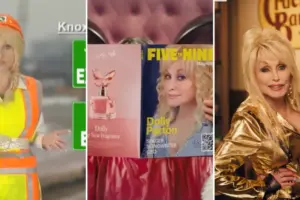
Parton’s magnetic appeal was not lost on the corporate world. Always one for the spotlight, she brought her formidable talents to television and print commercials over the decades, weaponizing her iconic platinum blonde bouffant wig, sparkling attire, and self-deprecating wit.
Whether hawking telecommunications, fast food, or financial services, Parton understood the mechanics of marketing. She famously used her larger-than-life persona to disarm consumers, turning every commercial spot into a masterclass in brand affinity. Marketers revered her because she embodied the ultimate paradox of modern branding: she was simultaneously hyper-commercialized and fiercely authentic.
Official Statements and Industry Reactions
The news of Parton’s passing sent shockwaves through the global entertainment industry, prompting an outpouring of grief, admiration, and tributes from fellow artists, cultural figures, and corporate leaders.
In a joint statement released Tuesday afternoon, her family expressed profound sorrow:
"It is with heavy hearts that we announce the passing of our beloved Dolly. She passed peacefully, surrounded by the family, music, and prayer that she cherished above all else. While she leaves behind an unmatched musical legacy, her greatest creation was always the love she shared with the world. We take comfort in knowing that her light will continue to shine through every song she wrote and every heart she touched."
Music icons and longtime collaborators quickly took to social media and official channels to honor her memory.
Beyoncé, who worked closely with Parton on Cowboy Carter, shared a heartfelt tribute:
"Dolly, your voice taught us how to feel, and your grace taught us how to live. You welcomed me into your world with open arms, and your generosity of spirit changed me forever. There will never be another Queen of Country. Rest in peace, legend."
Post Malone echoed these sentiments, writing:
"Heartbroken doesn’t even begin to cover it. Getting to share a microphone with Dolly was the greatest honor of my life. She was pure magic, toughness, and heart all rolled into one. Love you always, Dolly."
Corporate and industry leaders also recognized her profound impact on business and marketing. Representatives from major trade organizations noted that Parton’s ability to navigate the intersection of pop culture, personal branding, and commerce made her a blueprint for modern influencers and marketers alike.
Future Outlook: Preserving the Imprint of a Legend
As the entertainment world transitions from active mourning to long-term legacy preservation, the question turns to how the vast empire built by Dolly Parton will endure.
Unlike many artists whose estates face fragmentation or administrative chaos, Parton was famously proactive in managing her business affairs. Throughout her career, she retained ownership of her master recordings and publishing rights—most notably turning down Elvis Presley’s request to record "I Will Always Love You" because Colonel Tom Parker demanded half her publishing rights, a business decision that proved immensely lucrative when Whitney Houston later recorded the track.
Her sprawling business ventures, including Dollywood, her production company Sandollar Productions, and her extensive philanthropic frameworks such as the Dollywood Foundation and the Imagination Library, are structured to run in perpetuity. Leadership teams trained under Parton’s watchful eye for decades are already positioned to ensure that her commercial and charitable endeavors continue uninterrupted.
Furthermore, Parton’s cultural blueprint will continue to influence future generations. In an era where personal branding dictates the success of nearly every entertainer, Parton was the original architect of the self-made persona. She proved that an artist could maintain absolute control over their image while remaining universally accessible and deeply endearing.
As Brandweek and industry marketers frequently analyze, the future of brands is forged through authenticity, connection, and cultural resonance. Dolly Parton mastered all three for over sixty years. Though the "Queen of Country" has left the stage, the standard of excellence, resilience, and joy she established will continue to shape what comes next for generations to come.