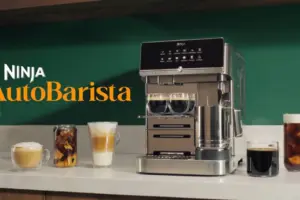
Executive Overview: The Dawn of the "Set-and-Forget" Espresso Era
In the evolving landscape of kitchen technology, SharkNinja has long positioned itself as the king of the multi-functional appliance. From air fryers that replace convection ovens to blenders that double as food processors, the brand’s philosophy is clear: simplify the complex. With the launch of the Ninja AutoBarista, the company has set its sights on the high-end coffee market, promising to bridge the cavernous gap between the lackluster convenience of pod-based systems and the daunting, artisan-level complexity of traditional semi-automatic espresso machines.
The AutoBarista is, by all accounts, an engineering marvel. It is a fully automatic espresso machine designed for the consumer who craves a café-quality cappuccino or a nuanced flat white but lacks the time—or the desire—to study the physics of extraction. By integrating a proprietary "Grind iQ" system, the machine claims to automate the most intimidating variables of brewing: grind size, tamping pressure, water temperature, and extraction timing. Yet, as our hands-on evaluation suggests, this level of automation comes with a distinct set of trade-offs, particularly regarding maintenance and the "invisible labor" required to keep the machine operational. At a premium price point of $999.99, the AutoBarista asks a fundamental question: Is the convenience of one-touch espresso worth the loss of manual control and the high-maintenance reality of a complex internal ecosystem?
Detailed Chronology: From Bean to Beverage
To understand the AutoBarista, one must look at the "Grind iQ" technology that serves as its brain. In testing, the machine effectively demystifies the espresso process. Upon loading the hopper with fresh beans, the machine’s sensors immediately begin to analyze the roast type, bean size, and relative freshness.
The Brewing Workflow
- Calibration: As you select one of the 13 programmed drink options, the machine automatically calibrates the grind profile. It is essentially "bowling with bumpers up"—a metaphor that holds true for the entire user experience.
- Extraction: The machine handles the tamping and pressure, ensuring that whether you are brewing a short shot or a long-pour, the extraction remains consistent.
- Milk Integration: On the machine’s secondary side, the automatic milk frother takes over. Users can specify the temperature and foam density, with dedicated settings for dairy and plant-based alternatives.
- Maintenance Cycles: A critical, if somewhat burdensome, part of the process is the pre- and post-brew rinse cycle. The machine purges its internal lines with hot water automatically, ensuring that old grounds and stale oils do not contaminate the next cup.
While this workflow is undoubtedly impressive, it highlights a stark divide in the coffee community. For the home barista who enjoys the tactile ritual of a gooseneck kettle and the visual inspection of a coffee puck, the AutoBarista will feel reductive. However, for the busy professional, the machine is nothing short of a miracle, delivering a solid, consistent beverage before the morning commute.
Supporting Context & Metrics: The Cost of Convenience
When analyzing the value proposition of a $1,000 appliance, one must account for more than just the taste of the coffee. The AutoBarista serves as a central hub, combining a grinder, a scale, a drip coffee maker, an espresso machine, and a milk frother into a single footprint.
The Maintenance Metrics
The true "hidden" cost of the AutoBarista lies in its maintenance requirements. While the machine is designed for ease of use, it is not designed for neglect:

- The Drip Tray Dilemma: The auto-rinse feature, while excellent for flavor, necessitates frequent emptying of the drip tray. In a multi-user household, this tray can reach capacity within days, leading to potential spills. The design of the tray is intuitive, but the capacity is surprisingly limited for a machine of this size.
- The Knock Box Reality: Perhaps the most significant hurdle is the internal knock box. While users of professional manual machines are accustomed to emptying spent pucks daily, the "set-and-forget" nature of the AutoBarista encourages users to ignore the waste container. Left unchecked, the moisture trapped in the pucks provides a perfect breeding ground for mold within 48 to 72 hours.
- Price vs. Utility: At $999.99, the device costs significantly more than a standard high-end drip machine or a basic entry-level espresso setup. For comparison, a dedicated cold brew maker—like the OXO model—costs a fraction of the price (roughly 6% of the AutoBarista’s cost). Unless a user intends to utilize the full breadth of the machine’s 13-drink library, the return on investment diminishes rapidly.
Official Perspectives: The Philosophy of Automation
SharkNinja has maintained that the AutoBarista is not meant to replace the artisanal coffee shop experience but rather to replicate the quality of that experience in a domestic setting. The inclusion of Grind iQ technology is a direct response to market research suggesting that many consumers purchase expensive espresso machines, only to be intimidated by the learning curve, eventually relegating the machines to "countertop ornaments."
By removing the "need to know" behind the chemistry of coffee, Ninja is democratizing the espresso market. The official stance from the company emphasizes that the machine is intended for those who love high-quality coffee but have "never analyzed their espresso pucks." It is an admission that the product is not for the coffee snob—the enthusiast who measures dosage to the tenth of a gram—but for the high-end consumer who values consistency and speed above all else.
Future Outlook: The Evolution of Smart Kitchens
The Ninja AutoBarista represents a pivotal moment in the "smart home" kitchen category. As AI and sensor technology become more affordable, we can expect to see "iQ-style" features migrate from premium machines to mid-range models. However, the future of these devices will likely hinge on solving the "maintenance friction" observed in our testing.
Where Do We Go From Here?
- Automated Waste Management: Future iterations will likely need to address the waste collection issue. Whether through a larger, modular knock box or a more efficient water drainage system, the "nuisance" of cleaning must be minimized to match the ease of brewing.
- Connectivity: While the current AutoBarista relies on button-press presets, future versions could see app integration, allowing users to schedule maintenance alerts or even remotely trigger the cleaning cycle.
- Sustainable Scaling: As the market shifts toward eco-conscious consumption, companies will face pressure to make these complex machines more repairable. The "all-in-one" nature of the AutoBarista means that if one component fails—be it the grinder or the milk steamer—the entire machine becomes effectively useless, raising questions about long-term electronic waste.
The Verdict
The Ninja AutoBarista is a triumph of engineering that serves a very specific type of coffee drinker: the one who wants the best possible cup of coffee with the least possible mental load. It is a luxurious, high-performance tool that effectively eliminates the variable-heavy anxiety of traditional espresso brewing.
However, the machine is not for everyone. If you view your morning coffee as a meditative, manual ritual, the AutoBarista will feel like a sterile intervention. If you are a casual user who is easily deterred by daily cleaning requirements, the mold-prone knock box and the frequent drip tray maintenance may prove to be a significant frustration.
Ultimately, the AutoBarista is a testament to Ninja’s ability to condense a complex, multi-step process into a single, sleek stainless-steel package. It is an investment in time-saving technology that rewards the user with café-grade drinks, provided that the user is willing to pay both the monetary price and the "maintenance tax" that accompanies it. For those who prioritize a low-effort, high-reward morning routine, it stands as the most comprehensive, albeit demanding, solution on the market today.