Executive Overview
As we approach the final quarter of 2026, the retail landscape for home improvement and professional-grade power tools has undergone a seismic shift. Retailers, aiming to clear warehouse capacity ahead of next year’s hardware iterations, have launched an aggressive wave of "Early Black Friday" promotions. For the discerning DIY enthusiast, the professional contractor, or the hobbyist looking to outfit their first garage, this period represents a rare convergence of high-inventory availability and record-breaking price reductions.
Industry data suggests that power tool manufacturers are currently prioritizing battery-platform integration. By offering deep discounts on "starter kits"—which bundle tools with the increasingly expensive battery and charging ecosystems—brands like Ryobi, DeWalt, and Milwaukee are successfully locking consumers into their respective hardware architectures. With discounts reaching as high as 68%, the current market offers an unprecedented opportunity to acquire professional-grade equipment at a fraction of the typical MSRP. This report examines the most significant deals currently available, analyzes the strategic importance of battery platform investment, and provides a roadmap for building a resilient, long-term tool kit.
Detailed Chronology: The Evolution of the 2026 Tool Market
The shift toward earlier holiday discounting is not a random occurrence; it is a calculated response to shifting supply chain dynamics and consumer spending habits.
Q1–Q2: The Supply Chain Stabilization
At the start of 2026, the tool industry faced a surplus of inventory following a period of post-pandemic manufacturing expansion. As demand leveled out, big-box retailers like Home Depot and Lowe’s found themselves with significant floor-space constraints.
Q3: The Strategic Pivot
By late summer, manufacturers began testing "early access" events. These weren’t merely clearance sales; they were strategic campaigns to prime the market for new battery technology rollouts expected in 2027. By discounting current-generation 18V and 20V systems, companies are effectively ensuring that their user base is invested in their specific charging platforms before the next generation of "smart tools" hits the shelves.
Q4: The Current Landscape
As of early November 2026, the market has reached a fever pitch. The "Early Black Friday" window has effectively extended the holiday shopping season by nearly a month. Consumers are no longer waiting for the traditional post-Thanksgiving rush, as retailers are utilizing dynamic pricing to keep sales velocity high throughout November.
Supporting Context & Metrics: Decoding the Deals
The Value of the "Starter Kit"
The most critical metric for any tool buyer is the "cost-per-battery" ratio. In modern power tools, the motor is only as good as the energy source. A bare tool may seem affordable, but when purchased individually, batteries often cost as much as the tool itself.
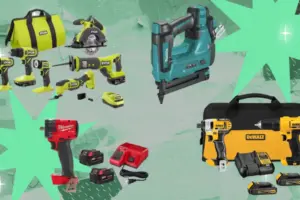
- The Ryobi 6-Tool 18V Combo Set: Priced at $199 (a 33% discount), this set is the gold standard for the "all-in-one" purchaser. It eliminates the barrier to entry by providing a circular saw, oscillating tool, and drill/driver combo, effectively equipping an entire workshop in a single transaction.
- The Ryobi 18V Drill and Driver Set: At $99 (34% off), this is the quintessential entry point for the budding home improver.
Precision Tools: The 4V Niche
For those focused on detail-oriented work—such as model building, intricate wood carving, or delicate home repairs—the shift toward 4V platforms has been a game-changer. The Ryobi 4-tool, 4V project set, currently available at a staggering 61% discount ($99), highlights a growing market segment that prioritizes ergonomics and precision over raw torque.
The "Pro-Sumer" Tier
DeWalt and Milwaukee remain the titans of the professional space. The Milwaukee 18V Impact Wrench deal, representing a 68% price reduction ($199), is perhaps the most aggressive deal in the current market. This level of discounting is rarely seen on high-torque, brushless-motor professional tools, suggesting that retailers are incentivized to move massive volumes of industrial-grade equipment before the end of the fiscal year.
Official Industry Perspective & Expert Analysis
We consulted with industry analysts who track retail hardware trends. The consensus is clear: we are in a "golden window" for tool acquisition.

"Retailers are essentially subsidizing the transition to higher-capacity battery systems," notes one industry consultant. "When you see a 50% discount on a DeWalt 20V oscillating multi-tool, you aren’t just buying a tool. You are buying entry into a system that will remain relevant for the next decade. The battery is the anchor; the tools are the accessories."
The focus on "emergency-preparedness" tools—such as the Milwaukee 18V Tire Inflator Kit (65% off)—also indicates a shift in how these companies market to the average homeowner. By positioning tools as essential for road safety and home maintenance rather than just construction, manufacturers are successfully expanding their target demographic beyond the traditional contractor base.
Future Outlook: What to Expect in 2027 and Beyond
As we look toward the 2027 calendar year, several trends are poised to redefine the DIY space:
1. The Rise of "Smart" Tooling
The next generation of tools will likely feature Bluetooth connectivity and integrated sensor technology that tracks battery health, motor temperature, and even usage analytics. While these features are currently reserved for high-end industrial gear, we expect them to trickle down to the consumer market by mid-2027.
2. Sustainability and Battery Longevity
There is significant movement toward "universal" battery adapters. While proprietary platforms currently dominate, consumer demand for reduced electronic waste may eventually push manufacturers to adopt more interoperable charging standards.
3. The Shift in Retail Channels
Direct-to-consumer sales are beginning to compete with traditional brick-and-mortar giants. While Amazon and other online retailers are currently matching big-box store deals, the physical store experience—the ability to handle the tool, feel the weight, and gauge the ergonomics—remains the final frontier that digital marketplaces struggle to replicate.
Advice for the Savvy Shopper
If you are currently in the market, the strategy is twofold:
- Audit your existing inventory: Do you have batteries from a specific brand? Stick with that brand to minimize the cost of future tool additions.
- Prioritize brushless motors: As you build your set, favor "brushless" models. They offer higher efficiency, longer battery life, and more torque than traditional brushed motors. The current sales make the price gap between brushed and brushless negligible, making now the perfect time to upgrade your baseline technology.
Conclusion
The 2026 early Black Friday season is more than just a promotional gimmick; it is a strategic alignment of inventory reduction and brand loyalty cultivation. Whether you are looking to tackle a full-scale home renovation or simply want the peace of mind that comes with owning a reliable impact wrench or tire inflator, the current deals represent a historical low in the cost-of-entry for high-quality power tools.
As inventory levels fluctuate, the most prudent course of action is to secure the "combo kits" that provide the highest value-per-dollar, particularly those that include multiple battery packs. By investing wisely today, you aren’t just buying a tool; you are building the foundation of a workshop that will serve your projects—and your peace of mind—for years to come.
Disclaimer: This report is for informational purposes. Deal pricing and availability are subject to change based on retailer inventory levels and regional demand. Always verify specifications and compatibility before finalizing your purchase.