Executive Overview
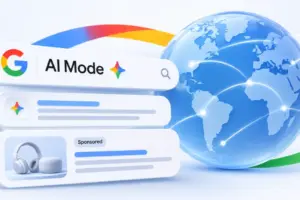
In a significant shift for the digital advertising landscape, Google has officially accelerated the global rollout of “Ads in AI Mode,” extending the feature to over 10 new English-speaking markets. This expansion, confirmed via official Google Ads channels on November 9, represents a strategic push to capture commercial intent within generative AI-driven search experiences. Alongside this geographic growth, Google is introducing “multiturn ads” in the United States, a sophisticated placement format that targets follow-up queries during complex conversational exchanges.
While these updates offer brands unprecedented opportunities to intercept consumers during the exploratory, top-of-funnel phase of the customer journey, they also underscore a widening chasm in data transparency. Despite the increased complexity of these placements, Google continues to withhold granular reporting, forcing advertisers to contend with a “black box” where AI Mode performance is inextricably woven into standard campaign metrics. For agencies and in-house marketing teams, this creates a critical reporting hurdle: the inability to isolate the return on investment (ROI) or cost-per-acquisition (CPA) specifically attributable to AI-driven search interactions.
Detailed Chronology: From Strategy to Global Rollout
The trajectory of Ads in AI Mode has been rapid, moving from experimental integration to a core component of Google’s search monetization strategy. The foundation for this expansion was laid in October, when Dan Taylor, Vice President of Global Ads at Google, teased the Q4 roadmap for the product on LinkedIn. Taylor’s post signaled that the tech giant was prioritizing the scaling of these placements to keep pace with the evolving nature of user search behavior.
The November Expansion
On November 9, the Google Ads X (formerly Twitter) account confirmed the rollout to more than 10 new countries. This deployment is currently limited to English-language queries, underscoring Google’s focus on high-adoption regions before localizing the technology for non-English markets.
Future Pipeline
Looking ahead, Google’s roadmap for 2026 includes targeted expansions into Brazil, Mexico, and the United Kingdom. These regions are currently classified as "upcoming," suggesting that the technical infrastructure—specifically the linguistic models required to maintain high-quality ad matching in diverse languages—is still under development. Notably, current documentation highlights that in specific markets like Pakistan, support remains limited to text-based advertisements, indicating that the rollout is not uniform across all global territories.
Supporting Context & Metrics: The Mechanics of AI Conversational Ads
To understand why this expansion is both a boon and a headache for advertisers, one must first understand how “AI Mode” transforms the search experience.
The “Query Fan-Out” Phenomenon
Unlike traditional search, which serves a static list of links, AI Mode functions as a collaborative research engine. Google’s system utilizes a process known as “query fan-out.” When a user submits a broad or exploratory query—such as "best home office setup for ergonomics"—the AI does not merely return a singular response. It automatically issues related searches across subtopics (e.g., chair support, monitor height, lighting) to synthesize a comprehensive, multi-faceted answer.
Multiturn Ads: Capturing the Follow-Up
The introduction of multiturn ads in the U.S. marks a critical evolution. Previously, ads were largely triggered by the initial prompt. Now, Google is inserting commercial placements into the "follow-up" phase of the conversation.
If a user asks a follow-up question regarding a specific product feature or a comparison between two brands, Google’s AI analyzes the context of both the original inquiry and the subsequent follow-up. This allows the system to serve an ad that is hyper-relevant to the user’s current stage of consideration. Even if the user has not explicitly searched for a brand name, the AI can infer commercial intent based on the "exploratory" nature of the conversation, effectively turning a research session into a point of sale.
Official Statements and Industry Implications
Dan Taylor’s commentary on the shift in search behavior has been particularly revealing. He notes that users are increasingly moving away from "keyword-heavy" queries toward longer, more conversational, and complex questions.
"People are asking longer, more detailed, and exploratory questions in AI Mode," Taylor noted in his LinkedIn update. He categorized these interactions as high-intent, upper-funnel queries. For the savvy advertiser, this is a goldmine; it offers the chance to reach consumers before they have finalized their purchase decisions. However, the catch remains: if the consumer is still in the "exploration" phase, a longer question or a multi-turn conversation does not necessarily equate to a high probability of conversion.
The Advertiser’s Dilemma: The Reporting Gap
The most contentious issue arising from this expansion is the lack of granular performance data. Google’s current policy is to roll all AI Mode impressions, clicks, and conversions into standard campaign reporting.
- Combined Data Streams: Advertisers cannot view a "breakdown" report for AI Mode. Consequently, it is impossible to calculate a separate CPA or ROAS (Return on Ad Spend) for these placements.
- Search Term Obfuscation: Google’s keyword prioritization documentation admits that reported search terms for AI-enhanced experiences are often "approximations" rather than verbatim user queries. This limits the ability of PPC managers to perform precise negative keyword management.
- The Attribution Void: If a campaign’s performance shifts after the AI Mode expansion, there is no way to definitively link that change to the new placements. Agencies are left to guess whether a surge in leads or a dip in conversion rate is due to AI Mode or other market variables.
Future Outlook: Navigating the "Black Box"
As AI Mode becomes the default search experience for an increasing number of users, the reporting gap will likely become a major pain point for CMOs and performance marketing directors.
How Teams Can Adapt Today
Until Google provides the transparency that the industry demands, marketing teams should adopt a "holistic performance" mindset:
- Benchmark Against Trends: Track campaign performance trends before and after the rollout in your specific region. While not perfect, identifying anomalous spikes or dips can help form a hypothesis about AI Mode’s impact.
- Focus on Conversion Quality: Since you cannot isolate the source, pivot your focus toward lead quality. If your conversion volume is rising but lead quality is declining, it may suggest that AI Mode’s "exploratory" traffic is lower-intent than traditional search traffic.
- Manage Client Expectations: Transparency is the best defense. Proactively communicate to stakeholders that AI Mode is an "emerging placement" and that current reporting constraints make it impossible to isolate its specific contribution. Frame this as part of the cost of staying ahead of the curve in an AI-first search environment.
The Long-Term Trajectory
Google is unlikely to provide granular reporting in the immediate future, as the very nature of AI-generated responses makes "keyword-level" attribution inherently difficult. The future of search advertising is moving toward "intent-based" rather than "keyword-based" bidding.
Advertisers must prepare for a future where they bid on audiences and contexts rather than specific strings of text. While the current lack of data is frustrating, it is a harbinger of a broader trend: the automation of the search engine results page (SERP). As Google continues to refine its AI Mode, the burden will shift from manual optimization to trusting machine learning models to identify and convert prospects within these complex, multi-turn conversations.
In conclusion, the expansion of AI Mode ads is a testament to the power of generative AI to reshape commerce. However, for the advertisers fueling this engine, the journey is one of blind navigation. Until the "reporting gap" is closed, the true efficacy of these ads will remain an enigma—a black box that requires both patience and a willingness to embrace the shifting sands of modern search.