Executive Overview
In the fast-paced ecosystem of modern web development, authoritative resources serve as the intellectual bedrock for millions of engineers, designers, and digital architects. The release of the 2026 State of CSS survey results has marked a historic milestone for the community, illuminating shifts not only in how developers write stylesheets, but also in how they consume critical technical knowledge.
Most notably, CSS-Tricks—the legendary web development publication that began as a humble personal blog—has officially secured the third-place ranking as the most widely used web platform resource globally. Standing shoulder-to-shoulder with absolute industry heavyweights like MDN Web Docs and Can I Use, CSS-Tricks has proven that deep, meticulously curated editorial content remains indispensable in an era dominated by automated tooling and framework-driven development.
This achievement is more than a vanity metric; it represents a validation of years of structural reinvestment, rigorous technical writing, and community-driven knowledge sharing. As the frontend landscape continues to grapple with unprecedented complexity—from container queries and view transitions to advanced cascade layers—the demand for reliable, human-authored documentation has never been higher. This report explores the implications of the 2026 State of CSS findings, the dedicated team behind the revival of CSS-Tricks’ core educational infrastructure, and the broader trajectory of web development resources in an evolving digital economy.
Detailed Chronology: The Journey from Personal Blog to Industry Pillar
To fully appreciate the significance of CSS-Tricks capturing the third-place spot in the 2026 State of CSS resource rankings, one must examine the historical trajectory of the platform and the broader developer ecosystem.
The Genesis and Golden Era (2007–2020)
Launched originally in 2007 by Chris Coyier, CSS-Tricks started as a straightforward outlet for sharing clever snippets, layout fixes, and foundational styling tips. Over the next decade and a half, it evolved organically into a digital institution. Long before modern CSS Grid, Flexbox, or native variables existed, developers turned to CSS-Tricks to decode the idiosyncrasies of cross-browser rendering, float clearing, and early responsive design patterns.
However, as the web platform grew exponentially more complex, the nature of web publishing changed. The platform transitioned through various ownership models, most notably joining the DigitalOcean ecosystem in 2022, before experiencing a subsequent renaissance focused heavily on revitalizing its core educational pillars: the comprehensive Guides and the legendary Almanac.
The Reinvestment Phase (2022–2025)
Recognizing that the modern frontend developer needed more than quick blog snippets to navigate modern CSS, leadership and editorial teams initiated a massive overhaul. Between 2022 and 2025, thousands of hours were poured into updating, expanding, and modernizing the site’s foundational reference sections.
Rather than chasing fleeting JavaScript framework trends, CSS-Tricks doubled down on pure, foundational web standards. The Guides and Almanac sections were meticulously audited to reflect modern layout engines, color spaces, logical properties, and performance optimization techniques. This strategic pivot transformed CSS-Tricks from a daily-read blog into an evergreen, authoritative reference database.
The 2026 Milestone
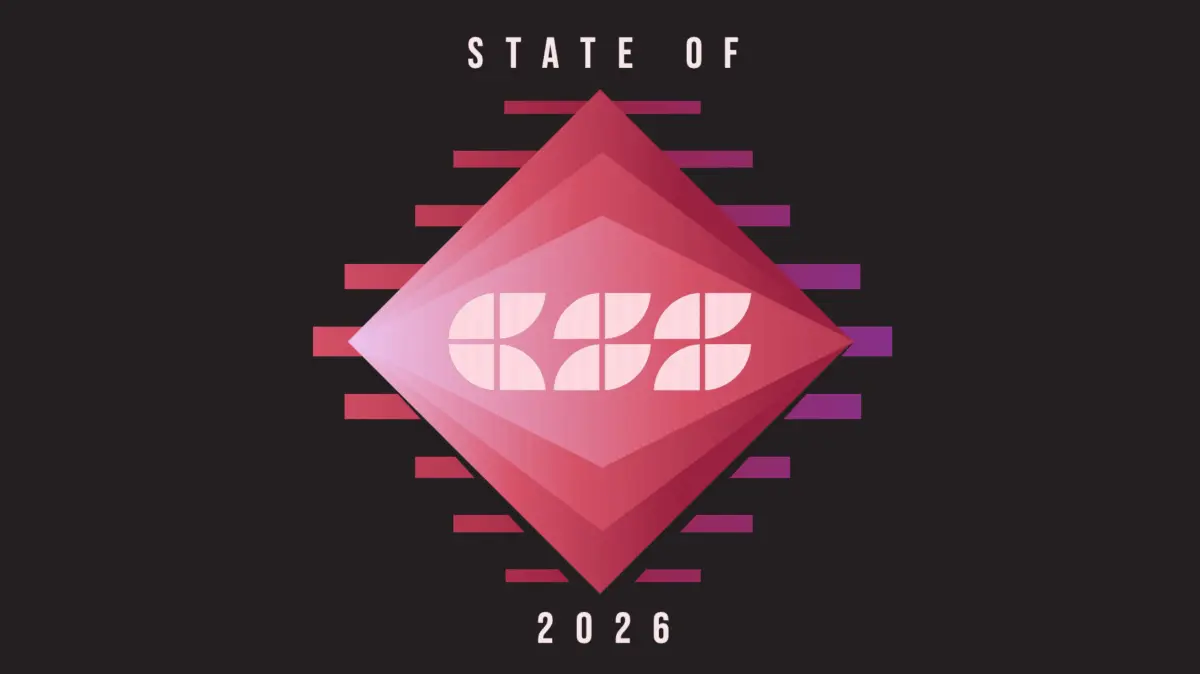
The culmination of this multi-year effort arrived with the publication of the 2026 State of CSS survey. Compiled and analyzed by industry veterans, the survey gathers data from tens of thousands of working developers across the globe. When the data was tabulated for web platform resources, CSS-Tricks emerged directly behind MDN and Can I Use. For an editorial publication to rank alongside native browser documentation tools and baseline compatibility matrices is an unprecedented feat in web development history.
Supporting Context & Metrics: Analyzing the 2026 State of CSS Data
The State of CSS survey, spearheaded by Sacha Greif and his collaborative team of data analysts, developers, and writers, continues to be the gold standard for measuring developer sentiment and tooling adoption.
The Resource Hierarchy
In the 2026 findings, the hierarchy of web platform resources illustrates a clear division between foundational tools and educational platforms:
- MDN Web Docs (Mozilla Developer Network): The undisputed primary source for web standards documentation, API references, and native specifications.
- Can I Use: The indispensable compatibility dashboard used daily by engineers to check browser support matrices before deploying features to production.
- CSS-Tricks: The premier community-driven educational hub, celebrated in the survey report itself for bridging the gap between raw specifications and practical, real-world implementation.
As the survey analysis aptly notes:
"CSS-Tricks may have found success as a blog, but its Guides and Almanac sections are wonderful resources in their own right, which makes the website’s third place here well-deserved."
Why Reference Architecture Matters
The modern web is no longer constrained by the limitations of early CSS. Developers today wield powerful architectural primitives:
- Container Queries & Subgrids: Enabling truly modular, context-aware component design.
- CSS Cascade Layers (
@layer): Providing explicit control over specificity wars in large-scale enterprise applications. - View Transitions API: Facilitating smooth, native-feeling page and state transitions without heavy JavaScript animation libraries.
With these advanced features comes cognitive load. Developers cannot rely solely on memorization; they require structured, searchable, and deeply contextualized documentation. While MDN provides the strict specifications, and Can I Use provides the timeline, CSS-Tricks provides the how-to—the architectural patterns, visual examples, and pedagogical clarity that allow developers to build resilient user interfaces.
Official Statements and Architectural Contributors
The success of CSS-Tricks reaching this monumental milestone is not an accident of history; it is the direct result of relentless, behind-the-scenes execution by an elite editorial and engineering team.
Leadership was quick to credit the individuals who carried the torch over the past few years, transforming the site’s infrastructure:
- Juan Diego: Instrumental in technical content strategy and maintaining high editorial standards across core architectural guides.
- Sunkanmi Fafowora: A driving force behind technical execution who notably authored the comprehensive conclusion for the 2026 State of CSS survey itself.
- Gabriel Shoyombo & Declan Chidlow: Key contributors who spent countless hours expanding, refining, and modernizing the Almanac and reference libraries.
- Mojtaba Seyedi: A critical operational pillar whose deep technical expertise ensured accuracy across complex layout and styling documentation.
These individuals represent a new breed of technical curators—writers and engineers who understand that the health of the open web relies on accessible, high-quality, human-curated documentation.
Furthermore, industry figures acknowledged the broader community effort. Sacha Greif, the mastermind behind the State of CSS (alongside sister surveys like the State of JavaScript and the newly minted State of Devs), was roundly praised for maintaining these vital data streams that keep the ecosystem informed, self-reflective, and progressive.
Future Outlook: The Horizon of Web Development and Documentation
As we look past the 2026 survey results, the trajectory of web development resources points toward an increasingly integrated, standards-first future. Several key trends will define the coming years:
1. The Human Element in an AI-Driven World
With the proliferation of AI-generated code assistants, the value of raw code generation has diminished. However, the value of architectural understanding, debugging intuition, and trusted documentation has skyrocketed. Developers are increasingly turning to human-curated platforms like CSS-Tricks to verify AI outputs, understand best practices, and learn the underlying philosophy of modern design systems. The third-place ranking proves that developers actively seek out trusted human voices amidst an ocean of synthetic content.
2. Continued Evolution of CSS Standards
CSS is evolving faster today than at any point in its history. Features that once took a decade to move from proposal to browser implementation are now landing rapidly. Resources like the CSS-Tricks Almanac and Guides must remain agile, continuously updating to reflect emerging paradigms such as anchor positioning, trigonometric functions in layout, and advanced scoping rules.
3. Expanding Horizons: The State of Devs
As the web development community celebrates these styling milestones, attention is already shifting toward broader professional realities. With the rollout of the State of Devs survey—a comprehensive initiative exploring developer lifestyle, mental health, career trajectories, and industry trends independent of specific codebases—the community continues to mature. Understanding the human beings behind the keyboards is just as critical as measuring the adoption of CSS features.
Conclusion
The 2026 State of CSS survey has delivered a resounding message: foundational web development knowledge matters, and platforms that dedicate themselves to excellence will always find a receptive audience. By transforming its Guides and Almanac into world-class reference assets, CSS-Tricks has solidified its legacy not just as a blog of yesteryear, but as an indispensable pillar of the modern web platform.