
Executive Overview: A Market in Flux
The global smartphone landscape is bracing for a significant contraction as we look toward 2027. Recent industry intelligence indicates that the world’s leading Original Equipment Manufacturers (OEMs) are preemptively slashing their shipment forecasts, signaling a collective acknowledgement that the "golden era" of unbridled annual growth has hit a structural wall.
This pivot is not merely a localized adjustment but a seismic shift in production strategy. From Samsung and Apple to major Chinese players like Xiaomi and Vivo, the industry is pivoting from a volume-driven model to a more defensive, margin-focused strategy. At the heart of this transformation is a perfect storm of macroeconomic pressure, a persistent global memory shortage, and a fundamental shift in consumer behavior driven by the rise of resource-heavy Artificial Intelligence (AI) integration.
Detailed Chronology: The Road to the 2027 Cutbacks
The current climate of apprehension did not manifest overnight. It is the culmination of a multi-year decline in consumer demand and an escalation in manufacturing costs.
Q4 2026: The Early Warning Signs
The warning shots were fired in late 2026. Samsung, traditionally a volume titan, took the industry by surprise when it instructed its supply chain partners to reduce smartphone production by 20% to 30% for the fourth quarter. This move was a calculated effort to prevent inventory bloating as memory costs—specifically for high-bandwidth DRAM and advanced NAND flash—began to soar. By revising its 2026 production targets downward from an anticipated 270 million units to roughly 200 million, Samsung set the tone for the industry: profitability over market share.
Mid-2027: The Current Strategic Pivot
As we progress through the current cycle, reports originating from Jiemian and corroborated by industry analysts suggest that this conservative outlook has hardened into a long-term strategy for 2027.
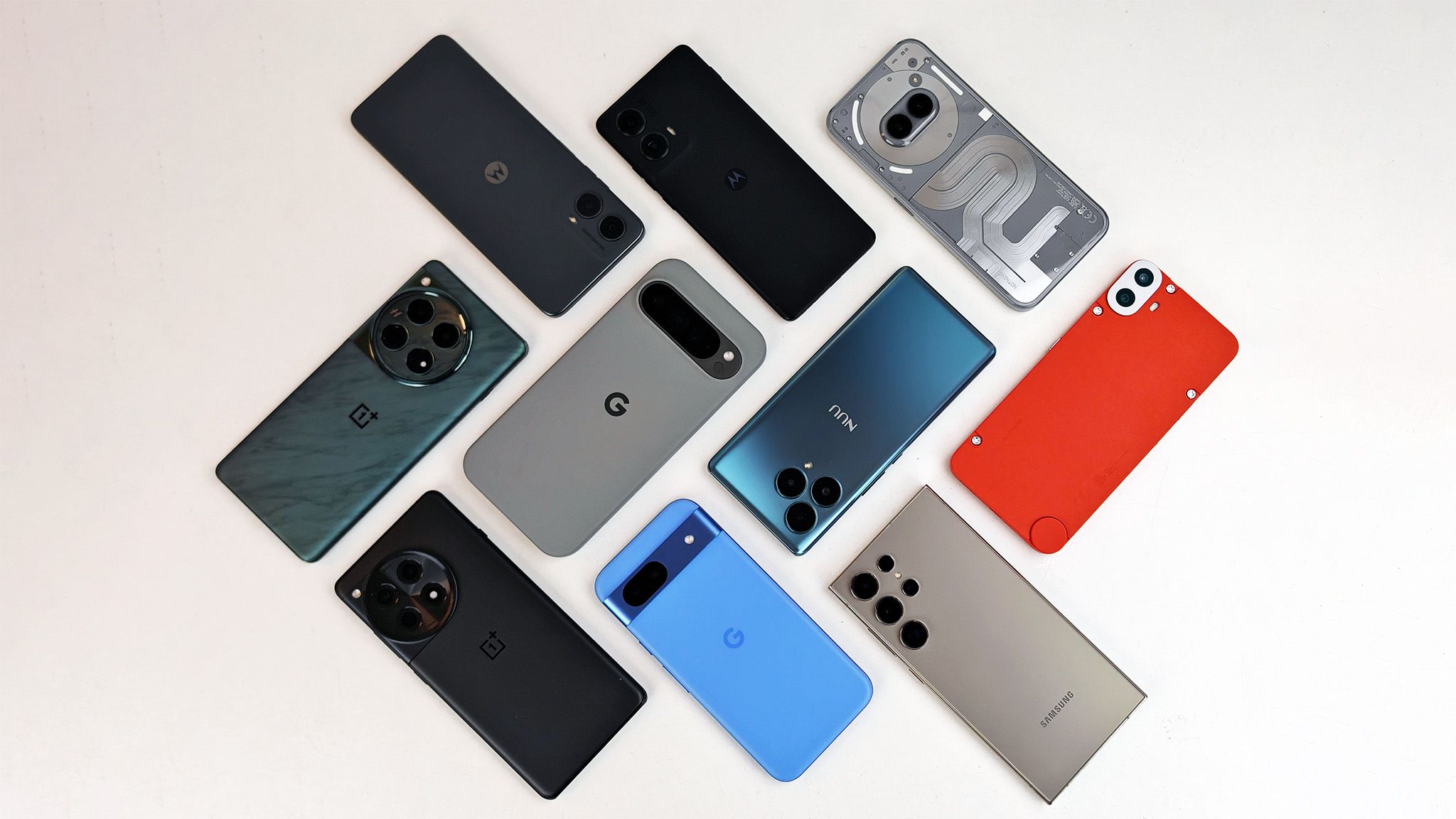
- Samsung: Projections now suggest a nearly 10% reduction in shipments for 2027, bringing their output to approximately 210 million units.
- Apple: Even the Cupertino giant is feeling the heat, with reports indicating a 5.6% reduction in shipments, targeting around 233 million units.
- Motorola: As the company doubles down on the "Signature 27" premium lineup and prepares for aggressive, early-cycle foldable launches, it is bracing for a 20% drop in total unit shipments to approximately 40 million.
- Xiaomi and Vivo: The most dramatic shifts are occurring within the Chinese market, with Xiaomi estimating a 25% reduction and Vivo potentially cutting output by as much as 29%.
Supporting Context: Metrics and Market Forces
To understand why these companies are retreating, one must look at the data. In Q3 of the current cycle, the smartphone market hit a 14-year low, plummeting by 20% year-over-year. This is not a temporary dip; it is a structural correction.
The AI-Driven Memory Crunch
The primary culprit is the rapid evolution of on-device AI. As manufacturers attempt to cram Large Language Models (LLMs) and advanced neural processing units into mobile devices, the hardware requirements have skyrocketed. This has created an intense, global shortage of high-performance DRAM and NAND memory. When component costs rise, the end price for the consumer follows. This creates a cycle of "premiumization" where mid-range devices become too expensive to manufacture profitably, leading OEMs to pull back on the total number of units produced.
Changing Consumer Behavior
Shilpi Jain, a senior analyst at Counterpoint Research, has highlighted that the market is entering a "selective phase." For over a decade, consumers were conditioned to upgrade their handsets every 18 to 24 months. That cycle has been decisively broken.
- Extended Ownership: Consumers are holding onto their devices for 36 months or longer.
- The Refurbished Surge: The secondary market for high-end, refurbished devices is booming, siphoning off potential new-device buyers.
- Value Prioritization: In an era of economic uncertainty, consumers are no longer interested in incremental upgrades. They are either opting for budget-friendly legacy models or investing in top-tier "ultra" flagship devices, leaving the "middle" of the market to hollow out.
Official Statements and Industry Consensus
While official corporate communications often mask the severity of production cuts behind "strategic portfolio optimization" terminology, the sentiment among market watchers is uniform. Omdia’s research, which identified a 4% decline as early as Q2 2026, reinforces the narrative that the holiday seasons are no longer the "guaranteed lifesavers" they once were.
The silence from companies like Google regarding these specific reports is telling. While the Pixel series continues to gain market share in specific territories, the broader trend of consolidation suggests that even "challenger" brands are being forced to temper their ambitions. The consensus is clear: the industry is moving toward a state of "managed stagnation," where total volume is sacrificed to ensure that the units that are sold carry higher profit margins and more robust hardware feature sets.
Future Outlook: The 2027-2028 Horizon
What does this mean for the average consumer? As we look toward the 2027 landscape, the smartphone experience is likely to change in three distinct ways:
1. The Rise of the "Super-Premium"
With volume targets shrinking, OEMs will focus their R&D budgets on high-margin devices. We expect to see a surge in "Ultra," "Pro," and "Foldable" branding, as these devices offer the hardware specifications necessary to run the next generation of AI software. The entry-level and mid-range tiers will likely see less innovation, serving primarily as "utility" devices for the mass market.
2. Software as the Differentiator
As hardware differentiation becomes more difficult due to component shortages and supply chain constraints, the battleground will shift entirely to software. We anticipate that 2027 will be the year of the "AI Subscription." Manufacturers will look to recover lost hardware revenue through tiered software services, offering advanced AI features, cloud storage, and security packages as recurring revenue streams.
3. Sustainability and Circularity
The shift toward refurbished devices is no longer a niche phenomenon; it is a permanent fixture of the market. Manufacturers are already beginning to pivot, with many introducing official "Certified Pre-Owned" programs to reclaim the market share currently lost to third-party resellers. In 2027, the success of an OEM will be measured not just by how many new phones they sell, but by their ability to keep a device within their ecosystem for a longer, more profitable lifecycle.
Conclusion: A Mature Market’s New Reality
The era of the "smartphone boom" is officially over, replaced by an era of industrial maturity. The move by Samsung, Apple, and others to cut 2027 shipment estimates is a pragmatic, if painful, response to a market that has finally reached saturation. For the consumer, this means fewer new releases to choose from, but perhaps a more meaningful, long-term experience with the devices we do choose to purchase. As we navigate the coming year, the focus will shift from how many phones are shipped to how much value those phones provide over an increasingly long and complex life cycle.