Executive Overview: The Paradigm Shift in Discovery
For two decades, the primary objective of e-commerce visibility was clear: satisfy the algorithms of traditional search engines like Google and Bing. Today, that landscape has fundamentally shifted. Large Language Models (LLMs) and AI-powered discovery engines are rapidly evolving into the primary intermediaries between consumers and merchants.
When a user asks an AI chatbot for a product recommendation or a pricing comparison, the machine is no longer merely directing traffic; it is synthesizing information and making decisions on the user’s behalf. Consequently, ensuring that your website is accessible to and readable by AI crawlers has transcended the realm of technical curiosity—it is now a critical business imperative. If an AI cannot "read" your product pages, you are effectively invisible to the next generation of consumers. This report outlines why AI-readiness is the new benchmark for search optimization and provides a tactical framework for ensuring your digital storefront remains open for business in the age of generative AI.
Detailed Chronology: From Keyword Matching to AI Synthesis
To understand the current state of "AI-readiness," we must look at the evolution of search. In the early 2000s, search optimization was a game of keywords and meta-tags. If you told the crawler what your page was about, it would index it accordingly.
By the mid-2010s, Google’s algorithms had become sophisticated enough to interpret context, leading to the rise of semantic search. However, the foundational interaction remained the same: the user performed a search, and the engine provided a list of blue links.
The 2023–2026 period represents a radical break from that history. The ascent of LLMs—such as OpenAI’s GPT series, Anthropic’s Claude, and Google’s Gemini—has shifted the user journey from "searching for links" to "asking for answers." As these models integrate directly into browsers and operating systems, they no longer just "index" a site; they "consume" it.
We have entered a period where the "Crawl Budget"—a term once reserved for specialized SEO engineers—now applies to every merchant. If your server blocks a bot, or if your site architecture prevents an AI from parsing your pricing structure, you are not just losing a ranking; you are being excluded from the conversation entirely.
Supporting Context & Metrics: The Mechanics of Accessibility
Why are so many sites currently failing to be AI-ready? The issues are often unintentional, stemming from overly aggressive security configurations or outdated web development practices.

The Hidden Barriers: Bot Access
Many e-commerce platforms utilize security suites that automatically block "unknown" user agents to prevent scraping or DDoS attacks. While protecting your proprietary data is vital, blanket blocking can inadvertently silence the very bots that power AI discovery.
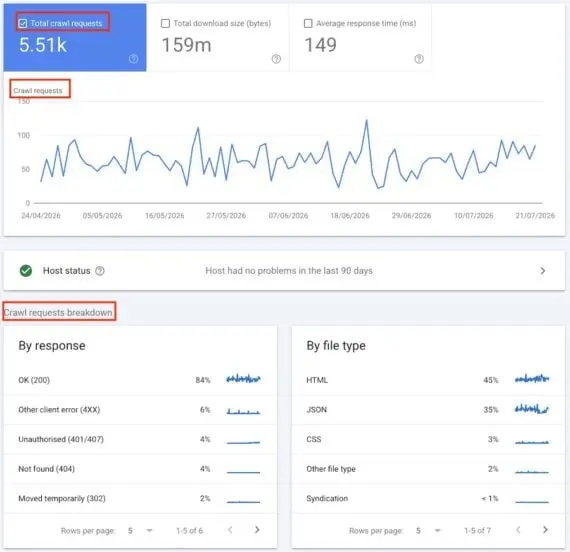
Former Google veteran Vanessa Fox, who was instrumental in the development of Search Console, highlights this as a major blind spot. She notes that many merchants are blocking crawlers without realizing it. Her free diagnostic tools have become a vital resource, allowing site owners to test whether prominent AI platforms—like OpenAI’s GPTBot or Anthropic’s ClaudeBot—are successfully receiving a 200 OK server response.
Metric to watch: If your robots.txt file is too restrictive, or if your Content Delivery Network (CDN) triggers a CAPTCHA for automated agents, you are effectively opting out of the AI economy.
The JavaScript Dilemma
One of the most persistent issues in web development is the reliance on complex JavaScript frameworks that render content client-side. While modern search engines have improved their ability to render JavaScript, AI crawlers—which often operate under different resource constraints—may not always interpret these dynamic elements correctly.
To audit this, SEO professionals are reviving an "old-school" tactic: the "exact match" test. By taking a unique, non-visible string of text from a page—such as a specific sentence within a collapsible FAQ—and asking an LLM to identify its source, developers can determine if the AI is successfully ingesting the page’s full content. If the AI cannot retrieve that text, your site’s deep content is likely hidden from the model’s training data.
The Chrome Reading Mode Audit
Google Chrome’s "Reading Mode" serves as an excellent proxy for how an AI "sees" your page. By utilizing the Dom Distiller algorithm, the browser strips away the visual clutter—navigation bars, pop-ups, and sidebars—to isolate the core information.
If your product page looks fragmented or disorganized in Reading Mode, it is likely that an AI crawler will have the same difficulty extracting your product title, price, and specifications. In the eyes of an AI, a clean DOM structure is the difference between being featured as a top-tier recommendation and being ignored due to a "parsing error."

Official Insights: Strategies for Future-Proofing
The consensus among technical SEO experts is that "AI-readiness" is essentially an extension of "good technical hygiene."
- Audit Your Robots.txt: Ensure you are not blocking the major AI agents that drive traffic and brand awareness. Use tools to verify that your server is serving the expected content to these specific user agents.
- Prioritize Structural Semantics: Use clean, standard HTML tags. If an AI has to "guess" which number is the price because it is wrapped in a non-standard
<div>rather than a<price>schema or a clear header tag, the AI may misinterpret your value proposition. - The "Prompt-Ready" Content Approach: Start writing your product descriptions not just for humans, but for synthetic processors. This means including clear, factual statements about product features, dimensions, and use cases. If you provide the answer clearly in the text, you remove the "cognitive load" from the AI, making it more likely that the model will cite your site as a source.
Future Outlook: The AI-Centric Commerce Era
Looking toward 2027 and beyond, we can expect the boundary between "Search" and "AI" to vanish entirely. The future of commerce is "Agentic"—meaning that digital assistants will be empowered not just to suggest products, but to negotiate prices, check inventory, and initiate transactions on behalf of the consumer.
For merchants, this creates a new hierarchy of visibility. The websites that win in this era will be those that provide the cleanest, most accessible data to these AI agents. This isn’t about gaming a keyword ranking; it’s about becoming a trusted, reliable data source for the machines that influence human consumption.
The transition to an AI-ready web is not a one-time project; it is an ongoing process of monitoring, testing, and adapting. By treating AI crawlers as a high-value audience, merchants can ensure that their products remain front-and-center, regardless of how the user chooses to search. As the technology continues to mature, the sites that have built a solid foundation of accessibility today will be the ones defining the marketplace of tomorrow.
The digital gatekeepers have changed, but the goal remains the same: ensuring that when a customer asks a question, your site has the answer.