Executive Overview
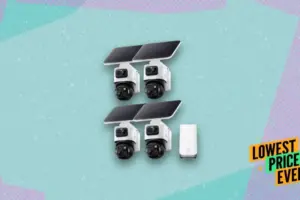
As the consumer smart home security market reaches a new zenith of technological integration, hardware pricing, and privacy-conscious design, significant developments continue to reshape how homeowners safeguard their properties. In a major retail shift observed in late August 2026, the comprehensive Eufy Security EufyCam S4 four-camera kit experienced a historic price drop on Amazon, plunging from its standard manufacturer’s suggested retail price (MSRP) of $1,399.99 down to an unprecedented $999.99. According to aggregate e-commerce price-tracking tools, this marks the absolute lowest price point recorded for the robust security ecosystem since its market introduction.
For modern homeowners, small business operators, and tech enthusiasts seeking robust, subscription-free property monitoring, this significant $400 discount represents a crucial inflection point. The EufyCam S4 system stands apart from conventional cloud-dependent security architectures by combining dual-lens 4K and 2K hardware, integrated solar harvesting capabilities, advanced edge-computed artificial intelligence, and expandable local Network Attached Storage (NAS)-style capabilities via the included HomeBase S380.
This deep-dive investigative report examines the core technical specifications of the EufyCam S4 ecosystem, evaluates the financial and privacy implications of local versus cloud-based storage, analyzes how solar-powered home automation is transforming DIY installation, and contextualizes where this high-end kit fits within the broader, hyper-competitive smart home surveillance landscape of 2026.
Detailed Chronology: The Evolution and Price Break of the EufyCam S4 Ecosystem
To fully understand the significance of the August 2026 price correction, it is essential to trace the developmental trajectory of Eufy’s security product line. Over the past several years, parent company Anker Innovations has aggressively targeted the vulnerabilities of legacy security systems: exorbitant recurring monthly subscription fees, complex wiring requirements, compromised battery longevity in extreme weather, and privacy concerns surrounding cloud-stored biometric and video telemetry.
The Problem with Legacy Surveillance Paradigms
For over a decade, consumer smart home security was dominated by brands requiring continuous cloud data transmission. While these systems made remote viewing accessible via smartphone applications, they introduced two major pain points:
- The Subscription Trap: Users were forced to pay continuous monthly or annual fees per camera simply to retain cloud history, access rich motion notifications, or utilize basic artificial intelligence features like human and vehicle detection. Over a three-to-five-year ownership lifecycle, these subscription costs frequently outpaced the initial hardware investment.
- Bandwidth and Privacy Vulnerabilities: Streaming continuous high-definition video data to remote servers choked home internet bandwidth and raised legitimate cybersecurity concerns regarding third-party access to personal property footage.
The Eufy Counter-Strategy and the S4 Launch
Recognizing these pain points, Eufy engineered its ecosystem around edge computing and local data storage anchored by the HomeBase hub series. The culmination of this engineering philosophy is the EufyCam S4.
- Initial Launch Phase: Upon its market rollout, the four-camera EufyCam S4 kit was positioned as a premium, enterprise-grade consumer tier, commanding a retail price of $1,399.99. While early tech reviewers praised its optical innovation and self-sustaining power architecture, the substantial upfront price tag limited its adoption primarily to large suburban properties and commercial storefronts.
- The August 2026 Market Adjustment: As semiconductor supply chains stabilized and competitive pressures mounted from rival smart home manufacturers, Amazon introduced a coordinated promotional markdown. Dropping the price by $400 to $999.99 effectively democratized access to the four-camera configuration, bringing high-end multi-lens surveillance into a more accessible pricing tier for suburban homeowners and rural property managers alike. Simultaneously, Eufy introduced a scaled-down two-camera bundle for users with tighter spatial footprints, cementing a multi-tiered approach to property surveillance.
Technical Deep-Dive: Hardware Architecture and Dual-Lens Mechanics
What separates the EufyCam S4 from standard single-lens bullet or dome cameras is its sophisticated optical array and intelligent tracking algorithms.
Dual-Lens Configuration: Wide-Angle and Pan-and-Tilt Synergy
Traditional security cameras typically force a compromise: either use a wide-angle lens to capture a massive field of view (thereby sacrificing distant detail) or use a narrow, zoomed-in lens that misses peripheral activity. The EufyCam S4 resolves this engineering dilemma through a dual-lens optical architecture housed within a single weatherproof chassis:
- The Primary Wide-Angle Lens: Each camera features a high-resolution 4K sensor designed to maintain constant, unbroken situational awareness over a broad area, such as an entire front lawn, driveway, or backyard perimeter.
- The Secondary Pan-and-Tilt Lens: Operating in tandem with the primary sensor is a secondary 2K pan-and-tilt lens. When motion is detected, this secondary lens dynamically locks onto the moving subject, mechanically panning and tilting to track their trajectory across the property, while zooming in to capture facial features or license plates with exceptional clarity.
This dual-lens orchestration solves a classic surveillance problem: tracking a visitor or potential intruder walking from a distant property line straight toward the front porch. Instead of capturing a series of disjointed, static clips from separate cameras, the S4 hardware maintains visual continuity.
Solar Harvesting and Wire-Free Independence
A major deterrent to expanding a home security grid is the logistical nightmare of running low-voltage power lines through exterior walls or climbing ladders every few months to recharge depleted lithium-ion battery packs.
The EufyCam S4 system bypasses this limitation through dedicated, detachable 5.5W solar panels paired with each camera. According to Eufy’s engineering specifications, under typical weather conditions, as little as one hour of direct sunlight per day is sufficient to maintain a 100% battery charge indefinitely. This allows homeowners to mount cameras on remote outbuildings, detached garages, perimeter fence lines, and dark corners of the property without accounting for the proximity of electrical outlets.
Furthermore, the completely wire-free communication protocol utilizes a proprietary low-latency wireless connection linking the cameras directly to the HomeBase S380 hub. If a homeowner decides to rearrange their landscaping or relocate a shed, repositioning the camera takes mere minutes without requiring rewiring or professional electrician fees.
Low-Light Visibility and Sensor Suites
Nighttime surveillance has historically suffered from grainy, monochromatic infrared (IR) footage that obscures critical details like clothing color or vehicle paint. The EufyCam S4 integrates advanced color night vision, leveraging high-aperture lenses and high-sensitivity sensors to render full-color imagery in low-light environments without blindly blinding neighbors with harsh floodlights (though active motion-activated spotlights are also available).
To prevent false alarms triggered by swaying tree branches, heavy rainfall, or stray neighborhood cats, the cameras utilize a hybrid sensor array combining radar and passive infrared (PIR) sensors. By cross-referencing thermal signatures with radar-based distance measurements, the system filters out environmental noise, ensuring that notifications sent to the user’s mobile device are relevant and actionable.
Supporting Context & Metrics: Local Storage vs. Cloud Subscriptions
The most economically transformative aspect of the EufyCam S4 ecosystem is its approach to data storage and processing.
The Financial Equation of Local Storage
To understand the true value of the $999.99 price point, one must calculate the total cost of ownership (TCO) over a five-year operational lifespan compared to traditional subscription-based competitors.

| Surveillance System Model | Initial Hardware Cost | Monthly Cloud Fee | Annual Cloud Cost | 5-Year Total Cost of Ownership |
|---|---|---|---|---|
| Traditional Cloud-Dependent Kit (4 Cams) | $500.00 | $10.00 / camera / month | $480.00 / year | $2,900.00 |
| EufyCam S4 Kit (4 Cams – August 2026 Sale) | $999.99 | $0.00 (Local Storage) | $0.00 / year | $999.99 |
Note: Calculations reflect standard tiered cloud pricing across major competitors charging approximately $10 per month for multi-camera support.
As demonstrated by the financial metrics, while cloud-reliant systems often sport a lower initial purchase price, subscription fees accumulate rapidly. Over a standard five-year window, a cloud-dependent system can cost nearly triple its original purchase price, whereas the EufyCam S4 requires zero ongoing investments after purchase.
HomeBase S380: Edge Computing and Expandable Capacity
At the heart of this local storage model is the HomeBase S380, a centralized hub that ships with 16GB of built-in eMMC storage. For average users, this internal capacity stores weeks of event-triggered clips. However, for properties requiring extensive, continuous archiving, the HomeBase S380 features a built-in drive bay compatible with standard 2.5-inch SATA hard drives or solid-state drives (SSDs), allowing users to expand local storage capacity by up to 16TB.
Crucially, the HomeBase S380 is not merely a hard drive enclosure; it is a dedicated edge-computing appliance powered by a robust neural processing unit (NPU). This onboard computing power handles complex tasks locally:
- Facial Recognition: The system learns familiar faces, allowing users to tag family members, frequent visitors, or trusted delivery personnel to suppress unnecessary alerts.
- Cross-Camera Tracking: The HomeBase stitches together video feeds from multiple cameras in real-time, mapping a person’s movement seamlessly across the property.
- Data Privacy: Because all video feeds, biometric facial data, and motion alerts are processed and stored locally on the physical hardware within the home, user data remains impervious to cloud server breaches and external data harvesting.
Official Statements and Industry Expert Perspectives
Industry analysts and consumer advocacy groups have closely monitored the rollout of local-storage, solar-powered surveillance ecosystems like the EufyCam S4.
During a recent smart home security symposium in Chicago, consumer technology analyst Dr. Elena Vance noted the shifting consumer sentiment regarding subscription fatigue:
"For years, consumers accepted recurring cloud fees as an unavoidable cost of home safety. However, inflation, subscription fatigue, and growing unease over cloud privacy have inverted market demand. Hardware that empowers the consumer to own their data outright—without ransom fees paid to tech conglomerates to view their own front yards—is no longer a niche preference; it is the primary driver of market growth in 2026."
Anker Innovations, the parent company behind Eufy Security, has consistently emphasized its commitment to local data sovereignty. In a corporate product briefing accompanying the summer hardware rollout, senior product manager Marcus Thorne remarked:
"Our engineering philosophy has always been centered on removing friction for the user. Security should not feel like a second mortgage, nor should it require a degree in electrical engineering to maintain. By combining infinite solar harvesting with local storage that scales up to 16 terabytes, the EufyCam S4 gives homeowners enterprise-grade situational awareness without compromising their monthly budgets or their personal privacy."
Future Outlook: Where the Smart Security Market is Headed
The aggressive discounting of the EufyCam S4 kit points toward broader industry trends that will define the smart home landscape over the remainder of the decade.
1. The Death of Mandatory Cloud Subscriptions
As edge-computing chips (NPUs) become smaller, cheaper, and vastly more powerful, consumer hardware manufacturers are finding it increasingly feasible to move AI processing directly into home hubs and cameras. Cloud storage will likely transition from an enforced necessity to an optional backup method for remote off-site archiving, rather than a prerequisite for viewing basic camera feeds.
2. Mainstreaming of Autonomous Power Systems
The reliance on cumbersome lithium battery packs that require manual recharging is rapidly phasing out. The success of integrated 5.5W solar panels in the EufyCam S4 sets a new baseline expectation for outdoor IoT devices. Future iterations will likely feature even more efficient photovoltaic cells, transparent solar glass integration, and advanced kinetic energy harvesting, bringing us closer to truly maintenance-free outdoor electronics.
3. Cross-Platform Matter and Ecosystem Integration
As smart home standards like Matter and Thread mature, consumers are increasingly intolerant of proprietary walled gardens. Future security ecosystems will need to offer robust local storage while seamlessly tying into broader smart home automation suites—allowing outdoor motion alerts to trigger indoor smart lighting, automated door locks, and localized audio announcements without relying on fragile internet cloud bridges.
Conclusion
The temporary price reduction of the Eufy Security EufyCam S4 four-camera kit to $999.99 on Amazon represents an ideal entry point for homeowners looking to overhaul their property security without committing to endless subscription fees. By pairing dual-lens 4K/2K tracking optics with self-sustaining solar power harvesting and expandable 16TB local storage via the HomeBase S380, Eufy has delivered a masterclass in consumer-centric hardware design.
While the upfront cost remains substantial—and may prove excessive for apartment dwellers or small single-entry homes (for which the scaled two-camera bundle serves as a viable alternative)—the long-term financial and privacy benefits solidify the EufyCam S4 as a gold standard in modern DIY home surveillance. As local edge computing continues to displace cloud monopolies, systems like the S4 offer a compelling glimpse into a more secure, independent, and cost-effective smart home future.