Executive Overview
In a landmark geopolitical and regulatory escalation, the United Kingdom has levied sweeping economic sanctions against Cryptomus, a highly adaptable and evasive cryptocurrency payment platform. According to international cybersecurity experts, intelligence analysts, and blockchain forensic firms, Cryptomus has operated as a critical financial conduit for ransomware syndicates, international drug cartels, darknet market vendors, and sophisticated cybercrime service providers. Crucially, the platform has allegedly functioned as an essential lifeline for the Russian government and associated financial institutions seeking to bypass Western economic restrictions implemented in the wake of the invasion of Ukraine.
Announced on October 8, the U.K. Foreign, Commonwealth & Development Office sanctions freeze all domestic assets tied to Cryptomus across British banks and explicitly prohibit U.K.-based entities and individuals from engaging in any commercial, virtual, or financial transactions with the firm. Alongside Cryptomus, the U.K. government targeted several allied virtual asset service providers, including VexPay, TokenSpot, and the Tsunami Payments service, in a concerted effort to dismantle the subterranean financial infrastructure fueling Russia’s wartime economy.
Cryptomus—which has previously operated under corporate aliases such as Certa Payments and Xeltox Enterprises, and more recently rebranded as Heleket—has a well-documented history of regulatory evasion. Blockchain analytics indicate that since its inception in 2022, the platform has processed upwards of $7 billion in cryptocurrency transactions, facilitating everything from state-sponsored sanctions evasion to abhorrent illicit economies, including child sexual abuse material (CSAM) vendors, terrorist financing networks, and global human trafficking operations.
The U.K.’s enforcement action marks a historic departure from previous regulatory attempts, representing the first known instance of a "Five Eyes" intelligence-sharing nation (comprising Australia, Canada, New Zealand, the United Kingdom, and the United States) sanctioning a cryptocurrency enterprise with historical corporate footprints embedded within a fellow Five Eyes jurisdiction. Unlike monetary fines, which illicit operators frequently treat as a cost of doing business, the U.K. sanctions aim for total operational annihilation.
Detailed Chronology of an Evasive Payment Empire
Genesis and Rapid Expansion (2022–2023)
Cryptomus emerged onto the decentralized finance landscape in 2022, quickly positioning itself as a premier white-label payment gateway for e-commerce websites, high-risk merchant ventures, and underground Russian cryptocurrency brokerages. Promoted heavily within Russian-language cybercrime forums, the platform offered low-friction transaction processing, allowing illicit actors to seamlessly convert digital assets like Bitcoin and Tether (USDT) into fiat currency without triggering standard compliance alarms.
From its earliest days, corporate transparency was notably absent. Investigations by blockchain forensics experts revealed that Cryptomus shared a physical corporate address in Vancouver, Canada, with dozens of other foreign exchange dealers and money transfer businesses. None of these entities appeared to maintain a physical presence at the listed location, signaling a classic shell-company framework designed to obscure ultimate beneficial ownership.
The Canadian Regulatory Crackdown and the "Heleket" Pivot (2024–2025)
As investigative journalists and blockchain analysts began unmasking the platform’s heavy reliance on illicit transaction flows, regulatory bodies took notice. In late 2024, comprehensive investigations—including prominent exposes mapping out how cryptocurrency converts to cash in Russian banks—highlighted Cryptomus as a primary clearinghouse for illicit funds.
In October 2025, Canadian authorities levied a record-shattering CAD $176 million administrative monetary penalty against Cryptomus for severe violations of anti-money laundering (AML) and know-your-customer (KYC) regulations.
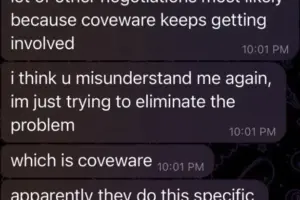
Faced with a debilitating financial penalty, Cryptomus employed a classic chameleonic strategy. The platform formally appealed the Canadian fine while simultaneously launching a parallel, rebranded service dubbed Heleket. While Cryptomus briefly instituted superficial KYC protocols that caused its direct transaction volumes to dip, Heleket aggressively stepped into the vacuum, offering uninterrupted, no-KYC payment processing for the exact same high-risk clientele. Furthermore, customer support agents operating Heleket’s official Telegram channels brazenly denied any structural or corporate affiliation with Cryptomus, despite overwhelming technical, infrastructural, and operational evidence proving otherwise.

The U.K. Sanctions and Operational Collapse (October 2026)
The turning point arrived on October 8, 2026, when the United Kingdom formally issued restrictive measures against Cryptomus, Heleket, and associated shell entities.
The impact of the U.K. sanctions was swift and catastrophic for the platform’s day-to-day operations. Within hours of the announcement, user-facing support bots on Telegram—including those representing both Cryptomus and Heleket—began issuing automated and manual notices to merchants and customers confirming that the platform was suddenly and indefinitely unable to process cryptocurrency transactions. For an operation that relied on uninterrupted uptime to launder billions, the asset freezes and prohibition of British financial services effectively severed its access to vital liquidity pools.
Supporting Context, Forensic Metrics, and Illicit Scale
The sheer volume of illicit capital processed by Cryptomus and its derivatives places it in an elite tier of underground financial networks. According to data compiled by leading blockchain intelligence firm Chainalysis, Cryptomus and Heleket rapidly evolved into premier payment hubs for criminal enterprises, absorbing vast sums of illicit cryptocurrency.
In a comprehensive blog post detailing the U.K. sanctions, Chainalysis revealed that at their peak in late 2025, the number of distinct illicit counterparties interacting with Cryptomus infrastructure surged to more than 900 in a single month. Notably, the platform received more illicit funds across tracked criminal categories than traditional privacy mixers, illustrating a shift among cybercriminals toward centralized, high-volume payment processors that offer the illusion of institutional legitimacy.
Complementing these findings, forensic assessments conducted by TRM Labs in April 2026 underscored the horrifying scope of the platform’s transactional history. TRM Labs determined that since its inception in 2022, Cryptomus had cleared over $7 billion in total volume. A significant percentage of this turnover was directly linked to high-harm criminal ecosystems, including:
- Ransomware-as-a-Service (RaaS) operations seeking to launder extortion payouts.
- Darknet marketplaces trading in illicit narcotics, stolen credentials, and malware.
- Vendors of Child Sexual Abuse Material (CSAM) capitalizing on crypto anonymity.
- Terrorist financing networks operating across geopolitical conflict zones.
- Human trafficking cartels moving illicit proceeds across international borders.
Richard Sanders, an independent blockchain analyst and investigator who spent months dissecting Cryptomus’s infrastructure and interacting directly with its payment gateways, emphasized the fundamental difference between regulatory fines and targeted sanctions.
"A fine doesn’t stop a cryptocurrency payment processor from processing payments," Sanders noted in a public analysis. "Sanctions kill the operation. The distinction matters." Sanders highlighted that because Canada’s CAD $176 million fine was ultimately unenforceable across international borders against an entity structured for evasion, it failed to halt the illicit cash flow. The U.K. sanctions, by contrast, carry global enforcement weight that isolates the enterprise from the international banking system.
Official Statements and Geopolitical Significance
The international security community has widely praised the U.K. government’s decisive action. Security analysts view the move not merely as a localized enforcement measure against a rogue crypto exchange, but as a strategic strike against the financial architecture sustaining modern state-backed hybrid warfare.
Chainalysis underscored this perspective in their post-sanctions advisory:

"Cryptomus and Heleket have emerged as major payment hubs for illicit activity… The U.K. sanctions target the broader infrastructure supporting Russia’s wartime economy, demonstrating that Western allies are increasingly willing to dismantle the digital conduits enabling sanctions evasion."
Furthermore, legal and intelligence experts have pointed out the unprecedented nature of this multi-jurisdictional clash. Richard Sanders noted that these sanctions represent a historic milestone: the first known instance where a "Five Eyes" member state has formally sanctioned a cryptocurrency enterprise incorporated within the legal borders of another Five Eyes partner. By cutting through bureaucratic hesitation, the U.K. has set a new precedent for holding shell companies accountable, regardless of the friendly jurisdictions they attempt to exploit for legitimacy.
The Phantom Regulator: Tracing Cryptomus Back to Western Sahara
Perhaps the most bizarre and illuminating aspect of the Cryptomus investigation lies in how the enterprise established its supposed regulatory authority. For years, cryptocurrency platforms operating in regulatory gray zones have sought legitimacy by obtaining licenses from obscure or nonexistent financial authorities. Cryptomus took this practice to an unprecedented extreme.
An extensive investigative deep dive into the corporate genealogy of Cryptomus revealed that the sole shareholder of its original parent company, Certa Payments, was a 25-year-old Ukrainian national. Alongside her role at Certa Payments, this individual served as the head of several other corporate entities, most notably the WS Management and Advisory Corporation.
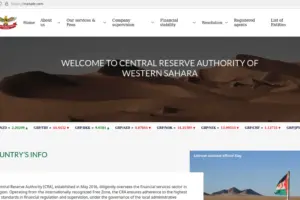
WS Management and Advisory Corporation marketed itself aggressively as an exclusive, official regulatory body responsible for issuing licenses to cryptocurrency exchanges, foreign exchange (Forex) brokers, and online gaming enterprises. The catch? The jurisdiction it claimed to regulate was the Western Sahara—a disputed territory in northwest Africa that is not widely recognized as a sovereign nation by the United Nations or the international community.
The regulatory body operated through a web of questionable digital infrastructure. Its primary web portal (crasadr.com) functioned as the official website of the "Central Reserve Authority of Western Sahara," proudly publishing lists of companies allegedly granted official authorization to conduct global financial services. Technical forensic analysis revealed deep structural overlaps: Certa Payments’ former corporate website (certa.website) shared a physical web server with 12 distinct domains, including rasd-state.ws, which served as an official portal for the phantom state’s reserve authority.
By leveraging a fictitious regulatory body situated in a contested African territory, the masterminds behind Cryptomus successfully hoodwinked numerous compliance officers, partner banks, and merchants into believing the platform possessed legitimate international oversight. In reality, it was a self-certified, fraudulent ecosystem designed from the ground up to facilitate uninhibited, anonymous global money laundering.
Future Outlook
The U.K.’s decisive enforcement action against Cryptomus and its alter-ego Heleket signals a severe tightening of the noose around illicit cryptocurrency payment processors. As Western intelligence agencies increasingly synchronize their blockchain analytics with traditional financial intelligence, the days of chameleonic crypto platforms seamlessly rebranding after regulatory crackdowns are rapidly coming to an end.
While decentralized platforms and underground networks will undoubtedly attempt to mutate into new corporate forms, the total operational paralysis experienced by Cryptomus following the U.K. asset freezes serves as a stark warning. For illicit payment processors acting as financial conduits for ransomware cartels and sanctioned Russian state actors, the global regulatory landscape has shifted from passive monetary penalties to active, systemic neutralization.