Executive Overview
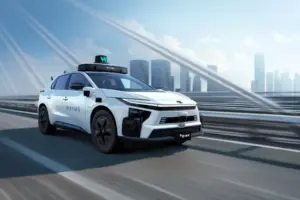
In a significant expansion of the global autonomous vehicle (AV) landscape, Waymo and Toyota have officially formalized a partnership that marks a turning point for both companies. Announced on October 30, 2026, the collaboration will see Waymo integrating its industry-leading self-driving technology into Toyota’s bZ4X electric SUVs.
This move represents more than a mere vehicle supply agreement; it is a strategic maneuver designed to accelerate Waymo’s international footprint, specifically targeting right-hand drive markets like Japan and the United Kingdom. By leveraging Toyota’s manufacturing prowess at its Takaoka facility in Japan, Waymo is effectively securing a reliable, high-volume hardware partner to complement its existing fleet of Jaguar I-Pace vehicles. For Toyota, the deal validates its ongoing commitment to the future of mobility, signaling a shift from a purely hardware-focused automaker to a collaborative partner in the burgeoning AV-as-a-service (AVaaS) sector.
A Detailed Chronology: From Vague Intent to Concrete Reality
The journey toward this partnership has been methodical, spanning 18 months of intensive negotiation and technical vetting.
The Preliminary Phase (April 2025):
In the spring of 2025, the two companies signed a memorandum of understanding that, at the time, left industry analysts questioning the depth of the commitment. The agreement was characterized by broad, aspirational language regarding the "development and deployment of an autonomous vehicle platform." For much of the following year, critics and observers categorized the deal as speculative, waiting to see if either party would move beyond research-level collaboration.
The Technical Integration Phase:
Throughout 2025 and early 2026, engineers from both companies worked in relative silence. The challenge was significant: integrating the "Waymo Driver"—the complex sensor suite, compute stack, and proprietary software—into the architecture of the Toyota bZ4X. Unlike traditional vehicle manufacturing, this process required deep-level collaboration on vehicle-to-everything (V2X) communication, power management for the heavy compute loads required for autonomous driving, and the specific ergonomic adjustments needed for a robotaxi configuration.
The October 2026 Breakthrough:
The formalization of the deal this week confirms that the technical hurdles have been cleared. With the announcement, the companies have shifted from the "R&D" phase into the "operational readiness" phase. Testing of the autonomous bZ4X fleet is slated to begin in Japan in early 2027, serving as a proving ground for the platform before a wider commercial rollout.
Supporting Context: Why the bZ4X?
The choice of the Toyota bZ4X (marketed as the "BZ" in North America) is not incidental. As an all-electric SUV, it provides the necessary range, cabin space, and safety profile required for a modern robotaxi.
Global Market Strategy
Waymo’s decision to prioritize Japan and the U.K. is a calculated response to the saturation of the U.S. autonomous market. While Waymo has seen significant success in cities like Phoenix, San Francisco, and Los Angeles, global expansion requires a different regulatory and infrastructural approach.
- The U.K. Front: Waymo has spent the last several months conducting "shadow testing" with its Jaguar I-Pace fleet in London. The addition of the Toyota bZ4X, which is natively designed for right-hand drive configurations, streamlines the logistics of deploying in the U.K.
- The Japanese Market: Toyota’s home turf offers a highly regulated, high-density environment that serves as the gold standard for testing urban navigation. Success in Japan provides a powerful case study that Waymo can present to regulators in other parts of the world.
The Shift in Robotaxi Economics
Historically, robotaxi companies have struggled with the "cost-per-mile" equation. By partnering with a volume manufacturer like Toyota, Waymo is attempting to industrialize its fleet. The Takaoka factory integration model—where the AV technology is essentially "baked in" during the assembly process rather than retrofitted post-production—is expected to significantly reduce unit costs and improve vehicle reliability, two critical metrics for scaling an autonomous ride-hailing business.
Official Statements and Corporate Vision
The partnership was framed by both parties as a synthesis of safety, innovation, and global scale.
Hiroki Nakajima, Executive Vice President of Toyota and a member of the company’s board, emphasized that this collaboration extends beyond the passenger experience. "This collaboration will help scale that technology and bring it to customers in Japan and beyond through Waymo’s ride-hailing service," Nakajima stated. "In parallel, Toyota will continue to explore how integrating vehicles with traffic infrastructure can make those roads safer still."
This sentiment suggests that Toyota is interested in the "smart city" aspect of autonomy. By collecting data from Waymo’s operations, Toyota aims to refine its vehicle-to-infrastructure (V2I) systems, which could theoretically allow cars to "talk" to traffic lights, emergency vehicles, and road sensors, creating a safer ecosystem for all road users—not just those inside a robotaxi.
Future Outlook: Beyond the Robotaxi
While the immediate focus is on deploying the bZ4X for ride-hailing, the scope of the agreement leaves the door wide open for future developments.
The Consumer-Owned AV Frontier
Perhaps the most intriguing aspect of the deal is the stated intent to explore bringing Waymo’s autonomous technology to personally owned Toyota vehicles. While we are years away from a consumer-grade, fully autonomous car that can be purchased at a dealership, this partnership provides the roadmap. If Waymo can prove the safety and reliability of its system in a commercial fleet, the transition to a high-end consumer product becomes a question of "when" rather than "if."
Improving Safety Through Real-World Insights
The companies have committed to utilizing "insights from Waymo’s real-world operations" to improve overall road safety. This implies a data-sharing loop:
- Waymo gains access to Toyota’s massive dataset on vehicle durability and mechanical failure modes.
- Toyota gains access to Waymo’s behavioral AI, helping to train better Advanced Driver Assistance Systems (ADAS) for their retail fleet.
The Competitive Landscape
This alliance places pressure on other major players in the space. With Waymo—already the market leader—now backed by the world’s largest automaker by volume, companies like Tesla, Cruise, and Zoox face a formidable new dynamic. The ability to manufacture at scale, combined with the proven safety record of the Waymo Driver, creates a high barrier to entry for any competitor hoping to capture the global market.
Conclusion
The Waymo-Toyota partnership is a definitive signal that the "experimental" era of autonomous driving is ending, and the "industrial" era is beginning. By focusing on established, right-hand drive markets and utilizing the manufacturing might of the world’s premier automaker, Waymo is positioning itself to be the primary architect of the global robotaxi network.
As testing begins in Japan in 2027, the world will be watching to see if this synergy of Silicon Valley software and Japanese manufacturing precision can finally deliver on the long-promised vision of safe, accessible, and autonomous mass transit. The road ahead remains complex—navigating regulatory hurdles in the U.K. and the intricate traffic patterns of Tokyo—but with the weight of Toyota behind it, Waymo has significantly improved its odds of defining the future of transportation.