Executive Overview
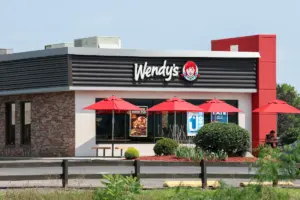
In the high-stakes arena of corporate finance and fast-food boardrooms, few clashes match the drama of an activist investor setting sights on an iconic American brand. The latest battleground is Wendy’s, the venerable quick-service restaurant giant famous for its square beef patties and frosty treats. Wendy’s independent directors have officially delivered a definitive rejection to billionaire activist investor Nelson Peltz, turning down a $1.4 billion buyout proposal.
According to evaluations by the company’s board and independent financial advisors, the buyout bid fundamentally "substantially undervalues" the company, failing to capture the intrinsic long-term value of Wendy’s global franchise network, operational transformations, and strategic growth initiatives.
To fortify its defenses against a potential hostile takeover, the Wendy’s board took swift and decisive
action by adopting a short-term shareholder rights plan—commonly referred to in corporate governance as a "poison pill." This mechanism is designed to dilute the value of shares acquired in an unapproved takeover attempt, making any hostile accumulation of the company cost-prohibitive.
The move highlights the intensifying tension between Peltz’s investment vehicle, Trian Fund Management—which already commands a formidable 16.3% stake in the burger chain—and Wendy’s executive leadership team. Led by Chief Executive Officer Bob Wright, the executive suite maintains that the company possesses the right strategy, execution capabilities, and operational resources to independently navigate macroeconomic headwinds and deliver superior long-term returns to its shareholders.
This comprehensive report delves into the intricate chronology of the takeover battle, explores the financial metrics and operational realities facing Wendy’s, analyzes the strategic motivations of both parties, and outlines the future trajectory of one of America’s most recognizable fast-food institutions.
Detailed Chronology of the Takeover Attempt
The standoff between Nelson Peltz and Wendy’s is not merely a transient financial skirmish; it represents the latest chapter in a long-standing relationship between the billionaire investor and the fast-food chain. To fully understand the gravity of the current $1.4 billion buyout rejection, one must examine the timeline of events that brought the two entities to this critical juncture.
The Historic Ties Between Trian and Wendy’s
Nelson Peltz is no stranger to the Wendy’s boardroom. Through his investment firm, Trian Fund Management, Peltz has historically played a monumental role in shaping the modern identity of the fast-food chain. Trian was instrumental in orchestrating the merger between Wendy’s and Arby’s in 2008—a corporate pairing that eventually dissolved when Wendy’s spun off Arby’s in 2011 to refocus exclusively on its core namesake brand. For years, Peltz and his associates maintained significant influence over Wendy’s strategic direction, holding board seats and pushing for operational efficiencies, digital modernization, and international expansion.
The Escalation: A $1.4 Billion Buyout Proposal
The tension escalated when Trian Fund Management—already holding a substantial block of Wendy’s stock—signaled its intent to take the company private or exert even greater control over its corporate destiny. Peltz submitted a buyout proposal valuing the company at approximately $1.4 billion, framing the offer as a lucrative and secure exit strategy for public shareholders amid a volatile macroeconomic landscape characterized by soaring inflation, shifting consumer behavior, and heightened competition within the quick-service restaurant (QSR) sector.
The Board’s Unanimous Rejection
Upon receiving the formal acquisition proposal, Wendy’s board of directors established a committee of independent directors to evaluate the merits of Peltz’s bid. Following thorough financial and legal reviews, the independent directors reached a unanimous consensus: the offer was entirely inadequate. They asserted that the $1.4 billion price tag failed to reflect the underlying asset value, growth potential, and operational turnaround initiatives currently underway at the company. Consequently, the board issued a polite yet firm rejection, signaling that Wendy’s was not willing to be acquired at a bargain-basement valuation.
Deployment of the "Poison Pill" Defense
Recognizing that Trian Fund Management—along with associated entities and partners—already commanded a formidable 16.3% stake in the company, Wendy’s board recognized an immediate vulnerability to a creeping or hostile takeover. To neutralize this threat, the board enacted a shareholder rights plan, widely known as a "poison pill."
Under the terms of this one-year plan, if any individual, entity, or coordinated group acquires a stake of 15% or more in Wendy’s without board approval, all other non-offending shareholders are granted the right to purchase additional shares of the company at a heavily discounted rate. This mechanism exponentially dilutes the ownership percentage and financial value held by the hostile acquirer, effectively pricing them out of a complete takeover. Because Trian’s existing 16.3% stake predated the implementation of the plan, the poison pill was structured to grandfather their current holdings while heavily penalizing any unauthorized accumulation beyond that threshold.
Supporting Context, Financial Metrics, and Operational Realities
While financial maneuvering dominates headlines, the real battle for Wendy’s future is being waged on the operational front. The quick-service restaurant industry is undergoing a period of profound transformation, shaped by inflationary pressures, labor shortages, supply chain complexities, and evolving consumer preferences.
Macroeconomic Pressures and Consumer Sentiment
Nelson Peltz has argued that the current macroeconomic climate justifies a buyout. With inflation eating into household budgets, consumers are increasingly squeezed, forcing them to pull back on discretionary spending, including dining out. Furthermore, competition within the burger segment has never been fiercer, with industry behemoths like McDonald’s, Burger King, and an army of fast-casual upstarts vying for market share. Peltz contends that navigating these turbulent waters as a public company exposes shareholders to undue volatility, making a private buyout the most pragmatic path forward.
Leadership and Operational Strategy
Conversely, Wendy’s leadership team views these very challenges as temporary hurdles that can be cleared through disciplined execution. In May, the company welcomed Bob Wright as its new Chief Executive Officer. Wright, who previously engineered a successful turnaround at Potbelly, stepped into the role with a mandate to revitalize Wendy’s operational efficiency, accelerate digital adoption, and optimize the restaurant footprint.
Addressing investors, CEO Bob Wright emphasized that Wendy’s possesses "the right strategy, execution, and resources" to drive sustainable growth independently. This confidence was recently bolstered by better-than-expected third-quarter financial results, which propelled Wendy’s shares up by more than 2% following the earnings announcement. The positive report demonstrated that despite inflationary headwinds, consumer demand for Wendy’s core menu offerings—such as the Baconator and fresh-never-frozen beef burgers—remains remarkably resilient.
Portfolio Optimization and Footprint Realignment
As part of its ongoing operational modernization, Wendy’s is actively reshaping its physical footprint. The company announced plans to shutter up to 358 older, underperforming U.S. restaurants throughout the year. This pruning process is designed to eliminate operational drags, redirect capital toward high-performing locations, and encourage franchisees to invest in modern, high-tech restaurant formats featuring improved drive-thru lanes and enhanced digital pickup capabilities.
Despite these efforts, competitive pressures remain palpable. Industry data from market research firm Technomic reveals that Wendy’s share of total U.S. burger chain sales slipped from 11.5% in 2019 down to 10.4% last year. Reversing this downward trajectory in market share is one of the central missions facing CEO Bob Wright and his management team—and it forms the crux of the debate between internal turnaround advocates and external buyout proponents.
Official Statements and Stakeholder Perspectives
The corporate tug-of-war over Wendy’s has generated significant commentary from financial analysts, institutional investors, corporate governance experts, and the principal actors themselves.
The Independent Board’s Position
The independent directors of Wendy’s have maintained a unified front throughout the standoff. In communications released to the investment community, the board underscored its commitment to acting in the best interests of all shareholders, rather than accommodating the short-term liquidity desires of a single activist investor. The board’s financial advisors conducted rigorous modeling to determine that the $1.4 billion valuation significantly discounts the future cash flows expected from Wendy’s digital expansion, international franchise growth, and breakfast daypart success.
Trian Fund Management’s Perspective
While Trian Fund Management has not launched a public scorched-earth media campaign, the firm’s actions speak volumes. By accumulating a 16.3% stake, Peltz and his partners have demonstrated a long-term economic commitment to the brand. Trian’s investment thesis centers on the belief that legacy QSR brands burdened by public market regulatory costs and fluctuating public equity valuations can often unlock significantly higher value as private entities, free from quarterly earnings pressures. Whether Trian will seek to challenge the poison pill in court, launch a proxy battle to replace board members, or sweeten its offer remains one of the most closely watched storylines on Wall Street.
Wall Street and Shareholder Reactions
Wall Street analysts remain divided on the outcome. Some analysts view the poison pill and board rejection as a necessary defense of shareholder value, arguing that Wendy’s long-term growth initiatives justify a higher valuation than what Peltz offered. Others suggest that given the persistent macro-level volatility, management should have engaged in formal negotiations rather than instantly slamming the door with a poison pill defense. However, the positive market reaction to Wendy’s Q3 earnings report indicates that public equity markets currently have faith in Bob Wright’s leadership and the company’s standalone operational trajectory.
Future Outlook: What Lies Ahead for Wendy’s?
As the dust settles on the initial round of this corporate chess match, the central question remains: What does the future hold for Wendy’s, its investors, and its millions of loyal customers?
Navigating the One-Year Poison Pill Window
With the implementation of the shareholder rights plan locked in for a one-year duration, Wendy’s board has bought itself valuable time to execute its operational turnaround without the immediate threat of a hostile takeover. During this window, CEO Bob Wright and his executive team will be under immense pressure to deliver measurable results. To justify their rejection of Peltz’s bid, management must demonstrate that Wendy’s can accelerate its sales growth, improve profit margins, and reclaim the market share it lost to competitors over the past several years.
The Breakfast Daypart and Digital Growth
Key drivers of Wendy’s future outlook include the continued expansion of its successful breakfast menu—which has carved out a profitable niche in the competitive morning quick-service market—and the ongoing scaling of its digital loyalty programs. Mobile ordering, delivery partnerships, and automated drive-thru technologies are transforming the fast-food landscape. Wendy’s ability to successfully integrate these digital channels will be critical to attracting younger demographics and increasing average ticket sizes.
Franchisee Relations and Footprint Rationalization
The closing of up to 358 older U.S. restaurants represents a painful yet necessary surgical intervention. By shedding legacy units that no longer meet modern profitability or structural standards, Wendy’s can strengthen the overall health of its franchise system. Maintaining strong, collaborative relationships with its franchisees will be paramount, as these operators provide the capital and local execution necessary to fuel brand growth.
The Long-Term Standoff with Nelson Peltz
Finally, the elephant in the room remains Nelson Peltz and Trian Fund Management. Owning 16.3% of the company gives Peltz a powerful voice that cannot be easily ignored. Whether Trian will bide its time, attempt a proxy contest at the next annual shareholder meeting, or return with a revised, higher-valuation acquisition proposal remains to be seen. What is certain, however, is that Wendy’s is charting its own course, betting its future on operational excellence, culinary innovation, and the leadership of Bob Wright to prove that the company’s best days are still ahead of it—both on and off the balance sheet.