Executive Overview
The explosive expansion of artificial intelligence, cloud computing, and digital infrastructure has collided head-on with a harsh physical reality: the American power grid, local water supplies, and residential communities are straining under the sheer weight of unprecedented digital growth. As massive server warehouses sprawl across rural towns, suburban neighborhoods, and post-industrial urban centers, a profound political and social conflict is taking shape. On one side stand technology conglomerates and federal regulators pushing for rapid, unchecked deployment to maintain global technological dominance; on the other stand local communities, grassroots activists, and municipal leaders grappling with soaring utility bills, toxic emissions, and the transformation of their backyards into industrial computing zones.
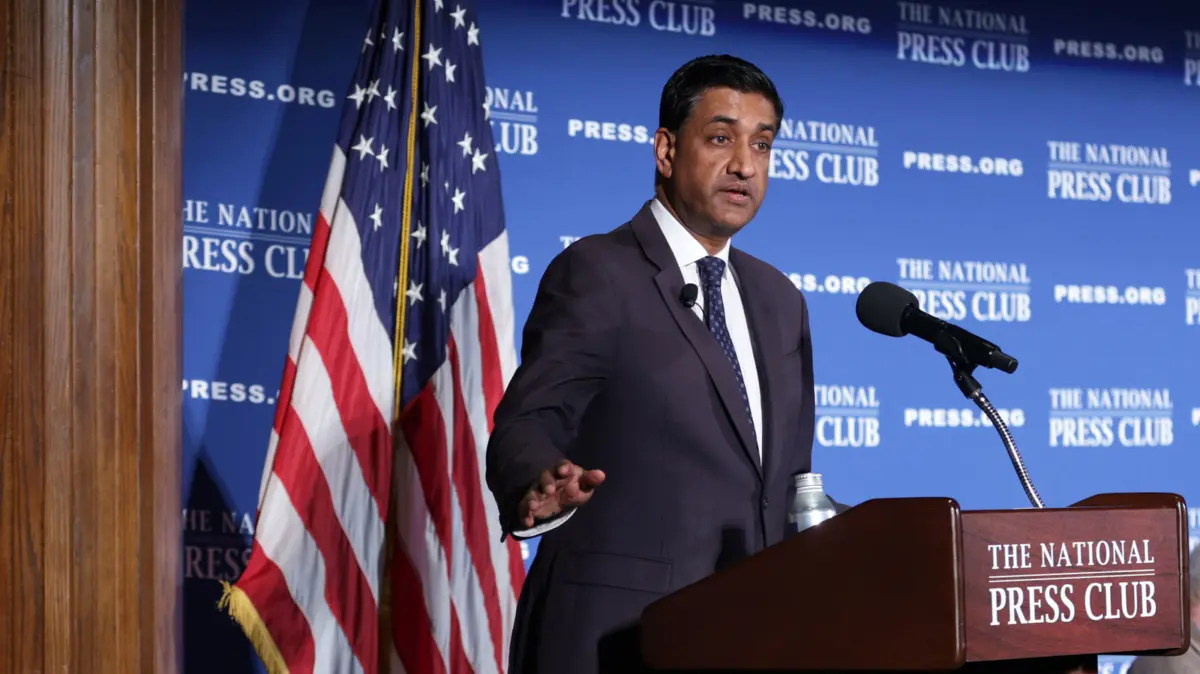
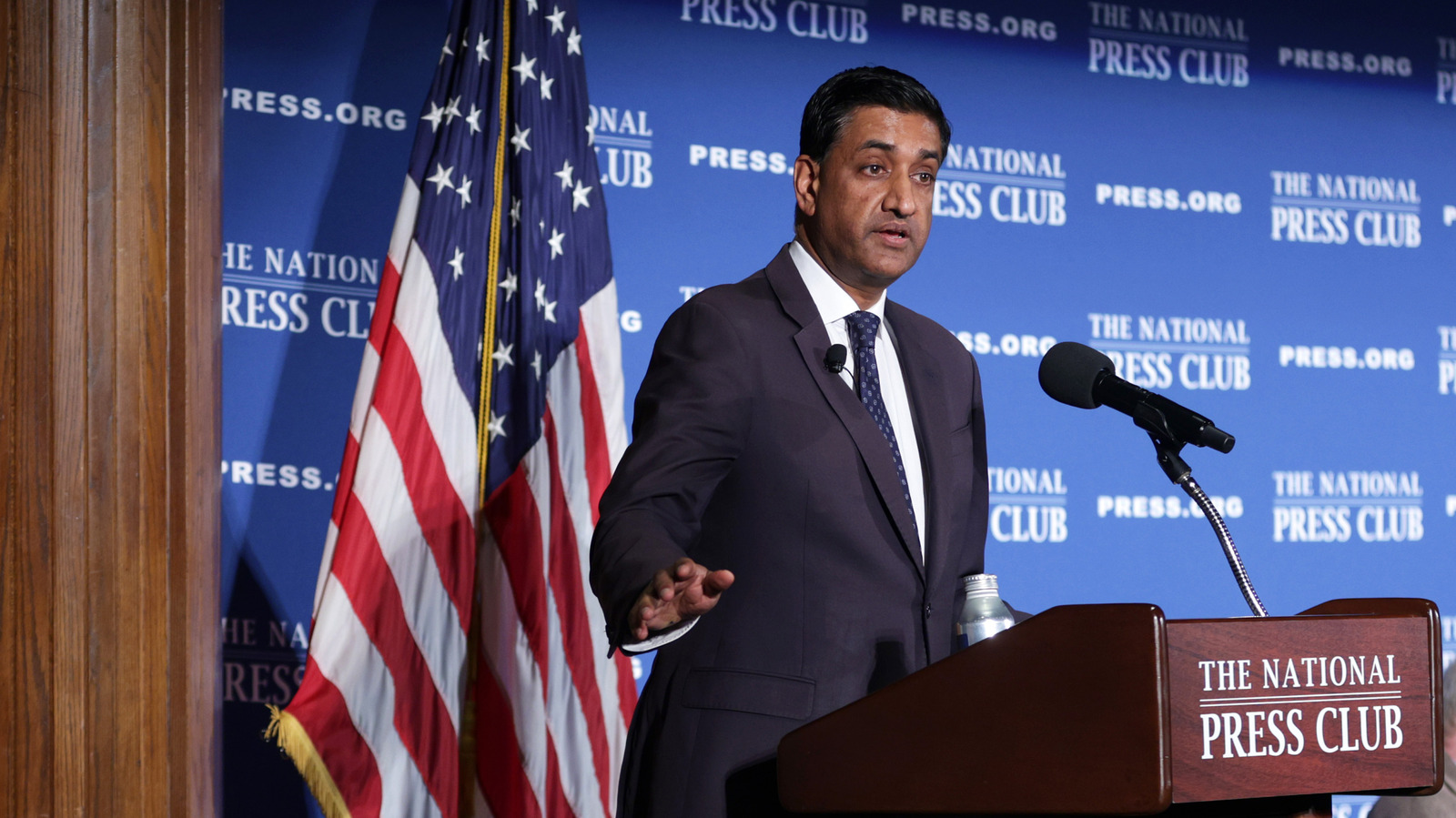
Into this high-stakes arena steps Representative Ro Khanna (D-CA). In response to federal preemption efforts and growing industry deregulation, Khanna has introduced a groundbreaking congressional resolution calling for a federally recognized "Data Center Bill of Rights." This policy framework is designed to safeguard the absolute authority of local communities to oppose, regulate, or outright ban data center projects near their homes, schools, and hospitals.
Far from a localized zoning dispute, the debate over the data center boom has become a defining proxy war of the 21st century. It forces lawmakers to weigh the imperatives of national security and technological innovation against environmental justice, public health, and basic democratic self-determination. By examining the structural tensions between federal ambitions and municipal rights, this report explores the origins, implications, and future outlook of Khanna’s legislative crusade against unchecked digital industrialization.
Detailed Chronology: The Escalating Resistance Against Unchecked Digital Expansion
To understand the urgency behind Representative Khanna’s proposed resolution, one must trace the rapid acceleration of local pushback and the corresponding federal push to strip municipalities of their regulatory powers.
The Grassroots Awakening (2022–2023)
For years, data centers were welcomed by local governments as quiet, unobtrusive neighbors that generated modest tax revenue without the heavy traffic or smoke stacks associated with traditional manufacturing. However, as generative AI models required exponential leaps in computing power, the scale of these facilities changed dramatically. Instead of modest server farms, tech giants began proposing multi-acre complexes powered by dedicated natural gas turbines and consuming as much electricity as small cities.
By late 2022 and throughout 2023, suburban communities from Northern Virginia (known globally as "Data Center Alley") to rural Oregon and Georgia began organizing formal resistance groups. Residents armed themselves with decibel meters to record the relentless, low-frequency hum of massive cooling fans, while municipal planners realized their local zoning codes were entirely inadequate for facilities operating 24 hours a day, 365 days a year.
The Legislative Wave of Moratoriums (2024–2026)
As the impacts became undeniable, local and state governments began taking aggressive defensive measures:
- Seattle, Washington: The Seattle City Council approved a landmark moratorium on large-scale data center developments to protect the local power grid and ensure residential electricity rates remained stable.
- New York State: Governor Kathy Hochul signed a sweeping one-year data center moratorium, temporarily halting the approval of new facilities powered by fossil-fuel generators while environmental impact studies could be conducted.
- Maine: Lawmakers and executive officials grappled with severe legislative battles over temporarily banning large data centers to protect local water tables and pristine natural ecosystems.
The Federal Counter-Offensive and Khanna’s Intervention (Late 2025–Present)
As states and cities attempted to slam the brakes on construction, the federal response moved in the opposite direction. The executive branch increasingly utilized federal authority to streamline AI infrastructure, exempting data center developments from key pollution laws intended to prevent acid rain and proposing overarching policy frameworks designed to supersede state and local zoning laws entirely.
Recognizing that federal preemption was stripping everyday citizens of their right to protect their local environments, Representative Khanna introduced House Resolution 1471. While structured as a non-binding resolution rather than an immediate statute, the measure lays down a clear legislative marker: the federal government must not trample the rights of local populations who wish to say "no" to industrial server farms in their neighborhoods.
Supporting Context & Metrics: Environmental Toll and Grid Strain
The friction between local residents and tech corporations is not rooted in mere opposition to progress; it is driven by quantifiable, systemic strains on natural resources and municipal infrastructure. The environmental and financial footprints of modern AI data centers are reshaping the American landscape in alarming ways.
The Water Crisis
The sheer thermal output of modern AI accelerators—such as advanced Graphics Processing Units (GPUs)—requires intensive cooling systems. While some facilities utilize closed-loop systems, many rely on evaporative cooling towers that consume millions of gallons of water daily. According to comprehensive analyses by the World Resources Institute (WRI) and academic researchers, U.S. data centers could consume up to 32 billion gallons of water annually by 2028. In drought-prone regions of the American Southwest and parts of the industrial Midwest, this level of consumption directly threatens municipal water tables, agricultural irrigation, and residential access.
Air Pollution and Public Health
To meet their insatiable power demands—often far exceeding what local utilities can reliably supply—many data centers install massive on-site backup generators powered by diesel or natural gas turbines. These generators are frequently operated not just during grid emergencies, but during routine testing and peak-load hours.
The resulting emissions include particulate matter, nitrogen oxides, and sulfur dioxide. The public health consequences have proven severe enough to trigger legal action; notably, the NAACP filed a major federal lawsuit against xAI over the environmental pollution generated by its massive Memphis data center, citing disproportionate health hazards inflicted on surrounding minority and low-income neighborhoods.
The Electricity Rate Shock
Perhaps the most immediate grievance felt by ordinary Americans is the impact on their utility bills. Data centers operate continuously at maximum capacity, driving up wholesale electricity prices. Utility companies across the country are scrambling to build new transmission lines and generation plants—costs that are frequently passed down to residential ratepayers through rising monthly utility bills. For families living miles away from a single server rack, the financial penalty of the AI boom is arriving in their mailboxes every month.
Official Statements and Political Dynamics
The introduction of the "Data Center Bill of Rights" has exposed deep ideological fractures within American politics, creating unusual alliances and fierce opposition across the political spectrum.
Representative Khanna’s resolution champions a philosophy of radical localism. By advocating that communities should be empowered to ban data centers within 2,500 feet of homes, schools, childcare facilities, hospitals, and nursing homes, the resolution draws a hard boundary between human habitations and industrial computing infrastructure. Furthermore, the measure asserts that local populations should hold the explicit right to demand absolute transparency from tech providers, block unjustified changes to their electricity rates, and legally mandate the use of 100% clean, renewable energy sources.
The Irony of "NIMBYism" in Modern Politics
Political analysts have pointed out a fascinating irony in Khanna’s legislative posture. Khanna represents a California congressional district that has spent years grappling with severe housing shortages. In response, California lawmakers have aggressively passed state-level housing laws designed to override local "Not In My Backyard" (NIMBY) objections to high-density residential developments, prioritizing the greater social good of housing affordability over local opposition.
However, Khanna argues that data centers are fundamentally different from affordable housing or public transit. While housing satisfies a fundamental human need, industrial server farms are private commercial ventures constructed to harvest data and train proprietary algorithms for multi-trillion-dollar corporations. Allowing corporations to bypass local communities for digital infrastructure, Khanna contends, is a subversion of democracy, whereas local opposition to housing often exacerbates socioeconomic inequality.
The Broader Legislative Landscape
Khanna’s resolution does not exist in a vacuum. It follows a series of progressive federal interventions, including efforts by Senator Bernie Sanders and Representative Alexandria Ocasio-Cortez to introduce sweeping legislation aimed at pausing nationwide data center construction until strict environmental and grid-stability safeguards can be established.
Conversely, the tech industry and its allies in Washington argue that restricting data centers will permanently cede American leadership in artificial intelligence to geopolitical rivals like China. Industry groups maintain that federal oversight and expedited permitting are essential to prevent a fragmented regulatory patchwork that could stall the energy transition and strangle technological innovation in its crib.
Future Outlook: Where Do We Go From Here?
As H.Res. 1471 makes its way through committee consideration, its immediate path to becoming binding federal law remains uncertain. As a non-binding resolution, it cannot unilaterally halt a single server construction project or overturn executive exemptions. However, its true power lies in its ability to crystallize public sentiment, provide a unified messaging framework for grassroots activists, and force lawmakers on Capitol Hill to take a recorded stance on digital infrastructure development.
Scenarios for the Future of Data Center Regulation
-
The Compromise Model (Federal Standards with Local Consultation):
As public pressure mounts, federal regulators may eventually be forced to abandon wholesale preemption. A middle-ground future could see federal agencies establishing baseline environmental, water, and energy efficiency standards that empower local communities to enforce compliance without granting them veto power that completely halts grid modernization. -
The Balkanized Regulatory State:
If federal courts and executive orders fail to resolve the conflict, the United States may witness a deeply balkanized landscape. Blue states and progressive municipalities may enact stringent bans, forcing tech companies to cluster their infrastructure in deregulated, resource-abundant "sacrifice zones," leading to prolonged legal battles between state attorneys general and federal regulators. -
The Energy Innovation Pivot:
Ultimately, the data center crisis may force the tech industry to fundamentally alter its energy sourcing model. Rather than relying on fossil-fuel backup generators and straining municipal grids, tech giants may be legally or economically compelled to invest directly in next-generation clean energy, such as dedicated small modular nuclear reactors (SMRs) and advanced geothermal systems, rendering local energy opposition obsolete.
Conclusion
Representative Ro Khanna’s call for a "Data Center Bill of Rights" marks a critical turning point in the relationship between American democracy and the digital economy. It signals that the era of frictionless, invisible tech expansion has come to an end. Whether through municipal moratoriums, federal resolutions, or grassroots lawsuits, communities across the United States are making it abundantly clear: the digital future cannot be built at the direct expense of the air we breathe, the water we drink, and the democratic integrity of our local neighborhoods.