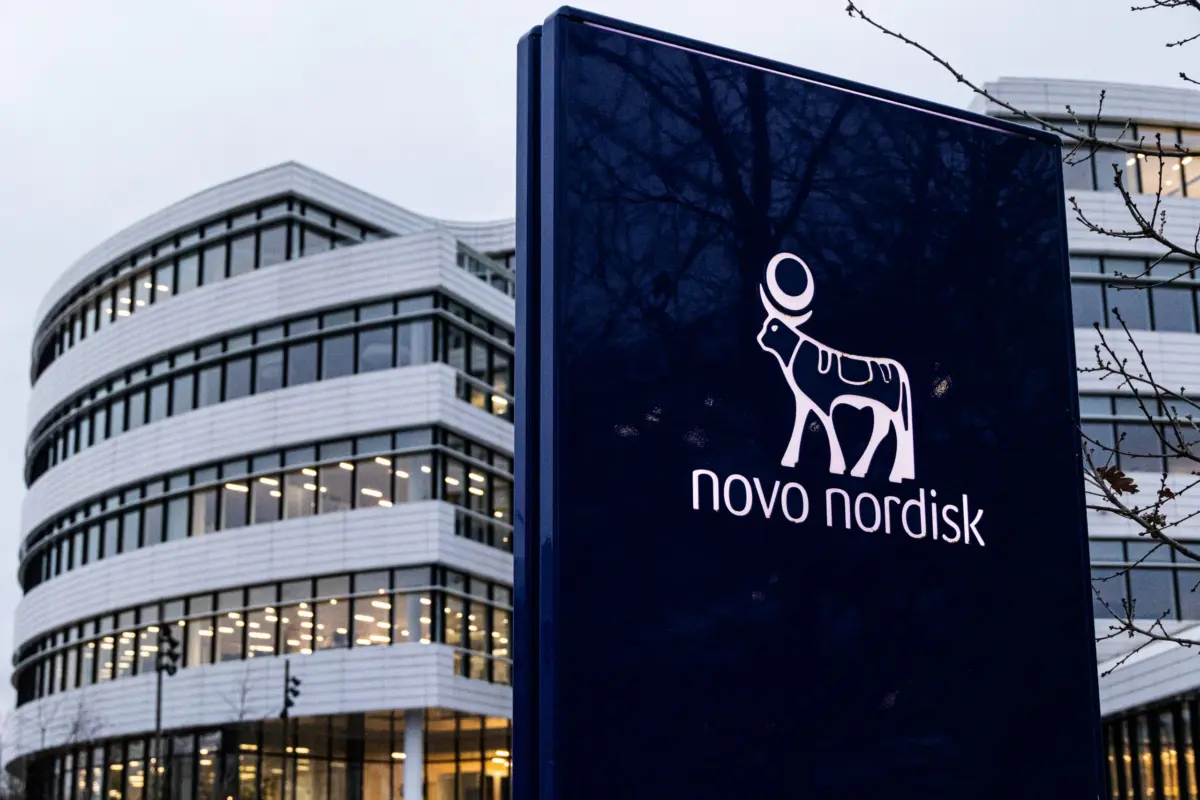
In one of the most significant agency-of-record (AOR) realignments within the global healthcare and pharmaceutical sectors, Omnicom has officially been selected to manage the lucrative U.S. media planning and buying account for Novo Nordisk, the Danish pharmaceutical powerhouse behind blockbuster metabolic treatments Ozempic and Wegovy.
The appointment marks a pivotal turning point in how pharmaceutical giants approach direct-to-consumer (DTC) marketing, digital transformation, and patient education in an era dominated by chronic disease awareness. According to industry intelligence firm COMvergence, the global scope of the Novo Nordisk media account is valued at an astonishing $618 million, with the U.S. portion alone commanding a staggering $520 million. This massive capital outlay underscores the high-stakes battleground of the weight-loss and diabetes management therapeutic categories, where brand visibility, regulatory navigation, and consumer engagement dictate market leadership.
For Omnicom, securing this account is a major triumph, validating the holding company’s sustained investments in data-driven marketing, precision audience segmentation, and healthcare-specific communication infrastructure. As metabolic therapies continue to capture mainstream cultural consciousness and reshape public health paradigms, Omnicom will be tasked with steering Novo Nordisk’s brand narrative across traditional, digital, and emerging technological channels.
This comprehensive report explores the trajectory of the partnership, the staggering financial metrics and market dynamics driving the account, official perspectives from corporate leadership, and an authoritative forward-looking analysis of what this multi-million-dollar collaboration signals for the future of pharmaceutical advertising.
Detailed Chronology: The Road to the Omnicom Partnership
The consolidation and shifting of Novo Nordisk’s media portfolio did not happen in a vacuum. It is the culmination of a rigorous, highly competitive pitch process that reflects the rapidly evolving relationship between pharmaceutical innovators and agency holding companies.
Pre-Pitch Landscape: Managing Explosive Growth
Prior to this sweeping appointment, Novo Nordisk’s explosive market growth—largely propelled by the unprecedented global demand for GLP-1 (glucagon-like peptide-1) receptor agonists—strained existing agency ecosystems. As consumer awareness of Ozempic (indicated for type 2 diabetes) and Wegovy (indicated for chronic weight management) transformed these prescription brands into household names, the sheer volume of media execution required institutional scale.
Historically, pharmaceutical marketing was characterized by conservative, physician-targeted detailing and heavily regulated print or linear television placements. However, the viral cultural phenomenon surrounding GLP-1 medications forced Novo Nordisk into the consumer lifestyle and retail media spotlight. The company needed an agency partner capable of handling multi-hundred-million-dollar budgets while maintaining strict adherence to pharmaceutical compliance, data privacy, and ethical marketing standards.
The Review and Evaluation Phase
The review process, which unfolded quietly behind closed doors over several months, invited top-tier holding companies to pitch comprehensive media planning and buying strategies tailored to the U.S. market—the world’s most lucrative and fiercely contested pharmaceutical arena. Agencies were evaluated on several critical vectors:
- Advanced Data Integration: The ability to merge real-world evidence (RWE), consumer lifestyle data, and healthcare professional (HCP) prescribing habits into actionable media strategies.
- Emerging Channel Agility: Mastery over programmatic video, connected TV (CTV), social media ecosystems, retail media networks, and spatial or AI-driven engagement platforms.
- Scalability and Resilience: Proven operational infrastructure to manage seasonal fluctuations, supply chain adjustments, and rapidly shifting regulatory environments.
The Omnicom Victory
By demonstrating a seamless synthesis of creativity, deep healthcare marketing expertise, and cutting-edge media architecture powered by its data and analytics arm, Omnicom emerged victorious. A spokesperson for Novo Nordisk officially confirmed the appointment to ADWEEK, signaling the end of the review and the immediate commencement of transition planning.
The partnership positions Omnicom at the vanguard of the pharmaceutical sector, tasking the holding company with orchestrating U.S. media operations for a brand that is literally redefining modern medicine and public health policy.
Supporting Context & Metrics: Inside the $620 Million Media Ecosystem
To truly grasp the magnitude of Omnicom’s new mandate, one must examine the hard metrics, financial valuations, and market forces that dictate Novo Nordisk’s media expenditure.
Financial Breakdown of the Account
Data compiled by media audit and research firm COMvergence highlights the staggering scale of Novo Nordisk’s media investments:
- Global Account Value: $618 million annually.
- U.S. Market Valuation: $520 million annually (representing over 84% of the global media footprint).
In the hierarchy of global advertising accounts, a $520 million U.S. media assignment places Novo Nordisk in an elite tier of enterprise-level spenders, rivaling top automotive, consumer packaged goods (CPG), and telecommunications giants. This level of capital deployment requires hyper-sophisticated media attribution models, continuous optimization, and rigorous return-on-investment (ROI) tracking.
The GLP-1 Phenomenon: Ozempic, Wegovy, and Market Demand
The financial engine driving this massive media spend is anchored by Novo Nordisk’s pioneering portfolio of GLP-1 receptor agonists.
- Ozempic (semaglutide): Initially approved by the U.S. Food and Drug Administration (FDA) in 2017 for the treatment of type 2 diabetes, Ozempic quickly transcended its clinical indication. Its secondary effect—significant, sustained weight loss—ignited global consumer demand, making it a cultural touchstone and a frequent topic across mainstream media, social platforms, and celebrity interviews.
- Wegovy (semaglutide 2.4 mg): Specifically formulated and approved for chronic weight management in adults with obesity or overweight-related comorbid conditions, Wegovy became Novo Nordisk’s premier direct-to-consumer vehicle in the anti-obesity medications (AOM) market.
The commercial success of these drugs has transformed Novo Nordisk into one of the most valuable publicly traded companies in Europe, periodically surpassing national GDP figures in its home country of Denmark. Consequently, the marketing budget managed by Omnicom is not merely a promotional expense; it is a critical instrument of public health communication, supply-demand expectation management, and brand stewardship.
The Regulatory and Ethical Tightrope
Managing a half-billion-dollar U.S. media account for pharmaceutical products is vastly different from promoting consumer electronics or fast food. Omnicom’s media teams must operate within a complex labyrinth of regulatory frameworks enforced by the FDA, as well as voluntary industry codes established by Pharmaceutical Research and Manufacturers of America (PhRMA).
Key challenges within this media ecosystem include:
- Fair Balance Requirements: Ensuring that every broadcast, digital, or print advertisement adequately communicates potential side effects, contraindications, and prescribing information.
- Platform Policy Compliance: Navigating the shifting rules of major digital publishers (such as Meta, Google, and TikTok) regarding health-related advertising, sensitive weight-loss claims, and body image portrayal.
- Targeting Precision vs. Privacy: Balancing hyper-targeted programmatic buying with stringent healthcare data privacy regulations (such as HIPAA considerations and state-level consumer privacy laws).
Official Statements: Perspectives from Corporate Leadership
The formal confirmation of the partnership sheds light on the strategic alignment between Novo Nordisk’s corporate vision and Omnicom’s operational capabilities.
Novo Nordisk’s Consumer-Centric Vision
In an official statement provided to ADWEEK, a spokesperson for the Danish pharmaceutical leader articulated the rationale behind the agency selection and the roadmap for future campaigns:
"We look forward to working with the Omnicom team as we continue to scale consumer-focused strategies and connect with patients through emerging channels and technologies, helping bring even greater awareness of our medicines to people living with chronic conditions such as obesity and diabetes."
This statement illuminates three core strategic imperatives for Novo Nordisk moving forward:
- Scaling Consumer-Focused Strategies: Shifting away from legacy, insular marketing models toward empathetic, patient-centric narratives that destigmatize chronic illnesses.
- Embracing Emerging Channels and Technologies: Moving beyond linear television and static print into immersive digital environments, retail health ecosystems, and AI-powered personalization.
- Addressing Global Health Epidemics: Framing advertising not just as brand promotion, but as an educational public health service for millions suffering from obesity and type 2 diabetes.
The Omnicom Advantage
While specific financial terms of the agency contract remain confidential, industry insiders note that Omnicom’s triumph is a testament to its bespoke agency model—often referred to as "Omnicom Health Group" integration—which unites specialized healthcare marketing talent with enterprise-level media buying power. By leveraging its proprietary data platforms (such as Omni), the holding company can deliver granular audience insights that allow Novo Nordisk to reach undendiagnosed patients, support adherence among active users, and maintain constructive dialogues with healthcare providers.
Future Outlook: The Next Era of Pharmaceutical Media and Marketing
As Omnicom assumes control of Novo Nordisk’s $520 million U.S. media portfolio, the broader advertising and pharmaceutical industries are watching closely. The successes and hurdles of this partnership will likely set new benchmarks for healthcare marketing over the next decade.
1. The Convergence of Healthcare and Retail Media
One of the most profound shifts in modern media is the rise of retail media networks (RMNs). Pharmacies, grocery chains, and health-retail conglomerates possess vast amounts of first-party consumer transaction data. In the coming years, expect Omnicom to integrate retail health data into Novo Nordisk’s media mix, connecting digital ad exposure directly to prescription fulfillment trends at brick-and-mortar and mail-order pharmacies.
2. Hyper-Personalization Through Artificial Intelligence
Artificial intelligence and machine learning will play an indispensable role in optimizing half a billion dollars in media spend. Omnicom will likely deploy predictive modeling to identify micro-segments of consumers who are at high risk for obesity-related comorbidities or uncontrolled type 2 diabetes. By tailoring creative messaging dynamically across programmatic channels, the agency can deliver culturally relevant, medically accurate education to diverse demographic cohorts.
3. Combating Misinformation and Managing Public Perception
The cultural ubiquity of GLP-1 medications has invited a wave of misinformation, counterfeit product concerns, and public debates regarding healthcare equity and insurance coverage. A crucial component of Omnicom’s mandate will involve reputation management and proactive consumer education. Media strategies must build trust, debunk myths, and reinforce the clinical efficacy and safety profiles of Ozempic and Wegovy under the guidance of licensed medical professionals.
4. Navigating the Post-Cookie Digital Frontier
As third-party cookies face permanent deprecation across major web browsers, advertisers are forced to rely on alternative identity resolution frameworks. Omnicom’s ability to leverage deterministic first-party data and privacy-compliant identity graphs will be tested immediately. Ensuring uninterrupted campaign measurement and attribution without violating consumer trust will be a defining operational objective for the agency.
Conclusion
The marriage of Novo Nordisk’s market-leading pharmaceutical innovations with Omnicom’s media prowess represents a watershed moment for the advertising industry. Valued at $520 million in the United States alone, this landmark account is far more than a routine business transaction—it is the logistical backbone of a global health conversation.
As Omnicom takes the helm of media planning and buying, its success will be measured not merely by impressions, clicks, or return on ad spend, but by its capacity to responsibly educate patients, empower healthcare providers, and expand access to life-changing therapies for millions navigating chronic conditions. In an era where health is increasingly shaped by digital connectivity and consumer empowerment, the Novo Nordisk-Omnicom alliance establishes the definitive gold standard for modern pharmaceutical marketing.