Executive Overview
The rapid integration of generative artificial intelligence into visual marketing has produced a dual reality for modern brands. On one side lies an unprecedented acceleration in content production velocity; on the other, a visual environment saturated with generic, easily recognizable imagery—often dismissed by audiences as "AI slop." This visual homogenization threatens brand identity, dilutes consumer trust, and undermines the return on investment (ROI) of automated marketing workflows.
However, industry experts assert that the prevalence of synthetic-looking imagery is not an inherent limitation of underlying machine learning architectures, but rather a consequence of primitive prompt methodology and inadequate tool selection. As generative models have transitioned from pure diffusion algorithms to multimodal Large Language Models (LLMs) capable of complex visual reasoning, the bottleneck in output quality has shifted entirely from technological capability to operator execution.
By moving away from basic, unrefined text queries and adopting structured architectural frameworks—such as the Seven-Pillar Prompt Methodology—marketers can systematically eliminate default algorithmic outputs. Furthermore, by coupling these frameworks with multi-model rendering platforms like Magnific and agentic orchestration tools like Anthropic’s Claude, enterprise teams are establishing hyper-consistent visual universes. This shift enables scalable asset production across thousands of stock keeping units (SKUs) and rapid ad refreshes, fundamentally challenging traditional photographic workflows.
Detailed Chronology: The Architectural Evolution of AI Image Generation
Understanding the root cause of generic AI imagery requires examining how synthetic media generation has evolved over recent years.
+-----------------------------------------------------------------------------+
| ERA 1: Early Diffusion Models (2021–2023)                                   |
| - Mechanics: Latent diffusion / noise subtraction                           |
| - Characteristics: Visual artifacts, six-fingered hands, plastic skin       |
| - Limitation: Zero semantic context; unguided reverse diffusion             |
+-----------------------------------------------------------------------------+
                                      │
                                      ▼
+-----------------------------------------------------------------------------+
| ERA 2: Multimodal LLM Engines (2023–2024)                                   |
| - Mechanics: Transformer-backed vision models (e.g., GPT Image)             |
| - Characteristics: Native text rendering, reference image reasoning         |
| - Advantage: Deep contextual comprehension of intent and aesthetics        |
+-----------------------------------------------------------------------------+
                                      │
                                      ▼
+-----------------------------------------------------------------------------+
| ERA 3: Orchestrated Multi-Model Workflows (Present)                        |
| - Mechanics: MCP integration, agentic frameworks (Claude + Magnific)        |
| - Characteristics: Batch rendering, cross-model benchmarking, native plugins |
| - Advantage: Automated visual world-building and programmatic asset design |
+-----------------------------------------------------------------------------+
Phase 1: The Early Diffusion Era (2021–2023)
Initial iterations of commercial AI generators relied strictly on latent diffusion architectures. These models operated by starting with a field of Gaussian noise and progressively removing it—much like a sculptor chipping away at marble—guided by text embeddings.
While groundbreaking, this approach suffered from severe conceptual and structural limitations:
- Anatomy rendering was notoriously flawed, giving rise to six-fingered hands, misaligned teeth, and "uncanny valley" facial features.
- Texture mapping was overly smooth, giving human skin and surfaces a distinctly unnatural, plastic finish.
- Contextual awareness was absent; models processed text as isolated tokens rather than holistic semantic ideas, making multi-subject composition nearly impossible to control.
These early technical hurdles established widespread skepticism among creative directors, leading many to dismiss AI tools as unsuitable for high-stakes enterprise applications.
Phase 2: The Shift to Multimodal LLM Foundations (2023–2024)
The landscape changed dramatically with the introduction of multimodal models, exemplified by OpenAI’s GPT Image architecture. Rather than treating visual synthesis as an isolated pattern-matching task, these next-generation engines merged image generation with the reasoning power of Large Language Models.
Trained on billions of paired visual assets and nuanced textual descriptions, these systems developed an understanding of world physics, spatial logic, and thematic context. When prompted with complex scenarios, the engine does not stitch together existing photographic fragments; instead, it synthesizes new compositions by drawing upon learned spatial and conceptual relationships.
Key advancements in this era include:
- Deep Reference Context: The ability to upload source imagery (e.g., a specific consumer package) and instruct the model to "build an environment around it." The LLM analyzes the subject, identifies constituent elements (such as ingredients, branding cues, or geometric lines), and constructs a coherent surrounding scene.
- Typographic Control: Previous models struggled to render single words correctly. Current LLM-backed engines can render whole paragraphs of text while adhering to explicit font directions, hierarchical placement, and aesthetic constraints.
Phase 3: Multi-Model Orchestration and Agentic Systems (Present)
The modern paradigm has moved beyond single-box chat interfaces toward integrated, multi-engine workflows. Creative technologists now leverage platforms like Magnific (formerly Freepik) alongside advanced agentic setups using Anthropic’s Claude and the Model Context Protocol (MCP).
This configuration allows operators to bypass the single-output limits of consumer interfaces, rendering up to eight varied outputs simultaneously across multiple underlying models (such as GPT Image and Google’s Imagen). By executing prompt engineering via specialized AI personas and outputting directly into design applications like Adobe Photoshop and Illustrator, creative workflows have evolved from simple "text-to-image prompting" into end-to-end programmatic content systems.

Technical Framework: The Seven-Pillar Prompt Architecture
The primary driver behind generic AI visuals is algorithmic default selection. When a user provides a brief, non-specific prompt—such as "create a flyer for a coffee shop"—the underlying language model fills in the details using statistical averages derived from its training set. The result is predictably bland visual output featuring cliché layouts, muted colors, and uninspired compositions.
To eliminate this reliance on model defaults, creative strategist Lauren deVane developed the Seven-Pillar Prompt Framework. This methodology treats prompt construction as a precise control panel where every omitted parameter represents a decision deferred to the algorithm.
       [Seven-Pillar Prompt Control Panel]
 ┌──────────────────────────────────────────────┐
 │ 1. MEDIUM      │ Camera / Render / Illustration│
 │ 2. SUBJECT     │ Action, Emotion, Pose        │
 │ 3. SETTING     │ Environment, Props, Context  │
 │ 4. COMPOSITION │ Camera Angle, Framing, Grid  │
 │ 5. LIGHTING    │ Source, Kelvin Temp, Shadows │
 │ 6. AESTHETIC   │ Stylistic & Color Palette    │
 │ 7. INTENT      │ Emotional & Marketing Goal   │
 └──────────────────────────────────────────────┘
                        │
                        ▼
    [Eliminates Default Algorithmic Output]
1. Medium
Specifies the fundamental art style or photographic process. Marketers must move beyond broad terms like "photorealistic" and define precise artistic constraints.
- Standard Default: "A photo of…"
- Advanced Parameter: "A medium-format 35mm film photograph, high-grain texture," or "A 3D isometric octane render with soft matte textures."
2. Subject and Action
Defines the primary focal point and its dynamic state within the frame, focusing on precise narrative movement rather than static positioning.
- Standard Default: "A woman drinking coffee."
- Advanced Parameter: "A barista mid-motion, pouring microfoam into a ceramic mug, with focused eyes and steam rising off the mug."
3. Setting and Scene
Establishes the physical environment, focusing on background details that replace default environmental filler.
- Standard Default: "In a coffee shop."
- Advanced Parameter: "Inside a sun-drenched mid-century modern café with walnut wood paneling, brass fixtures, and exposed brick walls."
4. Composition
Directs the virtual camera lens, spatial framing, and perspective, controlling how the audience moves through the image.

- Standard Default: Centered, eye-level, straight-on shot.
- Advanced Parameter: "A low-angle, extreme close-up shot with a tight depth of field, keeping the product crisp while blurring the background into soft bokeh."
5. Lighting
Controls light source quality, direction, color temperature, and shadow intensity—one of the most effective ways to establish mood and avoid artificial-looking render styles.
- Standard Default: Even, ambient studio lighting.
- Advanced Parameter: "Golden hour directional sunlight streaming through wooden window blinds, casting warm geometric shadows across the counter."
6. Aesthetic and Style
Translates broader visual influences into descriptive visual characteristics without relying on simple artist attribution, which can yield inconsistent results.
- Standard Default: "In the style of modern art."
- Advanced Parameter: "Symmetrical framing, warm pastel tones, deep teal accents, clean retro-futuristic styling."
7. Intent
Communicates the underlying emotional goal or psychological effect of the visual. Because modern LLM-driven engines interpret contextual meaning, detailing the purpose of the asset helps shape subtle choices like facial expressions and tonal balance.
- Standard Default: Unspecified.
- Advanced Parameter: "Designed to evoke a sense of calm, premium craftsmanship, and quiet morning luxury."
Practical Application and Scale Mechanics
Applying structured prompting strategies enables enterprise teams to address long-standing creative challenges around asset volume, cost efficiency, and brand consistency.
                  ┌────────────────────────┐
                  │ Core Master Prompt     │
                  │ (Seven-Pillar Ruleset) │
                  └───────────┬────────────┘
                              │
         ┌────────────────────┼────────────────────┐
         ▼                    ▼                    ▼
┌──────────────────┐ ┌──────────────────┐ ┌──────────────────┐
│ Reference Asset 1│ │ Reference Asset 2│ │ Reference Asset N│
│ (Variant A Color)│ │ (Variant B Color)│ │ (Variant C Color)│
└────────┬─────────┘ └────────┬─────────┘ └────────┬─────────┘
         │                    │                    │
         └────────────────────┼────────────────────┘
                              │
                              ▼
                ┌───────────────────────────┐
                │ Unified Visual Universe   │
                │ (Hundreds of Scaled Assets│
                └───────────────────────────┘
Case Study 1: High-SKU E-Commerce Scaling (Club Critterz)
For product-driven businesses, visual production costs scale linearly with inventory size. Traditional photography requires unique staging, lighting, and post-processing for every individual stock item.
Using generative frameworks, 3D-printed toy brand Club Critterz scaled asset creation across more than 800 distinct SKUs while maintaining unified visual standards:
- Workflow: A master prompt template based on the Seven-Pillar Framework was constructed to define lighting, camera focal length, background aesthetics, and rendering style.
- Execution: Each individual product image was fed sequentially into the system alongside the master template. The LLM parsed the unique geometry and color profile of each item, generating an environment tailored to that specific product while keeping the overall art style intact.
- Result: Production of 800 unique, brand-aligned visual assets without the cost or complexity of 800 physical photo shoots.
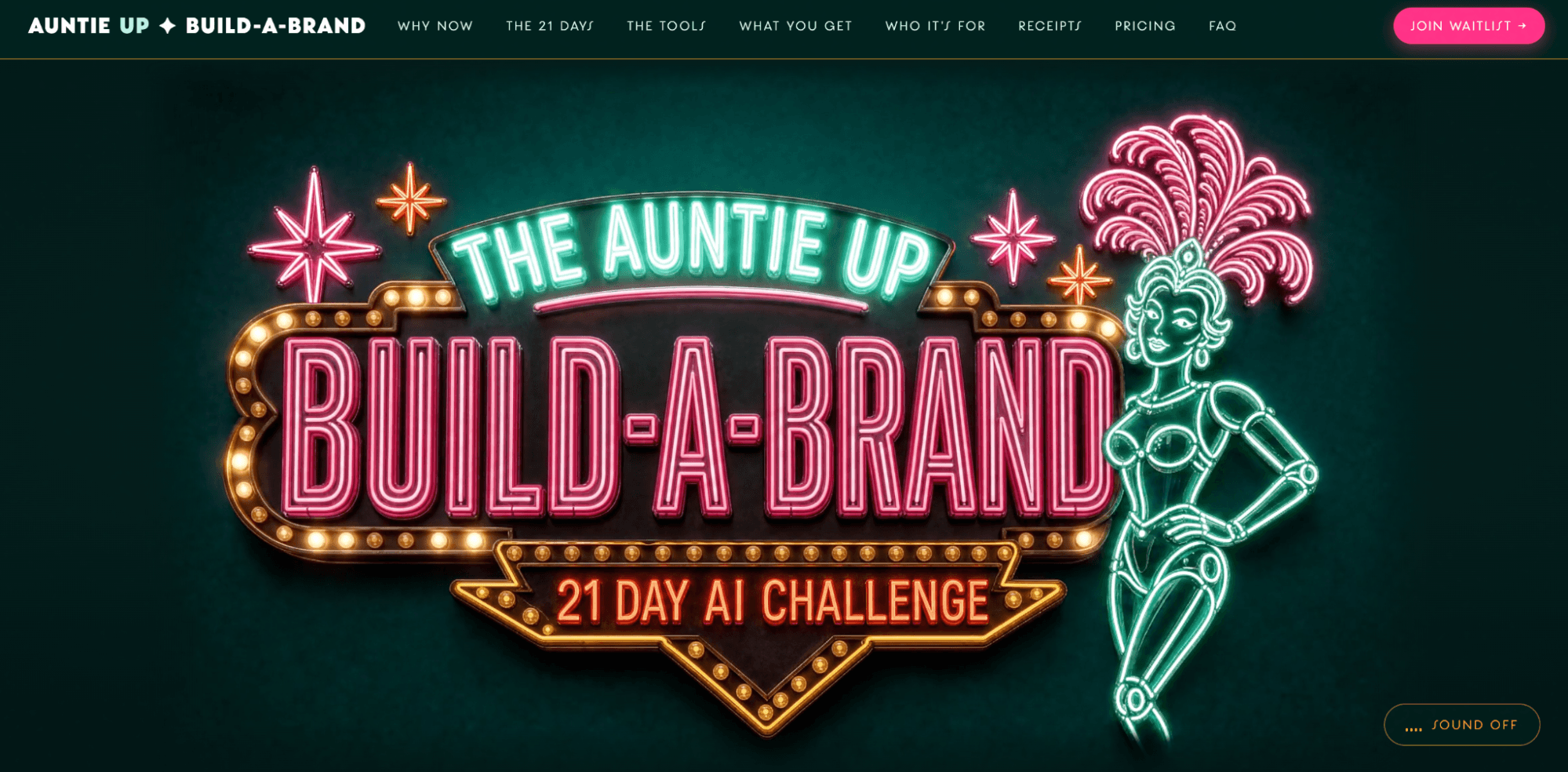
Case Study 2: Narrative Cohesion in B2B Marketing (Auntie Up)
B2B services often struggle to maintain visual continuity across digital sales assets, frequently relying on mismatched stock photography or disconnected graphics.
To build a complete digital sales interface for sub-brand Auntie Up, creative teams developed a cohesive visual universe built around a futuristic casino theme:
- Workflow: Instead of generating standalone assets, all image prompts pulled from a single master visual framework.
- Execution: Hero banners, section icons, and contextual body graphics were generated using shared reference materials, specific color palettes defined by exact hex codes, and uniform lighting parameters.
- Result: Every asset across the digital experience—from broad visual headers to minor illustrative accents—shared identical textures, color tones, and stylistic logic.
Pre-Prompting Rigor and Reference Management
High-quality generative outputs depend heavily on the accuracy of the input assets provided before prompting begins.
Brand Color Fidelity via Hex Codes
Standard text inputs like "navy blue and orange" force generative engines to guess at exact shades, leading to visual drift across campaign assets. Enterprise brand compliance requires providing exact hex values (e.g., #0A192F and #FF6B35) within the prompt text, ensuring outputs match corporate design guidelines.
Asset Curation over Asset Density
A common point of failure in generative workflows is over-providing reference images. Uploading dozens of loose source assets introduces visual noise, causing the model to struggle with subject priority.
- Character Realism: A maximum of two high-resolution reference images—one focused on facial structure and one capturing full-body proportions—delivers optimal output quality.
- Multi-Angle Character Sheets: For recurring visual characters, teams create a single reference sheet containing front, profile, and three-quarter angles. Passing this unified asset into subsequent generation cycles maintains consistent character geometry across different visual scenes.
       [INCORRECT INPUT]                     [CORRECT INPUT]
 ┌──────────────────────────┐          ┌──────────────────────────┐
 │ 15-20 Low-Res References│          │ 1 High-Res Contact Sheet │
 │ Unclear Subject Priority │    VS    │ Front / Side / Profile   │
 │ Mismatched Lighting      │          │ Unified Lighting & Color │
 └─────────────┬────────────┘          └─────────────┬────────────┘
               │                                     │
               ▼                                     ▼
 ┌──────────────────────────┐          ┌──────────────────────────┐
 │ Output: Anatomic Drift,  │          │ Output: High Structural  │
 │ Visual Confusion         │          │ Consistency Across Shots │
 └──────────────────────────┘          └──────────────────────────┘
Multi-Model Orchestration and Integrated Tooling
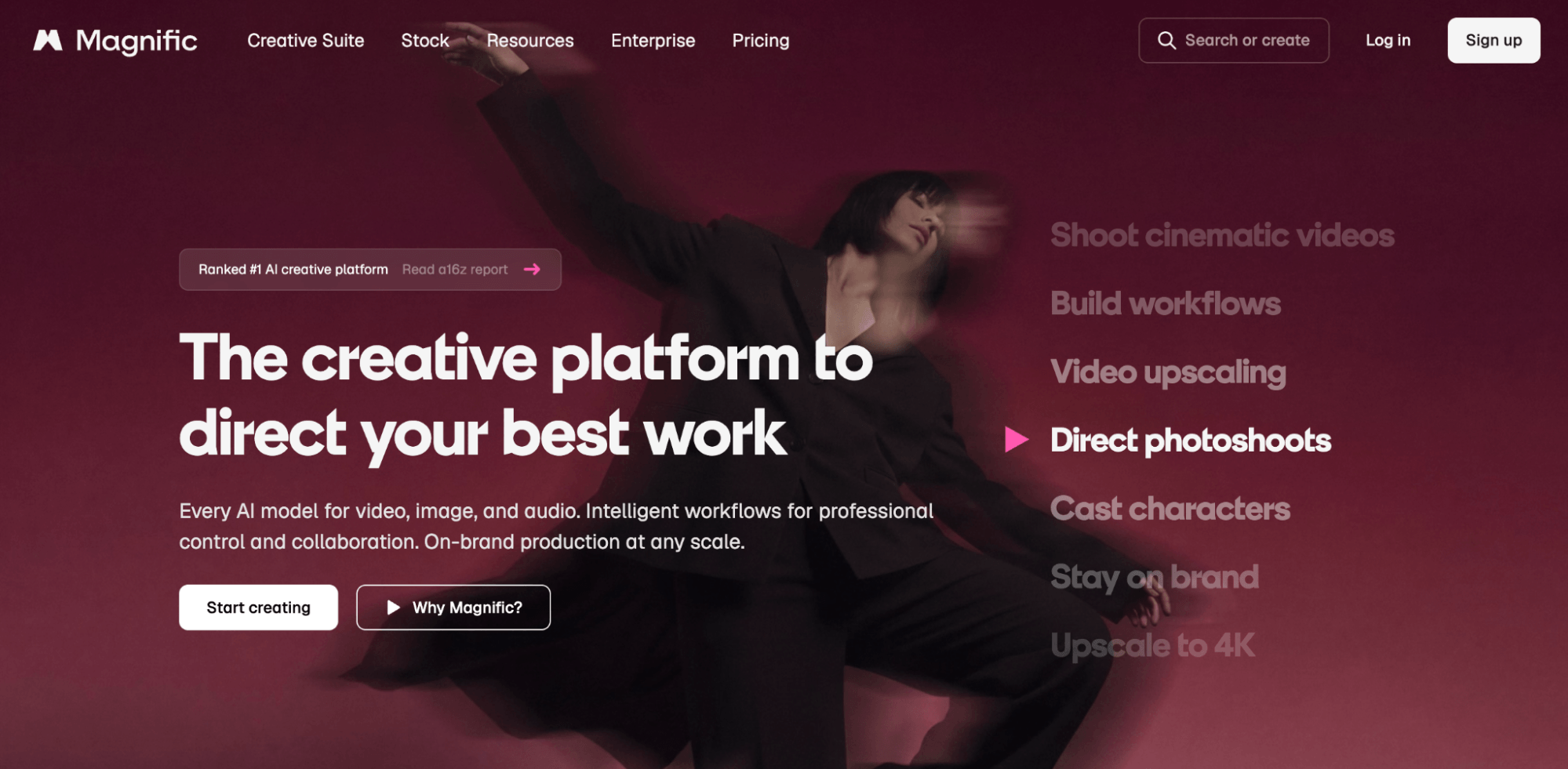
Relying on a single AI platform introduces operational bottlenecks. Advanced creative teams use specialized management suites like Magnific to run multi-engine generation and streamline visual workflows.
                            ┌────────────────────────┐
                            │ Anthropic Claude (MCP) │
                            │ Creative Direction &   │
                            │ Prompt Engineering     │
                            └───────────┬────────────┘
                                        │
                                        ▼
                            ┌────────────────────────┐
                            │ Magnific Engine Hub    │
                            │ Multi-Model Processing │
                            └─────┬────────────┬─────┘
                                  │            │
            ┌─────────────────────┘            └─────────────────────┐
            ▼                                                        ▼
┌──────────────────────┐                                  ┌──────────────────────┐
│ GPT Image Engine     │                                  │ Google Imagen Engine │
│ High Text Accuracy   │                                  │ Broad Exploration    │
└───────────┬──────────┘                                  └───────────┬──────────┘
            │                                                        │
            └─────────────────────┬──────────────────────────────────┘
                                  │
                                  ▼
                    ┌──────────────────────────┐
                    │ Concurrent 8-Up Output   │
                    │ Visual Benchmarking      │
                    └─────────────┬────────────┘
                                  │
                                  ▼
                    ┌──────────────────────────┐
                    │ Direct Export to Adobe   │
                    │ Photoshop / Illustrator  │
                    └──────────────────────────┘
Concurrent Generation and Model Benchmarking
Standard consumer portals output a single asset per request, making iteration slow and inefficient. Magnific enables concurrent rendering, generating up to eight variations from a single prompt simultaneously.
This approach addresses two practical realities of visual AI generation:
- Algorithmic Stochasticity: Generative processes are inherently probabilistic. Even with precise prompting, subtle elements like light refractions, micro-textures, and fine graphic layouts vary with every run. Generating variations in parallel increases the probability of producing a client-ready asset on the first pass.
- Cross-Model Benchmarking: Different models excel at different visual tasks. GPT Image offers superior performance for text rendering and complex visual logic, while Google’s Imagen excels at broad artistic exploration and background textures. Side-by-side rendering allows creative teams to select the strongest output for a given task.
Agentic Integration via Model Context Protocol (MCP)
By integrating Anthropic’s Claude with Magnific through the Model Context Protocol (MCP), creative teams can execute entire visual production pipelines within a single natural language interface:
- System Persona Prompting: Using specialized frameworks (such as deVane’s Prompty Poppins system), Claude assumes the role of a Creative Director, Director of Photography, and Lighting Stylist.
- Automated Prompt Architecture: When requested to create a campaign asset, Claude drafts an optimized Seven-Pillar prompt string based on the project’s creative parameters.
- Programmatic Asset Rendering: Claude passes the prompt directly to Magnific via API, selects the optimal underlying rendering engine, triggers the batch build, and embeds the finished visual assets straight back into the working interface or regional project directories.
Expert Insights and Official Statements
Reflecting on industry misconceptions regarding synthetic media, creative strategist Lauren deVane highlights the critical gap between basic tool execution and true creative skill:
"One of the biggest misconceptions about AI imagery right now is that everything AI produces is ‘slop.’ It’s like judging all piano music by watching a five-year-old bang keys in a dentist’s office. Mozart exists—we’re just judging the medium based on a kid smashing keys. The best AI imagery is already indistinguishable from real photography. The problem isn’t the underlying technology; it’s the execution skill of the operator."
Addressing the widespread issue of low-quality design collateral generated by basic web tools, deVane points to a lack of precise design direction as the primary cause:
"When users simply tell a model to ‘make me a flyer,’ the system defaults to average fonts, predictable icon placement, and safe layouts because it hasn’t been given explicit instructions to do anything different. That is how you get generic AI content. Every detail you fail to specify in your prompt is a design choice you surrender to an algorithm’s statistical baseline."
Strategic Metrics: Generative Efficiency vs. Traditional Workflows
| Metric | Traditional Photography Pipeline | Standard AI Prompting | Advanced Orchestrated Workflow |
|---|---|---|---|
| Asset Generation Speed | 2–6 Weeks (Planning to Edit) | 1–2 Minutes per Asset | Real-time (Batch Multi-Engine) |
| Visual Consistency | High (Controlled Studio Setup) | Low (Randomized Variations) | High (Anchor Reference Frameworks) |
| Production Cost per SKU | High ($500 – $2,000+) | Extremely Low (< $0.10) | Low ($0.50 – $2.00 optimized) |
| Text & Design Integration | Manual Post-Production | Poor / Unreliable | Native (LLM Context Engines) |
| Campaign Asset Velocity | Quarterly Refresh Cycles | Ad-hoc Updates | Weekly / Programmatic Refreshes |
Future Outlook: Automated Asset Pipelines and Adaptive Visuals
As multimodal models continue to advance, the boundary between text prompt engineering, graphic design, and software development will become increasingly porous.
       [Programmatic Creative Engine]
 ┌─────────────────────────────────────────┐
 │ Real-Time Consumer Performance Data     │
 └────────────────────┬────────────────────┘
                      │
                      ▼
 ┌─────────────────────────────────────────┐
 │ Autonomous Agentic Orchestrator (Claude)│
 │ Evaluates Performance & Rewrites Prompts │
 └────────────────────┬────────────────────┘
                      │
                      ▼
 ┌─────────────────────────────────────────┐
 │ Multi-Engine Rendering (Magnific API)   │
 │ Generates Target Asset Variants         │
 └────────────────────┬────────────────────┘
                      │
                      ▼
 ┌─────────────────────────────────────────┐
 │ Automated Native Layout Delivery        │
 │ (Direct Push via Photoshop / Web Hooks) │
 └─────────────────────────────────────────┘
Continuous Programmatic Campaign Iteration
Marketing creative will increasingly move away from static, quarterly campaign production toward continuously updated visual pipelines. Performance metrics from digital ad campaigns will feed directly into agentic networks like Claude. When creative fatigue drops click-through rates, these systems will automatically adjust lighting, color palettes, or compositional framing, generating updated creative assets via engines like Magnific without human intervention.
Embedded Design Tool Integrations
The distinction between standalone generative chat portals and professional design software will continue to shrink. With direct native plugins connecting engines like Magnific to software like Adobe Photoshop and Illustrator, creative directors will apply AI transformations—such as re-lighting scenes, swapping product variations, or adjusting camera angles—directly inside layer-based design files.
The Emerging Value of Creative Taste
As technical tools become faster and more accessible, pure execution speed will no longer serve as a competitive advantage. The primary differentiator for brands will be the cultivated visual taste and analytical clarity of their creative directors.
Tools that break down and analyze design references—acting as "taste accelerators"—will help team members translate intuitive aesthetic preferences into precise, programmatic language. Ultimately, the future of enterprise visual media belongs to those who master the art of translating strategic creative vision into disciplined computational instructions.