Executive Overview
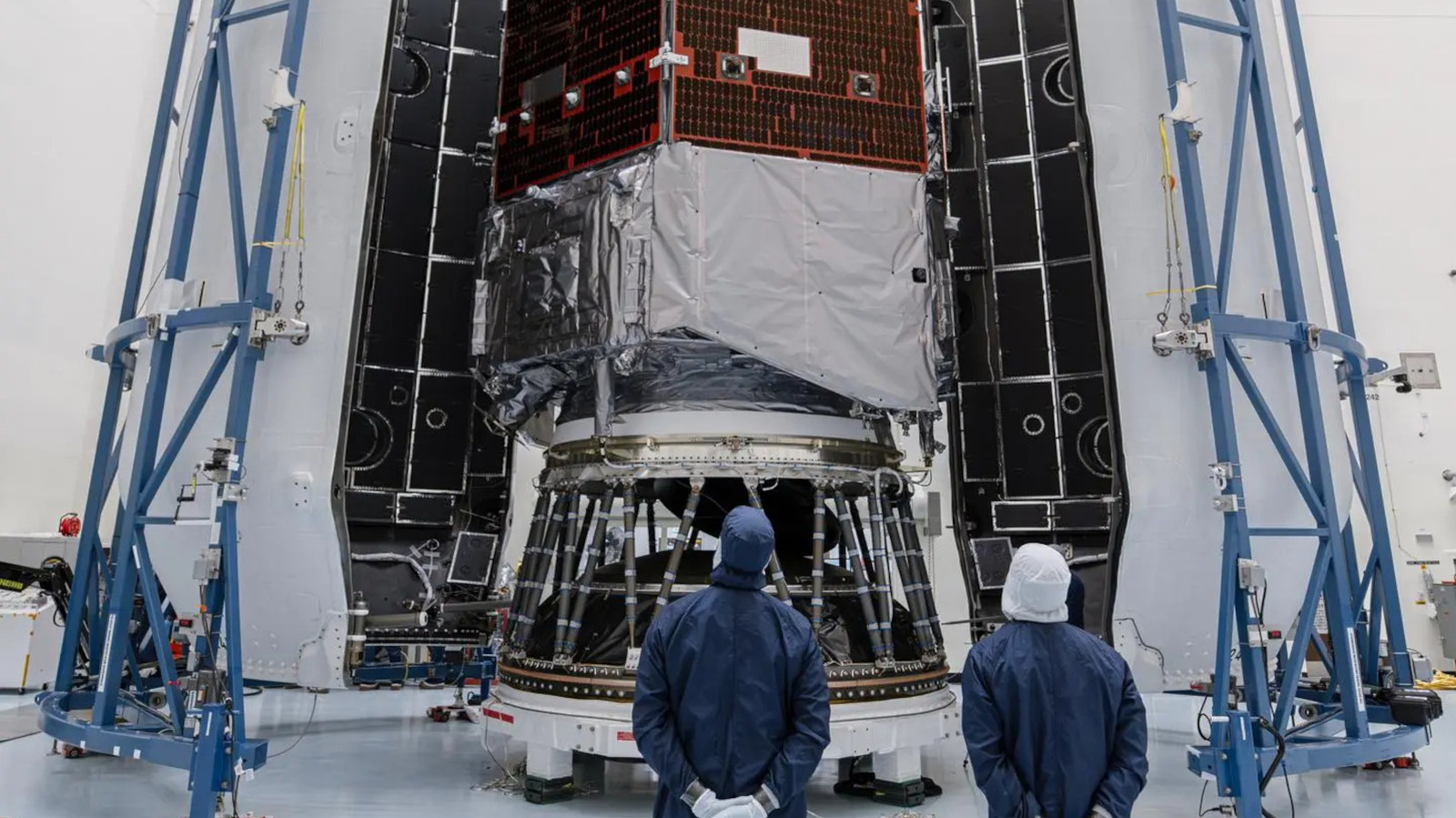
The global scientific community is on the cusp of a transformative leap in our understanding of the universe. On August 30, NASA is scheduled to launch its next flagship observatory: the Nancy Grace Roman Space Telescope. Blasting off from Launch Complex 39A at the Kennedy Space Center in Florida aboard a SpaceX Falcon Heavy rocket, the mission represents a monumental step forward in astrophysics. With a primary mirror inspected, cleared, and secured within its payload fairing, the telescope is poised to open a dazzling new chapter in space exploration.
Originally slated for a September deployment, the launch timeline was aggressively pulled forward following the successful completion of rigorous environmental and structural testing. NASA has announced that live broadcast coverage will commence at 6:20 AM Eastern Time on August 30, with lift-off targeted for no earlier than 7:26 AM Eastern Time. Should technical anomalies or unfavorable weather conditions force a scrub, a backup window has already been secured for August 31 at 7:22 AM Eastern Time.
Named in honor of Nancy Grace Roman—NASA’s pioneering first Chief of Astronomy and affectionately dubbed the "Mother of Hubble"—this state-of-the-art infrared observatory is designed to tackle some of the deepest mysteries of the cosmos. Boasting a field of view that is at least 100 times greater than that of the Hubble Space Telescope, the Roman Space Telescope will capture sweeping panoramas of the universe with unprecedented clarity. Its core scientific objectives are twofold: to decode the enigmatic mechanics of dark energy, which accelerates the expansion of the universe, and to discover and characterize exoplanets on a scale never before achieved. As humanity prepares to watch this astronomical milestone unfold live through NASA and SpaceX streaming platforms, the mission stands as a testament to decades of engineering ingenuity and scientific vision.
Detailed Chronology: From Blueprint to the Launchpad
The journey of the Nancy Grace Roman Space Telescope from a conceptual proposal to a fully integrated flight-ready observatory is a masterclass in modern aerospace engineering. Formerly known as the Wide-Field Infrared Survey Telescope (WFIRST), the project has weathered budgetary debates, design pivots, and the logistical nightmare of a global pandemic before finally arriving at the threshold of space.
The Milestones of Assembly and Testing
The development timeline accelerated significantly as components moved from cleanrooms to rigorous testing chambers. In late May, engineers at NASA completed a comprehensive final inspection of the telescope’s primary mirror. This meticulous evaluation confirmed that the mirror had suffered zero structural compromise or optical degradation during the punishing vibration, acoustic, and thermal vacuum testing phases designed to simulate the violent realities of a rocket launch.
Following the green light on the optics, integration teams moved swiftly. By early June, NASA formally revised its schedule, advancing the targeted launch window from September to August 30. This acceleration was made possible by the seamless integration of the telescope assembly with its instrument carrier and the subsequent encapsulation process inside the SpaceX Falcon Heavy payload fairing at NASA’s Kennedy Space Center.
The Pre-Launch Countdown Protocol
As launch day draws near, NASA and SpaceX have established a rigorous sequence of media events and technical checkouts to ensure absolute transparency and mission readiness:
- August 29, 9:00 AM ET: NASA will broadcast a specialized Mission Science Briefing featuring lead researchers and engineers from the Roman telescope team. This session will dive deep into the specific observational targets, operational strategies, and anticipated discoveries of the mission.
- Following the Science Briefing: A formal Prelaunch News Conference will be hosted by mission managers from NASA, contractor teams, and SpaceX to provide final status updates on weather constraints and vehicle health.
- August 30, 6:20 AM ET: Official live broadcast coverage begins across NASA’s digital channels, including NASA+, the agency’s official website, and SpaceX’s official account on X (formerly Twitter).
- August 30, 7:26 AM ET: The targeted instantaneous launch window opens for the SpaceX Falcon Heavy rocket carrying the Roman Space Telescope from LC-39A.
- August 31, 7:22 AM ET: The designated backup launch window, should atmospheric conditions or technical parameters necessitate a 24-hour scrub.
Supporting Context & Metrics: Unlocking the Universe’s Greatest Secrets
To truly grasp the significance of the Nancy Grace Roman Space Telescope, one must examine the engineering metrics that set it apart from its predecessors, as well as the profound cosmological questions it seeks to answer.
The "Mother of Hubble" and Her Legacy
Dr. Nancy Grace Roman joined NASA in 1960 as the agency’s first Chief of Astronomy. At a time when women in STEM fields faced immense systemic barriers, Roman successfully spearheaded the planning, development, and political lobbying required to turn the vision of space-based astronomy into a reality. Her most enduring legacy was championing the Hubble Space Telescope, a machine that fundamentally revolutionized human understanding of our place in the cosmos. By naming this next-generation observatory in her honor, NASA pays homage to a trailblazer who literally mapped out the modern era of observational astrophysics.
Engineering Marvels: Field of View and Optics
While Hubble is renowned for its ultra-deep, hyper-focused imagery of narrow cosmic targets, the Roman Space Telescope is engineered for breadth without sacrificing depth.
- Panoramic Capacity: Roman’s primary mirror matches Hubble’s 2.4-meter diameter, but its instrument suite features a specialized Wide-Field Instrument designed with a field of view at least 100 times greater than that of Hubble’s infrared capabilities.
- Data Harvest: This immense scope allows Roman to survey large swaths of the sky in a fraction of the time. Over the course of its primary mission, it is expected to map billions of stars and galaxies, generating a volume of astronomical data that will dwarf previous surveys.
- Coronagraphic Technology: In addition to its wide-field camera, the telescope is equipped with an advanced technological demonstration instrument: a high-performance coronagraph. This system can artificially block the blinding glare of host stars, allowing scientists to directly image and study exoplanets orbiting distant star systems.
Investigating Dark Energy and Exoplanets
The mission’s scientific charter focuses on two monumental pillars of modern astrophysics:
- Dark Energy: Comprising roughly 68% of the universe, dark energy is the mysterious, repulsive force driving the accelerated expansion of the cosmos. Roman will utilize multiple independent techniques—including measuring distant supernovae, charting the clustering of galaxies, and analyzing baryon acoustic oscillations—to map the expansion history of the universe over billions of years, shedding light on the true nature of dark energy.
- Exoplanet Census and Habitability: By utilizing gravitational microlensing surveys and its starlight-blocking coronagraph, Roman will discover thousands of new exoplanets. This dataset will provide planetary scientists with the vital statistical data needed to determine how common Earth-like worlds are and what chemical markers define planetary habitability across our galactic neighborhood.
Official Statements and Perspectives
The impending launch has elicited profound commentary from leaders across the aerospace and scientific communities, underscoring the collaborative triumph required to bring the mission to fruition.
Senior NASA leadership has consistently emphasized the generational impact of the observatory. In recent mission briefings, agency representatives noted that the Roman Space Telescope bridges the gap between historical observatories like Hubble and James Webb, serving as a high-efficiency cartographer of the cosmos. "Dr. Roman gave us the tools to peer deep into the universe; her namesake will now allow us to map it on a scale previously thought impossible," remarked a senior NASA science director during mission readiness evaluations.
SpaceX officials have likewise expressed pride in utilizing the Falcon Heavy rocket for the deployment. Known for its massive lifting capacity and high-reliability flight heritage, the Falcon Heavy provides the precise orbital insertion energy required to place the infrared observatory into its optimal operational orbit far beyond Earth’s atmospheric interference. The integration teams at Kennedy Space Center have praised the seamless coordination between NASA payload handlers and SpaceX technicians, noting that the encapsulation phase within the payload fairing proceeded without a single technical deviation.
Future Outlook: The Next Era of Astrophysics
The successful launch of the Nancy Grace Roman Space Telescope marks not an endpoint, but the explosive beginning of a decades-long golden age in astrophysics. Once operational, the observatory will immediately begin calibrating its instruments, initiating a commissioning phase that will test the limits of its wide-field detectors and starlight-suppression coronagraphs.
As the data begins streaming back to Earth, it will feed into a global network of astronomers, astrophysicists, and citizen scientists. The archives generated by Roman will serve as a foundational dataset for generations of researchers, potentially rewriting physics textbooks by solving the enigma of dark energy and identifying candidate worlds capable of supporting life.
With the countdown timer steadily ticking toward August 30, humanity stands on the precipice of a profound awakening. Through the lens of the Nancy Grace Roman Space Telescope, we are about to see our universe larger, clearer, and more interconnected than ever before.