Executive Overview
In a development that fundamentally redefines the scope of commercial aerospace infrastructure, SpaceX has announced a monumental $100 billion investment to construct a futuristic, 125,000-acre (195-square-mile) launch and manufacturing facility along the southern coast of Louisiana. Located in the remote region of Pecan Island, the upcoming site—officially designated as "Starbase, Louisiana"—will serve as the company’s third major operational orbital launch hub, joining existing facilities in Boca Chica, Texas, and Cape Canaveral, Florida.
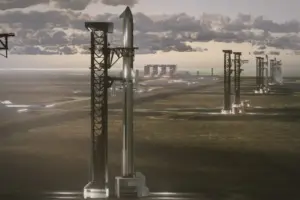
The unprecedented undertaking will span a massive 195-square-mile footprint, making it one of the largest private industrial investments in United States history. According to architectural blueprints and promotional materials released by SpaceX and Louisiana state officials, the sprawling campus will house five distinct launch complexes, each featuring dual launch pads capable of supporting an aggressive, high-cadence flight schedule.
Designed to operate on a scale previously confined to the realms of science fiction, Starbase, Louisiana is engineered to facilitate thousands of orbital Starship flights annually. The missions launching from the site will support a broad spectrum of objectives, ranging from commercial payload deployments and low-Earth-orbit operations to crewed voyages to the Moon, Mars, and deep-space destinations beyond.
The initiative is deeply intertwined with Elon Musk’s broader technological ecosystem, acting as a crucial geographic and industrial node for SpaceX’s next-generation initiatives, including the deployment of high-density orbital data center constellations and regional fuel manufacturing. Production at the site is slated to commence in 2027, with the historic first orbital launch targeted for 2029.
Detailed Chronology of the Project
The genesis of the Pecan Island spaceport project represents a convergence of corporate strategy, state-level economic development, and historical land-use transitions in the American South.
The Evolution of the Site
The land designated for Starbase, Louisiana carries a complex industrial and legal history. Previously owned by multinational energy giant ExxonMobil, the 125,000-acre tract was returned to the state of Louisiana as part of a comprehensive legal settlement stemming from long-standing litigation over coastal land loss and environmental degradation in the marshlands.
Recognizing the strategic value of the expansive, sparsely populated coastal real estate, Louisiana Governor Jeff Landry’s administration engaged in prolonged, high-level discussions with SpaceX executives. The state sought a transformative economic anchor that could revitalize the region’s industrial footprint without compromising its delicate ecosystem. The resulting agreement bridges aerospace innovation with large-scale environmental restoration, turning a contested industrial asset into a futuristic hub for space exploration.
Regulatory Approvals and Environmental Pledges
Given the massive physical footprint of the project—spanning nearly 200 square miles across marshlands and coastal zones—environmental oversight has been a central pillar of the planning phase. As part of the binding agreement negotiated with the state of Louisiana, SpaceX has committed to pioneering a sustainable industrial model.
The company has pledged extensive financial and logistical support for comprehensive ecological restoration initiatives within the Pecan Island region. These efforts will focus heavily on:
- Marshland Preservation: Reversing historical erosion patterns through advanced sediment diversion and wetland stabilization techniques.
- Wildlife Preservation: Establishing protected corridors and monitoring habitats for native and migratory species indigenous to the Gulf Coast.
- Storm Protection Infrastructure: Constructing robust natural and engineered buffer zones to shield both the spaceport facilities and local communities from increasingly severe Gulf Coast hurricanes and storm surges.
Construction Timeline and Milestones
Despite the sheer scale of the engineering challenges ahead, SpaceX intends to move forward at a characteristically rapid pace:
- 2026 (Q3): Official announcement of Starbase, Louisiana, accompanied by the release of master-plan renders, technical briefs, and state partnership disclosures.
- 2027: Groundbreaking and the official commencement of heavy construction, grading, and foundation laying across the Pecan Island site.
- 2028: Installation of initial structural frameworks, including the first propellant production facilities, power generation plants, and employee residential zones.
- 2029: Targeted window for the inaugural Starship launch from the newly minted Louisiana spaceport.
Supporting Context & Metrics: Infrastructure and Strategic Integration
To understand the true magnitude of Starbase, Louisiana, one must examine the specific infrastructure it will incorporate, as well as how the site fits into SpaceX’s wider corporate and technological roadmap.
Architectural Blueprint and Capabilities
Unlike traditional government-run spaceports that rely on shared infrastructure, SpaceX is building Starbase, Louisiana as a vertically integrated, self-sustaining industrial city. The facility’s master plan includes:
- Five Launch Complexes: Each complex will feature dual launch pads (totaling 10 active pads across the site), allowing simultaneous processing, static fire testing, and sequential launches to minimize turnaround times between flights.
- On-Site Propellant Production: A dedicated propellant manufacturing facility will harness the region’s abundant natural gas supplies to synthesize methane-based rocket fuel (
CH4), drastically reducing logistical transportation costs for the cryogenic propellants required by the Starship and Super Heavy booster systems. - Power Generation Infrastructure: Given the immense energy demands of launching heavy-lift orbital vehicles and operating advanced computing hardware, the site will feature independent, high-capacity power generation facilities.
- Vehicle Processing Integration: Expansive assembly and integration bays will allow engineers to build, repair, and upgrade Starship components directly on-site, mirroring the methodologies established at Starbase, Texas.
- Employee Residential Housing: Recognizing the remote nature of Pecan Island, SpaceX is constructing dedicated residential, recreational, and community housing developments to support thousands of aerospace workers and their families.
The "Starmind" Connection and Polar Orbits
The geographic location of southern Louisiana offers distinct orbital mechanics advantages that complement SpaceX’s existing launch sites in Texas and Florida.
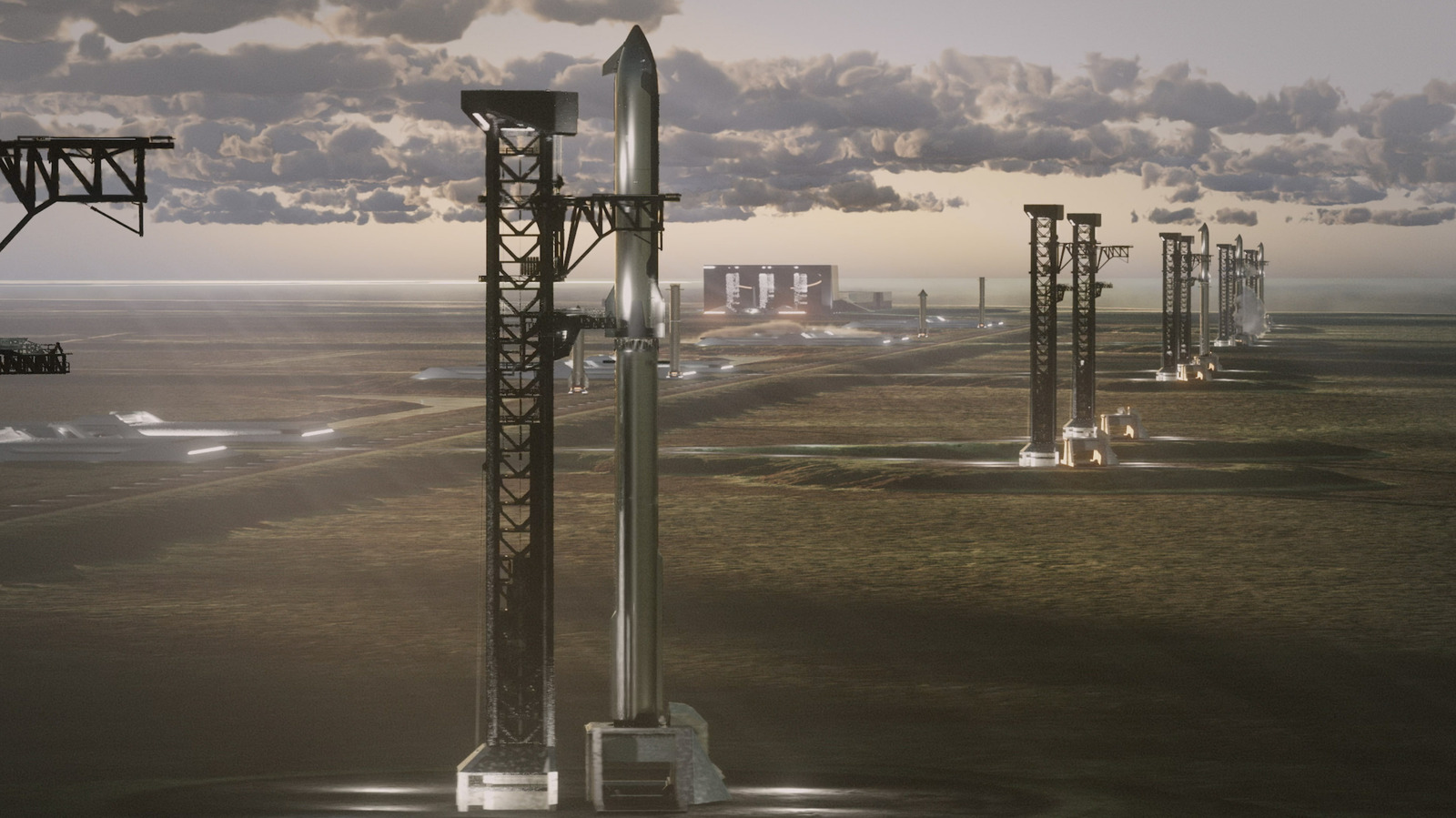
From Pecan Island, SpaceX can safely launch Starship rockets southward over the Gulf of Mexico and into polar and high-inclination orbits. This trajectory is critically important for the deployment of SpaceX’s planned "Starmind" data center satellite constellation—a vast network designed to blanket the skies with high-bandwidth, space-based computing infrastructure.
Furthermore, the Louisiana site places SpaceX in immediate geographic proximity to the Gulf Coast’s extensive petrochemical networks. This ensures a reliable, continuous supply chain for the methane feedstocks necessary to fuel thousands of annual Starship flights.
Synergies with Recent Corporate Mega-Projects
The announcement of the $100 billion Louisiana spaceport arrives amid a flurry of historic corporate maneuvers by Elon Musk’s enterprises:
- The SpaceX Initial Public Offering (IPO): The capital-intensive nature of the Starbase Louisiana project is heavily supported by SpaceX’s recent, highly publicized public offering, which provided the liquidity necessary to fund generational infrastructure projects.
- The "Terafab" Project: SpaceX recently unveiled plans for a massive semiconductor foundry in Texas—dubbed the "Terafab"—which aims to become the largest chip-manufacturing facility ever built. The Terafab will supply advanced AI processors directly to SpaceX’s specialized AI division, generating the custom silicon required to power the orbiting "Starmind" data center satellites.
Official Statements
The unveiling of Starbase, Louisiana drew high-profile commentary from both corporate leadership and state government officials, underscoring the transformative nature of the partnership.
SpaceX CEO Elon Musk highlighted the science-fiction-turned-reality aspect of the venture during the launch reveal:
"We’re preparing to build a spaceport that, until now, has only existed in science fiction. SpaceX was founded to bring about a future where humans are out exploring amongst the stars, which will only be possible when we make going to space as routine as flying on an airplane. Starbase, Louisiana will unlock that future."
Reinforcing the mission parameters, an official statement published via SpaceX’s corporate channels detailed the flight cadence and destination profile:
"Starbase, Louisiana will be built to support thousands of Starship flights a year with missions launching to Earth orbit, the Moon, Mars, and beyond."
Louisiana Governor Jeff Landry praised the economic and technological windfall for the state, emphasizing the rigorous collaboration between state regulators and the aerospace firm:
"This partnership marks the dawn of a new industrial era for Louisiana. Not only are we securing our place at the epicenter of commercial spaceflight and interplanetary exploration, but we are doing so with an unprecedented commitment to protecting and restoring our vital coastal marshlands for future generations."
Future Outlook
The authorization and construction of Starbase, Louisiana signal a definitive maturation of the commercial space industry. By transitioning from experimental flight testing to mass-production, multi-site operational cadence, SpaceX is laying the foundational concrete for an interstellar transportation economy.
Over the next three years, the remote wetlands of Pecan Island will undergo one of the most radical transformations in American industrial history. As heavy machinery rolls onto the site in 2027, the eyes of the global aerospace community will be fixed on Louisiana.
If SpaceX successfully executes its vision, Starbase, Louisiana will not only serve as the launchpad for humanity’s return to the Moon and our first tentative steps toward Mars, but it will also anchor an entirely new paradigm of space-based computing, resource utilization, and global connectivity. The road to the multi-planetary future is officially under construction along the Gulf Coast.