The rapid proliferation of Large Language Models (LLMs) has fundamentally altered the digital knowledge economy. While foundational models like ChatGPT, Claude, and Gemini have democratized access to general information, they have simultaneously commoditized standard advice. Modern consumers no longer suffer from a scarcity of content; rather, they face an execution bottleneck driven by information overload, lack of personalization, and operational friction.
To navigate this shift, leading strategy consultants, course creators, and agency executives are transitioning from passive educational products to expert-backed AI tools. By embedding proprietary frameworks, specialized datasets, and nuanced decision-making logic into interactive AI systems—frequently deployed as interconnected "bot squads"—subject matter experts can bridge the traditional gap between strategic instruction and actual implementation.
Early market data underscores the impact of this shift. According to research on digital learning engagement, traditional online courses suffer from low completion rates, typically hovering between 10% and 20%. However, integrating guided, expert-tuned AI tools into these programs drives completion rates to between 70% and 80%. By lowering the perceived technical and operational hurdle of execution, expert-backed AI is reshaping revenue models, shifting knowledge businesses from low-margin, one-off digital assets to high-retention, subscription-based technology services.
The Paradigm Shift: From Generic Information to Expert-Driven Execution
The Limits of Commodity AI
Standard LLMs operate on broad probabilistic correlations drawn from wide-ranging internet data. When a user prompts a public AI model for assistance—whether to draft a public relations pitch, construct a content calendar, or analyze financial metrics—the output reflects average, non-specialized consensus.
For enterprise clients and sophisticated entrepreneurs, these generic drafts present a distinct risk:
Validation Gaps: Unskilled users lack the domain expertise to audit the quality, accuracy, or strategic viability of generic AI outputs.
Lack of Proprietary Methodology: Standard tools do not account for battle-tested systems, client-specific constraints, or specialized strategic positioning.
Contextual Breakdown: Generic prompts fail to capture historical brand voice, target demographic nuances, and specific operational realities.
The Mechanics of "Expert-Backed AI"
Expert-backed AI solves these limitations by embedding proprietary expertise directly into the system prompt and technical architecture of the AI interface. Instead of requiring the end-user to master prompt engineering or possess deep strategic clarity, the tool encapsulates the expert’s precise analytical lens.
+-----------------------------------------------------------------------+
|                        TRADITIONAL KNOWLEDGE DYNAMICS                 |
|  Expert Knowledge  --->  Static Video/Course  --->  10-20% Execution  |
+-----------------------------------------------------------------------+
                                   VS
+-----------------------------------------------------------------------+
|                          EXPERT-BACKED AI MODEL                       |
|  Expert Framework  --->  AI Execution Engine  --->  70-80% Execution  |
+-----------------------------------------------------------------------+
As brand and marketing strategist Kelly Sinclair notes, this transition shifts the core value proposition from education to implementation. Traditional digital products teach clients how to think; AI-driven execution engines allow clients to apply an expert’s strategic thinking dynamically.
This technical evolution enables the deployment of "bot squads"—orchestrated networks of single-purpose AI agents designed to guide users sequentially through multi-step operational workflows. Under this model, automation handles the labor-intensive mechanics of execution, while the human expert focuses on top-tier strategic oversight, community building, and high-value coaching.
Supporting Context & Metrics: The Implementation Friction Audit
To determine where AI productization offers the highest return on investment, organizations must systematically identify operational friction within their client lifecycle. Four primary friction points signal an immediate opportunity for AI automation:
Friction Point
Diagnostic Indicator
AI Intervention Strategy
1. Repetition
Client success teams repeatedly address identical inquiries or baseline concepts.
Deploy interactive, user-specific dynamic knowledge bases that adapt general principles to client context.
2. Implementation Gap
Clients receive high-level strategy assets but fail to execute due to operational complexity.
Create guided AI workflows that transform static strategy documents into actionable step-by-step tasks.
3. The "Skip Zone"
Clients bypass essential workflow steps (e.g., audience research) due to perceived effort or inertia.
Build automated tools that generate complete initial drafts or data extractions, eliminating blank-page syndrome.
4. Confidence Gap
Intellectual understanding exists, but execution halts due to a lack of validation or fear of error.
Implement real-time evaluation bots to audit, score, and optimize outputs against proven industry benchmarks.
Enterprise AI Adoption Statistics
This shift toward embedded software tools comes at a time when professionals are taking AI adoption into their own hands. Industry benchmarks highlight the growing demand for targeted, pre-built AI workflows:
85% of marketing and strategy professionals report learning AI tools through self-guided experimentation rather than formal corporate mandates.
7% receive structured AI training from their employers.
Over 50% invest personal or discretionary operational funds to acquire third-party AI utilities that streamline daily productivity.
The Input-Process-Output (IPO) Structural Architecture
Building scalable, monetization-ready AI tools requires a disciplined development architecture. The Input-Process-Output (IPO) framework provides a repeatable methodology for turning static consulting frameworks into reliable software assets.
   [ CUSTOMER INPUTS ]
   - Intake Answers
   - raw Data / Voice Files
   - Business Context
           |
           v
+-----------------------------+
|    EXPERT PROCESS LAYER     |
| - Defined Tool Objective    |
| - System Instructions       |
| - Proprietary Resources     |
|   (Transcripts, Frameworks) |
+-----------------------------+
           |
           v
   [ CUSTOMIZED OUTPUT ]
   - Actionable Deliverable
   - Audit Reports
   - Production-Ready Copy
1. Input (User Variables)
The input layer captures the raw, user-specific data necessary to personalize the output. Rather than expecting users to craft complex prompts, the interface uses structured forms, standardized intake questions, or uploaded documents (such as audio transcripts, customer survey spreadsheets, or financial reports).
2. Process (The Proprietary Engine)
The process layer represents the expert’s intellectual property. It consists of three primary elements:
Core Objective: A single, unambiguous definition of the tool’s goal.
System Instructions: Explicit logic rules dictating how the tool must analyze inputs, handle edge cases, and format outputs.
Contextual Training Assets: Proprietary data embedded into the system’s memory, including transcripts of successful coaching sessions, internal templates, methodology guides, and high-performing output examples.
3. Output (Bespoke Deliverables)
The output layer yields a concrete, immediately usable work product. Rather than returning open-ended conversational text, the tool outputs structured assets such as audited strategic plans, ready-to-publish media pitches, or tailored messaging frameworks.
Case Studies: Real-World Implementations of Expert-Backed AI
Case Study 1: Transforming Research Analysis in Messaging Strategy
Practitioner: Dr. Michelle (Messaging Strategist)
Problem: Traditional voice-of-customer (VOC) research typically takes weeks or months of manual data coding, creating a significant barrier to client onboarding.
AI Solution: A custom-trained bot squad named Moxie.
Workflow: Clients input raw interview transcripts and survey responses into the system. Moxie parses the unstructured text, extracts recurring pain points, emotional triggers, and core buyer desires based on Dr. Michelle’s analytical framework, and outputs a formatted, market-ready brand messaging guide within minutes.
Case Study 2: Operationalizing Accountability and Strategy Auditing
Practitioner: Kelly Sinclair (Visibility Strategist)
Problem: Clients frequently default to low-ROI operational habits—such as endless social media posting—while avoiding higher-leverage initiatives like targeted PR or strategic partnerships.
AI Solution: Valerie the Visibility Auditor.
Workflow: Clients submit weekly activity logs. Valerie evaluates reported actions against an ROI scoring index derived from Sinclair’s strategic frameworks, highlights operational inefficiencies, and provides step-by-step course corrections for the upcoming week.
Case Study 3: Orchestrating End-to-End Media Relations
Practitioner: Nicole (PR Coach and Journalist)
Problem: Crafting media pitches requires three distinct skill sets: messaging strategy, pitch target selection, and custom copywriting.
AI Solution: A three-agent connected bot squad.
Workflow:
Bot 1 (Intake & Positioning): Interrogates the user to generate a structured core positioning brief.
Bot 2 (Media Matching): Cross-references the positioning document against podcast and media databases to identify niche-aligned coverage opportunities.
Bot 3 (Pitch Generation): Synthesizes the core positioning and selected media targets to draft personalized pitch correspondence in the expert’s authentic tone.
Once an expert tool is designed using the IPO framework, creators must select an appropriate technical stack for distribution. The choice balances operational friction, access security, and intellectual property protection.
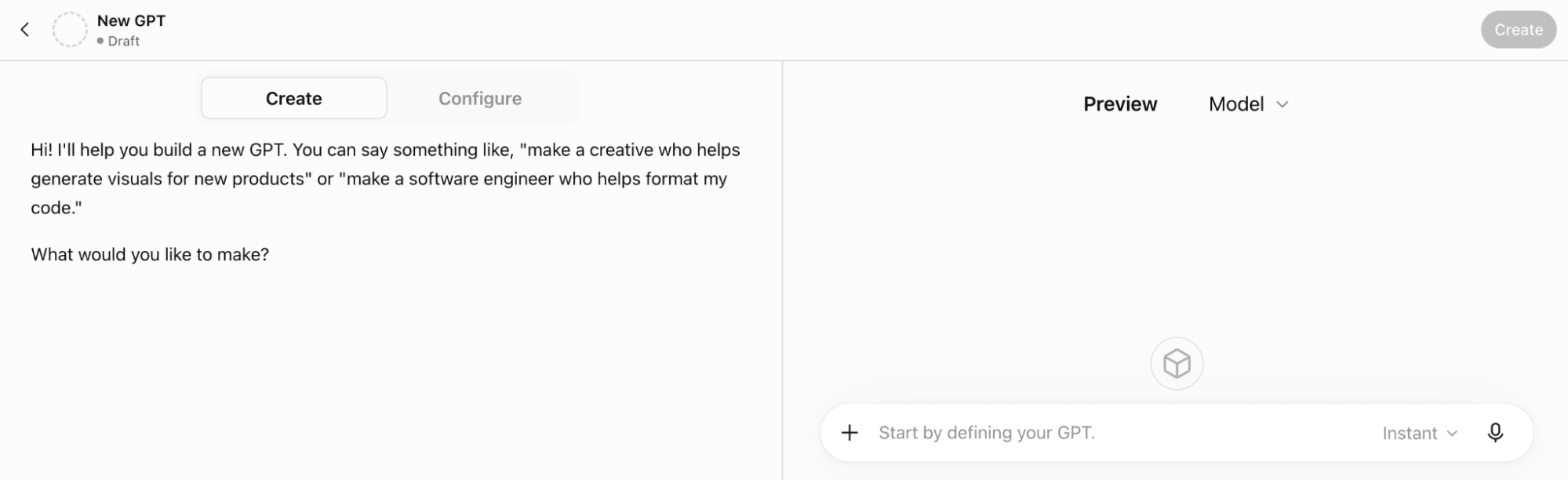
Custom GPTs within the ChatGPT ecosystem represent the lowest barrier to entry. Built through simple conversational interfaces, they allow creators to quickly upload knowledge files and set system instructions.
Advantages: Zero-code setup; native access to advanced multimodal capabilities.
Strategic Disadvantages:
Access Control Vulnerabilities: Custom GPTs are shared via web links. Creators cannot easily revoke access for individual churned subscribers without resetting and redistributing the master link to all remaining users.
System Instability: Underlying foundation model updates can alter behavior or break custom instructions without prior notice.
Workflow Silos: Custom GPTs struggle with complex, multi-step agent chaining, requiring users to manually copy-paste outputs between tools.
2. Claude Skills (Orchestrated Workflow Vector)
Claude Skills offer enhanced capability by enabling multi-agent orchestration within a unified workspace.
Advantages:
Context Retention: Skills can pull from dynamic data sources across a client’s workspace.
Multi-Step Execution: A single skill can coordinate complex multi-step processes without requiring manual intermediate copy-pasting.
Cross-Platform Portability: The standard workflow files used to build Claude Skills are increasingly portable across multiple modern enterprise AI environments.
Strategic Disadvantages:
IP Exposure: Distributing raw skill files can expose underlying system instructions and training resources directly to end-users, presenting risk for creators focused on protecting proprietary frameworks.
To protect intellectual property, manage user access, and construct scalable software businesses, experts are leveraging AI-assisted development tools ("vibe coding" environments such as Lovable, Claude Code, or OpenAI Codex) and specialized hosting engines.
A notable example of dedicated infrastructure is wAIv (developed by Gravia Studio in collaboration with developer Andrew Sinclair). Specialized enterprise deployment platforms like this solve several challenges inherent to public consumer interfaces:
Multi-Tenancy & Data Isolation: Ensures individual client data remains strictly segregated, maintaining privacy and compliance.
Centralized User Access Management: Allows creators to instantly provision or revoke client access upon subscription changes.
Dynamic Model Routing & Cost Management: Optimizes API infrastructure costs by automatically routing inputs to different models based on operational complexity.
       [ CUSTOMER INPUT REQUEST ]
                   |
                   v
      +-------------------------+
      |  DYNAMIC MODEL ROUTER   |
      +-------------------------+
        /
       /
      v                         v
+------------------+   +--------------------+
| LIGHTWEIGHT LLM  |   | HIGH-CAPACITY LLM  |
| (e.g., Haiku)    |   | (e.g., Sonnet/Opus)|
| - Simple Intake  |   | - Deep Analytics   |
| - Data Parsing   |   | - Strategic Synthesis
+------------------+   +--------------------+
Optimization Strategy: Simple processing steps (e.g., dynamic intake forms or textual reformatting) can run on lower-cost, high-speed models like Claude Haiku. Complex reasoning tasks (e.g., strategic brand alignment or voice-of-customer synthesis) are dynamically routed to advanced models like Claude Sonnet or Opus. This maintains execution quality while managing underlying compute costs.
Output Mitigation & Quality Assurance
Because Large Language Models are non-deterministic—meaning identical prompts can yield varying outputs—thorough testing is essential before launching a commercial AI product.
To maintain professional standards, experts must implement systematic quality assurance protocols:
Edge-Case Stress Testing: Run the tool using a wide variety of user inputs, including incomplete, poorly written, or atypical data sets.
Instructional Guardrails: Implement rigid system boundaries within the "Process" layer to explicitly define what the tool must not do (e.g., prohibiting speculative recommendations or unauthorized formatting).
Output Standardization: Benchmark system outputs against real-world expert deliverables to ensure continuous alignment with professional standards.
Future Outlook: The Convergence of Consulting and SaaS
The integration of domain expertise into dedicated AI software signals a major transformation in management consulting, corporate training, and digital product strategy.
As foundation models advance, the competitive differentiator for service businesses will no longer be access to general information, but rather the quality, structure, and execution velocity of proprietary AI implementations.
By wrapping domain expertise in tailored AI interfaces, modern consultants can build recurring-revenue software models that outpace traditional agency services in scalability while vastly exceeding the completion rates and real-world outcomes of traditional online courses. Organizations that capture their operational frameworks within robust, enterprise-grade AI applications will establish durable competitive advantages in an increasingly automated economy.