In an era where digital content consumption demands round-the-clock publishing across fragmented channels, solo creators and marketing teams face a persistent dilemma: how to scale high-volume, multi-platform output without sacrificing brand voice or ballooning operational overhead. The market has largely fractured into two ideological extremes—skeptics who reject generative tools to preserve manual authenticity, and automated accounts that flood platforms with generic, unrefined text colloquially known as "AI slop."
To resolve this trade-off, digital strategist Nicky Saunders, in collaboration with Social Media Examiner’s Michael Stelzner, has designed a systematic methodology that transforms Anthropic’s Claude platform into a virtual "AI Creative Director." Known as the DraftLoop workflow, this system leverages audio journaling, persistent skill archives, data scraping protocols, and multi-tool integration to convert single unscripted voice notes into cohesive, platform-tailored content portfolios—spanning X (formerly Twitter) threads, Substack essays, Instagram carousels, video storyboards, and email newsletters.
Rather than positioning artificial intelligence as a replacement for human creative agency, Saunders’s blueprint treats large language models (LLMs) as an operational integration layer. By combining persistent memory architectures, Model Context Protocol (MCP) integrations, and human-in-the-loop checkpoints, the framework enables creators to consistently generate content that achieves an estimated 80% to 85% alignment with their native communication style before any manual editing begins.
Detailed Chronology: Operational Roadmap for the AI Creative Director
The transition from basic generative prompting to an integrated AI creative director relies on a structured, four-phase implementation process. This roadmap establishes underlying creative standards, codifies persistent brand parameters, automates daily data ingestion, and deploys specialized visual and audio models.
Phase 1: Creative Vision and Aesthetic Calibration
Before building automated tasks, the system requires clear parameters regarding intent, goal setting, and visual tone. Giving an LLM raw generation commands without contextual boundaries leads to middle-of-the-road output.
Goal Definition & Dialogic Refinement: Creators establish target outcomes for each content format (e.g., direct response lead generation versus audience engagement). When initial goals are unclear, creators use conversational prompts within Claude—such as "I know I need to create a visual asset around this topic, but I’m unsure of the strategic objective. Interview me to define what it should accomplish for my audience"—to sharpen creative intent.
Visual Style Ingestion: Creators construct a running asset library inside a specialized Claude Project. Sources include Pinterest pins, Instagram carousel layouts, print publications, and high-performing brand assets.
Technical Vocabulary Mapping: By uploading visual inspiration, creators instruct Claude to extract precise technical terminology (such as color saturation indexes, typographic hierarchies, grid alignments, and composition styles). This process develops a shared aesthetic vocabulary, allowing non-designers to direct future visual requests using industry-standard terms.
Phase 2: Building Persistent Skill Archives and Data Integration
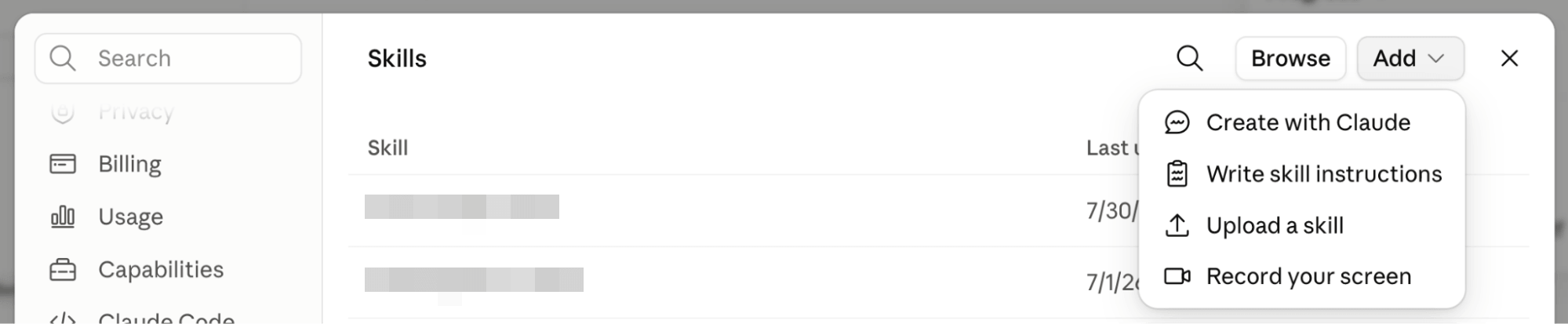
To eliminate the need to re-prompt the system during every session, the workflow relies on Claude Skills—reusable, persistent instructional files containing rules, contextual constraints, and reference samples.
The Brand Voice Skill: Synthesizes historical speech patterns, podcast transcripts, video subtitles, written newsletters, and social media feeds. Claude analyzes these texts to index rhetorical tendencies, phrase choices, sentence lengths, and voice cadence. It then creates a stored profile that automatically formats text generation without requiring complex prompt prefixes.
The Platform Style Skill: Documents channel-specific formatting criteria. It establishes exact structural rules for various platforms, distinguishing between the concise hooks needed for X, the narrative depth required for Substack, the visual brevity used in Instagram carousels, and the structural pacing suited for YouTube scripts.
Data Extraction via Apify: To keep these skill repositories updated with authentic performance data, the workflow integrates Apify, a web-scraping platform with Model Context Protocol (MCP) functionality. Apify scrapes public engagement analytics, video transcripts, comment sentiment, and top-performing formats across YouTube, Instagram, and competitor accounts. It routes this data into structured storage (such as Google Drive or Notion), allowing Claude to continuously calibrate its output against audience response.
Phase 3: The Daily "DraftLoop" Ingestion and Execution Engine
The operational core of the system converts daily personal reflections into structured draft suites using a scheduled, semi-automated pipeline.
Daily Routine:
07:30 AM — Audio Journal recorded during morning walk via Notion AI
08:00 AM — Claude Cowork scheduled task executes ingestion process
11:00 AM — Human-in-the-Loop review, selection, and directional input
Audio Journaling as Raw Source Material: Drawing inspiration from the unstructured "Morning Pages" exercise in Julia Cameron’s The Artist’s Way, the creator records a daily audio journal using Notion AI’s speech-to-text recording feature. Rather than attempting to deliver structured marketing thoughts, the creator speaks freely during a morning walk about daily experiences, strategic bottlenecks, personal insights, or client interactions.
Three-Layer "Why" Framework: To convert creative block into actionable source material, the creator uses an iterative questioning method. Asking "why" three consecutive times ("I have no ideas today. Why? Because I feel overwhelmed. Why? Because a technical process broke yesterday. Why?") uncovers deep operational insights that serve as authentic hooks for posts, newsletters, or live streams.
Scheduled Autonomous Ingestion: At 8:00 AM daily, a scheduled task within Claude Cowork retrieves the latest Notion AI audio transcript. Referencing the Brand Voice and Social Media Style skills, Claude processes the transcript and generates an organized dashboard in Notion featuring candidate topic ideas, thread drafts, newsletter outlines, visual quote concepts, and short-form video scripts.
The 11:00 AM Human Review Checkpoint: The process intentionally pauses for human evaluation. At 11:00 AM, the creator reviews the generated concepts, rejects off-target drafts, and provides explicit direction for top-performing ideas (e.g., "Expand Option 2 into a full video script and develop a carousel storyboard for Option 4").
Phase 4: Visual Storyboarding and Vocalized Prototyping
Once written concepts pass human review, specialized multi-modal systems execute asset generation directly within the Claude interface.
Inline Visual Production with Higgsfield: Using MCP connections, Claude interfaces directly with Higgsfield, an AI image and video generation engine. Claude writes structured visual prompts based on established brand guide parameters, generating multi-slide image carousels, background graphics, and stylized character elements directly inside the conversation thread.
Script Vocalization Previews with HeyGen: For video script development, the system connects to HeyGen to render an AI avatar prototype of the creator reading the drafted script. This serves as an internal review asset, allowing the creator to hear the script’s rhythm, tone, and pacing read aloud before stepping in front of a camera to record the final video.
Supporting Context & Performance Benchmarks
As organizations attempt to navigate generative AI integration, industry benchmarks show a clear gap between tool adoption and formal instruction.
+--------------------------------------------------------------------------+
|                     STATE OF AI IN DIGITAL MARKETING                     |
+--------------------------------------------------------------------------+
|  Learning Pathway:                                                       |
|  [|||||||||||||||||||||||||||||||||||||||||||||||||||||||||||||] 85%     |
|  Self-Taught / Independent Experimentation                               |
|                                                                          |
|  [|||||] 7%                                                              |
|  Formal Corporate Training Programs                                      |
|                                                                          |
|  Funding Source:                                                         |
|  [||||||||||||||||||||||||||||||||||||||] >50%                           |
|  Marketers Paying Out-of-Pocket for Tool Subscriptions                   |
+--------------------------------------------------------------------------+
Data from industry research illustrates why workflows like DraftLoop are emerging primarily from independent practitioners rather than corporate training programs:
85% of digital marketers report learning AI tools through trial-and-error experimentation without formal organizational guidance.
Only 7% of enterprise marketing teams provide structured internal training protocols for generative workflows.
Over 50% of creative professionals fund their own software subscriptions (LLM access, scraping utilities, multi-modal generators) to maintain competitive output levels.
Operational Metrics & Time-to-Output
Deploying dedicated skills changes the operational baseline for draft generation. Standard prompting typically yields output requiring significant rework, whereas trained skill architectures move generation much closer to publication readiness.
Metric Parameter
Standard LLM Prompting
DraftLoop Skill Architecture
Initial Voice Alignment
10% – 25%
80% – 85%
Human Editing Required
75% – 90% (Heavy rewrite)
15% – 20% (Polishing & refinement)
Production Time per Multi-Platform Suite
4 – 6 hours
30 – 45 minutes
Daily Input Effort
60+ minutes typing prompts
10 – 15 minutes audio journaling
Context Retention
Session-bound (Lost on reset)
Persistent (Maintained via Skills)
Advanced Model Selection: Short-Form Copy Benchmarks
The DraftLoop framework strategically pairs specific tasks with specialized LLM architectures rather than relying on a single default model. For short-form content—such as headline hooks, X threads, carousel titles, and email subject lines—the system uses high-precision models like Claude Fable 5 Low (accessible via advanced plans).
+--------------------------------------------------------------------------+
|                   MODEL PERFORMANCE MATRIX (HOOK & SHORT-FORM)          |
+--------------------------------------------------------------------------+
|  Model Architecture:                                                     |
|                                                                          |
|  Claude Fable 5 Low                                                      |
|  [|||||||||||||||||||||||||||||||||||||||||||||||||||||||||||||] 9.4/10  |
|  * High structural density; punchy phrasing; low fluff rate              |
|                                                                          |
|  Standard Tier Models                                                    |
|  [||||||||||||||||||||||||||||||||||||] 6.8/10                           |
|  * Tendency toward generic transitions and repetitive adjective usage    |
+--------------------------------------------------------------------------+
While resource-intensive, models like Claude Fable 5 Low yield concise phrasing, high structural density, and reduced reliance on generic conversational transitions—delivering punchier short-form text where every word directly impacts engagement metrics.
Official Statements & Expert Perspectives
In outlining the strategic rationale behind the system, Nicky Saunders emphasizes that long-term success with AI requires balancing operational efficiency with authentic personal expression.
"The biggest misconception about AI content creation is that it has to be all-or-nothing," Nicky Saunders stated during her analysis with Michael Stelzner. "People fall into two camps: those who reject AI entirely and insist on doing everything manually, and those who want to hand over every creative decision to a machine. The real opportunity sits right in between."
Addressing the practical utility of continuous AI availability, Saunders characterized the platform’s role as an always-on brainstorming collaborator:
"AI works best as an integration layer within existing creative workflows. It operates as a 24/7 brain-warming buddy. At 2 a.m., when calling a colleague isn’t an option, I can open a conversation, break down an Instagram carousel I saw, or brainstorm a new video concept. The idea doesn’t get lost by morning, and because persistent memory systems retain context across conversations, I can revisit ideas from weeks earlier and pick up right where I left off."
On the necessity of preserving absolute human oversight over publishing channels, Saunders drew a strict line between asset creation and distribution:
"The creative director system handles ideation, drafting, visual framing, and media prototyping. But scheduling and actual distribution remain strictly manual. Maintaining direct human judgment over what goes live protects brand safety, ensures compliance with platform policies, and guarantees that every published piece carries genuine personal accountability."
Finally, regarding how empirical data helps overcome creative fatigue, Saunders noted:
"Creators frequently grow tired of topics they have discussed repeatedly and feel compelled to chase shiny new ideas. But when connected to platform metrics, Claude can highlight that a core topic generated strong engagement across recent posts. The system acts as a data-driven guide, steering you back to what genuinely resonates with your audience whenever creative restlessness tries to pull you off track."
Future Outlook & Strategic Implications
The emergence of automated workflows like the DraftLoop system marks a key shift in digital content production: the transition from manual, real-time prompt engineering to architectural system design.
EVOLUTION OF CONTENT ENGINE DESIGN

Phase 1: Reactive Prompting
[ User Input Prompt ] ----> [ LLM Response ] ----> [ Manual Copy-Paste ]

Phase 2: Persistent Skill Architecture (Current State)
[ Raw Voice/Data Input ] ----> [ Claude Project Hub ] ----> [ Model Context Protocol ]
                                  |                             |
                                  v                             v
                        [ Persistent Skills ]         [ Higgsfield / HeyGen ]
                                  |                             |
                                  +--------------+--------------+
                                                 |
                                                 v
                                    [ Structured Multi-Format Output ]

Phase 3: Agentic Execution Loops (Emerging Standard)
[ Continuous Data Scraping ] <---> [ Autonomous Processing Engine ] <---> [ Human Verification Gate ]
1. The Expanding Role of Model Context Protocol (MCP)
As open-source connection standards mature, workflows will increasingly move away from manual text transfers between isolated applications. Native MCP implementations will enable central LLMs to query databases, run data collection scripts via Apify, update Notion workspaces, generate media via Higgsfield, and sequence video previews via HeyGen through automated, background API calls.
2. The Priority of Authentic Source Material
As AI-generated content floods digital networks, algorithms and audiences alike are placing a higher premium on verified personal perspective. Systems that rely on unstructured audio journaling, real-time meeting notes, or proprietary research remain insulated from content saturation because the primary input originates from distinct, unrepeatable human experience.
3. Shift in Lean Content Team Economics
By delegating reformatting, graphic storyboarding, script drafting, and performance tracking to an AI creative director, individual creators and small marketing teams can operate with the output capacity of traditionally staffed creative agencies. The core skill set for digital marketers is consequently shifting from raw copy production to directional editing, taste curation, strategic goal setting, and system architecture design.