The landscape of B2B sales and agency consulting is undergoing a fundamental structural shift driven by advanced generative artificial intelligence. Historically, closing high-value client contracts required extended sales cycles, multi-stage discovery meetings, static presentation decks, and significant unbilled speculative labor. However, early adopters of integrated AI workflows are demonstrating that hyper-preparedness—achieved in a fraction of traditional prep time—can systematically alter the psychology of the pitch meeting.
In a landmark case study detailed by AI consultant Etan Polinger on the AI Explored podcast hosted by Michael Stelzner, a streamlined AI framework enabled Polinger to move from an initial lead in an online community to a signed $12,000 digital service contract after a single discovery call. By spending fewer than four hours employing autonomous AI research agents, zero-shot brand extraction tools, and natural language development environments, Polinger arrived at the first meeting with an 80% complete, fully functional, on-brand software prototype.
This investigative report examines the tactical blueprint behind this deal, analyzing how multi-pass AI research, automated style guide generation, and "vibe coding" invert traditional sales dynamics—moving service providers from defensive pitch positions to high-leverage advisory roles.
Detailed Chronology
The execution of this high-yield sales methodology unfolded over a structured, multi-phase sequence that compressed days of standard agency pitch work into less than four hours.
The deal originated within a specialized digital community where a prospective client posted a request seeking a custom digital asset—specifically, a tailored chat widget designed to interface with their existing web infrastructure.
Rather than relying on manual interpretation or immediate scheduling of an exploratory phone call, Polinger captured the raw text of the community inquiry and ingested it directly into a Large Language Model (LLM). Utilizing a simplified distillation prompt:
"I just saw this message. What do they want? Answer in one sentence that anyone can understand."
The model stripped away technical jargon and ambiguous language, isolating the baseline operational objective: The prospect required a custom-branded, functional conversational chat interface. By prioritizing the business outcome over immediate technical implementation details, Polinger established the core deliverable around which all subsequent automation would pivot.
Phase 2: The Tripartite Deep Research Protocol
With the primary goal identified, Polinger launched three isolated research passes using deep-research-capable LLMs (leveraging tools across ChatGPT, Claude, and Gemini). Splitting the research into distinct execution pipelines prevented context contamination and maximized compute depth for each category. To optimize prompt construction, Polinger instructed the AI models to build their own optimized deep research queries before execution.
                  ┌───> 1. Individual Profiling (Persona & Voice)
                  │
Deep Research ────┼───> 2. Corporate Architecture (Business Model & Signals)
                  │
                  └───> 3. Market Alignment (Competitors & Alternatives)
Individual Profiling: The AI analyzed public statements, website bio copy, executive profiles, and available media transcripts (including podcast interviews and YouTube appearances) of the lead Decision Maker. This established the prospect’s communication style, strategic priorities, and personal business philosophy.
Corporate Architecture: The research models evaluated the company’s revenue mechanisms, target audience, existing technology footprint, and corporate positioning. For enterprise entities, this involved scraping press releases and published documentation; for leaner organizations, the research prioritized active job listings, which reveal internal strategic initiatives and operational gaps.
Market Alignment & Competitor Mapping: The final pass mapped existing industry solutions, alternative third-party software providers, and current AI integration benchmarks within the target sector. This provided a contingency map, allowing the consultant to offer off-the-shelf software configuration if a ground-up custom build proved unsuitable during negotiations.
The entire three-stage research pass and subsequent synthesis took approximately sixty minutes.
Phase 3: Autonomous Brand and Style Guide Extraction
To make the proposal immediately tangible, Polinger translated the client’s visual identity into a reusable, programmatic design system. Rather than engaging in custom graphic design work, Polinger leveraged visual asset tools alongside modern LLM multi-modal capabilities:
Font & Palette Identification: Chrome extensions such as WhatFont and ColorZilla captured precise typography choices and primary/secondary hex codes directly from the prospect’s domain.
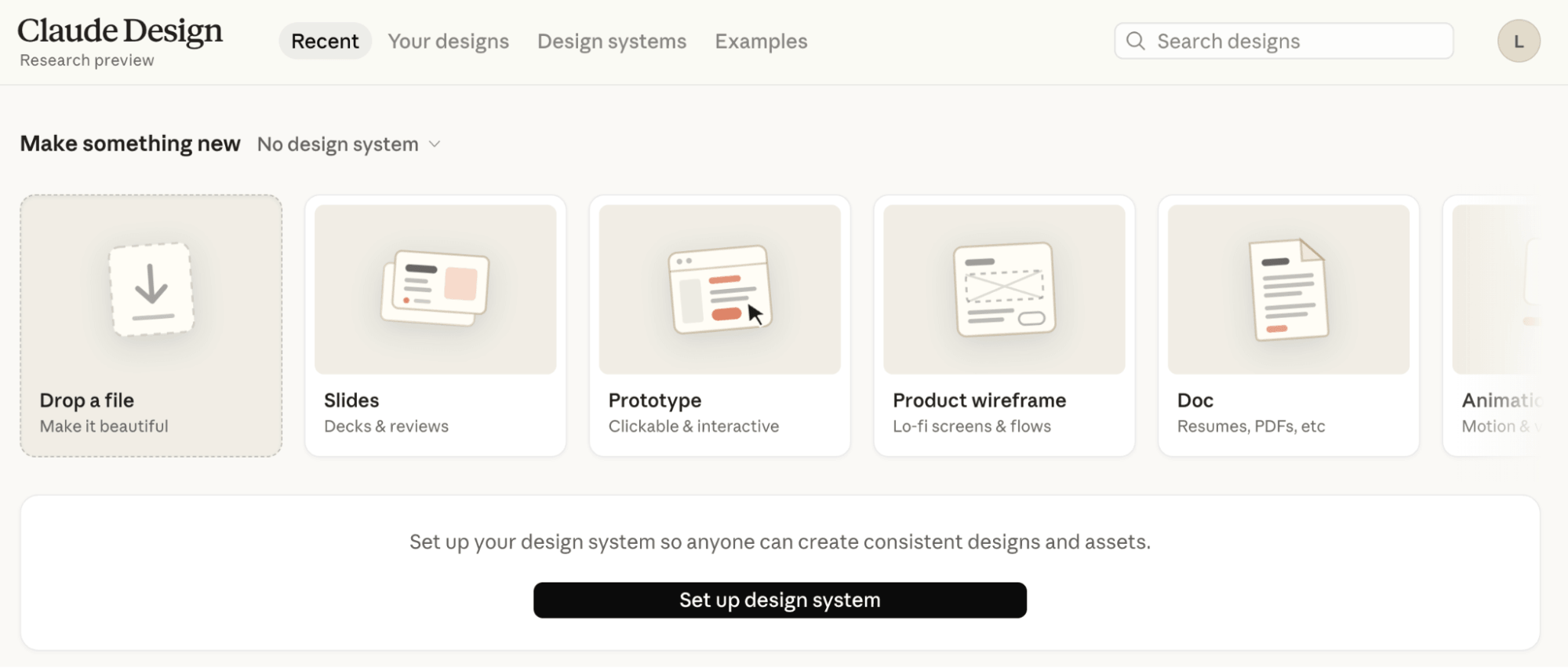
Automated Asset Generation: Screenshots of the client’s public landing pages, navigation components, and visual logos were uploaded into the Claude Design interface.
Claude Design parsed the visual assets and automatically generated a portable code package containing standardized UI/UX UI elements—including CSS/HTML code blocks for headers, buttons, form fields, and data charts matching the client’s exact aesthetic identity.
Phase 4: Rapid "Vibe Coding" and Proposal Synthesis
With the structural brand assets localized into a portable folder, Polinger imported the design system into an AI-driven development environment using tools like Claude Code and Replit.
Employing a technique commonly categorized as "vibe coding"—wherein the operator directs software architecture through natural language prompts rather than manual line-by-line programming—Polinger directed the model to generate a working custom chat widget embedded with the freshly extracted brand buttons, fonts, and hex schemes.
Simultaneously, the strategic insights derived from Phase 2 were ingested into an LLM to generate a streamlined slide deck structure. Screenshots of the working, interactive widget were embedded into the presentation, establishing an undeniable proof-of-concept prior to the initial meeting.
Supporting Context & Metrics
The effectiveness of AI-driven sales pre-work lies in its economic efficiency. In traditional consulting models, dedicating senior engineering and strategy resources to build functional software prior to contract signing carries prohibitive overhead costs. Generative AI fundamentally shifts this cost curve.
Metric / Dimension
Traditional Pitch Workflow
AI-Native Sales Workflow
Total Pre-Meeting Preparation Time
15–30 hours (Across multiple teams)
< 4 hours (Single operator)
Deliverables at First Discovery
Static Deck / Rough Capabilities
Functional Prototype + On-Brand Deck
Completion Status of Solution
0% (Conceptual)
~80% (Interactive Code)
Psychological Dynamic
Seller pitching/convincing client
Buyer validating provider capacity
Contract Closing Efficiency
Multi-call discovery cycle (3–6 weeks)
Single meeting execution ($12k closed)
The Psychological Shift in Sales Dynamics
In a standard sales environment, the agency bears the burden of proof, entering the call with a proposal intended to persuade a hesitant client. In this case, arriving at the initial meeting with a live, functional, custom-branded application inverted the power dynamic entirely.
When presented with a custom tool already operating at an 80% completion state, the prospective client no longer evaluated whether the provider was capable of delivering the solution. Instead, the buyer experienced a psychological loss-aversion effect: discarding the proposal would mean abandoning a pre-built asset tailored precisely to their brand. Consequently, the client’s primary concern shifted from "Should we buy this?" to "Does this consultant have the operational capacity to take us on as a client?"
Reflecting on the strategic mechanics of the $12,000 deal, Etan Polinger, AI consultant and creator of the AI Integrator Certification at Chief AI Officer, emphasized that advanced AI capabilities redefine the fundamental nature of client acquisition:
"Most people approach a sales conversation believing they have to convince the client to buy. When you show up with the right preparation and the right assets, you remove the ‘I hope they choose me’ energy from the room entirely. You can now come to the table with so much value created that instead of you pitching, the prospect feels like they’d lose something if they went elsewhere."
Polinger noted that the economics of pre-meeting effort have changed permanently due to LLM velocity:
"Before these tools existed, doing this much unpaid preparation for a single prospect would have been completely unreasonable. Now one person, or a small team, can do the work that used to take many people a long time… When you show up this prepared, the deal is likely, and the real question becomes whether you want to take the client on."
Commenting on the broader context of AI adoption across modern marketing and sales ecosystems, Michael Stelzner, founder of Social Media Examiner and host of the AI Explored podcast, highlighted the clarity these structured workflows bring to service providers seeking measurable return on investment from AI technology:
"New AI strategies, new tools, new takes every week—marketers and business owners are trying to figure out AI alone. Sourcing clear, actionable workflows that yield immediate business results is the central challenge facing operators today."
Future Outlook
The success of the rapid AI prototyping workflow signals broader structural changes across the professional services, agency, and enterprise software sales sectors. As natural language programming interfaces and automated deep-research tools mature, traditional consultative selling models face significant disruption.
                    ┌──> 1. Democratization of "Vibe Coding"
                    │    (Non-technical sellers build live apps)
                    │
Future Sales Trends ┼──> 2. Compression of the B2B Sales Cycle
                    │    (Elimination of multi-week discovery phases)
                    │
                    └──> 3. Shift to Agentic Pre-Sales Operations
                         (AI autonomous agents generating personalized prototypes)
Key Trends Shaping the Future of B2B Sales:
Democratization of "Vibe Coding": Non-technical sales professionals, account executives, and performance marketers can now bypass product engineering departments to generate proof-of-concept software. The ability to deploy code via conversational prompts bridges the historical gap between sales promises and technical execution.
The Compression of the Enterprise Sales Cycle: As buyers come to expect immediate, tangible proof-of-value, companies utilizing traditional multi-week discovery and scoping processes risk losing deals to hyper-agile operators who deliver working prototypes during initial engagements.
Agentic Pre-Sales Operations: The integration of autonomous AI agents will soon allow sales platforms to automatically extract prospective client brand identities, execute deep research, and draft prototype applications the moment a lead enters a CRM pipeline.
Ultimately, the deployment of integrated AI workflows converts unbilled preparation from a financial liability into a high-leverage competitive strategy. Organizations that retool their pre-sales pipelines around rapid AI research and real-time asset generation will capture disproportionate market share, shifting the core sales objective from convincing clients to choose a vendor to selecting which clients they choose to serve.