Executive Overview
In the current digital landscape, LinkedIn has evolved from a simple professional networking site into a high-stakes arena for content authority. However, a silent conflict is unfolding behind the scenes: the platform is actively waging war on "AI slop." As LinkedIn refines its algorithms to detect and suppress inauthentic, machine-generated content, creators face a critical junction.
To maintain visibility and professional credibility, marketers must pivot away from total AI reliance. The objective is no longer to let AI do the work, but to use it as a sophisticated instrument of human intent. By adopting a "sandwich" methodology—where AI handles ideation and final polish, but human expertise anchors the core—creators can navigate the platform’s crackdown while actually increasing their reach. This article explores the strategic nuances of AI integration, from optimizing engagement to the tactical realities of LinkedIn advertising.
Detailed Chronology: The Rise of the "AI Crackdown"
For the past several months, LinkedIn has been quietly but aggressively purging its ecosystem of automated clutter. The scale of this intervention is massive, with reports of hundreds of thousands of automated comments and billions of posts blocked or flagged by the platform’s internal systems.
This isn’t merely a technical hurdle; it is a fundamental shift in platform policy. LinkedIn has begun to transition its built-in AI tools—moving away from features that automatically rewrite user posts in a generic, robotic tone and toward tools that prioritize proofreading and style preservation.
According to industry expert AJ Wilcox, this shift serves a dual purpose. First, it addresses the "authenticity deficit" that users have increasingly reported. Second, it acts as a massive training exercise for LinkedIn’s own detection models. When users flag a post as "AI slop," they are essentially feeding data into the platform’s machine learning systems, refining its ability to identify and penalize inauthentic content in the future. While these reports may not currently trigger a direct penalty, the trajectory is clear: the algorithm is learning, and the penalty for low-value, machine-generated content will soon be a permanent suppression of reach.
The Ideation-Expertise-Polish Model: A Strategic Framework
The most effective way to integrate AI without triggering "the detector" is to adopt the Ideation-Expertise-Polish (IEP) model. Think of your content creation process as a structural sandwich:
1. The Ideation Phase (The AI Exterior)
AI is an incredible tool for overcoming the "blank page" syndrome. Use Large Language Models (LLMs) to generate broad lists of angles, potential frameworks, or listicle points around a niche topic. This stage is about volume and brainstorming possibilities. At this level, you aren’t looking for prose; you are looking for structural foundations.
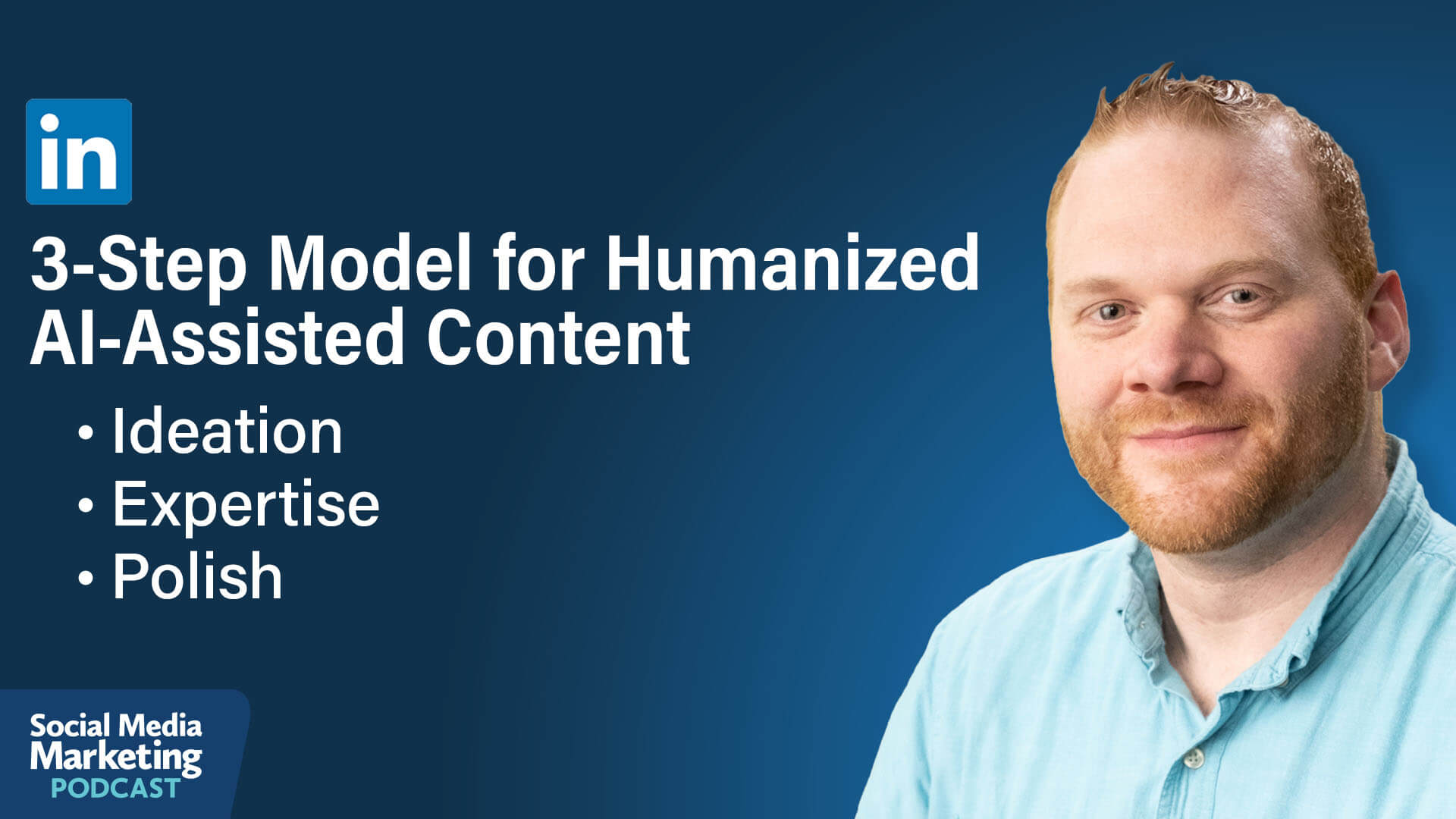
2. The Human Expertise Core (The Substance)
This is the non-negotiable middle layer. This is where your personal experience, anecdotal evidence, and industry-specific nuances reside. AI cannot replicate the "I was there" factor or the unique perspective gained from years of professional practice. If you skip this, the audience feels the emptiness. This is where the "soul" of the post lives, and it is the primary shield against being flagged as AI-generated.
3. The Polish Phase (The AI Exterior)
Once your human-led narrative is complete, you can return to AI for the final cleanup. Use it to tighten wordy sentences, fix grammar, and improve formatting for readability. The AI should be acting as a sophisticated editor, not an author. By keeping the AI on the "bookends" of the process, you maintain your voice while benefiting from modern efficiency.
Identifying and Avoiding "AI Tells"
As the cat-and-mouse game between AI content and platform detection continues, specific "tells" have emerged that signal inauthenticity to both the algorithm and the reader:
- Syntax Patterns: AI models are disproportionately fond of em-dashes. An over-reliance on this punctuation style is a major red flag for seasoned readers.
- The "Dramatic Default": LLMs often lean toward hyperbolic language when asked to write "engaging" content. Phrases like "guard your mental faculties" or "this is silently killing your productivity" are common patterns that trigger immediate skepticism.
- Emoji Misuse: The random insertion of emojis, particularly those that clash with your established brand voice, is a common indicator of AI-generated filler.
- The "Typo Fallacy": Some creators attempt to "trick" AI detectors by intentionally including typos. This is a futile strategy; modern AI can easily be instructed to insert errors. Instead of focusing on technical imperfections, focus on value. If a post delivers legitimate, substance-driven insight, it is rarely perceived as "slop," regardless of how well-written it is.
Supporting Context: The New Rules of Engagement
With the platform evolving, engagement tactics have shifted. LinkedIn now treats comments as a primary driver of growth.
The Comment-First Strategy
For creators who haven’t yet built a massive following, the best path to visibility is to stop obsessing over original posts and start engaging with others. LinkedIn now highlights "Top Comments" and provides users with their own "Comment Impressions" metrics.
By leaving thoughtful, substantive responses on posts from established industry voices, you gain impressions that rival, or even exceed, the reach of your own feed. To do this effectively:
- Targeting: Search for specific hashtags in your niche to identify high-value conversations.
- Density: Avoid shallow praise like "great post." LinkedIn’s algorithm now tracks "comment density"—the depth and nuance of the conversation.
- The "Curious" Framework: Utilize the "Ted Lasso" principle: be curious, not judgmental. Use prompts like "What am I missing?" or "Am I wrong on this?" to invite healthy, high-value dialogue.
Posting Frequency and Timing
While the shelf-life of a post has theoretically increased, the fundamental rules of engagement remain:
- Optimal Days: Tuesday and Thursday remain the strongest days for engagement.
- Avoid the Extremes: Monday (when people are catching up on work) and Friday (when people are checking out) are high-risk, low-reward days.
- The "Cannibalization" Rule: Never post twice in one day. Doing so forces your content to compete with itself, effectively cutting your reach in half. Give every post 24–48 hours to "breathe" before publishing the next.
Official Insights: Live Streams and Ad Tactics
LinkedIn has made significant strides in AI-powered media tools, particularly for live streaming. Previously, live replays were difficult to navigate. Now, AI automatically identifies standout moments and creates "chapters" for replays, vastly improving discoverability. For executives, this removes the "production barrier." You don’t need a polished, edited video; you need a high-quality, long-form conversation, and the platform will handle the snippet creation.
The Ad Campaign Trap
When it comes to advertising, there is a common misconception regarding variation. LinkedIn often suggests running five or more ad variations per campaign to boost CTR. However, this is a mechanical trap.
Running five or more creatives breaks the platform’s frequency cap, causing your ads to enter more auctions for the same users, which artificially inflates your costs. The optimal strategy is to run two to four variations. This provides enough data for testing while respecting the frequency cap and keeping your acquisition costs sustainable.
Future Outlook: The Professional Human Advantage
As AI becomes ubiquitous, the premium on "humanity" will only rise. LinkedIn is not going to abandon AI; it is going to integrate it as a utility rather than a content engine. The creators who win in the coming years will be those who treat AI as a research assistant, not a ghostwriter.
The future of professional branding on LinkedIn lies in the intersection of authentic, high-substance expertise and the tactical use of platform tools. As the algorithm becomes more adept at filtering out "slop," the content that provides genuine value—backed by real-world, non-simulated experience—will rise to the top. The "AI crackdown" is not an obstacle for the thoughtful creator; it is a filter that will eventually clear the noise, leaving more room for those who have something real to say.
Stay ahead of the curve by treating your LinkedIn presence not as a broadcast channel for AI-generated content, but as a dynamic space for deep, human-led professional discourse.