Executive Overview: The Silent Crisis in Modern Workspaces
In the modern, climate-controlled office, the air we breathe is often a cocktail of invisible hazards. While contemporary buildings are marvels of architectural efficiency, they are frequently sealed environments where ventilation systems prioritize thermal comfort over air purity. It was within this reality that engineering students Tanvi Thombre and Lakshya Saraf uncovered a stark, health-threatening truth: their university makerspace, a hub of innovation, was also a hotbed of toxic emissions.
What began as a routine academic project transformed into a mission to combat "Sick Building Syndrome"—a condition characterized by headaches, fatigue, and respiratory issues caused by poor indoor air quality. Their startup, Greenairy, represents a shift from mechanical filtration to bio-integrated engineering. By utilizing sophisticated "plant towers" designed to accelerate the natural air-purifying capabilities of vegetation, the duo is challenging the status quo of HEPA filters and ionizers. As they prepare to take the stage at TechCrunch Disrupt’s Startup Battlefield 200, their journey offers a compelling look at how the future of office design may depend on returning to our roots—literally.
Detailed Chronology: From Makerspace Emergency to Biotech Innovation
The Catalyst
The inception of Greenairy was not born in a boardroom, but in a moment of crisis. While working alongside laser cutters, 3D printers, and soldering irons in their university makerspace, Thombre and Saraf were routinely exposed to hazardous fumes. For a long time, the risk remained abstract—until it became visceral. When Thombre’s best friend fainted, requiring emergency medical intervention, the duo realized that the "clean" air in their high-tech environment was a dangerous illusion.
The Investigation
Following the incident, the pair pivoted their focus toward the science of indoor air pollution. Their research quickly identified that standard air purification systems—even those found in modern, "green" buildings—were fundamentally flawed. While traditional purifiers are excellent at capturing particulate matter like dust and pollen, they are largely ineffective against Volatile Organic Compounds (VOCs) such as formaldehyde, benzene, and carbon dioxide. These chemicals, which evaporate easily at room temperature, are the primary culprits behind chronic respiratory illness and cognitive decline in office settings.
The Formulation of a Solution
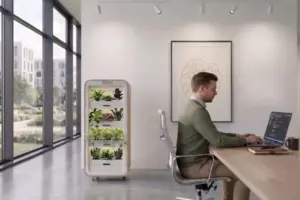
Recognizing that conventional filters were not only inefficient at removing these toxic gases but also required frequent, costly, and environmentally taxing replacements, Thombre and Saraf sought a more sustainable solution. They turned to nature, but with an engineering twist. They realized that a standard potted plant, while beneficial, cannot process toxins at the speed required for a high-occupancy office. By manipulating the environmental conditions around plants and their root-zone microbes, they discovered they could hyper-charge the biological process, creating a "plant tower" that functions as a high-capacity, self-regenerating air scrubber.
Supporting Context: The Science of "Sick Building Syndrome"
The Hidden Dangers of VOCs
To understand the necessity of Greenairy’s technology, one must understand the nature of VOCs. These compounds are emitted by a vast array of office materials, including carpeting, furniture, cleaning agents, and the equipment mentioned in the founders’ initial research. Because modern buildings are designed for energy efficiency, they are often sealed shut, preventing the natural exchange of air. When HVAC systems fail to cycle in sufficient fresh air, VOCs reach concentrations that lead to what researchers call "Sick Building Syndrome."
The Cognitive Cost
The implications of poor indoor air quality extend far beyond physical illness. Research from Harvard’s T.H. Chan School of Public Health has demonstrated a direct correlation between indoor air quality and cognitive function. Higher concentrations of CO2 and VOCs have been shown to degrade executive function, strategic thinking, and information usage—the very skills required for the modern knowledge worker. By improving air quality, Greenairy is not just selling health; they are selling a measurable boost in productivity.
Benchmarking the Competition
Greenairy’s competitive edge was highlighted in their pilot testing in Singapore. Using RESET-certified monitors—the gold standard for air quality sensors—they compared their plant towers against medical-grade ionizers and HEPA purifiers. The results were telling:
- HEPA Filters: Effective at trapping large particles, but largely ineffective against gaseous VOCs.
- Ionizers: Used electrical charges to clump particles, but often failed to mitigate the chemical makeup of the air.
- Greenairy Towers: Demonstrated the lowest VOC levels and the fastest rate of removal.
Beyond the metrics, the "soft" benefits were equally significant. Employees reported an improvement in mood and a psychological preference for the "natural" ambiance created by the plant towers, suggesting that biophilic design (the practice of connecting people with nature in interior spaces) serves as a potent morale booster.

Official Statements and Validation
The team’s commitment to scientific rigor is evident in their engagement with third-party testing firms. Greenairy has recently completed testing with the globally recognized certification firm TÜV SÜD.
"Our tower had the lowest VOC levels and removed VOCs the fastest," Saraf noted during a recent interview. "The office staff also grew fond of the natural ‘fresh’ aroma of the tower and the natural vibe it brought."
Thombre, emphasizing the durability of their system, noted that the purification results improved over time. "We saw an immediate improvement within regular office hours, with a 50% reduction in both the daily VOC average and peak levels," she said. "The results improved even more as the plants and microbes matured and the gases were prevented from accumulating."
Because the Greenairy towers rely on biological activity rather than chemical filters, there is no need for frequent, waste-heavy filter replacements, positioning the product as a leader in the circular economy movement.
Future Outlook: Scaling the Bio-Tech Revolution
The Trans-Pacific Strategy
The founders have adopted an unconventional but effective operational model. With Lakshya Saraf based in Berkeley, California, and Tanvi Thombre in Singapore, the team effectively bridges two of the world’s most influential startup ecosystems. Saraf leverages the Bay Area’s fundraising and venture capital networks, while Thombre oversees the R&D and pilot deployment in Singapore, a city-state that serves as a living laboratory for green architecture and smart-city initiatives.
The Roadmap to 2027
The next phase for Greenairy is ambitious. Following the certification of their testing results, the founders are preparing for large-scale manufacturing. Their primary objective for the coming eighteen months is to refine the assembly process to ensure that these towers can be deployed in commercial buildings, hotels, and schools at a competitive price point.
If the current timeline holds, both founders expect to be based in Singapore by the first half of 2027. This shift will mark the launch of their mass-produced product line, with early installations already slated for several corporate partners in the region.
Disrupt and Beyond
As they head into the Startup Battlefield 200 at TechCrunch Disrupt, Greenairy is looking to do more than just pitch a product; they are looking to change the industry standard for what constitutes a "healthy" workplace. In an era where employees are increasingly demanding higher standards for their physical work environments, Greenairy’s promise of a natural, high-performance, and sustainable solution is arriving at a critical inflection point.
For the modern office, the era of relying solely on mechanical fans and synthetic filters may be nearing its end. If Thombre and Saraf have their way, the future of the office will be a place where the air is as fresh as a forest, cleaned by the very biology that evolution designed to sustain it. As the company prepares to scale, the global business community will be watching to see if this "nature-tech" integration can successfully transition from the makerspace to the boardroom, forever altering the way we experience the built environment.