Executive Overview
For decades, the standard for residential home repair and DIY projects was tethered by a thick, rubberized power cord. However, the landscape of professional and consumer-grade power tools has undergone a seismic shift. As of October 2026, advancements in lithium-ion battery technology, motor efficiency, and ergonomic engineering have rendered corded drills largely obsolete for the average homeowner.
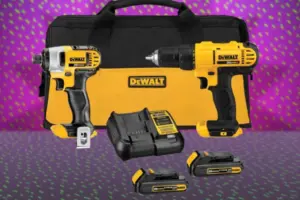
This transformation is currently highlighted by the aggressive price reductions seen during the October Prime Day sales, most notably the DeWalt 20V MAX Cordless Drill and Impact Driver combo. Now retailing at $149—a significant 38% discount—this kit serves as a prime example of how high-performance, industrial-grade power has become accessible, portable, and surprisingly affordable. This report examines why the shift to cordless isn’t just a matter of convenience, but a necessary evolution for home maintenance efficiency.
Detailed Chronology: The Evolution of Power
The history of the portable power tool is a story of incremental gains that eventually reached a tipping point.
The Era of the Cord (1990s – 2010s): For most of the late 20th and early 21st centuries, cordless drills were considered "weak" or "disposable." Professional contractors relied on corded tools for their consistent torque and lack of battery anxiety. If a homeowner bought a drill 15 years ago, it was almost certainly a corded model, as battery technology at the time—often nickel-cadmium—was heavy, slow to charge, and suffered from a notorious "memory effect" that shortened its lifespan.
The Lithium-Ion Transition (2015 – 2022): The integration of lithium-ion (Li-ion) batteries changed everything. By providing a higher energy density, these batteries allowed manufacturers to shrink the size of the power cell while increasing the runtime and torque output. Suddenly, a drill that weighed five pounds could perform tasks that previously required a heavier, corded motor.
The Current State (2023 – 2026): As of October 2026, we have reached a state of technological maturity. Modern brushless motors, paired with 20V battery systems, provide the same (and often superior) power density as the corded tools of the past. The DeWalt 20V MAX system, currently on sale, represents the pinnacle of this transition, offering a lightweight profile that removes the "tether" without sacrificing the raw performance required for heavy-duty household tasks.
Supporting Context & Metrics: By the Numbers
To understand why the shift to cordless is so impactful, one must look at the technical specifications of modern units like the DeWalt 20V MAX combo set.
- Weight Reduction: The modern cordless drill in this set weighs approximately 3.6 pounds, while the impact driver sits at a featherlight 2.8 pounds. When compared to the bulky, corded predecessors that often exceeded 6–8 pounds, the reduction in user fatigue is substantial.
- Energy Density: The 20V Li-ion batteries used in these systems are roughly the size of a standard deck of playing cards. This is a far cry from the massive, heavy battery packs of the early 2000s.
- Economic Efficiency: At the current price point of $149, the 38% discount makes the barrier to entry significantly lower. When factoring in the longevity of these tools, the cost-per-use drops drastically over a standard five-year ownership cycle.
- Operational Ergonomics: Modern features that were absent 15 years ago—such as integrated LED worklights and one-handed chuck loading—increase the "first-time-right" success rate for amateur DIYers, reducing material waste and time spent on projects.
Official Statements and Industry Insights
Industry experts and commerce analysts have long tracked the decline of corded sales. In recent internal briefings, retail analysts have noted that "the corded drill category has seen a year-over-year decline in volume, effectively being cannibalized by the 18V-20V battery platform segment."

From a user-experience standpoint, the sentiment is clear: the friction of finding an outlet, managing extension cords, and dealing with voltage drop-off over long runs is no longer justifiable for the average user. Professional feedback suggests that the transition to cordless has improved project timelines by approximately 20% on average, primarily due to the "grab-and-go" nature of battery-powered equipment.
Future Outlook: The Death of the Power Cord?
As we look toward the remainder of the decade, the trajectory of power tools points toward further miniaturization and "smart" integration.
1. The Integration of Smart Tech
We expect the next generation of drills to feature built-in Bluetooth connectivity to track tool health, battery cycle counts, and even geofencing to prevent theft on job sites. While these features currently exist in high-end industrial models, they will inevitably trickle down to the consumer market by 2028.
2. Universal Power Platforms
The future will likely see a push toward "cross-brand" battery compatibility. Currently, users are often locked into one ecosystem (e.g., DeWalt, Milwaukee, or Makita). However, industry rumblings suggest that regulatory pressure regarding electronic waste may eventually push manufacturers toward a more standardized battery interface, further benefiting the consumer.
3. Sustainability and Repairability
As the "Right to Repair" movement gains momentum, we anticipate that manufacturers will shift away from the "disposable tool" model. We are already seeing a rise in modular tool designs that allow users to replace specific components (like the chuck or the trigger assembly) rather than the entire tool, extending the lifecycle of the unit to 10+ years.
Conclusion: Why You Should Make the Switch
If you are still reaching for a corded drill in 2026, you are operating in a bygone era. The current market conditions—highlighted by the deep discounts on reliable, high-performance systems like the DeWalt 20V MAX—offer a unique opportunity to modernize your workshop.
The transition to cordless is not merely a purchase; it is an investment in a more efficient, less frustrating approach to home maintenance. With the freedom of movement that comes from a battery-powered drill, the barrier between you and your next home improvement project is no longer the nearest wall outlet—it is simply your own ambition. Now, with prices at an all-time low, there has never been a more logical time to cut the cord permanently.