By Daniel Oropeza
Published August 24, 2026
Executive Overview
For over two decades, high-end console gaming has operated under a strict financial and hardware threshold. To experience the fluid framerates, stunning graphics, and complex narratives of modern AAA titles, consumers were historically expected to invest heavily in specialized hardware. Whether committing hundreds of dollars to a dedicated Nintendo system, a Sony PlayStation, or a Microsoft Xbox, the entry barrier to video games remained stubbornly high.
However, the traditional console ecosystem is facing a dramatic structural transformation. Driven by rapid advancements in internet bandwidth, server-side rendering, and distributed cloud architecture, cloud-streaming games are shifting from an experimental novelty into a mainstream consumer standard. Gamers no longer need local processing power to run graphically demanding titles; instead, they can stream games across the internet in real-time, much like streaming a film on Netflix or a song on Spotify.
At the forefront of this consumer revolution is Amazon’s Luna platform. Originally introduced as a specialized cloud gaming service, Luna has quietly matured into a robust ecosystem. Crucially, it is integrated as a value-added perk for existing Amazon Prime subscribers—a strategy that bypasses the traditional subscription fatigue plaguing the modern entertainment market.
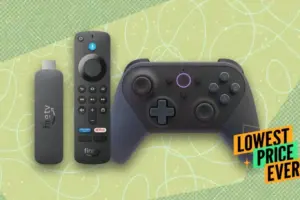
To capitalize on this momentum, Amazon has introduced an aggressive hardware promotion: a record-low bundle combining the Fire TV Stick 4K Select and the Luna Controller for just $64.98—a steep 46% discount off its standard $119.98 MSRP. According to major retail price-tracking tools, this marks the lowest price point ever recorded for the combined hardware package. By removing both the processing barrier via cloud infrastructure and the financial barrier via deep hardware discounts, Amazon is positioning Luna as the definitive gateway for casual and mainstream gamers alike.
Detailed Chronology: The Evolution of Cloud Gaming and the Rise of Amazon Luna
To fully understand the significance of the current Amazon Luna discount, one must trace the winding trajectory of cloud gaming over the past decade.
The Early Pioneers and False Starts
The concept of game streaming is not entirely new. Projects like OnLive and Gaikai first attempted to pioneer remote server-based gaming in the late 2000s and early 2010s. However, these early initiatives were severely hamstrung by the technological limitations of the era. High latency, inconsistent broadband infrastructure, and underdeveloped video compression algorithms resulted in a laggy, unresponsive player experience that frustrated early adopters.
As internet speeds stabilized and fiber-optic deployment expanded globally, tech giants re-evaluated the space. Sony launched PlayStation Now (later merged into the tiered PlayStation Plus service), and Microsoft introduced Xbox Cloud Gaming (Beta) as part of its Ultimate Game Pass tier. Yet, these services primarily functioned as extensions of existing console hardware rather than standalone ecosystems.
The Entrance of Tech Giants
Google’s high-profile entry into the market with Stadia in 2019 promised a console-less future, but its business model—requiring users to purchase individual games on a proprietary platform without a backward-compatible safety net—ultimately led to its closure in 2023. Google’s misstep provided a crucial masterclass for competitors: consumers are reluctant to buy digital licenses for closed ecosystems without alternative hardware paths or bundled value.
Amazon learned vital lessons from these early stumbles. Rather than attempting to build an isolated, standalone walled garden, Amazon leveraged its existing infrastructure: Amazon Web Services (AWS) for backend cloud stability, Prime for built-in audience acquisition, and Fire TV as an omnipresent living room interface.
The Birth and Maturation of Luna
Amazon officially announced Luna in late 2020 as an invitation-only beta before rolling it out to the broader public. Over the next several years, the service expanded its compatibility footprint well beyond dedicated Amazon devices. Today, Luna operates seamlessly across PC, Mac, select smart TV platforms (including recent models from Samsung and LG), iOS, Android, and Fire OS devices.
The introduction of hardware bundles like the Fire TV Stick 4K Select paired with the Luna Controller represents the culmination of this strategy. By packaging the necessary streaming stick—running modern software frameworks capable of low-latency decoding—alongside a dedicated Wi-Fi-enabled controller, Amazon has eliminated the friction points that historically kept mainstream consumers from experimenting with cloud gaming.
Supporting Context & Metrics: Breaking Down the Hardware and Economic Value
The economics of modern gaming have grown increasingly prohibitive. With standalone current-generation consoles retailing between $450 and $600, and individual AAA video game titles regularly priced at $70 at launch, casual players are finding it harder to justify the investment.

Financial Breakdown of the Bundle Deal
Amazon’s current promotion drastically alters the financial calculus of entering the gaming market:
- Standard Bundle Price: $119.98
- Discounted Promotional Price: $64.98
- Total Savings: $55.00 (46% discount)
- Historical Context: Verified by independent price-tracking algorithms as an all-time low for this specific hardware pairing.
Hardware Specifications and Compatibility
Understanding why this specific bundle is drawing attention requires a closer look at the included hardware:
- Fire TV Stick 4K Select: Beyond its primary function as a premier streaming device for 4K HDR content, this stick runs on advanced software frameworks (supporting modern iterations of Fire OS and Vega OS). Its processing architecture is optimized for low-latency video stream decoding, ensuring that input commands translated from the cloud translate to screen actions with minimal perceptible lag.
- The Luna Controller: Unlike standard Bluetooth controllers that pair exclusively to a local device, the Luna Controller can connect directly to Amazon’s cloud servers via Wi-Fi. This architectural choice reduces round-trip input latency by up to 30 milliseconds compared to traditional Bluetooth connections routed through a local console or PC. Furthermore, the controller features a familiar ergonomic layout closely mirroring traditional Xbox and PlayStation peripherals, minimizing the learning curve for new players.
- Ecosystem Flexibility: For households that already own alternative hardware, the barrier to entry is even lower. Users can connect standard PlayStation (DualSense/DualShock) or Xbox wireless controllers to compatible Fire TV devices via Bluetooth. Additionally, casual multiplayer titles like Taboo or Draw & Guess allow players to use their smartphones as controllers, transforming family living rooms into interactive game spaces without requiring extra peripheral purchases.
Official Statements and Industry Perspectives
While official corporate press releases often focus on marketing metrics, industry analysts and technology executives have offered a broader view of what Amazon’s aggressive pricing strategy signifies for the broader entertainment sector.
Tech analysts point out that hardware-agnostic entertainment is rapidly becoming the industry norm. In a recent consumer tech briefing, digital media strategist Marcus Vance noted:
"The traditional console cycle is reaching a plateau of diminishing returns. Consumers are fatigued by hardware fragmentation and rising peripheral costs. By treating hardware like the Fire TV Stick as a loss-leader or a deeply discounted entry point into a broader subscription ecosystem, companies like Amazon are successfully decoupling gaming from expensive local silicon."
Amazon representatives have consistently emphasized that Luna is designed to democratize access to interactive entertainment. During a recent product briefing, a spokesperson for Amazon’s digital entertainment division highlighted the core philosophy driving the platform:
"Our goal with Luna has always been to remove friction. You shouldn’t need a thousand-dollar PC or a specialized console sitting under your television just to enjoy a game with your family on a Friday night. By integrating Luna directly into Prime and pairing it with accessible hardware like the Fire TV Stick, we are making high-end gaming as frictionless as watching a movie."
Furthermore, software developers have expressed cautious optimism regarding cloud platforms. While high-octane competitive shooters still present distinct technical hurdles regarding latency, narrative-driven titles, puzzle games, and party titles run exceptionally well on cloud infrastructure, opening up new demographic markets that traditionally avoided conventional gaming hardware.
Future Outlook: Where Cloud Gaming and Amazon Luna Go From Here
As we look toward the remainder of the decade, the trajectory of cloud gaming suggests several major transformations for both hardware manufacturers and software publishers.
The Decline of Exclusive Hardware Silos
As broadband fiber networks expand and 5G/6G wireless architectures mature, the reliance on local processing power will continue to recede. While hardcore enthusiasts will undoubtedly maintain high-end local rigs for uncompromising graphical fidelity, the mass market will increasingly lean toward streaming solutions. Sony, Microsoft, and Google (through web-based streaming initiatives) are all actively investing in cloud infrastructure, but Amazon’s integration of cloud gaming into an existing e-commerce and media subscription (Prime) gives it a unique structural advantage.
Expanding Game Libraries and Developer Adoption
For Luna to maintain its competitive edge against established subscription giants like Xbox Game Pass, the continuous curation of its game library will be paramount. Amazon has steadily expanded its catalog, offering rotating selections of games included with Prime alongside standalone channel subscriptions like Ubisoft+ and Jackbox Games. As cloud technology proves its reliability to publishers, we can expect a higher volume of day-one cloud releases.
Potential Hurdles: Infrastructure and Net Neutrality
Despite the optimistic outlook, challenges remain. The long-term viability of cloud gaming heavily depends on the state of global broadband infrastructure. In regions plagued by data caps, high internet costs, or unreliable rural connectivity, cloud gaming remains out of reach. Furthermore, regulatory debates surrounding net neutrality and ISP data throttling could pose unforeseen hurdles for data-intensive streaming services in the years ahead.
Conclusion
Amazon’s historic discount on the Fire TV Stick 4K Select and Luna Controller bundle is more than just a fleeting retail deal—it is a clear indicator of where consumer technology is heading. By slashing the entry cost to nearly half its retail value, Amazon is actively accelerating the shift toward hardware-agnostic, cloud-streamed entertainment. For consumers sitting on the fence about the future of gaming, there has never been a more affordable—or frictionless—moment to take the plunge.