Executive Overview
In an era of increasing climate volatility and aging power grid infrastructure, the necessity for reliable home backup solutions has transitioned from a luxury to a fundamental component of household disaster preparedness. Recent market data indicates that consumers are shifting away from loud, fuel-reliant gas generators toward silent, sustainable, and indoor-safe portable power stations.
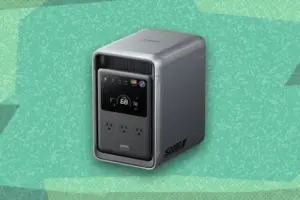
As of October 12, 2026, the retail market is seeing a significant adjustment in high-capacity energy storage, headlined by a major promotional event for the Anker SOLIX S2000. Currently available at a 46% discount—bringing the price down to $649.99 from its standard $1,199 MSRP—this unit represents a pivotal intersection of affordability and emergency utility. This report evaluates the technical specifications, performance metrics, and long-term value proposition of the S2000, contextualizing why this specific hardware has become a benchmark for residential energy resilience.
Detailed Chronology: The Evolution of Portable Power
The surge in demand for portable power stations did not occur in a vacuum. Over the past decade, we have observed a rapid evolution in Lithium Iron Phosphate (LiFePO4) battery technology. Early market entrants were plagued by short lifecycles, heavy lead-acid batteries, and erratic power output.
By 2024 and 2025, brands like Anker began shifting the paradigm by integrating sophisticated Battery Management Systems (BMS). The S2000, launched as a cornerstone of the SOLIX line, was designed to address the "power anxiety" felt by suburban and urban homeowners during seasonal outages.
The current discount, active as of October 2026, reflects a strategic mid-cycle retail push. By lowering the entry barrier for a unit capable of powering an average household refrigerator for 35 hours, manufacturers are positioning these devices not merely as camping gadgets, but as critical survival infrastructure.
Supporting Context & Technical Metrics
To understand the utility of the Anker SOLIX S2000, one must look beyond the marketing collateral and examine the raw engineering metrics.
Capacity and Efficiency
The S2000 features a robust capacity of 2,010 Wh. While many competitors boast similar "on-paper" capacities, the S2000 distinguishes itself through discharge efficiency. Third-party testing, including recent audits by PCMag, has highlighted the unit’s ability to maintain a high percentage of its rated capacity even under the fluctuating, intermittent load demands typical of home appliances like routers, refrigerators, and medical equipment.
Physical Engineering
Despite its substantial energy density, the device maintains a manageable form factor (8.2 x 11.1 x 12.7 inches) and a weight profile of approximately 36 pounds. This portability is critical; during an emergency, the ability to move a power source from the garage to the living room or a workspace can be the difference between utility and inconvenience.
Longevity and Lifecycle
Perhaps the most compelling metric for the long-term investor is the 10,000-cycle lifespan. Under normal usage—defined as daily charging and discharging cycles—the battery chemistry is rated to maintain functional capacity for approximately 15 years. This longevity effectively amortizes the cost of the unit, making the current $649.99 price point an exceptionally efficient investment in household energy security.
Connectivity and Interface
The user experience is largely defined by the unit’s versatility. Anker has equipped the S2000 with a comprehensive I/O array:

- AC Output: Two rear-facing outlets for high-draw appliances and three front-facing outlets for secondary devices.
- USB Integration: Dual USB-C ports alongside a dedicated USB-A port to ensure compatibility with mobile devices, laptops, and emergency lighting.
- Solar Readiness: A dedicated solar input port facilitates seamless integration with Anker’s proprietary solar panels, offering a path to off-grid energy replenishment that is vital during extended grid failures.
Furthermore, the Anker software suite, which governs the unit’s power management, is currently considered among the most intuitive in the industry. It provides real-time analytics on power consumption, allowing users to prioritize which devices remain powered when the battery percentage drops.
Official Perspectives and Expert Consensus
Industry experts emphasize that the "best time to buy" a power station is rarely during an active emergency. When a storm is imminent, supply chain constraints often lead to price gouging and inventory depletion. By purchasing during a non-critical window, consumers can perform necessary stress tests, familiarize themselves with the user interface, and ensure firmware is updated before the unit is actually needed.
The consensus from engineering reviewers remains that the S2000 excels in idle power consumption management. Most portable stations lose a significant percentage of their charge simply by being "on." The S2000’s ability to manage intermittent loads—the "on-off" nature of a refrigerator compressor—without significant energy bleed is a standout feature that justifies its premium engineering pedigree.
Future Outlook: The Shift Toward Home Resilience
The move toward decentralized energy storage is accelerating. As utilities face pressure from extreme weather events and increased demand on aging infrastructure, the responsibility for maintaining "always-on" power is increasingly shifting toward the individual homeowner.
Sustainability and the Grid
The S2000 is part of a broader shift toward "green" emergency power. Unlike traditional gasoline-powered generators, which require the storage of flammable liquids and produce carbon monoxide—making them unsafe for indoor use—the SOLIX series provides a clean, silent, and indoor-compatible alternative. As battery prices continue to fluctuate, the current 46% discount on the S2000 serves as a barometer for how quickly this technology is becoming accessible to the average consumer.
What to Expect in the Coming Years
In the near future, we expect to see even tighter integration between portable power stations and home solar arrays. We anticipate that firmware updates will eventually allow units like the S2000 to communicate directly with smart home systems, automatically shedding non-essential loads during an outage to maximize the runtime of critical medical or communication hardware.
Final Assessment
The Anker SOLIX S2000 is more than just a battery; it is a hedge against uncertainty. For those who live in regions prone to severe weather or grid instability, the current sale provides an ideal opportunity to acquire high-capacity, long-lifecycle hardware at a price point that is rarely seen outside of major promotional windows.
While the retail landscape remains volatile and pricing is subject to change, the technical specifications—10,000 charge cycles, 2,010 Wh capacity, and industry-leading power management software—make this a definitive choice for anyone serious about emergency preparedness. Whether you are a camping enthusiast needing reliable power in the wilderness or a homeowner looking to protect your perishables during a black-out, the S2000 stands as a reliable, authoritative solution in a crowded market.
Disclaimer: Deal pricing and availability are subject to change post-publication. As an affiliate, we may earn a commission on purchases made through the provided links. Readers are encouraged to verify current inventory and pricing directly with the retailer.