Executive Overview
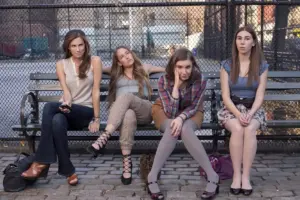
The announcement that Lena Dunham’s era-defining HBO comedy-drama Girls is returning for a five-episode limited run has sent ripples through the entertainment industry. Beyond the narrative implications of catching up with Hannah Horvath and her tightly wound circle of friends—with original core cast members Allison Williams, Jemima Kirke, Zosia Mamet, and Andrew Rannells all confirmed to reprise their roles—the revival serves as a profound cultural litmus test. It invites viewers to measure how both the characters and the audience have evolved in the decade since the series concluded in 2017.
For years, the discourse surrounding Girls was inextricably bound to the public perception of its creator. At the height of its cultural footprint, Dunham frequently struggled to separate her own identity from that of her most famous, polarizing creation. Journalists, critics, and viewers often treated Dunham as though she were the self-absorbed, chronically myopic writer she played on screen, assuming she lacked self-awareness regarding Hannah’s glaring flaws.
Today, however, the landscape has shifted dramatically. Bolstered by her candid 2025 memoir, Famesick, and the surprisingly mature, wistful Netflix series Too Much, Dunham is operating from a vastly different place personally and professionally. Free from the heavy compromises that defined the original series’ production—including the departure of former creative partner Jenni Konner—this new iteration of Girls promises to be a true reclamation. It offers Dunham an opportunity to rewrite her relationship with her most famous work while testing whether contemporary audiences are finally ready to appreciate the depth, nuance, and sharp self-awareness that always underpinned the show.
Detailed Chronology: From Indie Darling to Cultural Lightning Rod
To understand the weight of the upcoming Girls revival, one must examine the turbulent chronology of the show’s original run and the subsequent years of creative, physical, and emotional reckoning for its creator.
The Tiny Furniture Breakthrough and the Birth of Girls (2010–2012)
Lena Dunham first caught the industry’s attention with her micro-budget, critically acclaimed indie feature Tiny Furniture (2010). Her raw, idiosyncratic writing and directing style signaled the arrival of a distinct new voice in American independent cinema. This early success caught the eye of veteran producer Judd Apatow and HBO executives, who tapped Dunham to translate her distinct sensibility into a serialized television format.
However, translating a raw indie filmmaker’s vision into a conventionally structured weekly sitcom required compromise. To bridge the gap, Dunham was partnered with seasoned television writer and producer Jenni Konner. Together, Dunham and Konner ran Girls through six critically acclaimed, controversy-laden seasons.
The Peak Years and Public Misunderstandings (2012–2017)
When Girls premiered in 2012, it was immediately hailed by some as the definitive voice of a new generation (Millennials), while being fiercely panned by others for its lack of racial diversity, socioeconomic insularity, and the grating narcissism of its protagonists. Throughout this period, Dunham became an unyielding op-ed-generating machine. Unfortunately, the lines between fiction and reality blurred completely in the public consciousness.
Despite writing, directing, and starring in a show that relentlessly dissected and critiqued millennial self-absorption, Dunham was frequently accused by critics of sharing those exact blind spots. The show wrapped up its run in 2017 with a poignant, complicated finale that left Hannah Horvath isolated from her friends, raising a child as a single mother. At the time, however, the public was largely unaware of the physical and personal turmoil happening behind the scenes.
The Wilderness Years, Memoir, and Creative Renaissance (2017–2025)
In the years following the conclusion of Girls, Dunham struggled to step out from beneath the long shadow of the show. Her post-Girls projects faced hurdles, compounded significantly by severe health battles and substance abuse issues. These struggles—and the complex path toward recovery—were laid bare in her 2025 memoir, Famesick.
Crucially, Famesick also detailed the behind-the-scenes friction of her creative partnership with Jenni Konner, framing Girls as the product of a vexed series of negotiations. As Dunham healed physically and emotionally, her creative voice underwent a maturation process. This growth culminated in her 2025 Netflix series Too Much, which earned widespread praise for its mature, wistful exploration of romantic disillusionment and emotional relocation. Furthermore, having navigated personal grief following a medically necessary hysterectomy, Dunham has since become a mother—giving her a profound, lived-in perspective on parenthood that was entirely absent when she penned Hannah Horvath’s motherhood storyline in 2017.
Supporting Context & Metrics: The Mechanics of the Revival
The announcement of a five-episode limited run is not merely a nostalgic cash-grab; it represents a meticulously structured creative pivot. Examining the structural and personnel changes behind the scenes reveals how Girls 2.0 will differ fundamentally from its predecessor.
Behind-the-Scenes Shift: The Absence of Jenni Konner
One of the most telling details of the revival is the return of Judd Apatow as an executive producer, contrasted with the notable absence of Jenni Konner. As documented in Famesick, the creative dynamic between Dunham and Konner involved significant friction regarding narrative tone and structural television conventions.
For the first six seasons of Girls, Dunham shared writing credits and deferential control. In contrast, her recent work on Too Much showcased a creator who insisted on writing every single episode alongside co-writers, retaining absolute authority over her artistic vision. Consequently, the upcoming revival is expected to reflect Dunham’s unfiltered perspective more fully than the original series ever did.
Comparative Metrics of Television Revivals
Reviving classic television properties is a high-stakes gamble in the modern streaming era. Networks frequently rely on recognizable intellectual property to drive subscriptions and engagement, but the creative success varies wildly.
| Revival Project | Original Run | Revival Format | Core Creative Challenge | Critical & Audience Reception |
|---|---|---|---|---|
| And Just Like That… | 1998–2004 | Multi-season series | Updating late-Gen X icons to modern social mores; aging gracefully vs. narrative contrivances. | Polarized; praised for tackling middle age, criticized for erratic character choices. |
| Twin Peaks: The Return | 1990–1991 | 18-part limited series | Defying nostalgic expectations in favor of uncompromising auteurist vision. | Universally acclaimed as a masterpiece of late-era television. |
| Girls (Upcoming Revival) | 2012–2017 | 5-episode limited run | Recontextualizing late-Obama-era millennials in a post-pandemic, socially shifted landscape. | Pending (Acting as a cultural litmus test). |
As demonstrated by the successes and pitfalls of And Just Like That…, bringing beloved characters out of time and placing them into contemporaneity offers immense potential alongside narrative hazards. While Michael Patrick King’s continuation of Sex and the City offered a radical look at late-middle-age womanhood, it occasionally fell into the trap of treating characters like narrative contrivances. For Girls, a tight five-episode structure may serve as an ideal containment vessel—long enough to satisfy curiosity, but short enough to avoid narrative fatigue.
Official Statements and Industry Reactions
While HBO and the principal cast members have kept specific plot details under tight wraps, initial industry reactions highlight the profound emotional weight attached to the project.
In promotional and literary circles surrounding the rollout of Famesick, Dunham addressed the evolution of her relationship with her past work. Rather than running from the discomfort that Girls once generated, she has leaned into a posture of radical self-examination.
"You cannot spend your life apologizing for the art that required you to grow up in public," Dunham noted during a recent literary appearance discussing her creative evolution. "The characters we create are not our wardens; they are our snapshots. Looking back at them with clearer eyes is the only way forward."
Executive producer Judd Apatow, speaking briefly on the upcoming collaboration, expressed immense pride in Dunham’s growth as a writer and director. "Lena has spent the last several years doing the hard, necessary work of an artist reclaiming her narrative," Apatow stated. "What she is bringing to these new scripts is sharper, funnier, and more emotionally resonant than anything we did a decade ago. We are stepping back into this world not to recreate the past, but to see where these women genuinely land."
Cast members have similarly expressed enthusiasm. Sources close to the production indicate that Allison Williams, Jemima Kirke, Zosia Mamet, and Andrew Rannells jumped at the opportunity to reunite, viewing the limited run not just as a professional reunion, but as a celebratory capstone to a defining chapter of their careers.
Future Outlook: What to Expect from Girls 2.0
As we look ahead to the late 2020s premiere of the Girls limited series, the fundamental question remains: How has Hannah Horvath aged, and how have we aged with her?
When viewers last saw Hannah, she was living in a modest coastal home, grappling with the chaotic realities of single motherhood while attempting to soothe an infant who refused to latch. It was a messy, unresolved stopping point rather than a neat Hollywood conclusion. Today, with Dunham herself having experienced the profound emotional shifts of motherhood and personal recovery, Hannah’s impending narrative arc holds the promise of unprecedented emotional depth.
Furthermore, Hannah remains an immutable artifact of the late Obama era—a creature of old-millennial anxieties, hyper-articulate narcissism, and pre-algorithmic social media behaviors. Dropping her into the contemporary landscape of the late 2020s creates a fascinating comedic and dramatic friction. How does an aging millennial, once defined by her self-obsessed opining, navigate a world saturated by TikTok culture, post-pandemic disillusionment, and rapidly shifting economic realities?
Ultimately, the revival of Girls transcends a simple television reunion. It is an act of artistic reclamation. It gives Lena Dunham the chance to write Hannah Horvath on her own absolute terms, unburdened by external compromises or public misunderstandings. For the audience, it offers a rare mirror: an invitation to look back at our collective cultural adolescence, shed our knee-jerk cynicism, and embrace the messy, beautiful work of growing up.