Executive Overview
In a strategic move to bridge the gap between complex search infrastructure and the practical needs of webmasters, Google Search Central has officially launched a new video series titled "The Non-Canonical Cabinet." This sitcom-style, educational initiative is designed to address the "edge cases"—those niche, highly technical questions that fall outside the scope of traditional documentation and standard FAQ pages.
Hosted by Google’s Search Relations team members Gary Illyes and Cherry Prommawin, the series aims to demystify the mechanics of how Googlebot interacts with unconventional URL structures, domain naming conventions, and ranking factors. The inaugural episode, released on October 14, 2024, serves as a masterclass on the technical constraints of domains versus URL paths, effectively debunking myths regarding keyword stuffing in URLs and the viability of emojis in web addresses. For SEO professionals, this series represents an authoritative, on-the-record resource that clarifies how to structure websites for optimal crawling and indexing without resorting to outdated or "black hat" optimization tactics.
Detailed Chronology: From Concept to Screen
The genesis of "The Non-Canonical Cabinet" reflects Google’s broader shift toward transparency in its search algorithms and crawling processes.
The Teaser and Community Engagement
The journey began on October 6, 2024, when Google published a teaser trailer. Unlike traditional corporate announcements, the trailer utilized a lighthearted, sitcom-inspired aesthetic, signaling a departure from the dry, technical lectures of the past. The core mission was explicitly stated: to tackle questions that are too idiosyncratic for standard documentation but remain critical for developers, SEOs, and stakeholders navigating the era of generative AI and modern search.
The Debut Episode
Following the trailer, the first full episode dropped on October 14. The format is conversational, with Illyes and Prommawin dissecting specific user-submitted questions. By crowdsourcing these topics via the comments section of their videos, Google has created a feedback loop that allows the industry to dictate the technical syllabus of the series. This shift is notable, as it moves away from the "top-down" approach seen in their 2024 "How Search Works" series, which focused on the foundational pillars of crawling, indexing, and serving. Instead, "The Non-Canonical Cabinet" operates on an "inquiry-first" basis, prioritizing the immediate pain points of the digital marketing community.
Supporting Context & Metrics: Navigating Technical Standards
To understand the significance of the series, one must look at the underlying protocols that govern the internet. The debut episode focused heavily on the distinction between domain names and URL paths—a common point of confusion for many developers.
Domain Names: The Rigid Architecture
Gary Illyes and Cherry Prommawin reaffirmed that Google adheres strictly to the guidelines established by ICANN (Internet Corporation for Assigned Names and Numbers) and the IETF (Internet Engineering Task Force). Specifically, RFC 1035 and RFC 1123 dictate that domain names are restricted to letters, numbers, and hyphens.
While Internationalized Domain Names (IDNs) allow for non-Roman scripts—such as Arabic or Chinese characters—these are technically handled through Punycode (the "xn--" prefix). Illyes pointed out a critical vulnerability here: visual confusion. When characters from different alphabets look identical to the Latin alphabet, it poses a security and accessibility risk. Furthermore, the discussion addressed the persistent myth of "emoji domains." Citing a 2017 ICANN Board Resolution, Illyes clarified that emojis are strictly disallowed by current technical standards for domain names. While some country-code top-level domains (ccTLDs) may allow them, they are generally considered a liability rather than an asset for a domain strategy.
URL Paths: The Flexible Playground
Conversely, the URL path—the portion of the URL following the domain—offers significantly more flexibility. Googlebot is capable of processing emojis within the path, though the browser will render these as percent-encoded strings (e.g., a chicken emoji becoming %F0%9F%90%94).
The takeaway for webmasters is clear: while technically "crawlable," utilizing emojis in URLs is a double-edged sword. Not all browsers or social media platforms render them correctly, often displaying "gibberish" or broken strings. Google’s official documentation on URL structure continues to recommend standard ASCII characters, reinforcing that just because a system can handle a specific character doesn’t mean it should be used as a primary strategy.
Official Statements: The Truth About URL Keywords
Perhaps the most significant revelation from the series is the firm stance on keywords within URLs. For years, the SEO industry has debated the weight of keywords in the address bar.
The "Incredibly Small Signal"
Gary Illyes characterized keywords in URLs as an "incredibly small signal." He offered a blunt reality check: these signals only hold weight when Google has absolutely no other context—such as a brand-new page with no content, no internal links, and no external authority.
Once a page is indexed and Google begins to crawl its actual content, the keywords in the URL become "basically irrelevant." This echoes previous statements from John Mueller, who in 2021 described them as a "very, very lightweight factor." The message to the industry is unambiguous: stop attempting to manipulate rankings through keyword-heavy URL structures. It is a futile effort that yields negligible, if any, return on investment.
The Separator Debate: Hyphens vs. Underscores
The series also addressed the long-standing debate over word separators. Google’s stance remains unchanged: hyphens are the standard for separating words in a URL path. When underscores are used, Googlebot treats the phrase as "one long word." While Google’s algorithms are increasingly sophisticated at parsing these, the historical standard remains the hyphen. This preference is rooted in programming conventions, where underscores often denote distinct programmatic variables, whereas hyphens act as natural linguistic breaks.
Future Outlook: What to Expect
"The Non-Canonical Cabinet" is clearly positioning itself as the definitive source for edge-case SEO knowledge. By providing a forum for technical nuance, Google is effectively curbing the spread of misinformation regarding search ranking factors.
Upcoming Content
The series is set to continue with an exploration of robots.txt—a topic that has plagued developers for decades. The lack of a fixed release schedule suggests that the Google team is focusing on quality and thoroughness over rapid-fire content production. The eight-day gap between the trailer and the first episode indicates that viewers should expect periodic, high-impact drops rather than a daily cadence.
Strategic Implications for SEO Professionals
For the SEO professional, this series is a vital tool for client management. When a client insists on a "keyword-stuffed" URL strategy or asks about the "SEO value" of an emoji-laden path, practitioners can now point to direct, on-the-record statements from Google’s primary search engineers.
The era of guessing about "hidden" ranking factors is coming to an end. Through "The Non-Canonical Cabinet," Google is signaling that the path to ranking success lies in technical compliance, content quality, and adherence to established web standards—not in the clever manipulation of URLs. As the series progresses, it is highly recommended that SEO practitioners monitor the comments section, as this is where the industry’s most pressing, unaddressed technical hurdles are being surfaced and, eventually, resolved.
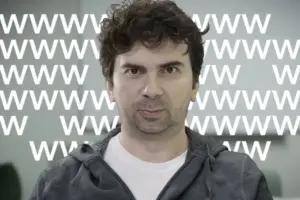
Featured Image: Screenshot from Google Search Central/YouTube, October 2024.