Executive Overview
The wearables landscape is undergoing a profound cultural and technological shift. After years of consumers gravitating toward increasingly complex, notification-heavy smartwatches—devices that often mirror the distractions of our smartphones—the market is experiencing a massive resurgence of interest in screenless health and fitness trackers.
Though screenless trackers have existed for well over a decade, their popularity has surged to unprecedented heights. This resurgence was punctuated recently by Whoop securing a staggering $575 million in Series G funding, pushing the pioneering health-monitoring company to a colossal $10 billion valuation. Yet, this newfound gold rush has not gone unchallenged. Heavyweights from across the tech industry—including Garmin, Luna, Hume, Amazfit, and, most notably, Google with the introduction of its Fitbit Air—are aggressively targeting the screenless sector.
This head-to-head competition has sparked a critical debate among fitness enthusiasts, biohackers, and everyday wellness seekers: How locked-in do you want to be to a specific ecosystem, and which device truly commands a spot on your wrist?
To answer this, a rigorous comparison of the latest market offerings—specifically pitting the newer Whoop models (such as the Whoop 5.0 and Whoop MG) against Google’s Fitbit Air—reveals two very different philosophies. While both track activity, sleep, and critical vitals with high fidelity, they cater to distinctly different demographics. Whoop remains the unyielding titan for serious athletes and data-hungry biohackers, while the Fitbit Air emerges as the accessible, AI-powered companion designed for the everyday user. Understanding the nuances of their hardware, app ecosystems, subscription models, and artificial intelligence capabilities is essential to determining which tracker deserves your investment.
Detailed Chronology: The Rise of Screenless Trackers and Corporate Maneuvering
To understand the current competitive landscape, one must trace the timeline of how screenless tracking evolved from a niche category into a multibillion-dollar battleground.
2015: The Pioneer Establishes the Blueprint
When Whoop launched its inaugural fitness tracker in 2015, the market was heavily saturated with display-bearing devices like early Fitbit wristbands and the original Apple Watch. Whoop made a bold, counter-intuitive bet: that elite athletes and dedicated trainers did not want another screen demanding their attention. By stripping away the display, notifications, and time-telling capabilities, Whoop focused entirely on continuous, unobtrusive biometric data collection. This strategy laid the foundation for an entirely new product category centered on strain, recovery, and sleep.
March 31: A Day of Reckoning and Capital Infusion
The rivalry between Whoop and tech monolith Google reached a symbolic and strategic peak on March 31. On this day, Whoop announced its massive $575 million funding round, solidifying its market dominance and signaling to Wall Street and Silicon Valley alike that the screenless health category was primed for explosive growth.
Coincidentally—or perhaps as a calculated preemptive strike—Google used that exact same day to tease the arrival of its performance-focused wearable, setting the stage for the Fitbit Air. Whether intentional or a stroke of astonishing corporate coincidence, Google’s timing made one thing abundantly clear: Big Tech was officially entering the ring to challenge Whoop’s hegemony over screenless tracking.
The Launch of the Fitbit Air and Next-Gen Whoop Hardware
Following the initial teasers, the rollout of the Google Fitbit Air and subsequent Whoop models (including the Whoop 5.0 and Whoop MG) brought distinct engineering solutions to common wearable hurdles, particularly battery life, form factor, and AI integration. As reviews rolled in, consumers were suddenly forced to weigh Whoop’s uncompromising, data-dense metrics against Google’s seamless integration into the broader Google Health ecosystem.
Supporting Context & Metrics: Hardware, Software, and Economics
Evaluating modern screenless trackers requires looking beyond surface-level aesthetics. A comprehensive breakdown reveals stark contrasts in physical design, battery logistics, app complexity, and pricing structures.
Hardware Form Factor and Battery Longevity
The most immediate physical difference between the two devices lies in their profile and power management:
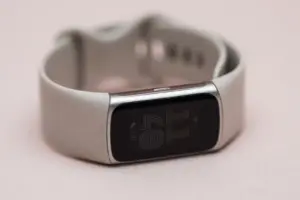
- Fitbit Air: Engineered by Google to be exceptionally slim, the Fitbit Air prioritizes discretion and everyday comfort. However, this minimalist design compromises battery longevity, yielding up to seven days of continuous use on a single charge.
- Whoop (5.0 / MG): Whoop bands are slightly more robust, but they boast an impressive battery life rating of 14+ days. Furthermore, Whoop solves the charging dilemma with a brilliant mechanical workaround: a slide-on wireless battery pack. Users can charge the tracker on the go without ever removing the band from their wrist, provided they keep the auxiliary battery pack charged.
Companion Apps and Data Granularity
Both companies have invested heavily in robust companion applications, but their design philosophies target entirely different user bases:
- The Whoop App: Unapologetically complex, the Whoop app can feel overwhelming to the uninitiated. It captures heart rate data at a notably higher sampling frequency and focuses intensely on proprietary metrics like day-to-day strain and recovery percentages. It is built for individuals who view their bodies through the lens of data analytics.
- The Google Health App (Fitbit Air): Designed with mainstream accessibility in mind, Google’s companion app translates complex biomarkers into user-friendly insights. It caters to the average person who wants to understand their health without deciphering dense charts of cardiovascular load.
The Economics of Wearables: Subscriptions and Hardware Costs
Perhaps the most defining differentiator between Whoop and the Fitbit Air is how they handle monetization and access to hardware:
- Whoop’s Membership Model: Whoop operates strictly on a subscription basis; you cannot use the hardware without an active membership. In major regions (US, Mexico, Canada, EU, and the UK), the "Whoop One" tier sells the hardware bundled with a membership starting at $199 per year for new 5.0 hardware. Outside these regions, memberships often ship with certified pre-owned 4.0 sensors and Onyx Superknit bands—a detail that may deter consumers averse to refurbished tech. Furthermore, specialized tiers can scale annual costs significantly higher, with top-tier memberships climbing up to $359 annually.
- Google’s Hybrid Approach: The Fitbit Air requires an upfront hardware purchase of approximately $100. Out of the box, users receive a three-month trial of Google Health Premium. Without a subscription, the Fitbit Air remains functional, providing basic activity, step, and sleep tracking. However, unlocking advanced features requires a Google Health Premium subscription, priced at $10 per month or $100 annually. Notably, subscribers to Google AI Pro or Ultra bundles may find Google Health Premium included as part of their existing perks.
Official Statements & Industry Perspectives
Executives and industry analysts have increasingly spoken out about the strategic pivot toward ambient, screenless health monitoring.
Industry analysts note that consumer fatigue with smartwatches has reached a tipping point. "People are exhausted by wrist-based notifications, haptic buzzes for emails, and the psychological burden of being perpetually connected," notes a prominent wearable tech analyst. "Screenless trackers offer a sanctuary. They track what matters—sleep, heart rate variability, and exertion—without demanding your visual attention every three minutes."
For its part, Google has positioned the Fitbit Air as a democratization of health intelligence. In promotional statements surrounding the Google Health ecosystem, company representatives emphasize that advanced wellness coaching should not be restricted to elite athletes. By embedding sophisticated artificial intelligence into the Fitbit Air experience, Google aims to make personalized health guidance conversational, approachable, and actionable for the general public.
Whoop leadership, conversely, doubles down on its uncompromising commitment to high-performance analytics. In investor briefings following their historic funding round, Whoop executives emphasized that their target demographic values deep physiological data over casual step-counting. This commitment is further demonstrated by Whoop’s forward-looking initiatives, such as plans to introduce in-app video consultations with licensed clinicians in select regions—transforming the tracker from a mere fitness accessory into a proactive telehealth gateway.
Future Outlook: Which Device Should You Buy?
As the screenless tracker market matures, consumers face a clear bifurcation in the road. Choosing between the Whoop ecosystem and the Google Fitbit Air ultimately depends on your lifestyle, financial commitment, and fitness ambitions.
When to Choose the Google Fitbit Air
The Fitbit Air is the superior choice for the vast majority of everyday users and casual fitness enthusiasts.
- Cost-Effectiveness: With a lower upfront hardware cost and a functional free tier that requires no subscription for basic tracking, it offers high value.
- User-Friendly AI: Google’s conversational AI coach feels remarkably natural. Whether you are logging your morning oatmeal and coffee or asking the system how to modify your workout routine to accommodate a sore shoulder, Google’s AI assistant provides fluid, context-aware guidance.
- Ecosystem Integration: For households already embedded in Google’s hardware and AI subscriptions (such as Google AI Pro or Ultra), the Fitbit Air integrates seamlessly.
When to Choose Whoop
Whoop remains the gold standard for dedicated athletes, biohackers, and those undergoing intense, rigorous training regimens.
- Automatic Activity Detection: Whoop excels at automatically recognizing and logging workouts—particularly heavy strength training and intense cardio—relieving the user of the need to manually start and stop tracking sessions.
- Granular Biometrics: If you obsess over heart rate variability (HRV), resting heart rate, precise strain scores, and recovery indexes, Whoop’s high-frequency sampling and dense data presentation are unmatched.
- Advanced Telehealth Aspirations: With upcoming features like in-app clinical consultations, Whoop is positioning itself as a comprehensive health management tool for those willing to invest heavily in their physical optimization.
Ultimately, the screenless revolution proves that less is often more. Whether you opt for the accessible, AI-driven convenience of the Google Fitbit Air or the uncompromising, data-heavy rigor of a Whoop band, reclaiming your wrist from the tyranny of the screen has never been more achievable—or more sophisticated.