Executive Overview: A Strategic Pivot in Wearable Tech
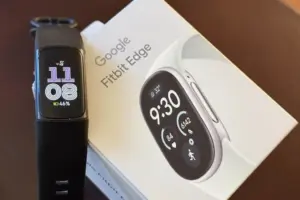
After a three-year hiatus from launching new screen-based fitness trackers, Google has finally broken its silence with the unveiling of the Fitbit Edge. For millions of loyal Fitbit users, the release represents more than just a hardware refresh; it signifies a strategic recalibration of the brand’s identity. Positioned as a bridge between the minimalist, screenless Fitbit Air and the sophisticated, feature-rich Pixel Watch, the Edge enters a market that has grown increasingly demanding regarding performance, reliability, and ecosystem integration.
While the Charge 6—the outgoing champion of the line—offered a solid, if flawed, experience, the Edge introduces tangible hardware upgrades that address long-standing user grievances. From the reintroduction of a tactile physical button to a more robust GPS chipset, the Edge is clearly designed to rectify the shortcomings of its predecessor. However, this advancement comes with trade-offs. By omitting NFC-based payment capabilities and launching with limited mapping features, Google is forcing consumers to decide whether they value physical hardware integrity over digital convenience.
Detailed Chronology: The Three-Year Gap
To understand the significance of the Fitbit Edge, one must look at the recent history of Google’s wearable strategy. Since the acquisition of Fitbit, the parent company has struggled to balance the simplicity of dedicated fitness trackers with the sprawling, multifaceted utility of the Pixel Watch.
The Charge 6 was the last vestige of the "traditional" tracker era. Released with a heavy emphasis on Google services—namely YouTube Music and Google Wallet—it promised a seamless integration into the Google ecosystem. Yet, in practice, it often felt like a restricted platform. Users reported frustration with the haptic-only button, which frequently failed to register inputs, and a GPS antenna that was prone to signal distortion if the band was tightened beyond a certain point.
The Edge, by contrast, seems to be the product of a design team that finally listened to the criticism. By iterating on the core hardware architecture while simultaneously streamlining the software experience, Google has attempted to pivot away from the "mini-smartwatch" identity of the Charge 6 and back toward the "dedicated fitness tracker" identity that made the brand a household name in the first place.
Supporting Context & Metrics: Hardware Under the Microscope
The Return of Tactile Feedback
The most immediate physical change—and arguably the most welcome—is the inclusion of a genuine, clicky side button. In the world of high-intensity interval training (HIIT) or wet-weather running, haptic "nubs" are notoriously unreliable. The Edge’s physical button provides audible and tactile confirmation, ensuring that users can pause a workout or navigate menus without second-guessing whether the command registered.
Altimeter Reintroduction: Elevating the Data
For years, serious hikers and trail runners lamented the removal of the altimeter in the newer Charge models. Its return in the Fitbit Edge is a significant boon for performance tracking. By measuring atmospheric pressure to determine elevation gain, the Edge can finally provide accurate "floors climbed" metrics and a more nuanced analysis of hilly terrain. This feature effectively moves the Edge out of the "casual step-counter" category and back into the territory of serious training equipment.
GPS Performance and Antenna Engineering
One of the most persistent issues with the Charge 6 was its susceptibility to signal loss. The design flaw was almost comical: when the band was tightened, it exerted pressure on the chassis that distorted the GPS antenna’s geometry. Google claims that the Edge features a redesigned chipset and a reinforced housing. While early testing suggests a more stable lock-on, the true test will be long-term, real-world usage in dense urban environments.
The Connectivity Compromise: Music and NFC
Perhaps the most controversial aspect of the Edge is the divergence in functionality.
- Audio Control: The Charge 6 was shackled to YouTube Music, alienating users of Spotify, Apple Music, and local file storage. The Edge breaks these chains, offering universal media control that mirrors standard industry expectations.
- The NFC Gap: Conversely, the removal of NFC and Google Wallet support is a significant regression. For runners who rely on the "leave-your-phone-behind" convenience of buying a post-run beverage with their wrist, the Edge is a downgrade. Google’s decision to excise this feature suggests that the internal real estate was prioritized for the altimeter and the new GPS hardware, marking a clear prioritization of fitness data over lifestyle convenience.
Official Statements and Industry Impact
Google’s positioning of the Edge is inherently conservative. By stripping away payment capabilities, the company is signaling that the Edge is not intended to compete with the Pixel Watch. Instead, it is meant to serve the "purist" athlete.
"Our goal with the Edge," a spokesperson noted, "was to create a reliable, high-performance tool that removes the friction between the user and their fitness data." This statement aligns with the industry trend of moving away from "all-in-one" devices that do everything poorly, toward specialized devices that perform core tasks—like altitude tracking and music control—with high fidelity.
However, the "coming soon" status of Google Maps is a point of concern. Relying on software updates to fill in missing functionality is a dangerous game, particularly for a company that has a history of sunsetting features without warning. If Google intends to keep the Edge relevant for three or more years, these software updates must be prioritized and delivered with transparency.
Future Outlook: Is the Edge the New Standard?
The Fitbit Edge represents a crossroads for Google. If the device succeeds, it confirms that there is a large, underserved market of consumers who want high-quality sensors and physical reliability without the battery drain and complex UI of a full-blown smartwatch. If it fails, it may signal the end of the standalone fitness tracker as a viable product category, pushing all future development into the Pixel Watch line.
For the Prospective Buyer
If you are currently wearing a Charge 6 and are satisfied with the NFC payments, the Edge might feel like a lateral move—or even a step backward. However, if you are a trail runner, a mountain hiker, or someone who is constantly frustrated by the Charge 6’s fickle touch-button and restricted music controls, the Edge is an essential upgrade.
The Edge is not a perfect device; it is a specialized one. It prioritizes the "edge" cases of athletic performance—climbing, GPS accuracy, and media control—at the expense of the digital wallet. As we move further into an era of biometric-focused health tracking, the Fitbit Edge serves as a testament to the idea that sometimes, the best technological advancement isn’t adding more features, but refining the ones that actually matter to the user.
Final Verdict
The Fitbit Edge is a compelling, if slightly uneven, evolution. It repairs the broken promises of the Charge 6, offers a superior hardware build, and finally treats the user’s music preferences with the respect they deserve. While the loss of NFC is a sting, the gain in sensor accuracy and physical input reliability makes it the most capable, dedicated fitness tracker Fitbit has released in half a decade. For those who value the "fitness" over the "smart," the Edge is, quite literally, the device they have been waiting for.