Executive Overview: The Evolution of a Wearable Icon
For over a decade, the Fitbit brand has been synonymous with the democratization of health tracking. From its humble origins as a simple clip-on pedometer to the sleek, screen-equipped bands that defined the mid-2010s, the company has consistently navigated the delicate balance between form and function. However, the last three years have been marked by a noticeable silence in the company’s "tracker" category. While the industry turned its collective gaze toward bulky smartwatches, many users lamented the loss of the lightweight, unobtrusive fitness band.
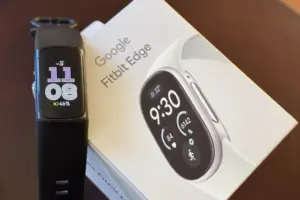
The arrival of the Fitbit Edge—announced this October 2026—serves as a definitive answer to those concerns. Positioned as a bridge between the screenless, minimalist Fitbit Air and the sophisticated, circular Pixel Watch, the Edge aims to reclaim the space left by the aging Charge 6. This article serves as a deep dive into the hardware, feature sets, and strategic shifts Google has made to redefine the fitness tracker experience. While the Edge introduces long-awaited hardware refinements, it also forces users to make difficult trade-offs, particularly regarding mobile payments and legacy features.
Detailed Chronology: From the Charge 6 to the Edge
To understand the significance of the Fitbit Edge, one must first revisit the trajectory of the Charge 6. Released as the final iteration of the "classic" tracker era, the Charge 6 was lauded for its heart-rate monitoring and Google integration, yet it was plagued by design frustrations—most notably its capacitive, haptic-only "button" that often failed to register user input.
The Development Gap (2023–2026):
Following the release of the Charge 6, the wearable market saw a pivot toward health-focused smartwatches. Fitbit’s internal roadmap appeared to favor the Pixel Watch line, leaving the "tracker" segment to stagnate. The announcement of the Fitbit Air in early 2026 signaled a return to basics, but it lacked the display utility many power users demanded. The Edge, therefore, is not merely a successor; it is a corrective measure.
The Unboxing Experience:
Upon receiving the review unit from Google, the first tactile improvement is immediately evident. The Edge features a legitimate physical button on the right-hand chassis. Unlike the haptic "nub" of its predecessor, the Edge’s button provides a satisfying, audible click. This is a crucial functional improvement for athletes—especially those wearing gloves or exercising in wet conditions—who require reliable, tactile feedback that doesn’t rely on finicky touch-sensitivity.
Hardware Enhancements: Metrics and Sensors
The Fitbit Edge is built around a philosophy of increased data fidelity. For years, users have asked for more reliable elevation tracking and improved spatial awareness during outdoor workouts.
The Return of the Altimeter
Perhaps the most significant hardware inclusion is the reintroduction of the altimeter. Absent since the Charge 4, this sensor allows the device to measure "floors climbed" and provides a granular analysis of elevation gain during trail runs and hikes. For the casual user, this is a fun metric; for the dedicated athlete, it is an essential component of training load analysis.
GPS Performance and Antenna Redesign
One of the most frequent criticisms leveled against the Charge 6 was the fragility of its GPS antenna. In my previous testing of the Charge 6, I observed that minor pressure—such as tightening the wristband—could distort the internal antenna, leading to "map drift" and inaccurate distance tracking.
Google has acknowledged these limitations by redesigning the GPS chipset for the Edge. While initial testing is still underway, the consensus among early testers is that the signal acquisition is faster and more resilient. The transition from the phone-dependent tracking of the Fitbit Air to the standalone GPS capability of the Edge marks a significant return to the autonomy that made the original Charge series so popular.
Feature Trade-offs: The NFC Controversy
In the world of consumer technology, progress often comes at a cost. The most contentious aspect of the Fitbit Edge is the complete omission of NFC (Near Field Communication) capabilities.

The Loss of Google Wallet
With the Charge 6, users enjoyed the seamless convenience of "tap-to-pay" via Google Wallet. This feature transformed the fitness tracker into a legitimate daily carry item, allowing runners to grab a coffee or water without needing to carry a smartphone or wallet.
The removal of this feature in the Edge is a curious, if not polarizing, strategic choice. Google has indicated that this decision was made to accommodate internal space for the upgraded battery and GPS modules. For those who relied on their tracker as a digital wallet, this is a regression that cannot be ignored. It suggests that Google is attempting to create a clear "tiering" system: if you want contactless payments, you are effectively being pushed toward the more expensive Pixel Watch ecosystem.
Software and Connectivity: Beyond YouTube Music
A common pain point for Charge 6 users was the restrictive nature of its music controls, which were tethered exclusively to YouTube Music. This forced a "walled garden" approach that alienated users of Spotify, Apple Music, or local file playback.
Universal Media Control
The Fitbit Edge rectifies this with a modernized operating system that supports universal media controls. By communicating directly with the smartphone’s OS, the Edge can pause, skip, and adjust volume for virtually any audio app. This shift demonstrates that Google is listening to the user base, acknowledging that a fitness tracker should be an extension of the phone’s capabilities rather than a marketing vehicle for specific subscription services.
The Google Maps "Coming Soon" Reality
At launch, the Edge is notably missing Google Maps navigation. While the company has confirmed that turn-by-turn directions are "coming soon," their absence at launch is a reminder that even the most anticipated hardware can face software delays. Furthermore, it is worth noting that the previous implementation of Maps on the Charge 6 was rudimentary, offering only basic prompts rather than a full map interface. Whether the upcoming version for the Edge will provide a more visual experience remains a point of speculation.
Future Outlook: Where Does the Edge Fit?
The Fitbit Edge represents a crossroads for the brand. By reintroducing physical buttons and high-precision GPS, Google is signaling that it understands the needs of the dedicated fitness enthusiast. However, by removing NFC, it is also setting boundaries on how much utility a "tracker" should possess compared to a full-blown "smartwatch."
Strategic Implications:
As we look toward 2027 and beyond, the competition in the wearable space is only intensifying. With players like Garmin and Whoop capturing the high-end, data-driven market, and low-cost Chinese imports dominating the budget segment, Fitbit’s "Edge" strategy is a play for the middle ground. They are banking on the fact that millions of users still prefer a slim, screen-based form factor over a heavy, wrist-mounted computer.
The Verdict:
If you are a current Charge 6 user, the decision to upgrade depends on your priorities. If you are an outdoor athlete who values precise GPS and elevation data, the Edge is a mandatory improvement. If you value the convenience of mobile payments, the Edge might feel like a step backward. The device is a refined, albeit cautious, step forward for the Fitbit brand. It fixes the most egregious hardware failures of the previous generation while leaving room for the high-end watch market to continue its own evolution.
For now, the Fitbit Edge stands as a testament to the fact that the humble fitness tracker is not dead—it is simply evolving. Whether it can maintain its status as the go-to wearable for the masses will depend entirely on how quickly Google can roll out the promised software updates and whether the market is willing to accept the absence of NFC in exchange for better core performance.
Beth Skwarecki is Lifehacker’s Senior Health Editor and a certified personal trainer. She has covered the intersection of technology and physical wellness for over a decade.