Executive Overview
The landscape of digital commerce is undergoing a structural paradigm shift. As we navigate the final quarter of 2026, the industry is moving beyond basic automation toward "Agentic Commerce"—a new era where AI agents act as autonomous surrogates for both consumers and merchants. This week’s developments reveal a market obsessed with removing friction, shortening the path to purchase, and unifying fragmented data ecosystems.
From the rise of conversational checkouts that allow purchases within an AI chat interface to the integration of same-day logistics with Shopify storefronts, the message is clear: the traditional "browse-to-cart-to-checkout" flow is being dismantled. Merchants are now prioritizing "contextual commerce," where loyalty data, product intelligence, and multi-carrier shipping are embedded directly into the shopping experience. This report examines the most significant product releases and strategic partnerships shaping the retail sector this week.

Detailed Chronology: Key Innovations of the Week
1. The Rise of Agentic Checkout and AI-Driven Buying
The most notable trend this week is the commoditization of AI-driven purchasing agents.
- Constructor’s Agentic Checkout: Powered by Stripe, this solution allows consumers to navigate from product discovery to payment without ever leaving a conversation with an AI agent. By streamlining the interaction into a single interface, Constructor is tackling the high drop-off rates typically seen in traditional, multi-step checkout processes.
- Crossmint’s Agent Commerce Toolkit: Aimed at the developer community, this toolkit enables AI agents to facilitate payments using virtually any card. By offering a self-serve, open-source reference app, Crossmint is lowering the barrier to entry for businesses looking to automate the purchasing flow for their own proprietary agents.
2. Logistics and Fulfillment: The "Ecom Now" Standard
Same-day delivery is moving from a luxury offered by industry giants to an accessible utility for small-to-medium businesses.

- Ecom Logistics’ Ecom Now: This service, specifically for Shopify merchants in major Canadian markets (Toronto, Montreal, Vancouver, and Calgary), bridges the gap between storefront and doorstep. By connecting a merchant’s Shopify backend directly to a localized delivery network, orders placed before noon can be fulfilled by 9:00 p.m. the same day, a move that significantly threatens the competitive advantage of massive marketplaces.
3. Payment Infrastructure Expansion
- BigCommerce Payments by PayPal (U.K. Launch): BigCommerce continues to refine its embedded finance strategy. By bringing a native checkout experience that aggregates cards, Apple Pay, Google Pay, and PayPal to the U.K. market, the platform ensures that the merchant’s relationship remains with PayPal while the user experience remains seamless and on-brand.
4. Marketing and Customer Intelligence
- Meta’s Commercial AI Suite: Meta has doubled down on generative AI, expanding its Ads Creative Studio and Advantage+ tools. Notably, the ability to convert static product imagery into video is a game-changer for SMBs lacking the budget for professional video production. Furthermore, the introduction of AI-enabled audience discovery promises to improve the precision of targeting in an increasingly privacy-focused ecosystem.
- Kantar Experience Impact: In collaboration with Qualtrics, Kantar has launched a tool that quantifies the relationship between customer experience and brand perception. This provides a critical bridge between "voice-of-customer" data and operational performance.
Supporting Context & Metrics: Why This Matters
The industry is currently grappling with a "Data Fragmentation Crisis." Merchants are utilizing an average of seven to ten different platforms to manage their business, leading to silos that stifle growth.
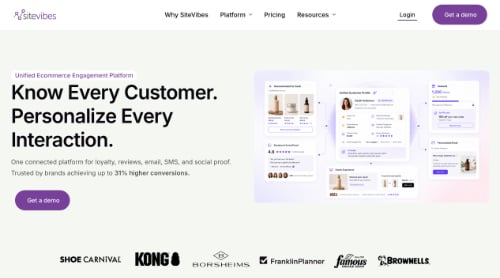
- The Integration Imperative: The integration between Listrak and SiteVibes represents a vital step toward a "Single Customer View." By passing loyalty data and review activity through webhooks in real-time, marketers can trigger hyper-personalized SMS or email campaigns the moment a loyalty event occurs.
- Attribution Clarity: With the launch of Sellforte’s Incremental Pixel, the industry is seeing a push toward causal measurement. As traditional third-party cookies fade, the reliance on incrementality experiments and marketing mix modeling (MMM) becomes the new gold standard for determining the true ROI of paid media spend.
- Inventory Transparency: SyncSpider’s B2Bware addresses a long-standing pain point in B2B commerce: the reliance on manual spreadsheets. By unifying inventory, pricing, and order data across Odoo, Shopware, and Shopify, businesses are effectively automating their operational backbone.
Official Statements and Strategic Vision
Industry leaders are increasingly framing these tools not just as "efficiency boosters," but as the foundational blocks of a new competitive economy.

The Maturity Shift: Shopware’s launch of the Agentic Commerce Maturity Index serves as a benchmark for the industry. By evaluating businesses across four pillars—discovery, transactions, fulfillment, and operations—Shopware is essentially providing a roadmap for digital transformation. Their 25-minute self-assessment is designed to force merchants to confront the reality that "business as usual" is no longer a viable long-term strategy.
Partnership Philosophy: The collaboration between FedEx Dataworks and Stripe signifies a shift in how legacy logistics providers view digital infrastructure. By combining FedEx’s physical network with Stripe’s financial rails, the partnership aims to solve the "last-mile finance" problem for SMBs, allowing them to access capital and global payment methods with the same ease as multinational corporations.
Future Outlook: The Road Ahead
As we look toward 2027, the trajectory of these technologies suggests three major shifts in the commerce ecosystem:
- The Death of the "Click": As AI agents become more sophisticated, the act of clicking through a traditional web store will diminish. The future of shopping will be conversational. Brands that do not optimize their product information for AI consumption (as seen with DaVinci Commerce’s Product Context Memory) will become invisible to these new buying agents.
- Autonomous Operations: The gap between "ordering" and "delivering" is shrinking. Logistics will become as dynamic as software. Expect to see more localized, network-based fulfillment models that mimic the efficiency of cloud computing.
- The Causal Revolution: Attribution will move away from "last-click" models, which are inherently flawed, toward causal measurement systems like Sellforte’s. Marketers will be required to understand the incremental lift of every dollar spent, rather than relying on vanity metrics that do not correlate to actual revenue growth.
Final Thoughts for Merchants
For merchants, the current environment is both a challenge and an opportunity. The tools listed in this week’s dispatch—whether they be AI landing pages from Typeform, or shipping apps for Salesforce—are designed to strip away the "busy work" of running an online store.

The successful merchant of tomorrow will be one who stops viewing their tech stack as a collection of disjointed apps and starts treating it as an integrated, AI-driven organism. Whether you are in Canada looking to optimize your local logistics or a global brand seeking to unify your loyalty data, the path to growth in 2026 and beyond lies in the ability to harmonize data, automate the mundane, and lean into the agentic revolution.
Do you have an ecommerce product release or a breakthrough in retail technology? Reach out to our editorial team at [email protected] to ensure your innovation is featured in our next weekly dispatch.