Executive Overview
In the modern media landscape, the boundaries separating political office from journalistic commentary have become increasingly porous. Nowhere is this more apparent—or more controversial—than in the United Kingdom. While the established democracies of continental Europe maintain a strict, often constitutionally enforced separation between lawmakers and the broadcast microphone, the UK has taken a distinctly permissive approach.
According to a landmark new report by the influential think tank Demos, authored by Dr James Painter of the Reuters Institute for the Study of Journalism, the United Kingdom stands apart from almost every other European nation in permitting serving politicians to host current affairs and news broadcasting programs. Surveying 37 media regulators across Europe via the European Platform of Regulatory Authorities (EPRA), the research reveals a striking continental consensus: in 35 out of those 37 countries, there are zero examples of active politicians anchoring national television current affairs broadcasts.
Only Iceland and Malta emerged as exceptions to this rule, and even within those jurisdictions, the practice remains highly circumscribed, episodic, and short-lived. By stark contrast, 34 European nations either explicitly ban the practice through stringent statutory legislation or substantially restrict it via enforceable regulatory codes.
For the UK, this regulatory divergence places its media ecosystem under an international microscope. As high-profile serving Members of Parliament increasingly step behind studio desks, the question of whether this phenomenon erodes public trust in impartial journalism has graduated from an academic talking point to a central crisis for British media ethics. This report examines the mechanics of the Demos findings, traces the historical and regulatory evolution of the debate, evaluates the broader implications for British newsrooms, and assesses what the future holds for the UK’s unique broadcasting model.
Detailed Chronology: From Strict Separation to the Modern Studio
To understand how the United Kingdom arrived at a point where sitting legislators regularly host flagship broadcast programs, it is necessary to examine the historical trajectory of British broadcasting regulation alongside the shifting tides of political culture.
The Post-War Settlement and the Birth of Impartiality (1950s–1980s)
For decades following the advent of commercial television in the UK, the principle of due impartiality was treated as an almost sacred trust. Established under the BBC Charter and subsequently codified for commercial broadcasters through successive Broadcasting Acts, the underlying philosophy was clear: the public airwaves belonged to the public, not to the political class.
During this foundational era, the concept of a serving MP interviewing constituents or rival politicians from the anchor’s chair was virtually unthinkable. While former politicians—those who had formally retired from elected office—frequently transitioned into media roles (a tradition with a rich and respected history), active legislators were largely restricted to being interviewees rather than interviewers. The regulatory watchdogs, primarily the Independent Broadcasting Authority (IBA) and later the Independent Television Commission (ITC), maintained robust guardrails designed to prevent any individual politician from wielding broadcast media as an unfiltered political platform.
The Digital Expansion and the Multi-Channel Boom (1990s–2010s)
The landscape began to shift incrementally with the proliferation of cable, satellite, and digital terrestrial television. As the number of channels multiplied exponentially, the economic models underpinning broadcast news underwent a radical transformation. 24-hour news channels and commercial networks faced intense commercial pressures to drive ratings, generate social media engagement, and secure high-profile scoops.
During this period, the rules governing politicians participating in media were interpreted through the lens of "due weight" and editorial balance over the course of a series, rather than a blanket prohibition on politicians acting as presenters. Provided that rival viewpoints were ostensibly represented across a schedule, the door was left ajar for charismatic politicians to test the waters of broadcasting. However, these appearances were generally confined to guest-hosting stints, documentaries, or light-entertainment crossovers rather than regular, agenda-setting current affairs shows.
The Rise of the Politician-Broadcaster (2019–Present)
The modern era of the politician-broadcaster truly crystallized in the wake of the 2019 General Election and the subsequent launch of new broadcast outlets eager to disrupt the traditional media duopoly. Driven by a combination of entrepreneurial newsroom strategies, changing audience habits, and politicians seeking direct lines of communication unmediated by traditional Westminster lobby journalists, the dam broke.
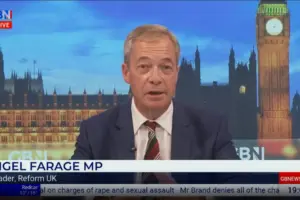
Sitting Members of Parliament began signing formal contracts with major commercial news and talk radio channels. Programs hosted by serving legislators became fixtures of the evening schedule. While proponents argued that these shows brought authenticity, insider access, and high engagement to broadcasting, critics pointed to an inherent conflict of interest: how could a politician effectively scrutinize government policy or hold an opponent to account when they themselves were active participants in the legislative and executive process?
By the time Dr James Painter and the Demos research team initiated their pan-European survey, the UK’s permissive regulatory stance had evolved from an idiosyncratic local loophole into an international outlier.
Supporting Context & Metrics: The European Landscape
The core empirical weight of the Demos report rests on a comprehensive survey of 37 national media regulators across Europe, facilitated by the European Platform of Regulatory Authorities (EPRA). The findings paint an unambiguous picture of a continent overwhelmingly united against the practice of politicians moonlighting as broadcasters.
+-------------------------------------------------------------------+
|               EPRA REGULATORY SURVEY FINDINGS (37 Nations)        |
+-------------------------------------------------------------------+
|                                                                   |
|  [■■■■■■■■■■■■■■■■■■■■■■■■■■■■■■■■■■■] 35 Countries               |
|  Zero instances of serving politicians presenting current affairs |
|                                                                   |
|  [■] 2 Countries (Iceland & Malta)                                |
|  Isolated, limited, and short-lived exceptions                    |
|                                                                   |
|  [■■■■■■■■■■■■■■■■■■■■■■■■■■■■■■■■■■] 34 Countries               |
|  Explicit statutory bans or substantial regulatory restrictions    |
|                                                                   |
+-------------------------------------------------------------------+
The Continental Consensus: Banned or Restricted
Out of the 37 countries surveyed:
- 35 nations reported absolute zero instances of a serving politician presenting a news or current affairs program on a national television channel.
- 34 nations maintain legal frameworks that either explicitly ban the practice or impose substantial, legally binding restrictions that effectively prohibit it.
In major European democracies such as Germany, France, and Scandinavian nations, the separation of powers and the protection of journalistic integrity are embedded deeply within constitutional traditions, public service broadcasting mandates, and independent regulatory codes. For instance, in Germany, the Rundfunkstaatsvertrag (Interstate Treaty on Broadcasting) and internal guidelines enforced by state media authorities (Landesmedienanstalten) place stringent limits on political influence within broadcasting structures, ensuring that public and commercial outlets alike remain structurally independent of active political parties and office-holders.
The Lone Exceptions: Iceland and Malta
The survey identified only two jurisdictions—Iceland and Malta—where the strict rule had been pierced, yet these exceptions served to prove the rule. In both cases, the instances were:
- Extremely limited in scope: Often restricted to minor, localized programming or brief educational slots rather than prime-time national current affairs journalism.
- Short-lived: Quickly abandoned due to public backlash, regulatory intervention, or changing political norms.
The UK’s Outlier Status
Against this monolithic European backdrop, the United Kingdom stands entirely alone among major Western economies. Under the current oversight of Ofcom (the Office of Communications), the Broadcasting Code permits serving politicians to act as news presenters or current affairs hosts, provided that specific compliance conditions are met—such as rules regarding elections, avoiding material misrepresentation, and ensuring adequate alternative viewpoints are presented over time.
However, as the Demos report highlights, these regulatory safeguards are procedural rather than structural, leaving the fundamental conflict of interest unaddressed and placing the UK at odds with virtually every one of its continental neighbors.
Official Statements and Stakeholder Perspectives
The publication of the Demos report has ignited a fierce debate among media ethicists, regulatory bodies, politicians, and newsroom leaders across the United Kingdom.
Dr James Painter and the Demos Perspective
Dr James Painter, the author of the report from the Reuters Institute for the Study of Journalism, emphasized the global uniqueness of the British arrangement during the rollout of the research findings:
"Our pan-European survey reveals a stark reality: when it comes to the intersection of active political office and broadcast journalism, the UK is operating in a jurisdiction of almost one. While our European neighbors view the firewall between lawmakers and the anchor’s chair as an essential pillar of democratic accountability, the UK has drifted into a uniquely permissive model. This raises profound questions about public trust, editorial independence, and the perceived neutrality of our newsrooms."
Demos representatives added that the erosion of boundaries risks accelerating public cynicism toward both politics and the media, creating an environment where news is increasingly viewed through a partisan prism rather than an objective lens.
Regulatory and Industry Reactions
Ofcom, the UK’s media regulator, has consistently defended its approach by pointing to the existing provisions within the Ofcom Broadcasting Code. The regulator maintains that while the practice is permitted, it is subject to rigorous oversight regarding impartiality rules. An Ofcom spokesperson noted in previous regulatory reviews that broadcasters must ensure audiences are not misled, that opposing views are given due weight, and that programs do not become vehicles for unearned political advantage.
However, critics within the broadcasting industry argue that Ofcom’s rules are ill-equipped to handle the modern reality of partisan talk radio and television. Speaking on condition of anonymity, a senior producer at a major UK public service broadcaster remarked:
"The rules were written for a bygone era when politicians occasionally appeared as studio guests. They were never designed to cope with sitting MPs hosting prime-time shows where they set the news agenda, interview their allies, and attack their opponents under the banner of independent journalism. It places an impossible burden on compliance teams and degrades the currency of impartial news."
The Political Divide
Unsurprisingly, political reactions to the debate are deeply polarized. Proponents of politician-broadcasters—including several parliamentarians who have successfully crossed the floor into commercial broadcasting—argue that the practice democratizes media access, breaks down the starchy formality of traditional political interviews, and brings genuine political expertise directly to viewers. They contend that audiences are intelligent enough to assess bias and that transparency regarding a presenter’s political affiliation is sufficient protection.
Conversely, opposition politicians and good-governance advocates argue that allowing lawmakers to act as journalists undermines the constitutional checks and balances that underpin British democracy. The argument centers on the core democratic function of the press: to hold power to account. When the person holding the microphone is also the person writing legislation and holding executive or legislative office, the fundamental watchdog role of journalism is severely compromised.
Future Outlook: What Next for UK Newsrooms?
As the findings of the Demos report reverberate through Westminster and media boardrooms alike, the UK faces a critical juncture. The future of political broadcasting hangs in the balance, shaped by several competing pressures.
1. The Regulatory Pressure Test
Pressure is mounting on Ofcom to review its guidance on politician-presenters. With public skepticism toward media institutions running high, civil society groups and media unions are calling for a tightening of the Broadcasting Code to mirror European standards. Whether Ofcom will respond with stricter interpretations or whether Parliament will be forced to consider statutory reform remains one of the most pressing regulatory questions of the decade.
2. Commercial Realities vs. Ethical Standards
Commercial broadcasters operating in the talk-radio and opinion-led television spaces rely heavily on high-profile political figures to drive audience engagement and commercial revenue. For these networks, the politician-presenter is not merely an editorial choice; it is a core commercial asset. Balancing the economic imperatives of modern multi-platform broadcasting against the traditional standards of public interest journalism will require innovative thinking from media executives.
3. The Impact on Public Trust
Ultimately, the debate is about public trust—the foundational currency of any healthy media ecosystem. As trust in both political institutions and mainstream media faces ongoing headwinds, the blurring of lines between the lawmaker and the journalist risks deepening public alienation. If audiences can no longer distinguish between independent reporting and partisan advocacy, the democratic function of the news media is profoundly diminished.
Conclusion
The Demos report by Dr James Painter has provided empirical proof of what many media observers have long suspected: the United Kingdom’s approach to politicians in the broadcast studio is a global outlier. While 35 European nations maintain a robust firewall protecting journalism from the direct influence of active politicians, the UK has chosen a path of permissive experimentation.
As British newsrooms navigate this uncharted territory, the lessons from across the Channel suggest that the rest of Europe views this separation not as an archaic formality, but as an indispensable safeguard for democratic integrity. Whether the UK will recalibrate its regulatory compass to align with its European neighbors, or continue down its unique and controversial path, will define the character of British broadcasting for generations to come.